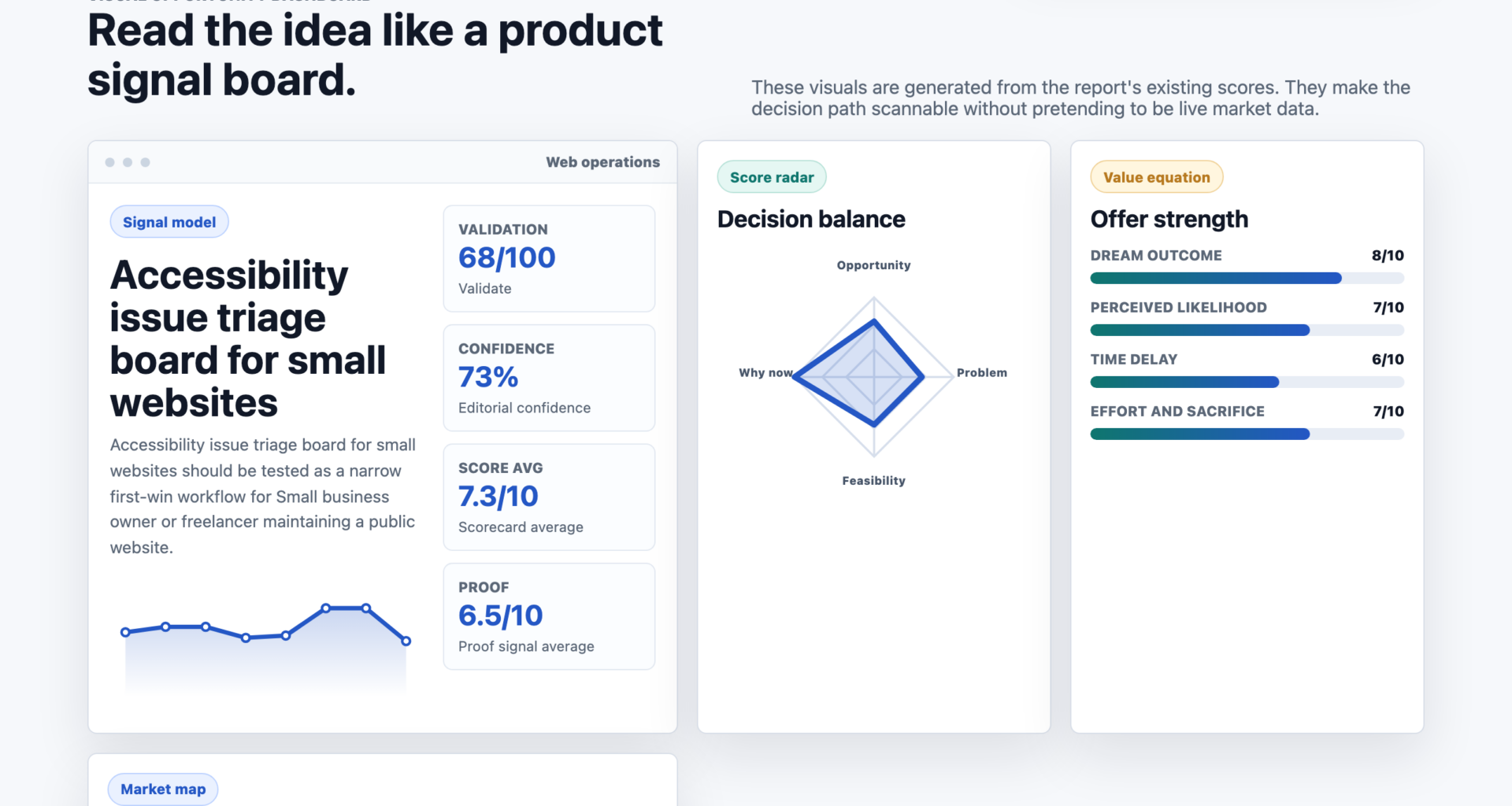

📊 Full opportunity report: Accessibility issue triage board for small websites on IdeaNavigator AI — validation score, market gap, and execution plan.

Get the little things that make your day delivered free — and shop member deals
- Fast, free delivery on millions of items
- Access to Prime Big Deal Days deals on October 6–7
- Prime Video, Amazon Music and more included
TL;DR
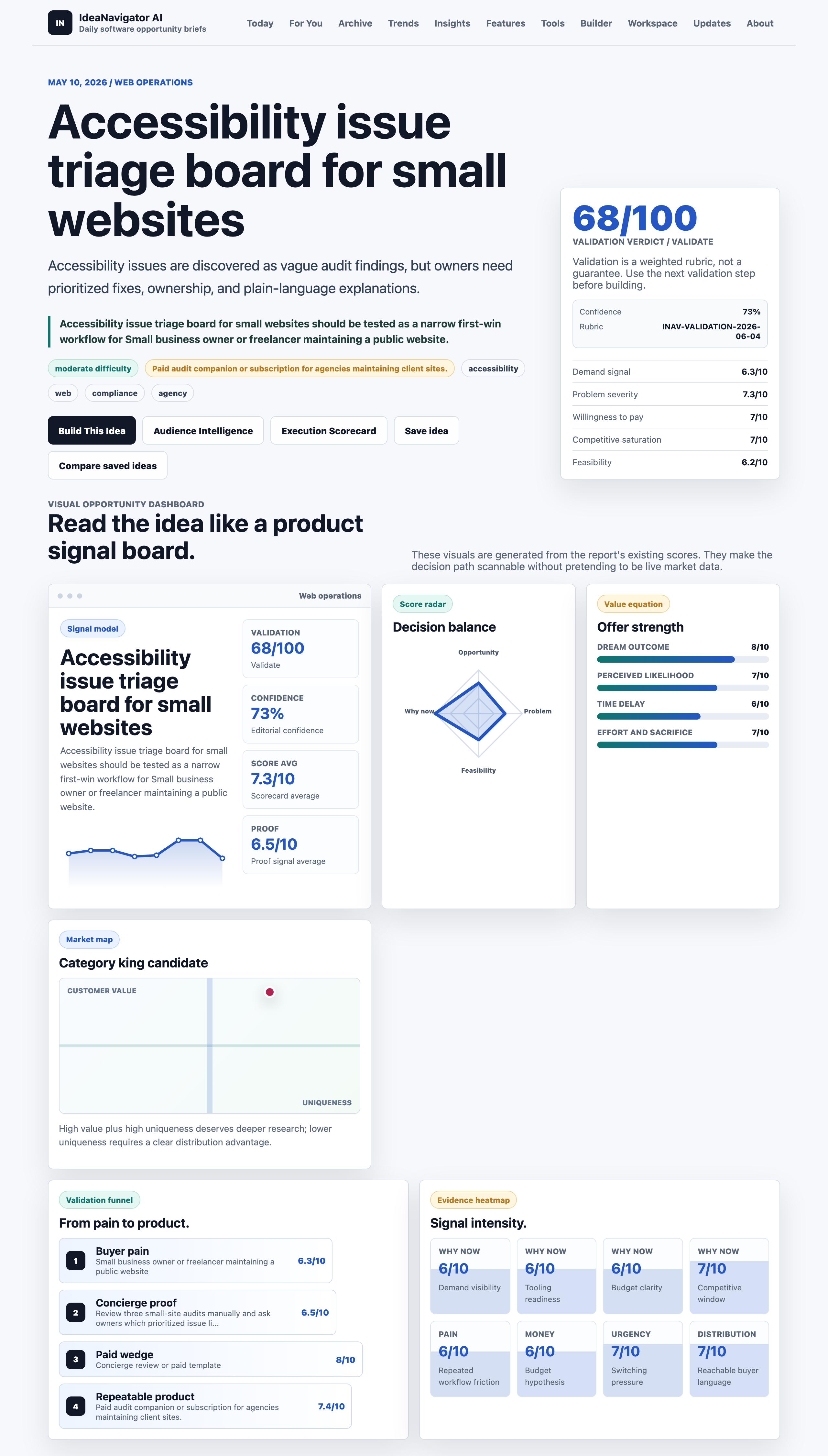
A proposed accessibility issue triage board for small websites is in development to help owners manage audit findings effectively. It aims to group issues, prioritize fixes, and turn findings into repair tickets, addressing a growing operational need.
A new accessibility issue triage board for small websites is being developed to help small business owners and freelancers manage audit findings more effectively. The tool aims to prioritize issues, assign ownership, and generate repair tickets, addressing a recognized operational need for accessible web maintenance.
The proposed triage board is designed to import accessibility audit notes, group issues by page and severity, and convert them into actionable repair tickets. It targets small website owners who often lack dedicated accessibility expertise and face challenges in prioritizing fixes.
According to an anonymous researcher involved in the project, this tool is intended as a narrow first-win workflow, providing a simple interface that streamlines the process of addressing accessibility problems. The initiative is motivated by increased awareness among small organizations that accessibility is an ongoing operational responsibility, not a one-time redesign.
Market validation involves reviewing three small-site audits manually and asking owners which prioritized issue lists they would pay to keep updated, indicating a potential revenue model through paid audits or subscriptions for agencies maintaining multiple client sites.
Why Small Website Owners Need a Triage Solution
This development addresses a critical gap for small website owners who often struggle with managing accessibility issues due to limited resources and expertise. By providing a straightforward workflow, the tool could improve compliance and user experience for millions of small sites, aligning operational responsibilities with practical management tools. The project’s success could influence best practices and set a standard for accessible web maintenance at the small business level.As an affiliate, we earn on qualifying purchases.
Growing Awareness of Accessibility as an Ongoing Responsibility
In recent years, more small organizations and freelancers have recognized that accessibility is not a one-off project but an ongoing operational duty. While larger firms often have dedicated teams and tools, small site owners typically rely on sporadic audits and informal fixes. The development of a dedicated triage board responds to this gap, aiming to simplify the process of managing and prioritizing accessibility issues. Initial market validation involves manual review of audits and owner feedback, with plans to test the tool in real-world scenarios.“This triage board is designed to give small website owners a manageable way to handle accessibility issues without needing extensive technical knowledge.”
— an anonymous researcher
“The focus is on creating a narrow, effective workflow that can be tested and refined before expanding to more comprehensive solutions.”
— an anonymous researcher
Development Status and Validation Uncertainties
It is not yet confirmed how effectively the triage board will integrate with existing audit tools or how small website owners will adopt it in practice. The project is still in the early testing phase, and user feedback will determine its future features and market fit.
Next Steps in Triage Board Development and Testing
The development team plans to conduct initial testing with three small-site audits, gather user feedback, and refine the interface accordingly. Following this, broader pilot programs are expected to evaluate real-world usability and potential for commercialization, including subscription models for agencies and individual owners.
Key Questions
Who is this accessibility triage board intended for?
The tool is designed for small business owners and freelancers maintaining public websites who need a simple way to manage accessibility issues.
How will the triage board improve accessibility management?
It will import audit notes, group issues by page and severity, and turn them into repair tickets, making it easier for owners to prioritize and track fixes.
When will the triage board be available for testing?
Initial testing is planned in the coming months, with broader deployment contingent on feedback and refinement.
Will this tool be free or paid?
The project aims to validate a revenue model based on paid audits or subscriptions for agencies maintaining multiple client sites.
What challenges might affect the development?
Integration with existing audit tools, user adoption, and ensuring the workflow remains simple and effective are key challenges still to be addressed.
Source: IdeaNavigator AI
NFL season / tailgating Picks
team gear
As an affiliate, we earn on qualifying purchases.