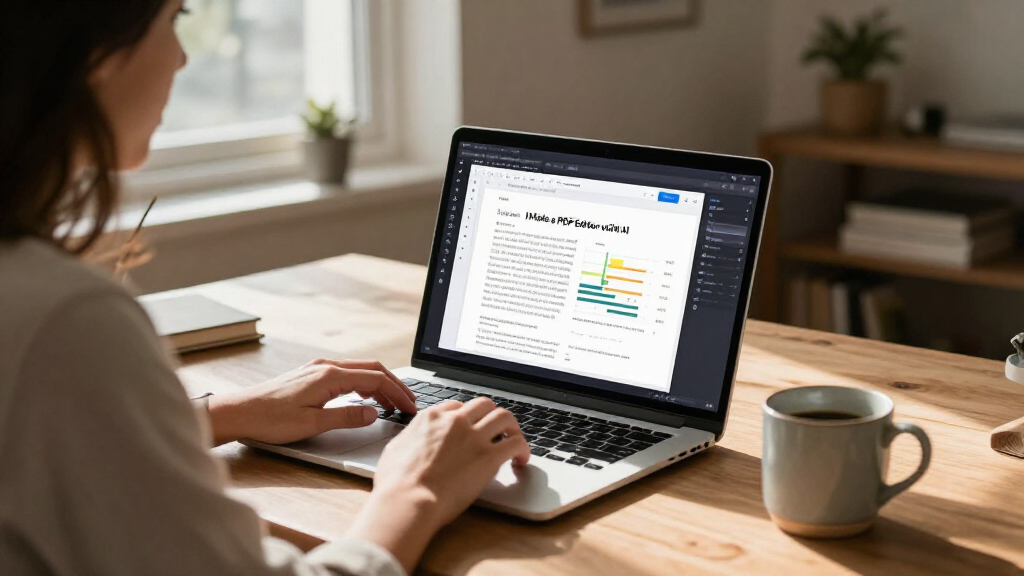

🔍 Read the full analysis: I Made A PDF Editor With AI. Here’s How I Made It Reliable on ThorstenMeyerAI.com

Get the little things that make your day delivered free with Prime
- Fast, free delivery on millions of items
- Prime Video, Amazon Music and more included
- Member-only deals all year
TL;DR
Thorsten Meyer says his AI coding agent built a working PDF editor, Docestra, in one day, but tests on real files exposed problems that took six more days to address. He reports fixes for saving, encrypted PDFs and redaction, alongside growth from 17 to 745 automated unit tests. The private app is not available to download, and its developer says he has not measured time or cost savings.
Thorsten Meyer says six days of testing and revisions turned Docestra from a one-day AI-built PDF editor into a more thoroughly tested personal tool. In an account published November 13, he describes problems found in real files—including disappearing annotations, encrypted documents and unsafe redaction—and says version 1.5.1 had 745 automated unit tests, up from 17 in the first version. Docestra runs locally on his Mac and is private, not available to download.
Meyer says he gave an AI coding agent a one-sentence request on November 6, 2026, to build an Acrobat-like editor he could use. The first working version was committed at 21:47 Central European Time that evening. It could open and search PDFs, add annotations and signatures, fill forms, rearrange pages and save files. The software was written with Anthropic’s Claude Code running Claude Opus, while OpenAI’s Codex reviewed the code, according to Meyer.
The first broad test run covered 930 real PDFs. Meyer reports that a save method produced a broken cross-reference table in a file made by a common PDF generator, causing markups to disappear from the saved document. He says he changed the save process to avoid compressed object streams. This failure was not apparent in the smaller set of files used to get the first version working.
Encryption and redaction brought different risks. Meyer says 52 of 69 encrypted PDFs in his test set did not permit annotations under restrictions set by their authors, while the library could not re-encrypt a file after editing. Docestra was changed to ask users to confirm an unlock, identify the restrictions, and save an unprotected copy without overwriting the original. For redaction, an independent AI review flagged 14 issues in the first design and 13 in a second review. Meyer then adopted a different method: convert marked pages to images, cover redacted areas in the image, and add a searchable text layer that excludes text touching those areas. He reports that testing on 917 PDFs found no leaks.
Docestra · Nov 6–13, 2026
From one prompt to a tool I can rely on
What the first version gave me, what real files broke, and what it took to fix it, from my project log.
What the tool rests on (schematic)
Built bottom up. The top layer is a plan, not a finished feature.
What happened, by date
- Nov 6One-sentence brief; first working version committed the same evening
- Nov 6Test over 930 real PDFs finds a save bug that dropped markups
- Nov 752 of 69 encrypted PDFs forbid annotations: unlock only into a new copy
- Nov 8Real redaction: review finds 14, then 13 problems; simpler design, 0 leaks in 917 PDFs
- Nov 12Version 1.5.1: 745 unit tests, 32 browser test suites
- Nov 13Version 2.0 starts: one shared PDF engine for our AI agents (in development)
Source: Docestra project records (development log, plans for versions 1 and 2.0, commit history), Nov 6–13, 2026. The layer stack is a schematic, not a measurement.
Graphic: Powered by Thorsten Meyer AI
Why Real-File Testing Changed Docestra
The account illustrates a gap between a software demonstration and a tool used on sensitive documents. An editor may appear to work while still losing saved annotations, mishandling protected files or leaving supposedly redacted information recoverable. These are not merely cosmetic defects: users could rely on a saved file that does not preserve their work or share information they believed they had removed.
Meyer’s description also shows the limits of treating a fast AI-generated first version as a finished product. He says testing and review sometimes took longer than building, and that each problem found led to a test intended to catch it again. The reported increase to 745 unit tests indicates a more structured development process, but does not by itself establish that the app is secure or suitable for other users. The results are the developer’s own account, not an independently published evaluation of Docestra.
For readers using AI-built software, the practical point is to test the exact actions that matter in real work: save, reopen, handle restrictions, and verify that sensitive information is actually gone. Meyer says he has not measured time or cost savings, so the account does not establish whether this approach was more efficient than other ways of building the tool.
Products Worth Considering

Dyson V9 Motorbar Cordless Vacuum

Bose SoundLink Max Portable Bluetooth Speaker, Black

Dreame L40 Ultra Gen 2 Robot Vacuum and Mop
As an affiliate, we earn on qualifying purchases.
From One-Day Build to Version 1.5.1
Meyer describes “vibe coding” as making software primarily by telling an AI model what to build in ordinary language, rather than writing the code himself. Docestra began as a local TypeScript web app running in a browser on his Mac. He says PDF files stay on that machine. The initial feature set included viewing, searching, annotations, form filling, page rotation and reordering, combining and extracting pages, printing, undo and saving.
Development continued through version 1.5.1 on November 12. Meyer says the initial “white-out” feature covered content visually but did not remove the underlying text; its description disclosed that limitation. He later built a separate redaction feature after review exposed repeated problems with the first approach. He also says he excluded fonts covered by the GPL-2.0 licence from the app, and reviewed licences before adding later libraries for text recognition and editing.
The article is a first-person account by the tool’s developer, published on ThorstenMeyerAI.com. Meyer reports his own test results and development choices; the source does not include an outside audit, a downloadable release or independent confirmation of the tests.
“Vibe coding gets you a working tool quickly. Turning it into a tool you can rely on is the real work.”
— Thorsten Meyer, Docestra’s developer
What the Report Does Not Establish
The reported test results come from Meyer, who built Docestra; the article provides no independent audit or outside replication of the PDF tests. A result of zero leaks across 917 test files describes that test set and method, not every document or possible redaction failure. The source also does not detail how the files were selected or provide a full account of the testing procedure.
Docestra is not publicly available, so readers cannot independently try the app or verify its behavior. Meyer says files remain on his Mac, but the account does not provide a security assessment of the local app. It also does not quantify development costs, time saved, or comparisons with commercial PDF editors. The status of version 2.0 is limited: development began November 13, and Meyer says it is unfinished.
Version 2.0 Remains in Development
Meyer says work on version 2.0 began November 13, 2026, the day his account was published, and that it was not finished at that point. He mentions interest in text recognition and true text editing, with library licences reviewed before inclusion. The source gives no release date or plans to make Docestra available to the public.
The next evidence readers would need is a clear update on version 2.0, along with more detail on its tests and any independent review. Until then, the reported fixes and test counts describe the developer’s private project rather than a product readers can evaluate or adopt.
Key Questions
What is Docestra?
Docestra is a PDF editor that Thorsten Meyer says he built with AI coding agents for personal use. It runs locally on his Mac as a browser-based TypeScript app and is not available to download.
What problems did testing find?
Meyer reports that a save method could make annotations disappear from some PDFs. Tests also exposed limits with encrypted files and showed that the original white-out feature covered text without removing it from the PDF.
How did Meyer change the redaction feature?
After an independent AI review reported 14 problems and then 13 more in a follow-up round, Meyer says he changed approaches. The revised method converts marked pages to images, covers the selected areas and adds a searchable text layer without text touching a mark. He reports zero leaks in a test of 917 PDFs.
Can the test results be independently checked?
Not from the information provided. Meyer’s account reports his own results, but Docestra is private and the source does not describe an independent audit or provide a public download.
When will Docestra version 2.0 be released?
No release date is given. Meyer says development started November 13, 2026, and that version 2.0 was unfinished when he published his account.
Source: ThorstenMeyerAI.com