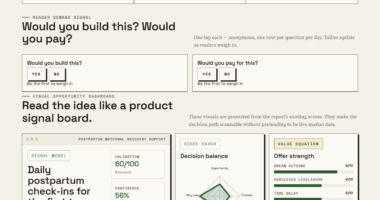
📊 Full opportunity report: A New Way To Combat Digital Eye Fatigue: Webcam Blink Tracking on IdeaNavigator AI — validation score, market gap, and execution plan.
TL;DR
A webcam-based blink rate tracker is being tested as a tool to combat digital eye fatigue among remote workers. It estimates blink rate and prompts breaks to improve eye comfort, with pilot testing planned.
A new webcam-based application designed to monitor blink rate and prompt eye breaks is set to be pilot tested among remote workers, offering an objective way to combat digital eye fatigue. This innovation responds to increased screen time due to remote and hybrid work trends, aiming to improve eye comfort and reduce associated symptoms such as dryness, tiredness, and headaches.
The proposed system uses on-device computer vision to estimate blink rate and monitor screen distance without sending video data externally. It aims to provide real-time nudges for 20-20-20 breaks—looking 20 feet away for 20 seconds—whenever blink rates drop below a healthy threshold. The initial plan involves a two-week pilot with twenty remote workers, tracking whether the tool improves self-reported eye comfort and adherence to breaks. Revenue would come from per-seat subscriptions sold to individuals and small teams, targeting the digital eye strain and screen wellness market.
According to IdeaNavigator AI, the app will log daily eye comfort scores based on blink activity and break adherence, offering a measurable way to assess its effectiveness. The approach addresses a key challenge: workers often only notice eye strain once symptoms become severe, lacking objective signals to prompt timely action.
Potential Impact on Remote Workers’ Eye Health
This development could provide a practical, accessible solution to a widespread problem among remote workers, who spend over 8 hours daily on screens. By offering real-time feedback and encouraging healthier eye habits, the tool may reduce the incidence of digital eye strain, improve productivity, and enhance overall well-being. If successful, it could influence workplace wellness strategies and set a new standard for screen-based health monitoring.
As an affiliate, we earn on qualifying purchases.
Growing Need for Digital Eye Strain Solutions
Remote work has significantly increased daily screen time, intensifying issues related to digital eye strain. Current measures rely largely on self-awareness, with workers noticing symptoms only after discomfort becomes severe. Existing research highlights that reduced blink rate is a primary contributor to dryness and fatigue, but objective monitoring tools remain limited. The advent of on-device computer vision enables new possibilities for real-time, privacy-preserving eye health monitoring, making this innovation timely and relevant.
“Using webcam-based blink tracking can provide immediate, objective feedback to workers, helping them maintain healthier eye habits without invasive procedures.”
— an anonymous researcher
Uncertainties About Effectiveness and Adoption
It is not yet clear how accurately the webcam app can measure blink rate in diverse lighting and facial conditions. The effectiveness of nudges in changing long-term behavior remains unproven, and user acceptance of continuous monitoring is uncertain. Results from the pilot study will be critical to evaluate whether the tool can deliver meaningful improvements in eye comfort and break adherence.
Next Steps for Validation and Deployment
The planned pilot with twenty remote workers will test the app’s accuracy, usability, and impact over two weeks. Results will inform further development, potential scaling, and commercialization strategies. If positive, larger studies and broader deployment could follow within the next year, with ongoing refinement based on user feedback and clinical insights.
Key Questions
How does the webcam blink tracker work?
The app uses on-device computer vision to estimate blink rate and monitor screen distance, providing real-time prompts for breaks when blink frequency drops below healthy levels.
Will this technology be available to all remote workers?
Initially, the tool is planned as a subscription-based app targeting individual users and small teams, with wider availability depending on pilot results and market demand.
Is my video data sent to external servers?
No, the system performs all analysis locally on the device, preserving user privacy and security.
What are the expected benefits of using this tracker?
It aims to objectively monitor blink activity, prompt timely breaks, reduce dry eyes, headaches, and fatigue, and promote healthier screen habits among remote workers.
When will the app be available for general use?
The pilot testing is planned in the coming months, with potential commercial release depending on the trial outcomes, likely within the next year.
Source: IdeaNavigator AI