

📊 Full opportunity report: 10 AI Trends That Will Dominate 2026 on ThorstenMeyerAI.com — validation score, market gap, and execution plan.

Get the little things that make your day delivered free — and shop member deals
- Fast, free delivery on millions of items
- Access to Prime Big Deal Days deals on October 6–7
- Prime Video, Amazon Music and more included
TL;DR
Experts predict that by 2026, AI will see major developments in automation, ethical frameworks, and personalized experiences. These trends will influence industries from healthcare to entertainment, shaping the AI landscape.
Artificial intelligence is poised to undergo significant transformation in 2026, with experts forecasting 10 major trends that will shape its development and application across industries. For a detailed overview, see the original analysis. These trends are based on current technological trajectories and strategic industry insights, highlighting the importance of staying ahead in AI innovation. For related industry insights, visit our related trends overview.
According to industry analysts, the top AI trends for 2026 include the widespread adoption of autonomous systems, advances in ethical AI frameworks, and the integration of AI with the Internet of Things (IoT). Learn more about emerging AI trends in this insightful report. These developments are expected to enhance automation capabilities across sectors such as manufacturing, healthcare, and transportation. Additionally, personalized AI experiences are predicted to become more prevalent, driven by improvements in machine learning algorithms and data privacy measures.
Experts emphasize that these trends will not only accelerate technological progress but also raise important ethical and regulatory considerations. Companies are increasingly investing in explainable AI to improve transparency, while governments are exploring regulations to ensure responsible AI deployment. The convergence of AI with other emerging technologies like quantum computing and 5G is also anticipated to unlock new possibilities in data processing and real-time decision-making.
The 10 picks
- 1
 Sonos Arc Ultra Soundbar with Dolby Atmos – BlackView on Amazon →
 - 2
 Sonos Beam Gen 2 – Black – Soundbar with Dolby AtmosView on Amazon →
 - 3
 Bose TV Speaker – Compact Soundbar with Bluetooth and HDMI-ARC, Remote Includ…View on Amazon →
 - 4
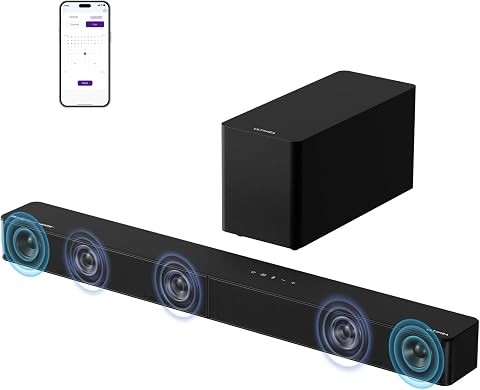 Ultimea 5.1CH Surround Sound Bar System with Dolby Atmos, Poseidon M60View on Amazon →
 - 5
 Fire TV Soundbar Plus (Newest Model) with Built-in Subwoofer, 3.1 Channel, Do…View on Amazon →
 - 6
 Sony S100F 2.0ch Soundbar with Bass Reflex Speaker, Bluetooth, and HDMI ARCView on Amazon →
 - 7
 Amazon Fire TV Soundbar, 2.0 Speaker with DTS Virtual:X and Dolby AudioView on Amazon →
 - 8
 Samsung B-Series Soundbar HW B400F 2.0 Ch with Built-in Subwoofer (2025 Model)View on Amazon →
 - 9
 ULTIMEA Sound Bar with Wireless Subwoofer, App Control, 2.1 ChannelView on Amazon →
 - 10
 Sound Bar for Smart TV with Bluetooth, ARC, Optical, AUX, Detachable Design, 80WView on Amazon →
Implications of 2026 AI Trends for Industry and Society
The predicted AI trends for 2026 matter because they will fundamentally alter how industries operate, improve efficiencies, and create new business models. Enhanced automation and personalized experiences will impact employment patterns, consumer behavior, and regulatory policies. Understanding these shifts is crucial for businesses, policymakers, and consumers to adapt effectively and harness AI’s benefits while managing risks.
Current State and Future Trajectory of AI Development
AI has experienced rapid growth over the past decade, driven by advances in machine learning, data availability, and computing power. Key milestones include the rise of deep learning, natural language processing, and AI-powered automation tools. Industry forecasts suggest that these foundational developments will continue to evolve, with 2026 marking a pivotal year for mainstream adoption of autonomous systems and ethically guided AI frameworks. Prior to this, discussions around AI regulation and responsible use have gained momentum, setting the stage for more structured development in the coming years.
“The focus on ethical AI and explainability will be critical in ensuring public trust and widespread adoption in the next few years.”
— Professor Mark Liu, Tech Futurist
Uncertainties Surrounding AI Development in 2026
While experts forecast these trends based on current trajectories, uncertainties remain regarding regulatory frameworks, technological breakthroughs, and societal acceptance of AI advancements. The pace of development may accelerate or slow depending on unforeseen challenges, such as ethical dilemmas, data privacy issues, or geopolitical factors influencing AI research and deployment.
Next Steps for Stakeholders in AI Evolution
Industry leaders and policymakers should focus on establishing clear regulations and ethical standards to guide AI development. Continued investment in research, transparency initiatives, and public engagement will be essential to ensure responsible growth. Monitoring emerging technologies like quantum computing and 5G integration will also be vital to understanding how they will influence AI capabilities in 2026 and beyond.
Key Questions
What are the most anticipated AI trends for 2026?
The top trends include widespread autonomous systems, advancements in ethical AI, integration with IoT, personalized AI experiences, and the convergence with emerging technologies like quantum computing and 5G.
How will AI impact employment and industries in 2026?
Automation and intelligent systems are expected to transform industries such as manufacturing, healthcare, and transportation, potentially reshaping job roles but also creating new opportunities for skilled workers.
What ethical concerns are associated with AI growth in 2026?
Key concerns include ensuring transparency, avoiding bias, protecting privacy, and establishing responsible use standards to maintain public trust and prevent misuse of AI technologies.
Will AI regulation keep pace with technological advancements?
It remains uncertain; while governments are increasingly active in developing frameworks, the rapid evolution of AI may pose challenges to timely and effective regulation.
Source: ThorstenMeyerAI.com
NFL season / tailgating Picks
team gear
As an affiliate, we earn on qualifying purchases.