
To upgrade your sleep and boost recovery, start by exploring your adjustable bed’s key features like head and foot controls, memory presets, and massage functions. Find the most comfortable positions that support spinal alignment and improve circulation, such as elevating your head or legs. Fine-tune your settings for pressure relief and better breathing, and guarantee safety by following manufacturer instructions. Proper maintenance keeps your bed performing well—discover simple tips inside for lasting comfort and recovery.
Key Takeaways
- Experiment with bed angles to find optimal positions for spinal alignment, circulation, and pressure relief tailored to your recovery needs.
- Use memory presets and adjustable controls to quickly switch to personalized comfort settings during sleep.
- Elevate your head and legs strategically to improve breathing, reduce acid reflux, and promote circulation for better recovery.
- Incorporate supportive pillows and supports to enhance comfort and maintain neutral neck and spinal alignment.
- Regularly maintain and inspect the bed frame for safety, ensuring smooth operation and proper hygiene to support long-term recovery.
adjustable bed frame with head and foot controls
As an affiliate, we earn on qualifying purchases.
As an affiliate, we earn on qualifying purchases.
Why Proper Bed Positioning Improves Sleep and Recovery

Proper bed positioning plays a vital role in enhancing sleep quality and speeding up recovery. When you prioritize good bed ergonomics, you support proper spinal alignment, reducing aches and discomfort that can disrupt your sleep. An essential position promotes better sleep hygiene by allowing your body to relax fully, preventing pressure points and minimizing tossing and turning. Proper positioning also helps improve circulation, which is critical for muscle repair and overall healing during rest. When you adjust your bed to fit your body’s needs, you create a sleep environment that encourages deeper, more restorative sleep. Additionally, digital concepts such as adjustable bed frames offer customizable support that can adapt to your changing needs, further enhancing sleep quality. Incorporating advanced sleep technology can optimize your sleep setup even more, ensuring you wake up refreshed and ready for the day. Utilizing bed ergonomics effectively can help reduce common sleep disturbances, making your recovery process more efficient. For example, sleep environment optimization can further support your body’s recovery process by reducing external disruptions. Enhancing your sleep environment with sleep optimization tools can also contribute to more consistent and restorative rest, supporting overall health and recovery. This simple yet crucial step can make a significant difference in how refreshed you feel and how quickly your body recovers overnight.
Understanding Your Adjustable Bed Frame’s Key Features and Settings
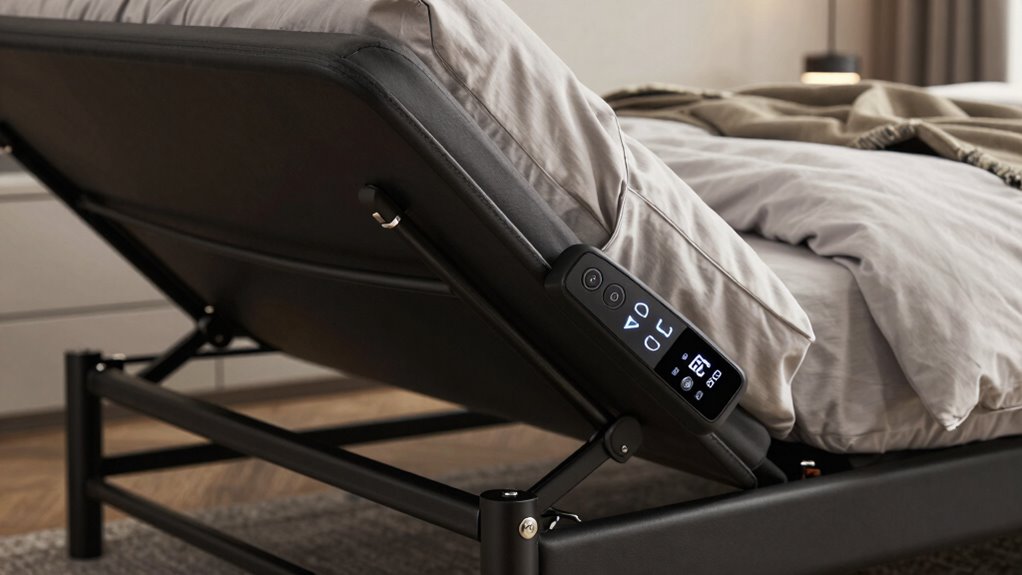
Understanding your adjustable bed frame’s key features and settings helps you personalize your sleep experience. You can easily customize bed positions to find what’s most comfortable and supportive. Knowing how to utilize these options ensures you get the best sleep positions for recovery and relaxation. Additionally, familiarizing yourself with home organization tips can help keep your sleeping area tidy and stress-free, enhancing your overall sleep quality. Incorporating proper kitchen gear care practices into your routine can also prevent damage to your bed frame components and prolong their lifespan. Being aware of projection technology features can also help you optimize your setup for better viewing and relaxation. Staying informed about tax law updates can help you plan your finances more effectively, even as you focus on improving your sleep environment. Moreover, understanding ethical considerations in consumer products can guide you in making responsible choices when selecting your bedroom equipment.
Key Adjustable Features
Your adjustable bed frame offers a variety of key features that let you customize your sleeping position for maximum comfort. These features directly impact bed ergonomics and help improve your sleep posture. Understanding how to use these features guarantees you get the most from your bed’s capabilities. For example, many frames have intuitive controls to elevate the head or foot sections independently, allowing you to find the ideal alignment. Other features may include memory presets for quick adjustments, zero-gravity positioning to reduce pressure points, and massage functions for relaxation. These key features work together to support your body’s needs, reduce discomfort, and promote better sleep quality. Mastering these options helps you create a personalized sleep environment that fosters true recovery. Properly filter sizing and flow can also enhance overall sleep comfort by ensuring consistent and clean airflow around your sleeping area. Additionally, understanding the importance of bed positioning can significantly improve your sleep posture and overall restfulness. Regular adjustable bed maintenance routines can further extend the lifespan and functionality of your frame, ensuring consistent performance over time. Incorporating advanced control systems can provide even more precise adjustments and convenience, enhancing your sleep experience. Furthermore, exploring user-friendly interfaces can make it easier to customize your bed settings quickly and efficiently.
Customizable Bed Settings
Customizable bed settings allow you to tailor your sleep experience with ease, making it simple to find the most comfortable position for rest and relaxation. With adjustable controls, you can modify your bed’s incline to optimize your sleep environment, whether elevating your head for better breathing or elevating your legs to reduce swelling. These settings also help you customize mattress firmness indirectly by positioning your body to relieve pressure points and enhance comfort. Many frames offer preset positions or customizable memory settings, so you can quickly switch between your preferred setups. This level of control ensures your sleep environment is optimized for quality rest, helping you wake up refreshed. Understanding and utilizing these settings puts you in command of your sleep quality and overall recovery. For added safety, it’s important to learn about LED skincare masks and eye safety tips to protect your eyes during relaxation and sleep. Additionally, knowing how adjustable bed frame mechanisms operate can help you troubleshoot common issues and maximize your comfort. Being familiar with bed frame safety features can further enhance your confidence in using your adjustable bed. Regular maintenance and understanding bed frame safety protocols can prevent potential malfunctions and extend the lifespan of your bed. Moreover, being aware of proper cleaning and upkeep techniques can ensure your adjustable bed remains hygienic and functions smoothly over time.
Optimal Sleep Positions
Adjustable bed frames offer a variety of features and settings that help you find the most comfortable sleep position. The right position can improve circulation, reduce pressure points, and support your mattress materials for better durability. Experiment with different angles to discover what relieves tension and promotes relaxation. Using sleep tracking tools, you can monitor how each position affects your rest quality, making modifications accordingly. Keep in mind, a slight elevation of the head or legs can alleviate acid reflux or swelling. Remember, your ideal sleep position varies based on your needs and mattress type. Regularly evaluating your comfort and sleep data helps fine-tune your setup for maximum recovery and restful nights. Additionally, considering vetted options for floating on water can inspire innovative ways to enhance your sleep environment or relaxation routines. Incorporating smart technology into your adjustable bed can further personalize your sleep experience and optimize recovery. Exploring ergonomic support features can also help you achieve better spinal alignment and comfort throughout the night. Understanding adjustable bed mechanisms can assist you in selecting and maintaining the best settings for your sleep needs.
How to Find the Most Comfortable Positions for Your Sleep Needs

Finding the most comfortable sleep positions involves paying attention to how your body feels throughout the night. To identify what works best, experiment with different angles and positions, focusing on maintaining proper neck alignment and a healthy sleep posture. Adjust your bed to support your natural curves and reduce strain. Use the table below as a guide:
| Position | Benefits | Tips |
|---|---|---|
| Semi-reclined | Eases breathing, reduces acid reflux | Keep head aligned with spine |
| Slightly elevated | Relieves pressure on lower back | Use pillows to support neck |
| Flat on back | Promotes neutral neck position | Avoid twisting or bending limbs |
| Fetal position | Comforts side sleepers | Avoid curling too tightly |
| Elevated head & knees | Reduces snoring, improves circulation | Use adjustable settings |
Finding your ideal position ensures better sleep posture and neck comfort.
Fine-Tune Your Bed for Pressure Relief and Better Circulation

You can improve your sleep comfort by adjusting your bed’s head and foot angles to reduce pressure points. Using pillows and supports strategically helps promote better circulation and spinal alignment. Small tweaks like these can make a big difference in how rested you feel. Additionally, elevating your head slightly can help reduce issues like acid reflux and improve breathing during sleep seasonal variations. Proper pressure relief strategies are essential for preventing discomfort and ensuring restorative sleep. Incorporating innovative wall art ideas, such as digital frames or interactive murals, can also create a calming environment that promotes relaxation before bed. Implementing soundproofing techniques around your bedroom can further enhance sleep quality by minimizing external noise disturbances.
Adjust Head and Foot Angles
Fine-tuning the head and foot angles of your bed can substantially improve pressure relief and boost circulation. Adjusting head elevation reduces strain on your neck and enhances breathing, while a slight foot tilt promotes better blood flow and reduces swelling. Properly positioning these angles can also alleviate pressure points and help prevent discomfort throughout the night.
- Optimize head elevation to elevate your upper body and ease breathing
- Use a gentle foot tilt to improve circulation and reduce swelling
- Find a balance between comfort and support for long-term relief
- Remember that small adjustments can make a significant difference in sleep quality
Use Pillows and Supports
Adjusting head and foot angles can considerably improve pressure distribution and circulation, but adding strategic support with pillows can enhance these benefits further. Using pillows and supports, especially ergonomic cushions, helps target pressure points and maintain proper spinal alignment. These supports reduce discomfort and promote better blood flow throughout the night. Experiment with different pillow placements until you find what relieves pressure and feels comfortable.
| Comfort Level | Support Strategy |
|---|---|
| Deep relief | Firm ergonomic cushions |
| Moderate | Soft pillows for shoulders |
| Gentle | Memory foam supports |
| Restorative | Adjustable support for hips |
Adjust Head and Foot Positions to Reduce Snoring and Improve Breathing

Changing the positions of your head and feet can considerably reduce snoring and enhance your breathing during sleep. Elevating your head helps keep airways open, decreasing obstructions caused by certain mattress materials or a cluttered sleep environment. Adjusting foot positions can also improve circulation and reduce pressure points that disrupt sleep quality. When fine-tuning your bed’s head and foot angles, consider how your mattress materials influence comfort and support, as some may hinder effective elevation. Proper positioning creates a more conducive sleep environment, allowing you to breathe easier and snore less. Remember, small adjustments can make a big difference in sleep quality and overall recovery.
Adjust head and foot positions to reduce snoring and improve sleep comfort naturally.
- Elevate your head to prevent airway collapse
- Use supportive mattress materials for stability
- Keep your sleep environment cool and dark
- Adjust foot position to promote circulation
Create a Routine: When and How to Adjust Your Bed for Restorative Sleep

Establishing a consistent routine for bed adjustments guarantees your body recognizes when it’s time to relax and prepare for restorative sleep. Incorporate your adjustable bed into your sleep hygiene and bedtime routines by setting specific times to adjust your bed’s position. Doing this regularly helps your body associate certain positions with relaxation and recovery. For example, you might elevate your head slightly to reduce acid reflux or elevate your legs to improve circulation before sleeping. Consistency is key—adjust your bed at the same times each night to signal to your body that rest is coming. Over time, these routines reinforce healthy sleep patterns, making it easier to progress into deep, restorative sleep each night.
Troubleshoot Common Adjustable Bed Settings and Ensure Safety

To keep your adjustable bed safe and functioning properly, it’s important to adjust the settings carefully. Always follow the manufacturer’s instructions to prevent mechanical hazards and avoid injury. Regularly checking and maintaining your bed helps guarantee it operates smoothly and safely.
Adjust Settings Safely
While adjusting your bed settings, ensuring safety is essential to prevent discomfort or injury. Take care when changing positions, especially if you have mattress materials that affect movement or comfort. Properly aligned settings can improve sleep hygiene, helping you wake refreshed. Before making adjustments, check that the bed isn’t obstructed and that the remote controls are functioning correctly. Remember these tips:
- Always start with gentle, gradual movements to avoid strain.
- Verify the remote’s batteries and connections for consistent operation.
- Avoid sudden or extreme position changes if you’re feeling unwell.
- Keep the area clear of objects that could interfere with bed movement or cause hazards.
Prevent Mechanical Hazards
Preventing mechanical hazards with your adjustable bed starts by troubleshooting common issues with its settings. If the bed moves unexpectedly or makes unusual noises, check the alignment and verify all parts are securely connected. Always follow the manufacturer’s safety precautions to avoid pinched fingers or trapped limbs. Regularly inspect the frame for loose bolts or damaged components, which can create mechanical hazards. When adjusting the bed, make sure nothing is obstructing the movement of the frame. Never force the controls if the bed resists movement. Proper maintenance and cautious operation help prevent accidents and ensure safe use. By staying vigilant and addressing issues promptly, you protect yourself from mechanical hazards and maintain a safe, comfortable sleep environment.
Maintain and Care for Your Adjustable Bed for Long-Term Performance
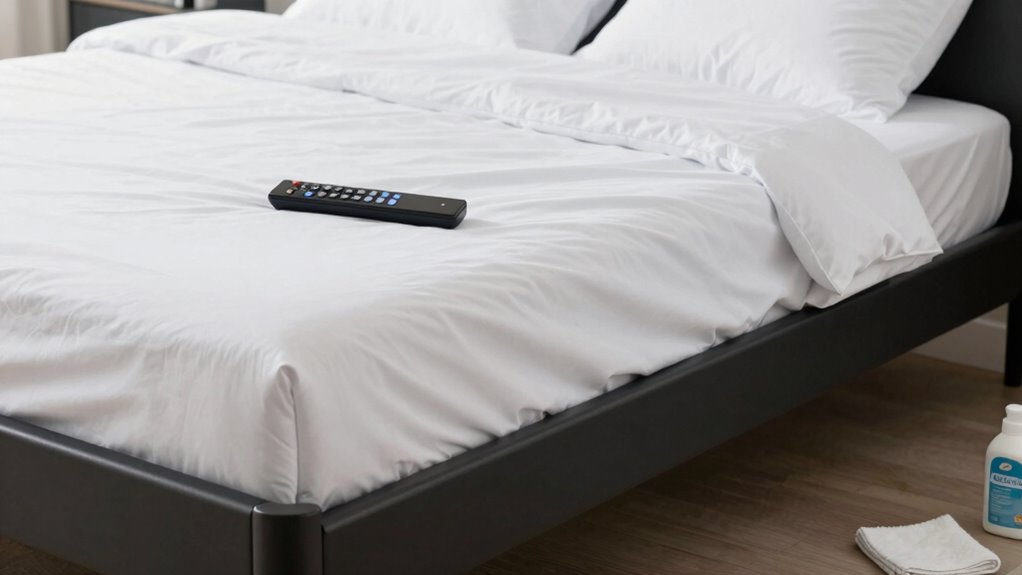
Regular maintenance is essential to keep your adjustable bed functioning smoothly over time. Proper bed frame maintenance ensures that all moving parts stay in good condition and operate quietly. Always check for loose bolts or screws and tighten them as needed. Pay attention to mattress compatibility; using the right mattress type prevents strain on the frame and prolongs its lifespan. Regularly clean the bed frame and lubricate joints if recommended by the manufacturer. Avoid overloading the bed with excessive weight, which can strain motors and mechanisms. Additionally, inspect electrical cords for damage to prevent hazards. By following these steps, you’ll maintain ideal performance and extend your bed’s longevity. Staying proactive with maintenance ensures your investment continues to support restful, healthy sleep for years to come.
Enhance Sleep Quality With Bedding and Accessories

To truly improve your sleep quality, selecting the right bedding and accessories makes a considerable difference. Your choice of mattress materials impacts comfort, support, and temperature regulation, which are essential for restful sleep. Opt for breathable fabrics like cotton or linen to enhance comfort and keep you cool. Bedding aesthetics also play a role in creating a calming environment; choose colors and patterns that promote relaxation. Layer your bed with a quality mattress protector and cozy blankets to add comfort and protection. Using supportive pillows tailored to your sleep position can reduce discomfort and improve alignment. Small adjustments—like soft sheets or a weighted blanket—can markedly elevate your sleep experience, making your adjustable bed a true haven for restorative rest.
Expert Tips for Maximizing Recovery With Your Adjustable Bed

Adjustable beds offer personalized support that can substantially enhance your recovery, but maximizing their benefits requires some strategic adjustments. To do so, focus on optimizing your sleep hygiene and bedtime routines. Confirm your bed position supports proper spinal alignment and reduces pressure points. Maintain a consistent sleep schedule to reinforce your body’s natural rhythms. Incorporate relaxing activities before bed, such as gentle stretches or deep breathing, to signal your body it’s time to unwind. Avoid screens and caffeine close to bedtime, which can disrupt sleep quality. Additionally, experiment with different bed angles to find what promotes the most restful recovery. Remember, small adjustments can lead to significant improvements in sleep quality and recovery outcomes.
Frequently Asked Questions
How Often Should I Adjust My Bed for Optimal Recovery?
You should adjust your bed as needed, ideally once or twice a day, to support good sleep hygiene and comfort. Pay attention to your body’s signals and experiment with different positions to find what promotes ideal recovery. Confirm your mattress compatibility with the adjustable frame, so adjustments remain smooth and effective. Regular tweaking helps maintain proper spinal alignment, reduces discomfort, and enhances your overall sleep quality for better recovery.
Can I Customize Multiple Sleep Positions on My Adjustable Bed?
Yes, you can customize multiple sleep positions on your adjustable bed. In fact, over 60% of users set up their beds with different custom positions for various comfort needs. You can easily save and switch between multiple settings, tailoring your sleep environment to suit your preferences. This flexibility ensures you get ideal support and comfort, whether you’re reading, watching TV, or sleeping, making your sleep experience more personalized and restful.
Are There Specific Settings for Side Sleepers Versus Back Sleepers?
Yes, adjustable beds often have specific settings for side and back sleepers. For side sleepers, you should elevate the bed’s head and foot slightly, ensuring your sleep posture keeps your spine aligned and your pillow properly supporting your neck. Back sleepers benefit from a flatter position with a slight incline, maintaining good pillow alignment. Experiment with these settings to find the most comfortable sleep posture, reducing pressure points and improving recovery.
How Do I Program or Save Preferred Bed Positions?
Did you know that 85% of adjustable bed users find personalized settings improve sleep quality? To program or save your preferred bed positions, start by adjusting your bed to your ideal setup. Then, use the remote control setup feature to save this position in the bed position memory. Simply press and hold the designated button until you hear a beep, confirming your position is stored for easy access anytime.
What Safety Precautions Should I Follow When Adjusting the Bed?
When adjusting your bed, prioritize bed safety by staying clear of moving parts and keeping hands and feet away from the bed’s mechanisms. Follow adjustment tips like moving slowly, checking for obstacles, and making certain the bed is on a flat, stable surface. Always read the manufacturer’s instructions, and if you feel unsure, consult the user manual or contact customer support. Safety first guarantees a comfortable, injury-free experience.
Conclusion
Think of your adjustable bed like a finely tuned instrument—when all the settings work together, you get a symphony of restful sleep and quick recovery. Just like a musician adjusts their instrument for the perfect sound, tweaking your bed’s position can transform your nights. Once you find that sweet spot, you’ll wake up feeling refreshed and ready to take on the day. With a little practice, your bed becomes your personal sanctuary for true recovery.