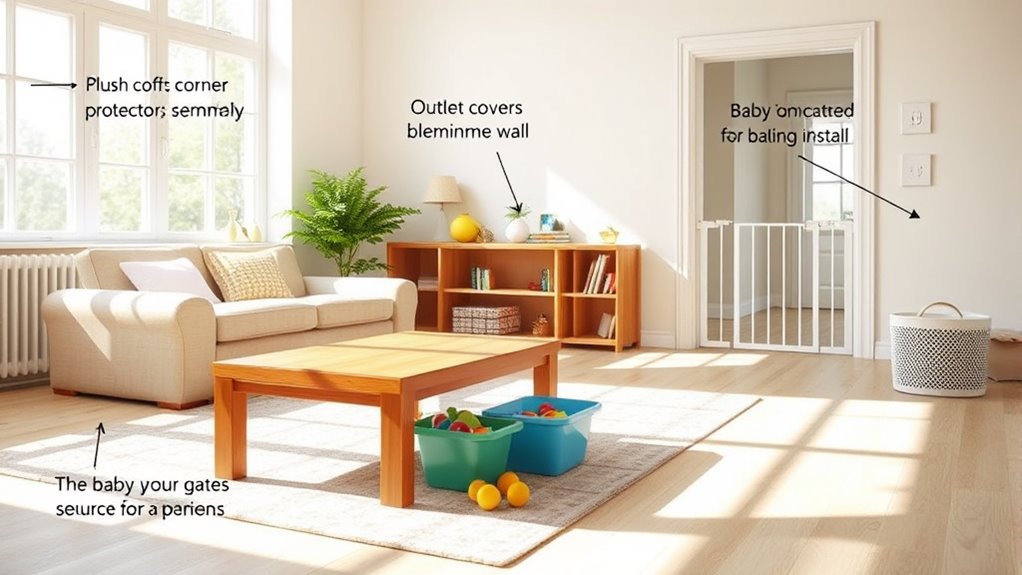

To childproof your home room-by-room, start by securing furniture and anchoring tall pieces to the wall to prevent tipping. Cover outlets with safety plugs and keep cords out of reach. In the kitchen, store sharp objects, use safety latches on cabinets, and never leave hot food unattended. In bathrooms, use non-slip mats and keep medicines out of reach. Install safety gates at stairways, and keep small toys or batteries away from children. Continue exploring each area for more safety tips.
Key Takeaways
- Secure tall furniture and heavy items to walls in all rooms to prevent tipping injuries.
- Install safety locks on cabinets, drawers, and appliances containing hazardous objects.
- Cover electrical outlets with safety plugs and keep cords out of children’s reach.
- Use non-slip mats, install grab bars, and prevent slips in bathrooms and kitchens.
- Keep small objects, toys, and choking hazards away from children’s access in every room.
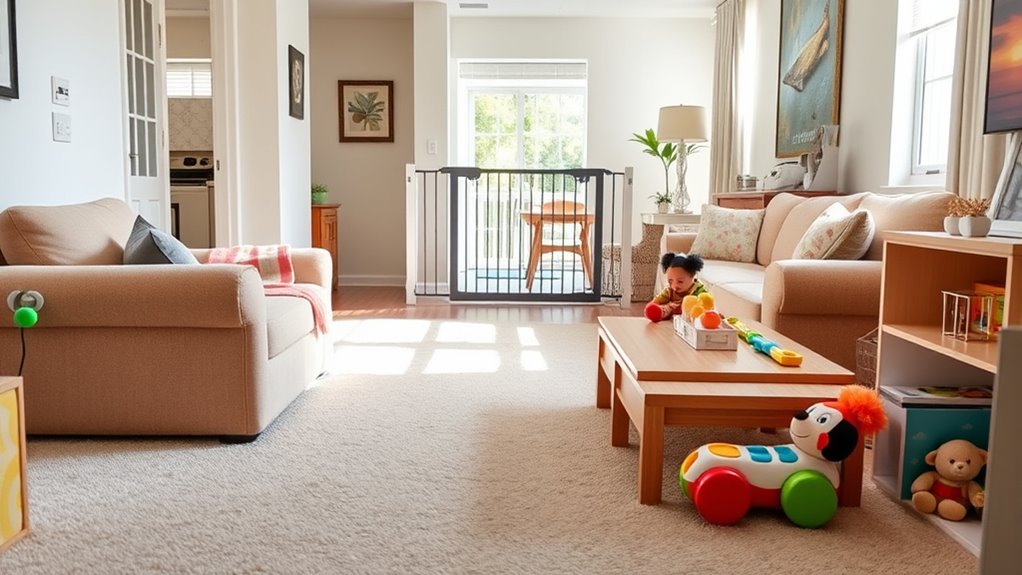
Childproofing your home is vital once your little one starts exploring on their own. At this stage, your primary goal is to create a safe environment where accidents are less likely to happen. Start by focusing on areas where hazards are most common, such as the living room, kitchen, and bedrooms. One of the most important aspects is electrical safety. Cover all unused outlets with safety plugs and ensure that cords are out of reach. Avoid running cords across walkways or under rugs, as children might pull on them or trip over them. Consider installing outlet covers that are difficult for small hands to remove, and keep appliances unplugged when not in use to prevent accidental shocks. Using self watering plant pots with child-safe materials can also be part of a safe home environment, especially for homes with young children. Furniture stability is another vital concern. Tall dressers, bookshelves, and TVs should be anchored securely to the wall to prevent tipping if your child pulls or climbs on them. Regularly check that furniture remains stable, especially after moving or rearranging items. Use brackets and straps designed for furniture anchoring, and avoid placing heavy objects on top of unstable furniture. This step minimizes the risk of furniture falling and causing injury. Moving into the kitchen, keep sharp utensils, small objects, and cleaning supplies out of reach. Use safety latches on cabinets and drawers containing hazardous items. Never leave hot food or liquids unattended on counters, and ensure stove knobs are turned off or have protective covers. Applying safety latches on appliances like ovens and microwave doors adds an extra layer of security. In the bathroom, store medicines, razors, and cleaning products in high cabinets or locked drawers. Install non-slip mats in the bathtub and on bathroom floors to prevent slips and falls. Keep toilet lids closed when not in use, and consider using toilet lock covers to prevent accidental drowning or misuse. In bedrooms and play areas, keep small toys, batteries, and other choking hazards out of reach. Use safety gates at doorways or staircases to control access to potentially dangerous areas. Cover all electrical outlets, secure cords, and ensure that furniture is stable and anchored properly. Regularly inspect these areas for hazards, and teach your child basic safety rules as they grow older. Childproofing is an ongoing process, so stay vigilant and adapt your safety measures as your child develops new skills. By focusing on electrical safety, furniture stability, and securing hazardous items, you can make your home a much safer place for your little explorer.
Frequently Asked Questions
When Should I Start Childproofing My Home?
You should start childproofing your home as soon as your baby becomes mobile, usually around 6 months old. At this stage, they’re curious and enthusiastic to explore. Install baby gates at stairways and doorways, and use outlet covers to prevent electrical shocks. Doing this early ensures your little one stays safe, giving you peace of mind while they grow and discover their environment.
How Do I Childproof Homes With Multiple Levels?
Think of your multi-level home as a castle with secret passages; you need to secure every door and stairwell. To guarantee stairs safety, install gates at the top and bottom of each staircase, and add multi-level barriers where needed. Regularly check for loose railings or hazards, just like a vigilant knight. This way, you protect your little explorer from falls and keep their adventures safe across all levels.
Are There Specific Childproofing Products for Different Age Groups?
You should choose age-appropriate products and safety gear tailored to your child’s development stage. For infants, use safety gates and socket covers, while older kids benefit from corner protectors and cabinet locks. Always select childproofing items designed for their specific age group to guarantee maximum safety. Regularly update and adjust your safety measures as your child grows, keeping their environment secure and age-appropriate.
How Can I Childproof a Rental Property?
Did you know that 60% of accidents happen at home? To childproof a rental property, focus on rental safety by using removable safety products like outlet covers and corner protectors. Always check lease considerations first—some landlords restrict permanent changes. Communicate with your landlord about safety upgrades, and prioritize portable solutions to keep your little one safe without risking your security deposit.
What Are Cost-Effective Methods to Childproof on a Budget?
To achieve budget safety, you can use DIY solutions to childproof your home without overspending. Start by securing furniture with inexpensive straps, covering electrical outlets with DIY covers, and using household items like corner protectors made from soft materials. Reorganize items to keep small or dangerous objects out of reach. These simple, cost-effective methods help create a safer environment for your child while saving money.
Conclusion
Now, picture your home as a safe haven, where little hands can explore freely without worry. With each door latch, corner cushion, and outlet cover in place, you create a cozy playground of safety and discovery. Your careful efforts turn every room into a welcoming space where your child can grow, learn, and giggle. By childproofing your home, you’re not just protecting them—you’re giving them the freedom to explore with confidence and joy.