To choose the right flooring for your home, consider your lifestyle, the space’s activity level, and your eco-values. For high-traffic areas, opt for durable materials like tile or vinyl; for cozy bedrooms, softer options like cork or carpet work well. Balance style, maintenance, and budget, and explore sustainable choices like bamboo or reclaimed wood to support environmental goals. Keep these factors in mind to find the best fit—more tips are just ahead.
Key Takeaways
- Assess your lifestyle, activity levels, and maintenance preferences to match flooring durability and ease of care.
- Consider the specific area’s needs, such as high-traffic zones or cozy bedrooms, for appropriate material choices.
- Prioritize eco-friendly options like bamboo, cork, or reclaimed wood to align with sustainability values.
- Balance aesthetic appeal and style with your budget to find a visually pleasing yet affordable flooring solution.
- Evaluate the environmental impact of materials to make responsible, informed decisions supporting environmental preservation.
Selecting the right flooring for your home can considerably impact its look, feel, and functionality. When choosing flooring, you’ll want to contemplate sustainable alternatives that align with your eco-friendly values. These options, like bamboo, cork, and reclaimed wood, not only reduce environmental impact but also add unique character to your space. Bamboo grows quickly and renews faster than traditional hardwoods, making it a popular sustainable choice. Cork, harvested from the bark of cork oak trees, is renewable and provides natural insulation, making it a cozy and eco-conscious option. Reclaimed wood, salvaged from old structures, offers vintage charm while giving new life to materials that might otherwise go to waste. By opting for these sustainable alternatives, you contribute to environmental preservation and create a stylish, responsible home.
Another key aspect to think about is maintenance considerations. Different flooring materials demand varying levels of upkeep, so you need to select one that fits your lifestyle. For example, hardwood floors are beautiful and timeless but require regular polishing and can be sensitive to moisture and scratches. If you prefer low-maintenance options, laminate or luxury vinyl planks might be better choices. They are durable, resistant to stains and scratches, and easier to clean with just a quick sweep or mop. Carpet, while comfortable and warm, can trap dust and allergens, making it less ideal if you have allergies or pets. Tile and stone floors are highly durable and easy to clean, but they can be cold and may require sealing or re-grouting over time. Considering your daily routines, activity levels, and willingness to perform maintenance will help you narrow down the best flooring material. Additionally, understanding the environmental impact of different options can guide you toward more sustainable choices that benefit both your home and the planet.
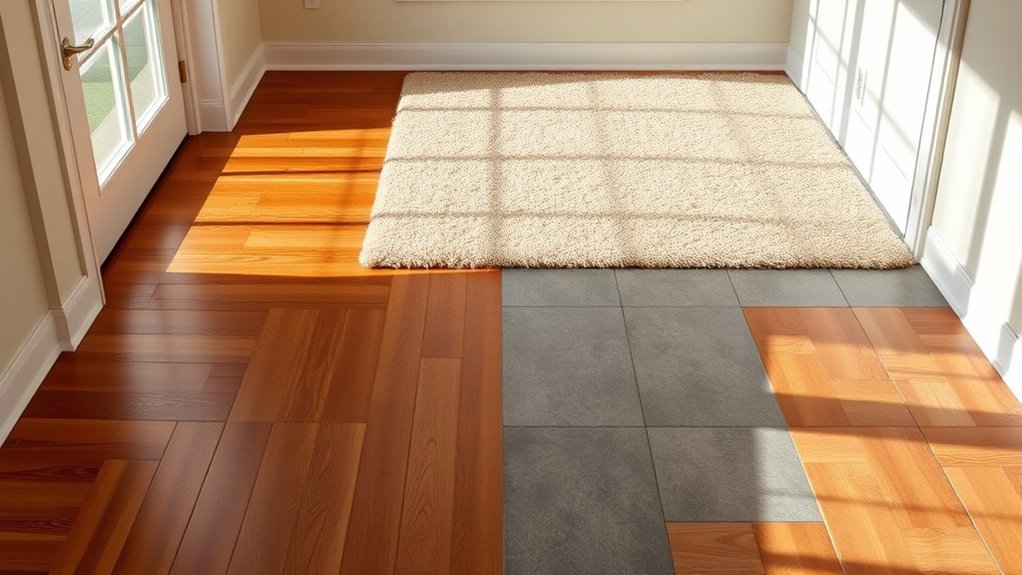
Furthermore, think about how your flooring will perform in different areas of your home. For high-traffic zones like entryways and kitchens, you’ll want sturdy, easy-to-clean options such as tile or vinyl. In bedrooms or living rooms, you might favor softer, warmer materials like carpet or cork. The right choice balances durability, comfort, and maintenance requirements, ensuring your flooring remains attractive and functional for years to come. Remember, selecting flooring isn’t just about looks; it’s about choosing a material that fits your lifestyle, values, and budget. Taking the time to weigh sustainable alternatives and maintenance considerations will help you make an informed decision that adds value and comfort to your home.
As an affiliate, we earn on qualifying purchases.
Frequently Asked Questions
How Does Flooring Impact Indoor Air Quality?
Flooring substantially impacts indoor air quality by influencing airborne allergens and indoor pollutant sources. If you choose materials with VOCs or that trap dust and pet dander, it can worsen air quality. Opt for flooring that resists allergens and emits low or no VOCs to keep your indoor environment healthier. Regular cleaning and proper ventilation also help reduce airborne allergens, making your home safer and more comfortable.
What Are the Eco-Friendly Flooring Options Available?
Ever wondered how to reduce your environmental impact while upgrading your home? You can choose eco-friendly flooring options like sustainable materials such as bamboo, cork, or reclaimed wood, which renew quickly and use fewer resources. Look for low VOC options to improve indoor air quality and minimize harmful emissions. These choices not only support sustainability but also create a healthier living space for you and your family.
How Often Should Flooring Be Professionally Maintained or Replaced?
You should maintain your flooring regularly to extend its lifespan, typically cleaning and inspecting it every few months. For high-traffic areas, consider professional maintenance annually. Replace flooring when signs of significant damage or wear appear, usually after 10-20 years, depending on the material. Keeping up with maintenance frequency ensures your floors stay beautiful and functional, delaying the need for replacement and maximizing your investment.
What Are the Best Flooring Choices for Homes With Pets?
When selecting flooring for homes with pets, you want pet-proof and scratches-resistant options. Consider vinyl or luxury vinyl planks, which are durable, easy to clean, and resistant to scratches. Laminate flooring also works well, offering scratch resistance and affordability. Avoid carpets, as they trap pet hair and stains. Ultimately, choose flooring that withstands pet activity, is comfortable for your pets, and maintains your home’s aesthetic.
How Do Different Flooring Types Affect Home Resale Value?
Imagine walking through a home and noticing the flooring types immediately—they influence resale value more than you think. Different flooring types, like hardwood or tile, can boost your home’s appeal and resale value, while carpet may do the opposite. The right choice depends on your market and preferences, but generally, durable, stylish flooring enhances your home’s worth, making it more attractive to buyers. So, choose wisely to maximize resale value.
Conclusion
Choosing the right flooring can truly transform your home. Remember, over 70% of homeowners say that their flooring choice considerably impacts their satisfaction with their living space. By considering your lifestyle, budget, and style preferences, you can select a floor that’s both beautiful and functional. Don’t rush the decision—taking the time to choose wisely ensures you’ll enjoy your new floors for years to come. Your perfect home starts with the right foundation!