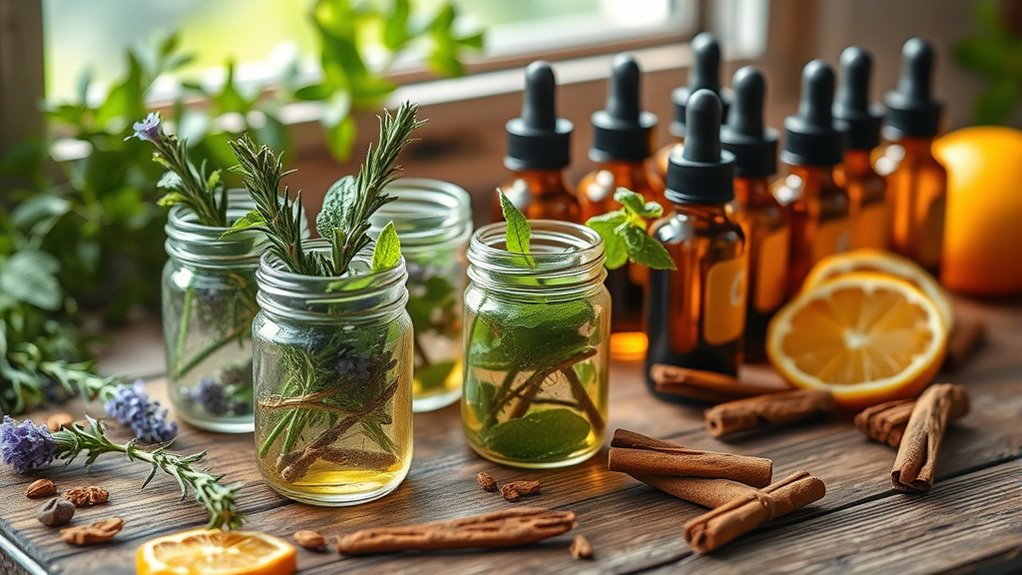

To make natural air fresheners, combine essential oils like lavender, citrus, or eucalyptus with herbs such as rosemary, basil, or mint. Use simple methods like mixing oils with water in a spray bottle or soaking bamboo sticks for a diffuser. You can also simmer herbs and citrus peels on the stove for a natural aroma boost. Experiment with different blends to customize your space. Keep exploring to discover even more revitalizing ideas and tips.
Key Takeaways
- Combine essential oils like lavender, citrus, or eucalyptus with herbs such as rosemary or basil for natural, personalized scents.
- Use water-based spray bottles or reed diffusers to disperse essential oil and herb blends throughout your home.
- Simmer herbs and citrus peels on the stove to naturally release fresh fragrances without chemicals.
- Start with a few drops of essential oils and adjust to achieve your preferred scent strength and balance.
- Natural air fresheners are safer for families and pets, promoting a healthier, chemical-free home environment.
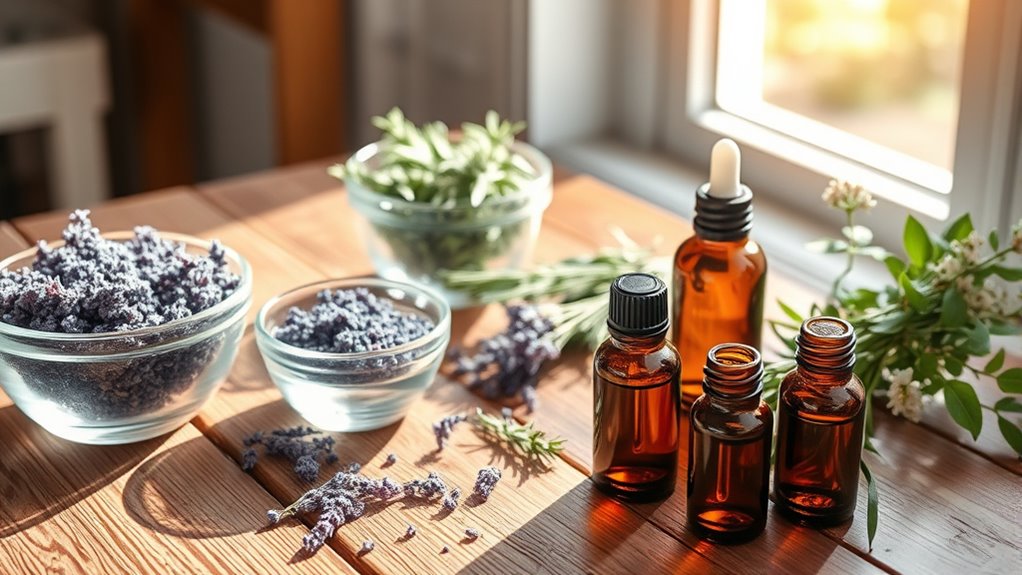
Freshening up your home doesn’t have to involve synthetic sprays or artificial fragrances. Instead, you can create your own natural air fresheners using simple ingredients like essential oils and herbs. These options not only smell great but also add a touch of wellness to your space. Start by exploring essential oil blends—carefully chosen combinations of oils that work together to produce a balanced, inviting aroma. For example, mixing lavender with citrus oils like orange or lemon creates a calming yet uplifting scent. You might also try blending eucalyptus with peppermint for a revitalizing, invigorating aroma that clears your mind and enhances the atmosphere.
Create natural air fresheners with essential oils like lavender, citrus, eucalyptus, and peppermint for a calming, invigorating home scent.
Herbal scent combinations are another fantastic way to infuse your home with natural fragrance. Fresh herbs like rosemary, thyme, or basil can be used directly or in dried form to add subtle, earthy notes to your air fresheners. You can combine these herbs with essential oils to craft personalized blends that suit your mood or the season. For instance, a mix of rosemary and lemon oil offers a clean, herbal scent that’s perfect for kitchens or bathrooms. Alternatively, basil paired with sweet orange oil creates a warm, inviting aroma that’s ideal for living rooms.
Making your own air fresheners with essential oils and herbs is straightforward. You can start with a simple spray bottle filled with water and add a few drops of your favorite essential oil blend. Shake well before each use, and spray lightly around your home. For a longer-lasting option, try creating a reed diffuser by soaking bamboo sticks in a mixture of carrier oil and essential oils. The reeds absorb the scent and release it gradually, providing a consistent aroma. You can also simmer herbs and citrus peels on the stove, releasing natural fragrances into the air without any chemicals.
The key to successful DIY natural air fresheners is balancing your scents. Don’t overdo it with the oils—start with a few drops and adjust as needed. Experiment with different herbal scent combinations to find what makes your space feel most welcoming and relaxing. Keep in mind that fresh herbs like mint and basil can be paired with citrus or floral essential oils to create unique, personalized blends. These natural options are safer for your family and pets and free from synthetic chemicals, making your home healthier and happier.
Incorporating essential oil blends and herbal scent combinations into your routine keeps your home smelling invigorating and vibrant without relying on artificial fragrances. With a little experimentation and some simple ingredients, you can craft custom scents that reflect your style and promote a calming environment.
Frequently Asked Questions
How Long Do Homemade Air Fresheners Typically Last?
Homemade air fresheners usually last about one to two weeks, depending on their shelf life and scent longevity. You should expect the scent to gradually fade over time, especially if exposed to sunlight or heat. To maximize freshness, store them in a cool, dark place. Refresh your air freshener by adding more essential oils or herbs as needed, and remember that homemade options often have a shorter shelf life than commercial products.
Are Essential Oils Safe for Pets in Air Fresheners?
Essential oils can pose risks to pets, so you should be cautious with pet safety when using them in air fresheners. Some oils, like tea tree, citrus, and eucalyptus, are toxic to animals. Always research essential oil risks and opt for pet-safe options. Keep air fresheners well-ventilated and out of your pet’s reach to minimize any potential health hazards. When unsure, consult your veterinarian for safe choices.
Can I Mix Different Herbs for a Stronger Scent?
Yes, you can mix different herbs for a stronger scent. Herb blending allows you to combine herbs like rosemary, lavender, and mint to create a unique, layered aroma. Scent layering enhances the overall fragrance, making it more intense and complex. Experiment with small amounts first, adjusting until you find the perfect balance. This approach helps you craft a personalized, natural air freshener that’s both fragrant and effective.
What Are the Best Storage Methods for DIY Air Fresheners?
You should store your DIY air fresheners in airtight containers or glass jars to keep their scent fresh and prevent evaporation. Make sure the lids seal tightly to avoid air exposure, which can diminish the fragrance over time. Store the containers in a cool, dark place away from direct sunlight and heat sources. This helps preserve the essential oils and herbs, ensuring your natural air fresheners stay potent and effective longer.
Are There Any Allergies Associated With Certain Herbs or Oils?
You should be aware of herb allergy risks and essential oil sensitivities, as some people may react to certain herbs or oils used in air fresheners. Always do a patch test before extensive use and start with small amounts. If you notice irritation, discontinue use. Consulting with a healthcare professional can help identify specific sensitivities, ensuring you enjoy your homemade air fresheners safely without allergy issues.
Conclusion
Now that you know how to craft your own natural air fresheners with essential oils and herbs, you can easily bring a fresh, inviting aroma into your home. Imagine walking into a space that’s as fragrant as a Victorian garden, yet free of synthetic chemicals. These simple, eco-friendly solutions help you breathe easier and enjoy a cozy atmosphere every day. So, get creative and transform your home into a fragrant sanctuary—your senses will thank you!