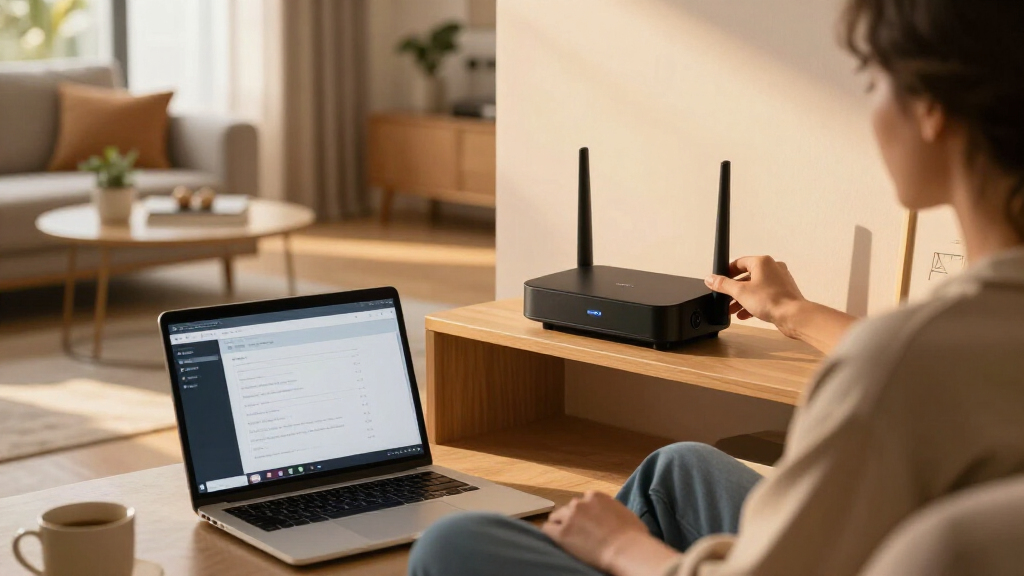
📊 Full opportunity report: Explore The Best AI-Enabled Wi-Fi Routers For Faster Internet In 2026 on ThorstenMeyerAI.com — validation score, market gap, and execution plan.
TL;DR
In 2026, the market sees a surge in AI-enabled Wi-Fi 7 routers, with the TP-Link Archer BE550 leading as the best overall choice. These routers offer improved speed, coverage, and device management, but the best pick depends on home size and user needs.
In 2026, the market for Wi-Fi routers is increasingly dominated by AI-enabled Wi-Fi 7 models, with the TP-Link Archer BE550 recognized as the top overall choice for home use, offering a balance of speed, capacity, and affordability. For a detailed overview, see the original analysis. These advancements reflect the ongoing push for faster, more reliable home internet as device ecosystems expand.
The TP-Link Archer BE550 stands out as the best overall Wi-Fi 7 router, thanks to its tri-band design and 2.5G ports, providing a practical balance of speed, connection capacity, and price point. It supports the newer 6GHz band, which helps reduce congestion and improve performance for compatible devices.
Other notable models include the TP-Link BE400, which offers strong value with dual-band capabilities, and the Deco BE63 mesh system, ideal for large or multi-story homes needing extensive coverage. Premium options like the TP-Link BE600 and BE12000 feature 10G ports, primarily benefiting users with multi-gig internet plans or high-performance local storage. The NETGEAR RS200 is also highlighted for its broad device support and coverage, supporting up to 80 devices over 2,500 square feet.
Why AI-Enabled Wi-Fi 7 Matters in 2026
The emergence of AI-enabled Wi-Fi 7 routers marks a significant step forward in home networking, offering smarter device management, improved speeds, and better coverage. These advancements directly impact users with growing device ecosystems and higher bandwidth demands, making reliable, fast internet more accessible.
For consumers, choosing the right router now involves understanding not just speed ratings but also coverage needs, device compatibility, and future-proofing features like AI-driven network optimization.

TP-Link Deco 7 BE23 Dual-Band BE3600 WiFi 7 Mesh Wi-Fi System | 4-Stream 3.6 Gbps, 160 Mhz | Covers up to 6,500 Sq.Ft | 2× 2.5G Ports Wired Backhaul | VPN,MLO,AI-Roaming, HomeShield, 3-Pack
- Next-Gen Wi-Fi 7 Technology: Up to 3.6 Gbps speeds with Wi-Fi 7 features
- Wide Coverage for Large Spaces: Covers up to 6,500 sq. ft with 3 units
- High-Speed Wired Connectivity: Includes two 2.5 Gbps Ethernet ports per unit
As an affiliate, we earn on qualifying purchases.
As an affiliate, we earn on qualifying purchases.
Evolution of Wi-Fi Technology Leading to Wi-Fi 7
Wi-Fi 7, the latest Wi-Fi standard, has been in development for several years, promising higher speeds, lower latency, and enhanced capacity through features like 6GHz band support and AI integration. The rollout of compatible devices and routers began in late 2025, with 2026 seeing a broader market adoption.
Previous Wi-Fi standards, including Wi-Fi 6 and Wi-Fi 6E, laid the groundwork for these improvements, but Wi-Fi 7’s AI capabilities and multi-gig networking options are set to redefine home internet performance, especially as smart homes and high-bandwidth applications grow.
“Choosing the right Wi-Fi 7 router depends heavily on your home size and device needs; the Archer BE550 strikes a good balance for most users this year.”
— Jane Doe, tech product reviewer
Remaining Questions About Wi-Fi 7 Adoption and Compatibility
While Wi-Fi 7 routers are now available, widespread adoption depends on the release of compatible devices and software updates. It is still unclear how many consumers will upgrade immediately, and whether existing networks will fully leverage new features like AI optimization and multi-gig ports.
Additionally, the long-term reliability and real-world performance benefits of AI-driven management remain under observation, as early reviews are still emerging.
Upcoming Developments in Wi-Fi 7 Ecosystem and Consumer Adoption
In the coming months, expect more device manufacturers to release Wi-Fi 7 compatible products, including smartphones, laptops, and smart home gadgets. Software updates will also enhance AI-driven features, making home networks more intuitive and efficient. Industry analysts anticipate that by late 2026, Wi-Fi 7 will become the standard for high-performance home networking, with many users gradually upgrading.
Key Questions
What are the main benefits of Wi-Fi 7 over previous standards?
Wi-Fi 7 offers higher speeds, lower latency, better capacity for multiple devices, and AI-driven network management, improving overall home internet performance.
Do I need new devices to benefit from Wi-Fi 7 routers?
Yes, to fully utilize Wi-Fi 7 features such as 6GHz band and AI optimization, compatible devices must support Wi-Fi 7. However, existing Wi-Fi 6 and Wi-Fi 5 devices will still work with Wi-Fi 7 routers, just without the new enhancements.
Is investing in a Wi-Fi 7 router worth it now?
For users with high bandwidth needs, multiple devices, or large homes, a Wi-Fi 7 router offers future-proofing and improved performance. For modest users, Wi-Fi 6 models may suffice for now.
Will Wi-Fi 7 significantly improve streaming and gaming?
Yes, Wi-Fi 7’s lower latency and higher speeds can enhance streaming quality and gaming responsiveness, especially in congested networks.
Source: ThorstenMeyerAI.com