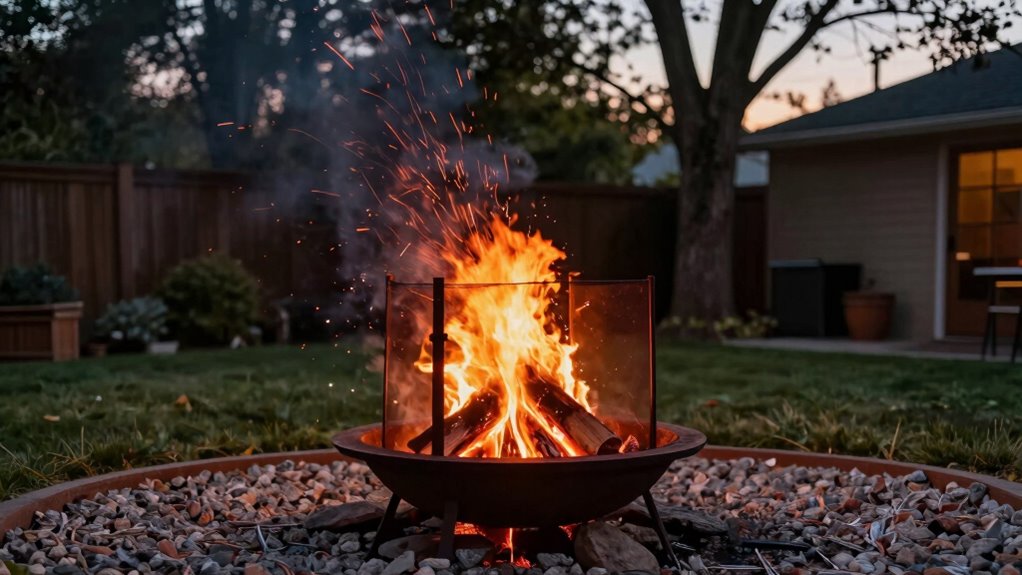

To guarantee fire pit safety at home, you need to control wind and sparks effectively. Always monitor weather conditions before igniting your fire, use spark guards, and keep a fire extinguisher nearby. Set up a safe zone—at least 10-20 feet from structures—and use non-flammable materials like bricks or gravel. Regularly check safety tips to prevent accidents, and learn emergency procedures to handle unexpected fires. Continue exploring to master all safety measures and protect your loved ones.

Get the little things that make your day delivered free with Prime
- Fast, free delivery on millions of items
- Prime Video, Amazon Music and more included
- Member-only deals all year
Key Takeaways
- Maintain a safe zone at least 10-20 feet from structures and flammable materials, using fire-resistant boundaries like bricks or stones.
- Monitor weather conditions and wind before and during fire pit use to prevent sparks from spreading.
- Use spark guards and windbreak barriers to contain embers and reduce fire risk.
- Keep fire safety tools, such as extinguishers or hoses, nearby and ensure the fire is fully extinguished after use.
- Supervise children and avoid placing fire pits near trees, dry grass, or combustible objects to minimize fire hazards.
As an affiliate, we earn on qualifying purchases.
Why Wind and Sparks Are a Big Deal and How to Keep Everyone Safe
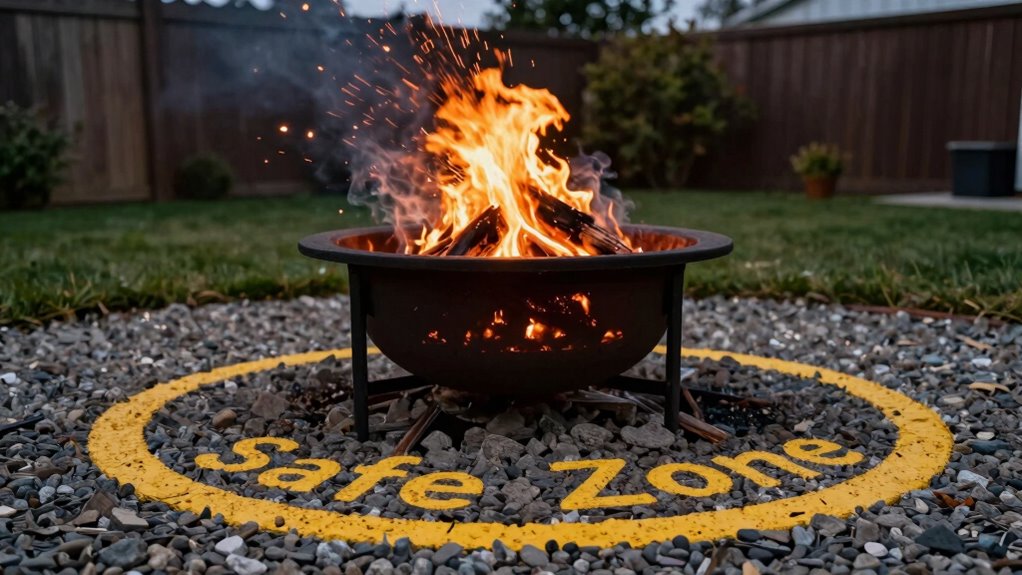
Wind and sparks can quickly turn a cozy fire pit into a dangerous situation if you’re not careful. Strong gusts can blow sparks beyond the fire pit’s boundaries, igniting nearby foliage or furniture. Wearing fire resistant clothing can offer some protection if sparks do land on you, but it’s best to prevent sparks from escaping altogether. Setting up windbreak barriers around your fire pit helps block gusts and keeps sparks contained. These barriers, whether made of glass, metal, or other fire-safe materials, create a barrier that minimizes the risk of accidental fires. Always check the weather before starting your fire, and use windbreaks to reduce wind’s impact. Staying attentive to wind conditions and controlling sparks is vital for keeping everyone safe around your fire pit.
How to Manage Wind Conditions and Sparks for Fire Pit Safety
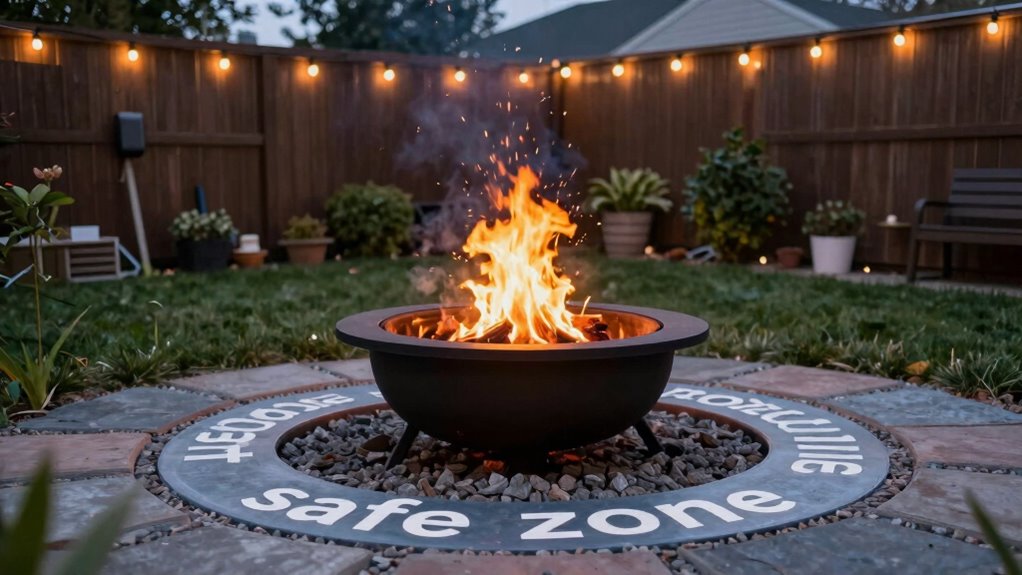
Monitoring weather conditions before and during your fire pit use helps prevent unexpected gusts from causing problems. Wind management is key to controlling sparks and maintaining safety. To minimize risks, position your fire pit away from trees, structures, or dry grass. Use a spark guard to contain flying embers and reduce fire spread. Keep a fire extinguisher nearby for quick response. Being aware of fire safety guidelines can further enhance your safety practices. Additionally, understanding Free Floating principles can help in designing a backyard that minimizes fire hazards while maximizing enjoyment. Recognizing the importance of proper filter sizing and flow can also contribute to safer, more efficient outdoor fires by ensuring combustible debris is minimized and airflow is optimized. Incorporating smart safety devices can provide real-time alerts and help you respond swiftly to changing conditions. Regularly inspecting your fire pit equipment ensures that all safety features are functioning correctly, reducing the risk of accidents.
Here’s a quick guide:
| Wind Level | Action | Spark Control Method |
|---|---|---|
| Calm | Enjoy safely | Use spark screens |
| Breezy | Monitor closely | Clear surrounding debris |
| Windy | Postpone or relocate | Avoid open flames |
Stay attentive, and adapt your wind management practices to keep your fire safe.
What’s the Best Way to Set Up a Safe Zone Around Your Fire Pit?
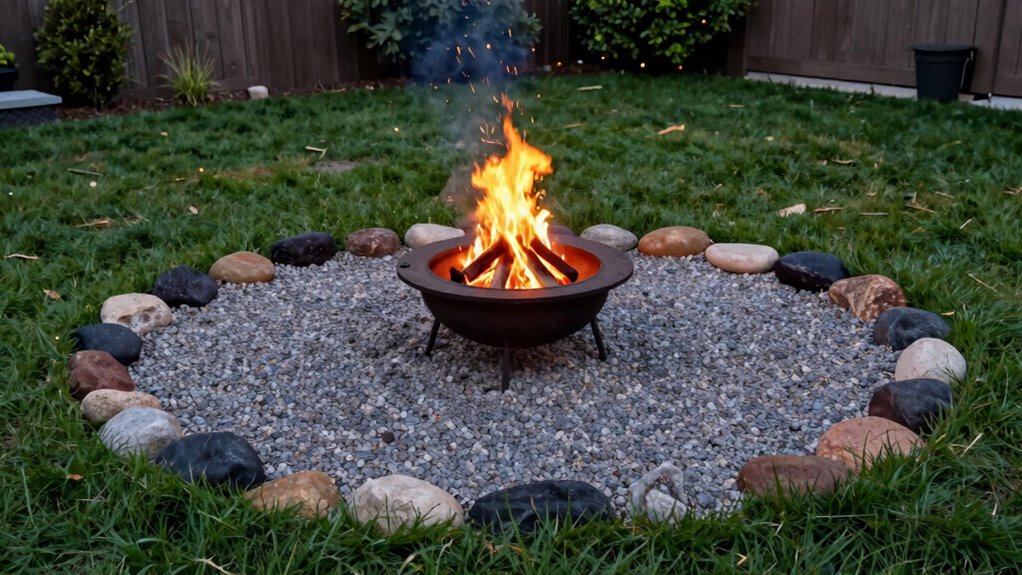
Creating a safe zone around your fire pit is essential for preventing accidents and ensuring everyone’s safety. Start by carefully choosing your fire pit placement, keeping it at least 10-20 feet away from your home, trees, and any flammable materials. Establish clear safety zone boundaries by marking a radius around the fire pit that’s free of furniture, plants, and debris. This space should be wide enough to prevent sparks or embers from reaching anything combustible. Use pavers, gravel, or fire-resistant materials to define the area if needed. Remember, the goal is to create a perimeter that keeps sparks contained and gives everyone ample space to enjoy the fire safely. Proper setup minimizes risks and promotes responsible fire pit use. Electric bikes can produce significant horsepower, so ensuring a safe distance and proper setup around your fire pit helps prevent any potential hazards related to sparks or embers. Additionally, understanding fire safety guidelines can further reduce the risk of accidents and ensure safe enjoyment. Incorporating herbalism principles can also remind us of the importance of natural safety measures, such as using fire-resistant plants or materials around the area. Incorporating elements of Native American cultural practices, such as traditional safety rituals, can also enhance awareness and respect for fire safety in outdoor settings. Being aware of the effects of wind and how it can carry sparks is crucial for adapting your safety measures in changing weather conditions.
Additional Fire Pit Safety Tips to Prevent Accidents and Fires
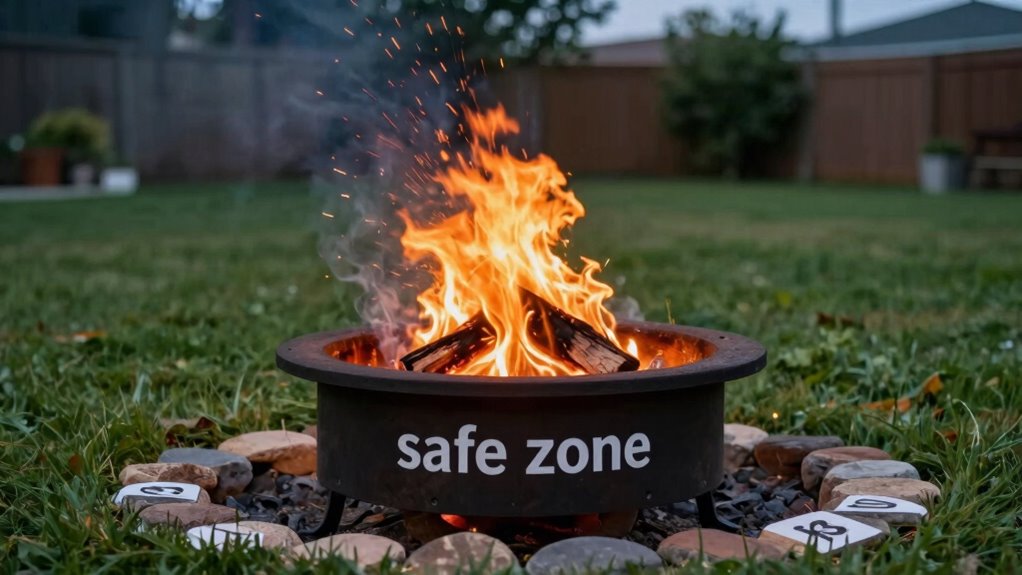
To keep your fire pit safe, make sure to stay vigilant and keep the area clear of debris and combustible materials. Use fire-resistant bricks or stones to build a sturdy, safe border that can contain sparks. Always supervise the fire, never leaving it unattended, to prevent accidents and potential fires. Additionally, considering safety regulations and local guidelines can help ensure your fire pit setup complies with community standards. Maintaining support vs boundaries when supervising children around the fire pit can also minimize risks and promote safe enjoyment.
Keep Fire Pit Clear
Keeping your fire pit clear of debris, leaves, and any combustible materials is essential for preventing accidental fires. Regular fire pit maintenance helps identify potential hazards and keeps the area safe. To maintain a safe environment, consider these tips:
- Remove leaves, twigs, and other debris before each use.
- Clear away outdoor decor or objects that could catch fire.
- Keep a fire extinguisher or hose nearby in case of emergency.
- Make certain the surrounding area is free of combustible materials for at least 10 feet.
- Using proper lighting can help you spot potential hazards around your fire pit area.
Use Proper Fire-Resistant Materials
Using fire-resistant materials around your fire pit is essential for preventing accidental fires and ensuring safety. When planning your fire pit area, choose materials like concrete, brick, or stone that withstand high heat and resist ignition. These fire resistant materials create a barrier that minimizes the risk of flames spreading to nearby surfaces or structures. Incorporate safety planning by placing the fire pit on a non-combustible surface and avoiding flammable materials nearby. Properly using fire-resistant materials not only reduces fire hazards but also makes cleanup easier and prolongs the life of your fire pit setup. The choice of durable, fire-resistant materials is crucial, as it directly impacts the safety and longevity of your setup. Using fire safety guidelines can help you optimize your fire pit area for maximum safety. Additionally, considering wind conditions and how they can affect sparks and flames is important for overall safety. Ensuring proper firebreaks around your fire pit can further prevent the spread of fire. Implementing proper maintenance routines, such as clearing away debris and inspecting materials regularly, can also significantly enhance safety. Always remember that smart safety planning, including the right choice of materials, is key to enjoying your fire pit responsibly and avoiding unnecessary accidents.
Never Leave Unattended Fires
Never leaving a fire pit unattended is one of the most important safety rules to prevent accidents and fires. Always stay nearby when your fire is burning to maintain spark control and respond quickly to any issues. Ignoring this rule increases the risk of sparks escaping or the fire spreading beyond your control. During burn bans, it’s essential to completely extinguish your fire, as restrictions are in place to prevent wildfires. To stay safe:
- Keep a fire extinguisher or garden hose close by.
- Never leave children or pets near the fire.
- Extinguish the fire completely before leaving.
- Monitor wind conditions and adjust or douse the fire if sparks fly.
- Regularly check fire safety equipment to ensure it’s in working order.
Additionally, be aware of wind conditions as they can significantly influence the spread of sparks and embers. Being mindful of fire behavior can help you anticipate and react to potential hazards more effectively. Also, understanding fire safety guidelines from local authorities can provide important information for safe fire pit use. Proper planning and awareness of capacity can help prevent dangerous situations and ensure your fire remains controlled. Following these tips helps prevent accidents and ensures your fire pit remains a safe and enjoyable feature.
How to Respond Quickly in an Emergency or Fire Outbreak
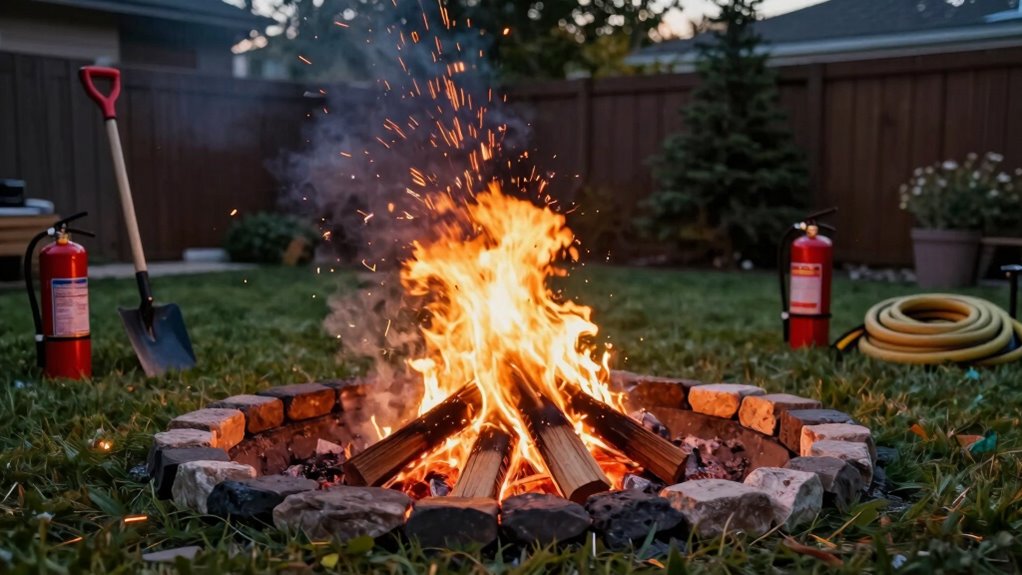
When a fire or emergency occurs, your first step is to recognize the signs early, like smoke, flames, or a strong odor. Act quickly to suppress the fire if you can, using a fire extinguisher or water, but always prioritize safety. Know your evacuation plan and get out immediately if the situation worsens or if you’re instructed to do so. Additionally, understanding cold sensation and temperature responses can help you stay calm and make better decisions in stressful situations. Being aware of piercing care and hygiene can also prevent infections that might complicate emergency responses or recovery efforts. Maintaining awareness of fire safety protocols is essential for minimizing risks during an incident. Recognizing fire behavior patterns can further improve your response time and effectiveness during an emergency.
Recognize Emergency Signs
How can you tell if a fire is spreading or if an emergency is worsening? Pay attention to key signs like increased smoke, faster flames, or a change in fire direction. Additionally, listen for the fire alarm, which signals a serious threat. If you notice anyone showing signs of distress, such as difficulty breathing or burns, prepare to administer first aid immediately. Here are four signs to watch for:
- Smoke billowing rapidly or changing direction
- Flames spreading beyond the initial area
- The fire alarm sounding loudly
- Visible sparks or embers flying outside the fire pit
Recognizing these signs helps you act quickly. Stay calm, evacuate if needed, and call emergency services. Your prompt response can make all the difference in keeping everyone safe. Early detection of fire hazards is crucial for preventing escalation and ensuring safety in emergency situations.
Immediate Fire Suppression
In the event of a fire or emergency, acting swiftly is essential to minimize damage and keep everyone safe. Your immediate response is critical for effective fire safety and emergency preparedness. First, if the fire is small and manageable, use a fire extinguisher suited for the type of fire. Remember the PASS technique: Pull, Aim, Squeeze, and Sweep. If the fire is growing or uncontrollable, evacuate immediately and call emergency services. Do not attempt to fight large fires alone. Keep a clear head and prioritize safety over containment. Having a fire safety plan in place helps you react quickly and confidently during emergencies. Being prepared ensures you can suppress minor fires promptly and prevent escalation, protecting your home and loved ones.
Evacuation Procedures
Quickly evacuating your home during a fire or emergency can make the difference between safety and disaster. Knowing your evacuation procedures and emergency exit routes guarantees you act swiftly. First, stay calm and avoid panicking. Second, alert everyone in the house and help children or those with mobility issues. Third, follow your pre-planned emergency exit routes, avoiding elevators and using stairs instead. Fourth, move directly to your designated safe zone outside the home. Keep your escape routes clear of obstacles and practice your evacuation procedures regularly. Remember, quick action saves lives. Familiarity with your emergency exit routes helps you respond efficiently during a crisis. Stay prepared, stay safe, and prioritize a smooth evacuation whenever necessary.
Essential Fire Pit Safety Checklist for Peace of Mind
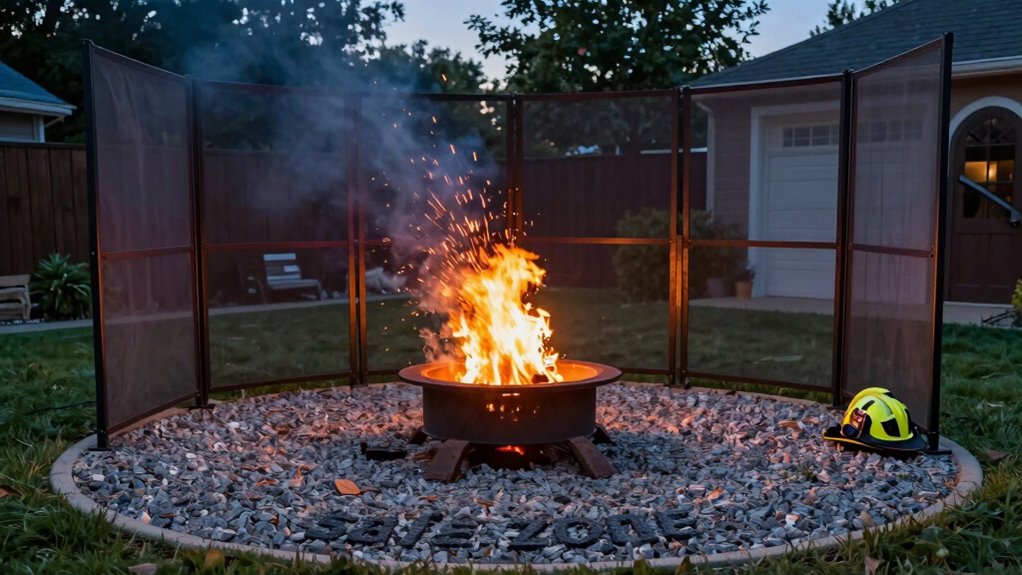
Ensuring fire pit safety starts with a clear, step-by-step checklist that helps you prevent accidents and enjoy your outdoor space peacefully. First, regularly inspect your fire pit for signs of wear, rust, or damage—proper fire pit maintenance keeps it safe and functional. Clear the area of combustible outdoor décor, like paper or fabric, that could catch fire easily. Always keep a fire extinguisher, hose, or bucket of water nearby in case of emergencies. Before lighting, check wind conditions to prevent sparks from spreading. Never leave the fire unattended, and ensure it’s fully extinguished before going inside. By following this checklist, you create a safer environment for everyone around your fire pit, allowing you to relax and enjoy your outdoor gatherings with peace of mind.
Frequently Asked Questions
Can Certain Types of Fire Pits Be Safer in Windy Conditions?
Yes, some wind-resistant pits are safer in windy conditions. You should look for fire pits with spark control devices, which help prevent sparks from escaping and causing accidents. These features decrease the risk of unwanted fires or injuries, especially when the wind picks up. Choosing a fire pit with sturdy construction and wind-resistant design guarantees you can enjoy your fire safely, even on gusty days.
How Often Should I Inspect My Fire Pit for Safety Hazards?
You should inspect your fire pit for safety hazards before each use and perform a thorough safety inspection schedule at least once a month. During these inspections, check for loose parts, corrosion, or cracks that could cause hazards. Regular fire pit maintenance helps prevent accidents and guarantees safe operation. Always clear the area of debris and ensure your fire pit is stable before lighting it to keep everyone safe.
Are There Specific Clothing Materials to Avoid Near a Fire Pit?
Think of your clothing as your armor when enjoying your fire pit. Avoid flammable fabrics like polyester, nylon, and lightweight silks, which can ignite easily and turn a cozy evening into a hazard. Instead, opt for protective clothing made of natural fibers like cotton or wool, which are less likely to catch fire. Staying mindful of your attire keeps you safe and lets you enjoy the warmth without worry.
What Safety Gear Is Recommended When Handling Sparks or Extinguishing Fires?
When handling sparks or extinguishing fires, you should wear fire-resistant gloves to safeguard your hands. Keep a fire extinguisher nearby—preferably a Class A or ABC type—to quickly put out flames if needed. Always stand at a safe distance, and verify your gear is in good condition before tending to the fire. These safety measures help prevent burns and control fires effectively.
How Can I Educate Children About Fire Pit Safety Effectively?
Did you know children are twice as likely to be injured around fire pits? To educate them effectively, start with engaging fire safety conversations that highlight the dangers. Use simple language and relatable stories. Always supervise children closely and set clear boundaries. Incorporate child supervision tips like keeping a safe distance and never touching sparks. Reinforce these lessons regularly to build their awareness and keep everyone safe during outdoor fires.
Conclusion
Remember, your safety around a fire pit is a delicate dance with nature’s unpredictable moments. By respecting wind, sparks, and the ‘safe zone,’ you’re not just protecting your space—you’re safeguarding loved ones’ lives and creating memories free of worry. Think of your fire pit as a trusted friend: when handled with care, it sparks joy, not disaster. Stay vigilant, stay safe, and let your outdoor evenings burn bright with confidence.
NFL season / tailgating Picks
team gear
As an affiliate, we earn on qualifying purchases.