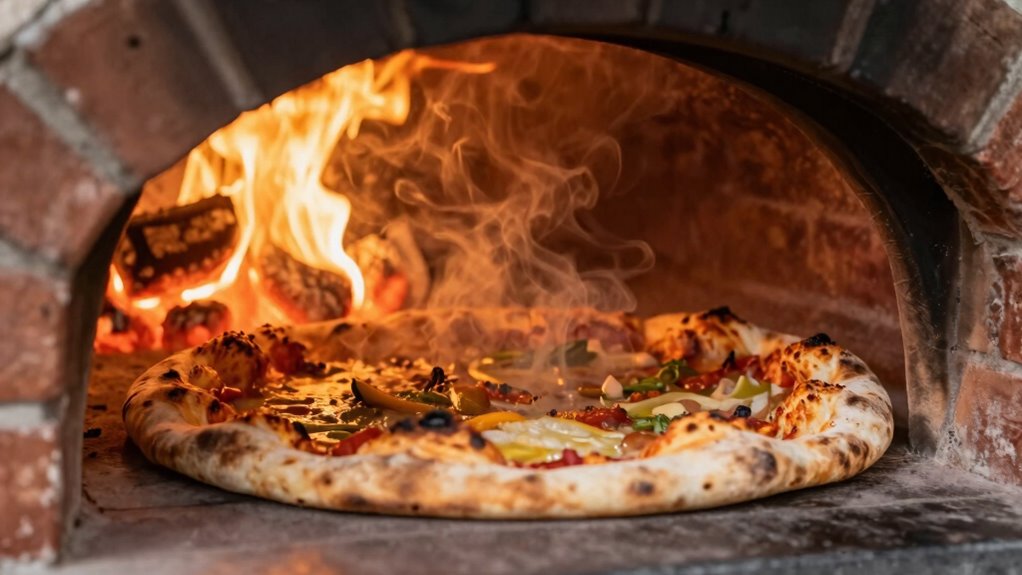

To get great pizza results, use high-quality dough with proper hydration and fermentation for flavor and elasticity. Preheat your oven with a pizza stone at the highest temperature (450°F–500°F) for at least 45 minutes to make certain of even heat. Bake your pizza for 7–12 minutes, monitoring for a crisp crust and melted toppings. Mastering heat, timing, and dough quality makes a huge difference—stick around, and you’ll discover how to perfect each step.

Get the little things that make your day delivered free with Prime
- Fast, free delivery on millions of items
- Prime Video, Amazon Music and more included
- Member-only deals all year
Key Takeaways
- Use high-quality flour and proper hydration for a strong, elastic dough that bakes evenly and crisps well.
- Preheat your oven with a pizza stone for at least 45 minutes at 450°F–500°F for optimal heat retention.
- Maintain consistent oven temperature by avoiding frequent door opening and using reliable temperature gauges.
- Bake pizza for about 7–12 minutes to achieve a crispy crust, melted toppings, and evenly cooked ingredients.
- Recognize doneness by a golden crust, bubbling cheese, and toppings; adjust baking time for desired crispness and flavor.
As an affiliate, we earn on qualifying purchases.
Why Good Dough Quality Is Key to Perfect Pizza
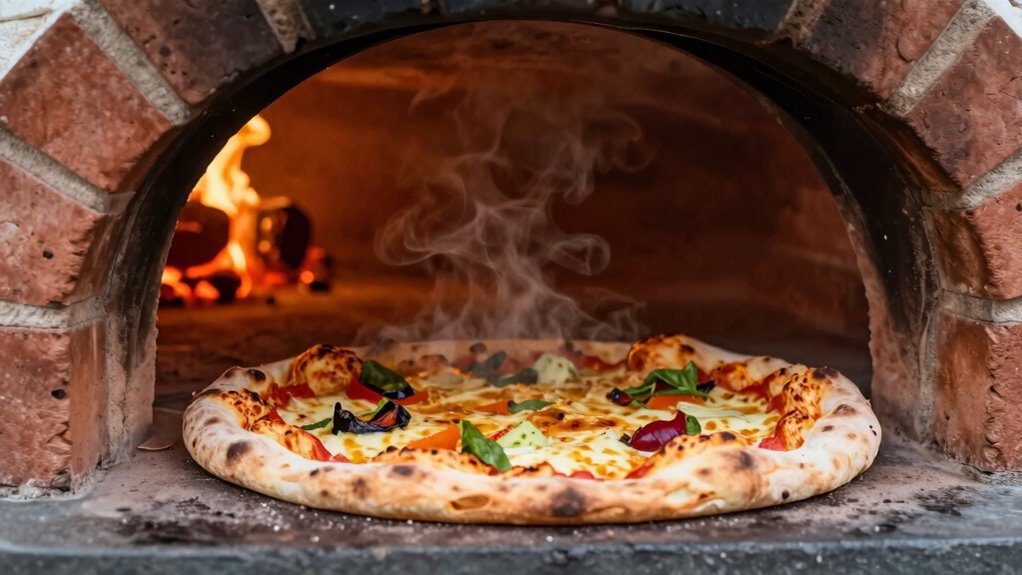
Good dough quality is essential because it forms the foundation of a great pizza. When your dough has good elasticity, it stretches easily without tearing, giving you a uniform crust. This elasticity also helps trap gases during fermentation, resulting in a light, airy texture. To achieve this, ingredient freshness matters—fresh flour and water create a lively dough that develops better gluten structure. Using old or stale ingredients can cause your dough to be dense or tough. Properly handling and kneading your dough enhances elasticity, ensuring it’s easy to work with and bakes evenly. Additionally, understanding Power Consumption Insights can help you manage energy use during baking, saving you money and reducing environmental impact. Regular checks can prevent issues with gas appliances during power outages. Remember, high-quality ingredients and attention to dough consistency directly influence the final taste and texture of your pizza. Without good dough, even the hottest oven can’t make a perfect pie. Paying attention to dough fermentation is also crucial for achieving the ideal rise and flavor. Proper fermentation promotes the development of gluten structure, which impacts both texture and elasticity. Furthermore, controlling oven temperature precisely ensures your crust develops the perfect color and crispness.
How to Get Your Oven Hot Enough for Baking Pizza
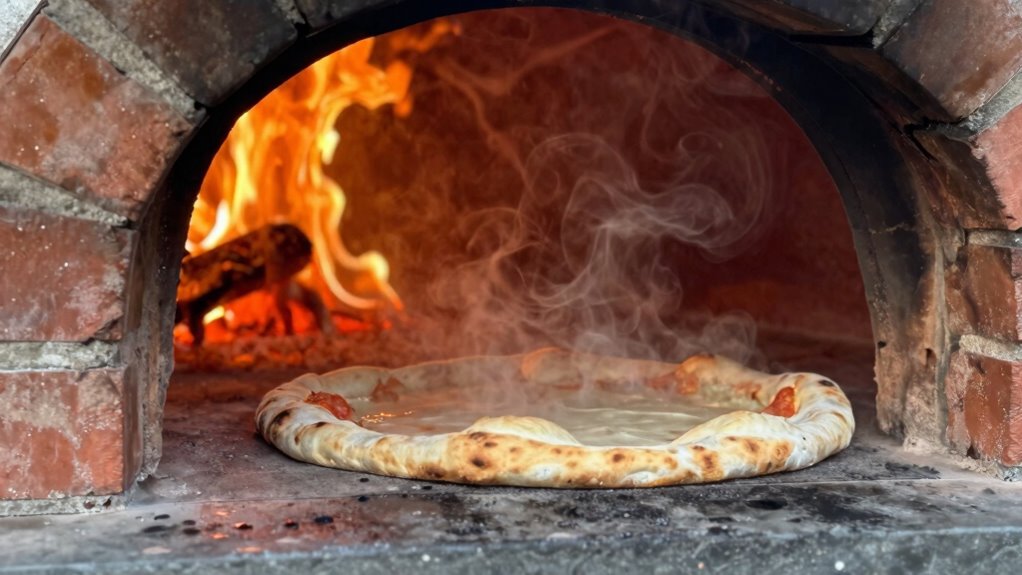
To achieve the perfect pizza crust, your oven needs to reach high temperatures, ideally between 450°F and 500°F (230°C to 260°C). To do this, guarantee good oven insulation so heat stays inside. Preheat your oven with a pizza stone inside for at least 45 minutes; this helps distribute heat evenly. Use the highest setting your oven allows, and keep the door closed as much as possible to maintain temperature. A sturdy pizza stone acts as a heat reservoir, ensuring your crust crisps perfectly. Proper cabling solutions and installation techniques can also improve oven performance by ensuring electrical components operate reliably. Additionally, maintaining consistent oven temperature throughout the baking process is crucial for a perfect result. Ensuring your oven has proper temperature calibration can help prevent hot spots and uneven cooking. When selecting equipment, consider heat retention features to improve overall baking consistency. Here’s a quick guide:
| Tip | Why it Matters |
|---|---|
| Use oven insulation | Keeps heat trapped inside |
| Preheat pizza stone | Provides even, high heat transfer |
| Max oven setting | Reaches desired temperature |
| Keep door closed | Maintains consistent heat |
| Allow ample preheat time | Ensures proper heat buildup |
Preparing Your Dough for Better Oven Results
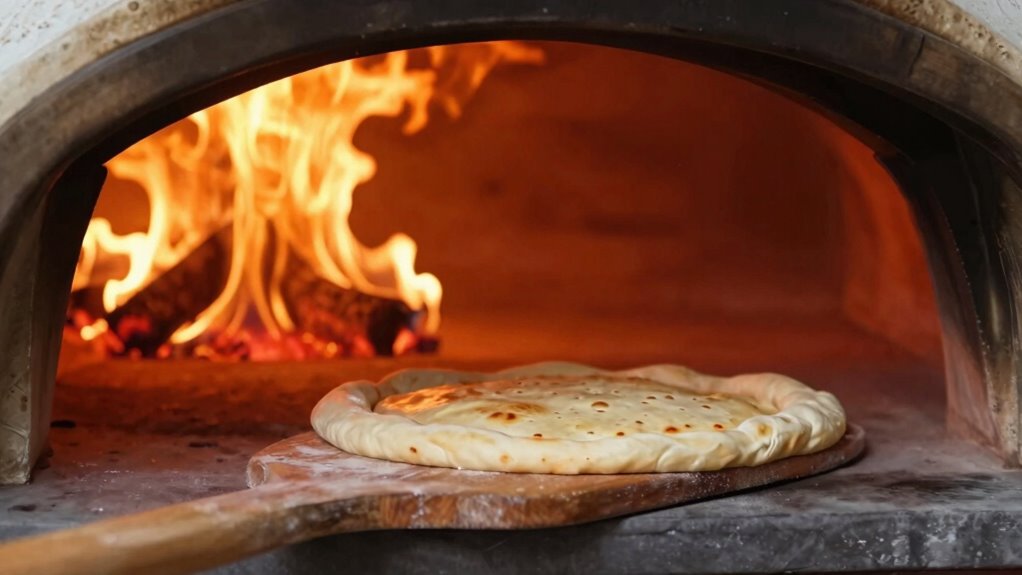
To improve your pizza oven results, start with high-quality flour that develops better flavor and texture. Make sure your dough has the right hydration level for ease of handling and a crisp crust. Don’t rush fermentation—allow enough time for the dough to develop depth and complexity. Incorporating luxury kitchen tools can also enhance your baking precision and overall experience. Using professional-grade equipment can further optimize temperature control and consistency in your baking process. Additionally, understanding future economies and the role of automation can inspire innovative approaches to traditional baking techniques. Exploring best gear and knife roundups for smart shopping can help you select the most effective tools to elevate your baking setup, and staying informed about content quality and topical authority is essential for continuous improvement in your craft.
Use High-Quality Flour
Using high-quality flour is essential for achieving a better crust and overall texture in your pizza. Different flour types, such as bread flour or Italian 00 flour, provide varying levels of protein that influence gluten development. Stronger gluten networks give your dough elasticity and chewiness, resulting in a more balanced crust. Cheaper or lower-quality flours may lack the necessary protein content, leading to a duller texture and less rise. Choosing the right flour guarantees your dough will stretch easily without tearing and hold up during baking. High-quality flour also enhances flavor, contributing to a richer, more authentic taste. Investing in good flour makes a noticeable difference in your pizza’s structure and mouthfeel, helping you achieve professional-level results in your home oven.
Proper Dough Hydration
Have you ever wondered how the amount of water in your dough affects your pizza’s final quality? Proper dough hydration is key to achieving the right texture and oven performance. Hydration levels, which refer to the percentage of water relative to flour, directly influence dough elasticity. When hydration is ideal, your dough becomes easier to stretch, with a tender crumb and a crisp crust. Too little water makes the dough stiff and difficult to work with, while too much leads to a sticky, hard-to-manage dough. Adjusting hydration levels based on your flour type and climate ensures consistent results. Proper dough hydration is essential for optimal oven spring and a satisfying final product. Practice and observation help you find the perfect balance, giving your dough the flexibility needed for a great oven spring and a satisfying final product. Understanding flour protein content can also help you fine-tune hydration for even better results.
Allow Adequate Fermentation
Allowing your dough adequate time to ferment is essential for developing flavor, improving texture, and guaranteeing better oven spring. During fermentation, yeast activation creates carbon dioxide, which makes your dough rise and develop complexity. Proper dough fermentation allows enzymes to break down starches and proteins, resulting in a tender, airy crust. To manage this process effectively, consider the following:
| Step | Duration | Temperature |
|---|---|---|
| Initial fermentation | 1-2 hours at room temp | 75-80°F (24-27°C) |
| Cold fermentation | 12-72 hours in fridge | 38-42°F (3-6°C) |
| Final proofing | 30 minutes – 1 hour | Room temperature |
| Dough readiness | Slightly springy | When it passes the poke test |
Patience in fermentation ensures your dough is flavorful and has guaranteed oven spring.
How Timing Affects Your Pizza’s Crust and Toppings
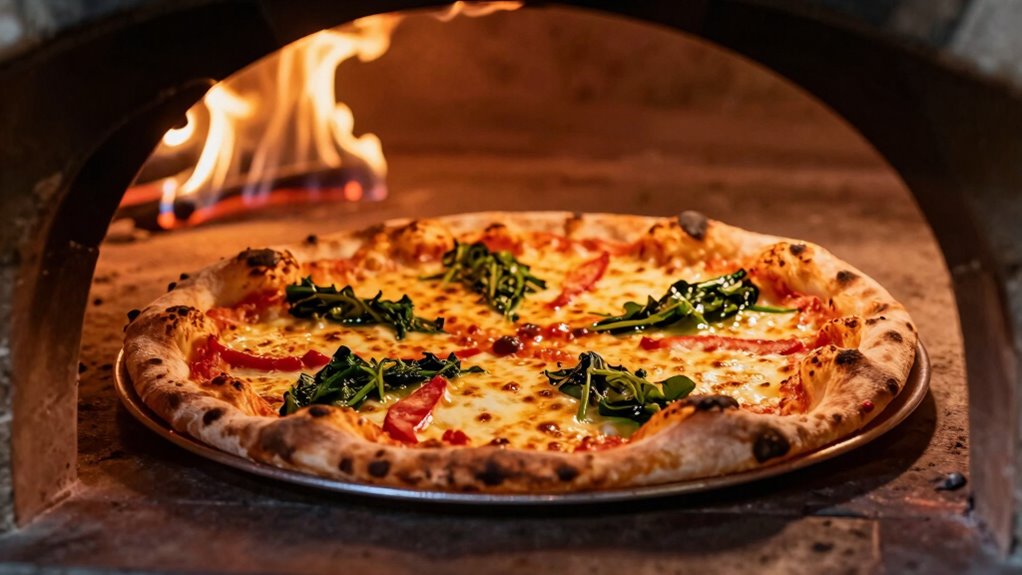
Timing plays a key role in achieving an even crust and perfectly cooked toppings. Cooking your pizza longer deepens flavors, while a quick bake helps preserve fresh toppings. By adjusting your timing, you control each element for the best results.
Timing Ensures Even Crust
When you control the timing of your pizza’s bake, you guarantee an even crust and perfectly cooked toppings. Proper timing ensures your oven placement allows heat to circulate evenly around the pizza. If you start with the right oven placement, the heat reaches all parts of the crust uniformly, preventing hot spots that can burn or undercook. Timing also influences crust thickness; a quicker bake keeps a thicker crust moist and tender, while a longer bake crisps it up evenly. By monitoring your bake time, you avoid over- or under-cooking, maintaining a consistent crust texture. Additionally, understanding how heat distribution affects cooking outcomes helps you achieve a well-balanced pizza where toppings are cooked through without overdoing the crust, resulting in a satisfying, evenly baked pie. Recognizing the importance of baking duration can further refine your results for consistently delicious pizzas.
Longer Bake Deepens Flavors
A longer bake can considerably deepen your pizza’s flavors, especially in the crust and toppings. As the bake time extends, the heat has more time to caramelize sugars in the crust, creating richer, more complex flavors. This process enhances crust crispness, giving it a satisfying crunch that complements the toppings. Additionally, a longer bake allows the cheese to melt thoroughly, encouraging a better cheese stretch and a more cohesive topping. The extended heat also helps develop deeper flavors in the toppings themselves, as they cook more uniformly and thoroughly. Proper fuel injection cleaning can ensure your oven’s heat distribution remains optimal, preventing uneven baking results. Maintaining consistent temperature and airflow is essential for even heat distribution, which contributes to better flavor development. Regularly cleaning the oven’s interior and heating elements can improve airflow and temperature stability, leading to more consistent baking outcomes. Additionally, paying attention to baking times and adjusting accordingly can help prevent overbaking or underbaking. For best results, consider preheating your oven thoroughly before baking to ensure even heat from the start. Keep in mind, though, that overbaking can lead to a dry crust or overly browned edges, so find the right balance. Overall, a longer bake unlocks fuller, more layered flavor profiles in your pizza.
Rapid Cooking Preserves Toppings
Since quick cooking times limit how long heat interacts with your toppings, they tend to stay fresher and more vibrant. This rapid process helps preserve the natural flavor and color of ingredients like vegetables and meats. The crust texture also benefits, remaining crisp and well-defined without becoming soggy from prolonged heat exposure. To better understand how timing influences your pizza, consider this:
| Aspect | Effect | Tips |
|---|---|---|
| Topping freshness | Vibrant, less cooked | Add delicate toppings late |
| Crust texture | Crisp, not overdone | Bake quickly at high heat |
| Cooking time | Shorter preserves quality | Aim for 90 seconds to 3 minutes |
| Heat interaction | Limited, retains moisture | Use high temperatures |
| Flavor retention | More intense and fresh | Avoid over-baking |
Additionally, understanding the thermal transfer process can help you fine-tune your cooking technique for optimal results. This approach ensures your toppings stay fresh, and your crust remains perfectly textured. Proper heat management is essential for achieving the ideal balance between cooking speed and ingredient preservation.
A properly preheated oven can make a significant difference in achieving these results.
Tips for Maintaining a Consistent Oven Temperature
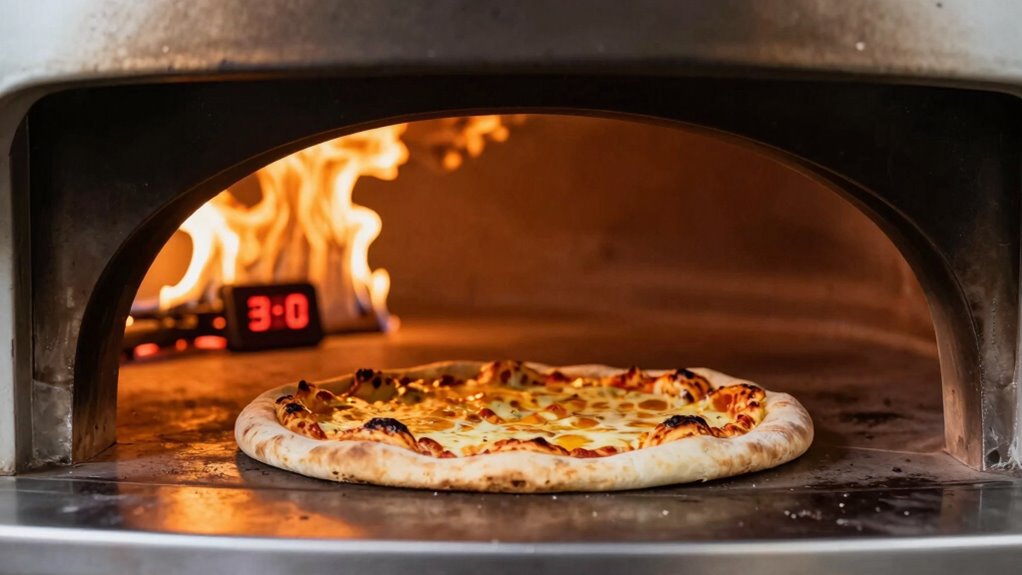
Maintaining a consistent oven temperature is essential for achieving perfect pizza results. To do this, ensure your oven is well-insulated; good oven insulation helps retain heat and prevents temperature fluctuations. Regularly check your temperature gauges to monitor the oven’s heat accurately. If you notice the temperature dropping, give your oven time to recover before baking. Avoid opening the door too often, as this causes heat loss and can disrupt the temperature balance. Keep the oven lid or door closed during cooking, and consider preheating thoroughly to reach your desired temperature. Using quality oven insulation and reliable temperature gauges helps you maintain steady heat, leading to evenly cooked pizzas with perfectly crispy crusts and well-melted toppings.
How Long Should I Bake My Pizza for the Best Results?

Once you’ve preheated your oven and made sure it’s maintaining a steady temperature, the next step is to determine the ideal baking time. Using a pizza stone helps distribute heat evenly, so your crust cooks thoroughly. Generally, baking times fall between 7-12 minutes. To get it just right:
- Watch for a golden, crispy crust that indicates doneness.
- Avoid over-baking, which can burn the dough stretch and ruin texture.
- Keep an eye on toppings to prevent burning or undercooking.
Troubleshooting Common Pizza Baking Problems
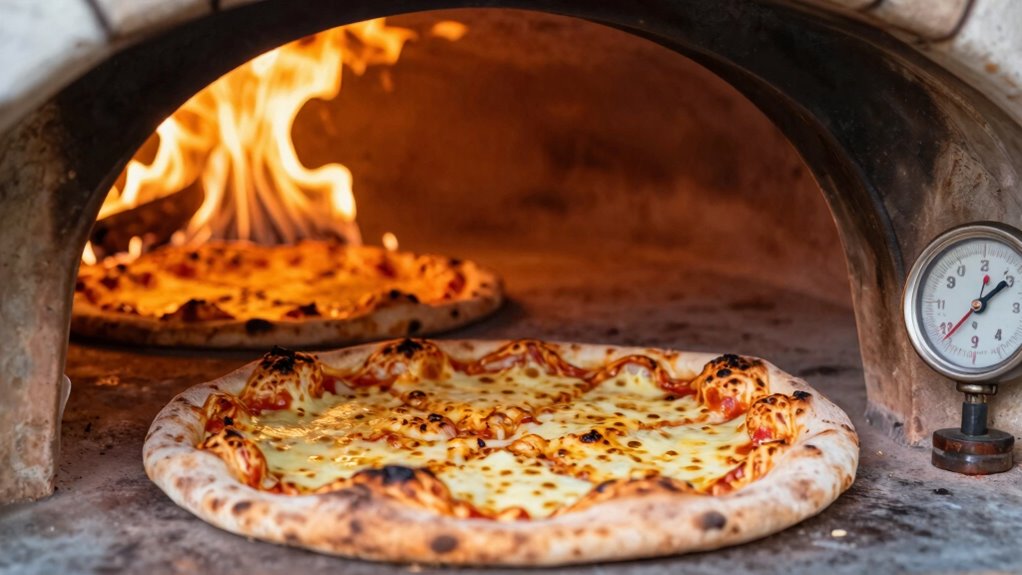
Even with careful planning, you might encounter common issues like a soggy crust, burnt toppings, or uneven cooking. Soggy crust often happens if dough kneading wasn’t thorough, resulting in uneven moisture distribution. To fix this, ensure your dough is kneaded well enough to develop gluten, which creates a sturdy base that holds up during baking. Burnt toppings may result from poor toppings selection or placing them too early on the pizza. Add delicate toppings later in the baking process or reduce oven temperature. Uneven cooking can stem from inconsistent heat or uneven dough thickness. Make sure to roll or stretch your dough evenly and preheat your oven properly. Addressing these issues involves adjusting your dough kneading technique and being mindful of toppings selection for a balanced bake.
Easy Tips to Make Better Homemade Pizza Every Time
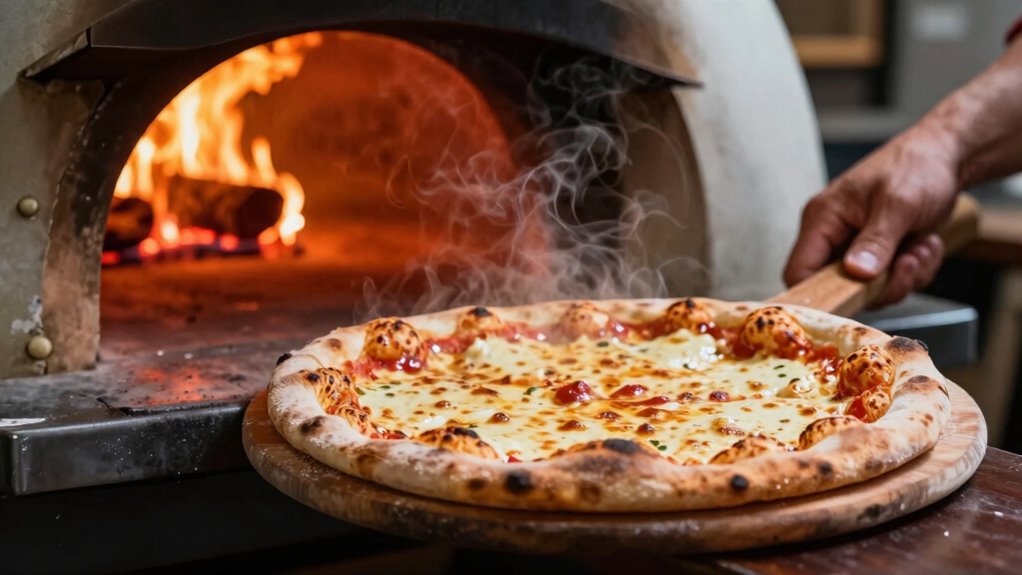
To make better homemade pizza every time, start with high-quality ingredients and prioritize proper dough preparation. Achieving excellent dough elasticity ensures your crust is chewy yet tender, making it easier to handle and shaping perfectly. Here are three tips to enhance your pizza:
Start with quality ingredients and knead your dough well for perfect, chewy, tender pizza crusts every time.
- Use cold ingredients and knead the dough thoroughly to develop good elasticity.
- Allow the dough to rest properly, which improves stretchability and enhances cheese melting.
- Preheat your oven and baking surface to high heat for crisp crust and even cheese melt.
Frequently Asked Questions
Can Different Types of Flour Affect Pizza Dough Quality?
Yes, different types of flour can affect your pizza dough’s quality. Higher protein flour, like bread flour, promotes better gluten development, giving your dough more elasticity and chewiness. Lower protein flours, like cake flour, result in a softer, less elastic dough. Choosing the right flour based on its protein content helps you control the texture and structure, ensuring your pizza turns out just how you like it.
Does the Shape of the Pizza Influence Baking Time?
Ever wondered if your pizza’s shape affects baking time? It definitely does. A round pizza usually bakes faster than a thick, rectangular slice because of its surface area and thickness. The pizza shape influences how heat distributes and how long it takes to cook evenly. So, if you want a quicker bake or a crispy crust, consider adjusting your pizza shape accordingly.
How Does Humidity Impact Oven Performance and Pizza Baking?
Humidity effects can considerably impact oven performance and pizza baking. When there’s high humidity, oven moisture increases, which can slow down the baking process and make the crust less crisp. Conversely, low humidity helps the oven retain heat better, allowing the crust to crisp up faster. By controlling humidity levels, you guarantee consistent heat, proper oven moisture, and perfect pizza results every time, whether in a commercial or home oven.
What’s the Best Way to Store Leftover Pizza Dough?
To store leftover pizza dough, you should wrap it tightly in plastic wrap or place it in an airtight container for ideal dough storage. Keep it in the refrigerator if you’ll use it within 1-2 days, or freeze it for longer preservation. Label the container with the date to track freshness. Proper leftover preservation ensures your dough stays fresh, easy to work with, and ready for your next pizza night.
Are There Specific Oven Settings for Different Pizza Styles?
Yes, you should adjust the oven temperature and baking duration based on the pizza style. For thin-crust pizza, set your oven to a high temperature, around 475-500°F, and bake for about 10-12 minutes. For deep-dish or thick crust, lower the temperature to 425°F and bake longer, around 20-25 minutes. These settings help achieve the perfect crust and toppings for each pizza type.
Conclusion
Remember, crafting the perfect pizza is like tending a warm, glowing fire—your dough, heat, and timing all work together to create something delicious. When your oven roars at the right temperature and your dough is just right, you’ll see that beautiful, bubbly crust and perfectly melted toppings emerge like a masterpiece. Keep experimenting, stay patient, and soon you’ll be savoring a homemade pizza that’s as satisfying as a crackling fire on a cozy night.
Halloween Picks
halloween
As an affiliate, we earn on qualifying purchases.