To maintain healthy indoor air quality, use a combination of air filters, humidity control, and houseplants. Air purifiers with HEPA filters effectively trap dust, pet dander, and airborne chemicals, while humidifiers or dehumidifiers help keep moisture levels balanced around 40-50%, preventing mold and dryness. Adding plants like peace lilies or snake plants naturally filters toxins and freshens the air. Keep exploring for simple tips to create a cleaner, healthier indoor environment.

Get the little things that make your day delivered free with Prime
- Fast, free delivery on millions of items
- Prime Video, Amazon Music and more included
- Member-only deals all year
Key Takeaways
- Use HEPA filters and air purifiers to effectively trap airborne pollutants and allergens.
- Maintain indoor humidity levels around 40-50% to prevent mold growth and dust mite proliferation.
- Incorporate air-purifying houseplants like snake plants and peace lilies to naturally absorb toxins.
- Regularly replace filters and clean air cleaning devices to ensure optimal performance.
- Combine humidity control, air filtration, and plants for a comprehensive approach to healthier indoor air.

Indoor air quality refers to the cleanliness and safety of the air inside your home or workplace. It directly impacts your health, comfort, and overall well-being. You might not always notice pollutants or allergens floating around, but they can cause respiratory issues, allergies, or fatigue. That’s why focusing on improving indoor air quality is essential, and there are practical steps you can take to make the air healthier for everyone. One effective way is through air purification, which involves using filters or purifying devices that trap dust, pet dander, mold spores, and airborne chemicals. HEPA filters, for instance, are excellent at catching tiny particles, helping to reduce allergens and improve your indoor air quality considerably. When you invest in an air purifier, you’re actively removing pollutants, making the environment safer and more breathable.
Humidity control also plays a crucial role in maintaining healthy indoor air. Too much moisture can lead to mold growth, dust mites, and mildew, all of which can trigger allergies or respiratory problems. Conversely, air that’s too dry can cause skin irritation, dry throat, and increase static electricity. To strike a balance, you might consider using a humidifier or dehumidifier, depending on your indoor conditions. Keeping humidity levels around 40-50% helps inhibit mold growth while preventing discomfort from dry air. Proper humidity control also ensures that airborne pollutants don’t become more concentrated or settle into surfaces, which can otherwise worsen indoor air quality. Additionally, integrating air filtration technologies like HEPA filters can further enhance the air quality by capturing tiny particles that traditional filtering methods might miss.
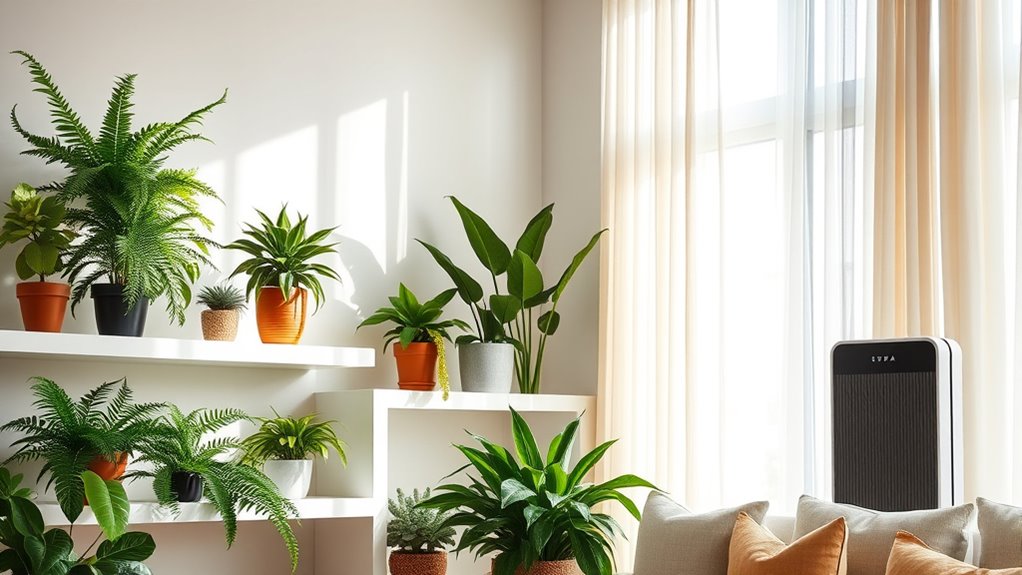
You can further enhance your environment by adding houseplants, which naturally contribute to better air quality. Some plants, like snake plants, peace lilies, and pothos, are particularly effective at filtering out toxins and releasing oxygen. Not only do they beautify your space, but they also absorb carbon dioxide and certain airborne pollutants, making the air fresher and healthier. When combined with air purification systems and humidity control devices, plants create a more balanced and clean indoor atmosphere.
Incorporating these methods requires a bit of effort but pays off with improved health and comfort. Regularly changing filters, monitoring humidity levels, and choosing the right plants can make a real difference. You’ll notice cleaner, fresher air that supports your respiratory health and reduces allergy symptoms. With consistent attention to air purification and humidity control, you’re creating a space where the air is safer, healthier, and more inviting for everyone inside.
As an affiliate, we earn on qualifying purchases.
Frequently Asked Questions
How Often Should I Replace Air Filters for Optimal Indoor Air Quality?
You should replace your air filters every 1 to 3 months to maintain ideal indoor air quality. Regular filter maintenance ensures your air purifier works efficiently and extends its lifespan. If you have pets, allergies, or live in a polluted area, consider replacing filters more frequently. Keeping up with this schedule prevents dust, allergens, and pollutants from circulating, helping you breathe cleaner air and guaranteeing your device stays effective longer.
Can Certain Houseplants Be Toxic to Children or Pets?
You might be surprised to learn that some houseplants can be toxic to children or pets, making plant toxicity a real concern for pet safety. Coincidentally, the plants you choose for your home could accidentally cause harm if ingested or touched. Always research specific plants beforehand, opting for non-toxic varieties to guarantee your kids and pets stay safe. Being cautious helps create a healthier, safer environment for everyone.
What Is the Best Way to Measure Indoor Air Pollution Levels?
You should use air quality sensors to monitor indoor air pollution levels regularly. These devices detect pollutants like VOCs, particulate matter, and carbon dioxide, giving you real-time data. For more detailed analysis, consider pollutant testing through professional services or DIY kits. This approach helps you identify sources of pollution and take effective measures to improve your indoor air quality, keeping your home healthier for everyone.
Do Air Purifiers Eliminate All Types of Indoor Allergens?
Air purifiers can’t eliminate all indoor allergens because of their limitations, especially with larger particles like pet dander or pollen that may bypass filters. While they improve allergen removal effectiveness, some allergens remain in the air. To maximize indoor air quality, combine purifiers with regular cleaning, proper ventilation, and allergen-proof bedding. This exhaustive approach helps reduce allergy symptoms and creates a healthier indoor environment.
How Do Humidity Levels Affect Indoor Air Quality and Health?
Maintaining proper humidity levels is vital for healthy indoor air quality and your well-being. When humidity is too high, mold can develop, worsening allergies and respiratory issues. Conversely, low humidity causes dryness, irritating your throat and skin. Humidity control helps balance moisture, preventing mold growth and reducing allergens in the air. By managing humidity, you create a healthier environment that promotes respiratory comfort and overall wellness.
Conclusion
By choosing the right plants, installing effective filters, and maintaining fresh air, you’re actively shaping a healthier home. Think of your space as a living, breathing entity that thrives on your care. Every breath becomes richer, every moment brighter, as you embrace these simple yet powerful steps. Remember, you’re the guardian of your indoor oasis—turning everyday air into a source of vigor and well-being. Your home’s freshness starts with you.
Halloween Picks
halloween
As an affiliate, we earn on qualifying purchases.