Robot vacuums often fail early because of poor maintenance, battery neglect, and charging habits. Dust buildup, worn components, and failing batteries reduce suction and cause overheating or motor issues. To keep yours working longer, clean filters, brushes, and vents regularly, and follow proper charging routines—avoid overcharging and unplug after full charge. Proper upkeep markedly extends its life, and keeping these habits in mind can save you from premature breakdowns. Learn more to keep your vacuum running smoothly.
Key Takeaways
- Regularly clean filters, brushes, and vents to prevent dust buildup and protect motor components.
- Follow manufacturer guidelines for charging routines, avoid overcharging, and store in cool, dry places.
- Inspect and replace worn brushes and filters promptly to maintain suction and motor health.
- Monitor battery health, avoid frequent full discharges, and use approved chargers to extend lifespan.
- Conduct routine inspections for dust sensor errors, motor issues, and component wear to address problems early.
As an affiliate, we earn on qualifying purchases.
Why Do Robot Vacuums Fail Early?
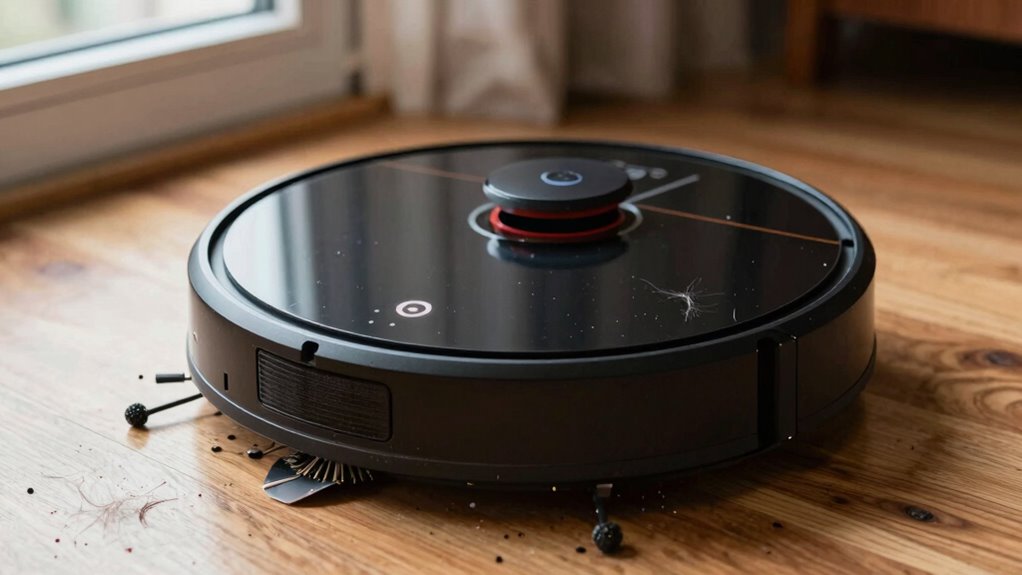
Many robot vacuums fail early because they aren’t built to withstand the wear and tear of regular use. Over time, dust buildup can clog filters and vents, reducing suction power and forcing the motor to work harder. This extra strain accelerates motor wear, leading to decreased performance and eventual failure. If you don’t clean your vacuum regularly, dust particles can settle into critical components, causing overheating or electrical issues. Cheap materials or poor sealing can also speed up deterioration. Without proper maintenance, these issues compound, damaging the motor and other parts prematurely. Additionally, home safety concerns such as blocked vents or electrical faults can exacerbate the risk of early failure. To extend your robot vacuum’s lifespan, you need to stay on top of cleaning filters, brushes, and vents, preventing dust buildup and reducing the risk of early failure caused by motor wear. Regularly inspecting and maintaining vacuum components is essential for preventing unexpected breakdowns, and following air purifier maintenance dos and don’ts can help ensure your device remains in good condition over time. Being aware of proper device maintenance practices can significantly improve your vacuum’s durability and performance over the long term. Moreover, neglecting routine maintenance checks can allow minor issues to develop into major failures, shortening the device’s lifespan.
How Does Battery Health Affect Your Robot Vacuum’s Lifespan?

Your robot vacuum’s lifespan depends heavily on its battery health. Frequent charging and discharging can wear out the battery faster, reducing overall efficiency. By understanding proper charging habits and how battery cycles impact wear, you can help extend your vacuum’s useful life. Additionally, using performance-enhancing parts like high-quality batteries or power management features can further improve longevity. Maintaining optimal charge settings and avoiding over-discharge through proper low-voltage cutoff can also preserve battery capacity over time. Ensuring the device operates within recommended temperature ranges can prevent unnecessary strain on the battery, ensuring consistent performance over time. Being aware of battery management techniques can also help you optimize your robot vacuum’s lifespan and maintain peak performance.
Battery Cycles and Wear
Battery health plays a crucial role in determining how long your robot vacuum will last. Every time you charge and use the battery, it undergoes a power cycle. Over time, these cycles cause battery degradation, reducing its capacity and efficiency. The more power cycles your vacuum experiences, the faster its battery wears out. This wear leads to shorter run times and more frequent charging, which accelerates the decline. If you notice your vacuum isn’t cleaning as long as it used to, it’s likely due to accumulated battery wear from repeated power cycles. Managing how often you let the battery drain completely can slow degradation. Additionally, battery capacity diminishes with each cycle, further impacting performance. Proper battery maintenance can also help extend your vacuum’s lifespan. Recognizing the importance of battery cycle count and battery degradation enables you to better monitor and care for your device. Ultimately, understanding the relationship between power cycles and battery wear helps you extend your vacuum’s lifespan. Regularly monitoring the battery health can provide insights into when it might be time for a replacement or service.
Proper Charging Habits
Proper charging habits are essential for preserving your robot vacuum’s battery health and extending its lifespan. Good power management guarantees the battery doesn’t undergo unnecessary stress or deep discharges that accelerate wear. Follow charging tips like unplugging the vacuum once it’s fully charged and avoiding leaving it on the dock constantly. Keep the battery between 20% and 80% whenever possible to minimize strain. Use the manufacturer’s recommended charger and avoid cheap, incompatible alternatives. Regularly monitoring the charging process helps prevent overcharging, which can damage the battery over time. Additionally, understanding battery maintenance can help you develop better habits to prolong your vacuum’s performance. Practicing proper charging habits not only helps maintain ideal battery capacity but also aligns with the Stoic principle of maintaining discipline over your actions, reducing the risk of early battery failure, and ensuring your robot vacuum performs reliably for years. Incorporating proper storage techniques during periods of inactivity can also prevent capacity loss and extend overall battery life. Being mindful of charge cycles can further optimize your vacuum’s battery longevity by preventing unnecessary wear.
How Can You Tell If Your Robot Vacuum’s Battery Is Worn Out?

Over time, a decline in your robot vacuum’s performance often signals that its battery is wearing out. One way to tell is by noticing if the vacuum struggles to reach full charge or if its runtime is notably shorter than before. You can also check the power indicators; if they show inconsistent or weak signals, it’s a sign the battery may be failing. Performing a battery calibration—completely draining and then fully recharging the battery—can reveal if the battery holds a proper charge. If, after calibration, the vacuum still doesn’t perform well or the power indicators remain inconsistent, it’s likely time to replace the battery. Monitoring indoor plant humidity levels can also help extend your vacuum’s battery life by maintaining optimal operating conditions. Additionally, ensuring the robot’s charging dock is clean and well-connected can improve charging efficiency and battery longevity. Regularly inspecting battery health can give you early warning signs of failure and help prevent unexpected downtime. Remember, a well-maintained battery is essential for optimal spirituality read performance and longevity. These signs help you determine when your vacuum’s power source is no longer reliable.
What Are the Best Charging Habits to Keep Your Robot Vacuum Running Longer?

To extend your robot vacuum’s lifespan, establishing an ideal charging schedule is key. Make sure you plug it in before the battery drops too low and avoid overcharging once it’s full. Consistent, proper charging practices help keep the battery healthy and your vacuum running longer. Incorporating inclusive casting practices when selecting and designing robot vacuums can also promote a more accessible and diverse user experience. Additionally, implementing safe electrical practices during charging can prevent potential hazards and further prolong device life. Ensuring your charger and power sources are compatible and properly maintained is another important battery management tip to prevent damage and optimize performance.
Optimal Charging Schedule
Establishing a smart charging routine can considerably extend your robot vacuum’s lifespan. To optimize its battery health, follow these tips:
- Always use the designated charging ports to avoid damage and ensure proper power flow.
- Keep the battery calibrated by occasionally letting it drain fully before a full recharge—this helps the battery maintain accurate charge levels.
- Avoid leaving your vacuum on the charger constantly; unplug it once fully charged to prevent overcharging.
- Regularly check and clean charging contacts to ensure good contact and prevent charging issues.
Proper Charging Practices
Adopting proper charging habits is essential for prolonging your robot vacuum’s battery life. Always use the recommended charging accessories to prevent damage and guarantee best performance. Avoid leaving your vacuum on the charger continuously; instead, unplug it once fully charged. When not in use, store the battery in a cool, dry place to prevent degradation. Proper battery storage helps maintain capacity and extends lifespan. Be cautious with cheap or incompatible charging accessories, as they can harm the battery. Regularly inspect the charging port and cable for wear or damage, replacing parts as needed. These habits minimize stress on the battery, prevent early failure, and keep your robot vacuum running longer. Proper charging practices are a simple yet effective way to maximize your device’s lifespan.
How Do You Maintain Your Robot Vacuum’s Components for Longevity?
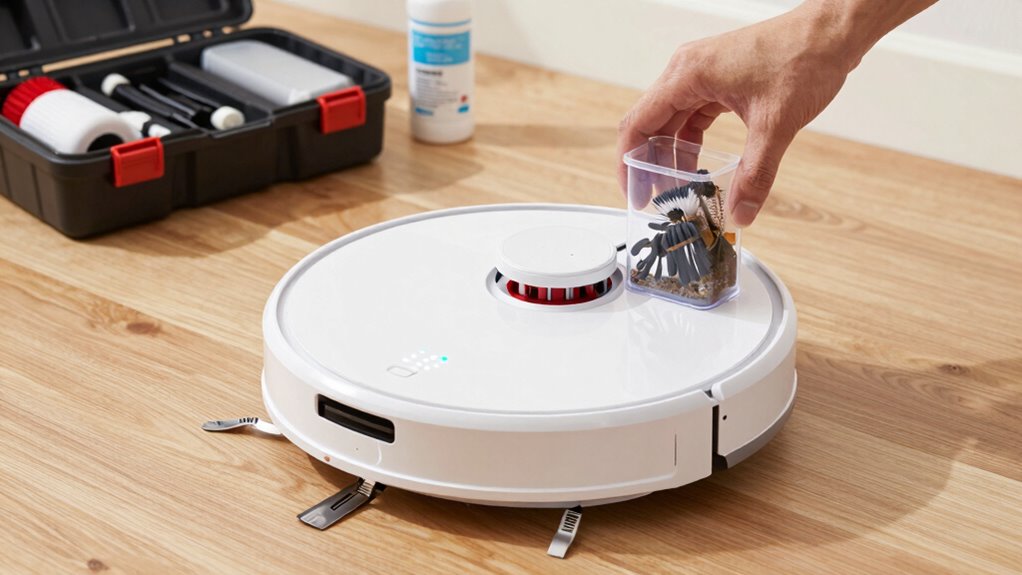
Regularly maintaining your robot vacuum’s components is key to guaranteeing it lasts longer and performs better. Proper care prevents issues like dust sensor errors and brush wear. First, check and clean the dust sensors weekly to keep them free of dust and debris, which ensures optimal navigation. Second, regularly inspect and perform brush maintenance—remove hair and tangled debris that can hinder cleaning and strain the motor. Third, replace filters as recommended to maintain suction power. Fourth, empty the dustbin after each use to prevent clogging and sensor misreads. These simple steps keep your vacuum running smoothly and extend its lifespan. Consistent maintenance reduces early failure and saves you money on replacements or repairs.
What Are Simple Fixes to Prevent Premature Vacuum Failure?
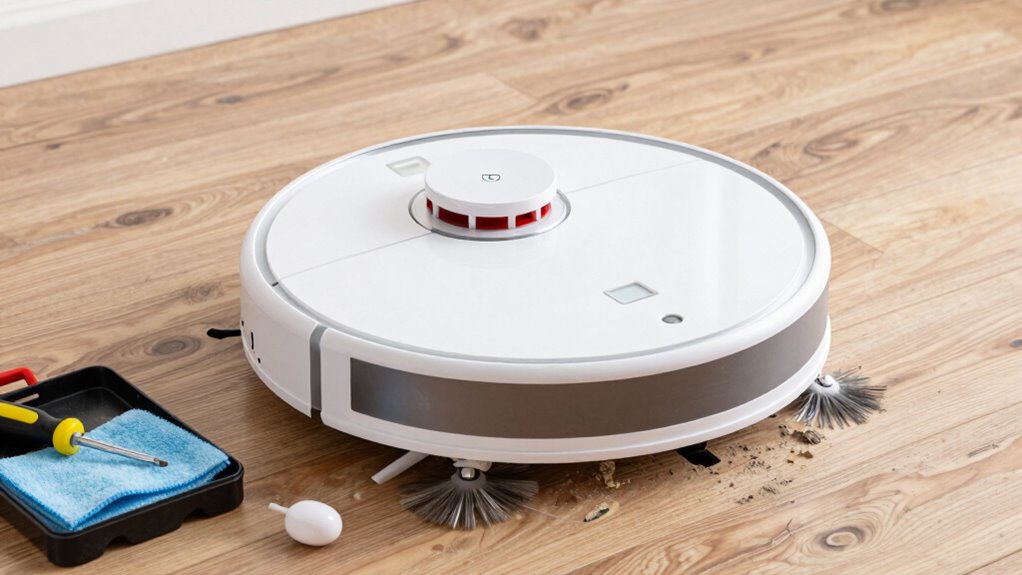
To prevent your robot vacuum from failing prematurely, start with simple fixes like ensuring the wheels and brushes are free of hair and debris. Regularly remove dust buildup from sensors and moving parts to keep your vacuum operating smoothly. Dust accumulation can interfere with navigation and cleaning efficiency, so wipe sensors with a soft cloth and check for debris. Additionally, calibrate sensors periodically to make sure accurate obstacle detection and prevent unnecessary strain on the motor. Keep the charging contacts clean to avoid poor power transfer. These small steps can considerably extend your vacuum’s lifespan by preventing common issues caused by dust and misaligned sensors. Staying proactive with regular maintenance helps your robot vacuum perform at its best and avoid early failure.
When Should You Consider Replacing Your Robot Vacuum or Its Battery?

Even with proper maintenance, there comes a point when your robot vacuum or its battery might need replacing. Recognize these signs to avoid damage or poor performance:
- Dust buildup causes the vacuum to struggle, despite regular cleaning.
- You notice increased motor noise, indicating strain or worn parts.
- Cleaning cycles take longer or are less effective than before.
- The battery no longer holds a charge, forcing frequent recharges or replacements.
If you’re experiencing these issues, it’s time to think about replacing the battery or the entire unit. Ignoring dust buildup or motor noise can lead to further damage and reduced lifespan. Staying attentive to these signs ensures your vacuum stays efficient and saves you money in the long run.
Frequently Asked Questions
Can Using Third-Party Batteries Harm My Robot Vacuum’s Lifespan?
Using third-party batteries can harm your robot vacuum’s lifespan if they aren’t compatible with your model. Poor battery compatibility may cause performance issues or damage. Also, it could void your warranty, so you might lose coverage if problems occur. To avoid these risks, always choose batteries recommended by the manufacturer. This way, you guarantee maximum performance and protect your warranty, helping your vacuum last longer.
How Often Should I Replace the Filters in My Robot Vacuum?
You should replace your robot vacuum’s filters every 1 to 3 months—unless you want to turn your shiny gadget into a dust magnet. Regular filter maintenance keeps suction strong and extends your vacuum’s lifespan. Don’t wait for it to sound like a dying animal; check those filters regularly, especially if you notice less pickup. A quick swap now saves you big repairs later—trust us, it’s worth it.
Does Cleaning the Brushes Regularly Extend the Vacuum’s Life?
Yes, cleaning the brushes regularly extends your robot vacuum’s life. By doing brush maintenance often, you prevent debris buildup that can strain the motor and reduce efficiency. Remove hair, dust, and dirt from the brushes to keep them spinning freely. This simple routine helps maintain ideal performance, prevents overheating, and minimizes wear and tear, ultimately prolonging your vacuum’s lifespan and ensuring it cleans effectively for years to come.
Are There Specific Brands of Batteries That Last Longer?
Yes, some battery brands like Samsung, LG, and Panasonic tend to last longer, offering better longevity tips. When choosing a replacement, look for batteries with high mAh ratings and good reviews. To extend your robot vacuum’s lifespan, always use authentic batteries from reputable brands and avoid cheap knock-offs. Proper maintenance, like keeping the contacts clean, also helps make sure your battery performs well and lasts as long as possible.
How Does Storing My Robot Vacuum Improperly Affect Its Longevity?
Storing your robot vacuum poorly is like leaving a plant in the dark—your device suffers. Improper storage can cause battery degradation, reducing its lifespan and risking damage to battery compatibility. To keep it healthy, follow storage tips: store it in a cool, dry place, avoid extreme temperatures, and keep the battery partially charged. This way, your vacuum stays ready to clean and lasts longer.
Conclusion
To keep your robot vacuum humming like a well-oiled machine, think of it as tending a garden—regular care, timely fixes, and mindful charging nurture its life. Picture it gliding smoothly across your floors, its battery bright and healthy, ready for every mess. With simple habits and quick fixes, you’ll extend its journey, avoiding those unexpected breakdowns. Treat your robot right, and it’ll serve you quietly and reliably, sweeping away worries before they even start.