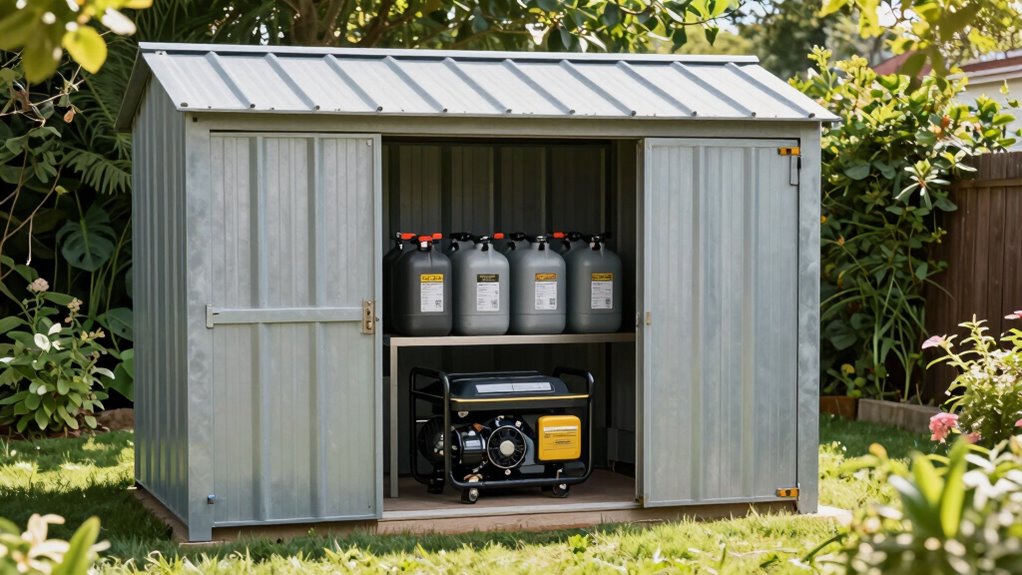

To store fuel safely, choose durable, chemical-resistant containers placed in well-ventilated, secure areas away from heat or flames. Always handle fuel with care, using approved containers and refilling when the generator’s cooled down. Keep storage areas organized, label everything clearly, and check for leaks or corrosion regularly. When operating your generator, ensure it’s outdoors and protected from sparks. For detailed tips on safe storage and operation, continue exploring proper procedures.

Get the little things that make your day delivered free — and shop member deals
- Fast, free delivery on millions of items
- Access to Prime Big Deal Days deals on October 6–7
- Prime Video, Amazon Music and more included
Key Takeaways
- Store fuel in approved, chemical-resistant containers placed in well-ventilated, secure areas away from heat and ignition sources.
- Regularly inspect storage containers for leaks, corrosion, and damage to prevent hazards.
- Always turn off and cool generators before refueling, using proper containers and avoiding spills.
- Place generators outdoors in well-ventilated areas, away from windows and vents, during power outages.
- Perform routine maintenance, including inspecting fuel quality, filters, and ventilation systems, to ensure safety and longevity.
chemical resistant fuel storage containers
As an affiliate, we earn on qualifying purchases.
As an affiliate, we earn on qualifying purchases.
How to Choose the Right Fuel Storage Containers and Locations

Choosing the right fuel storage containers and locations is essential for safety and efficiency. You need containers with high container durability that can withstand environmental conditions and prevent leaks or spills. Look for containers made from sturdy, chemical-resistant materials, ensuring they won’t degrade over time. When selecting a location, prioritize safety by choosing areas away from direct sunlight, heat sources, or ignition points. Proper location selection also involves placing containers on a flat, stable surface, ideally in a well-ventilated, secure area. Keep fuel containers off the ground and away from living spaces to minimize risks. Additionally, considering Free Floating backyard design elements can help you create a safe environment by integrating natural landscaping to reduce fire hazards and improve overall safety. Regularly inspecting containers for signs of wear and chemical degradation is also crucial to maintaining safe storage conditions. Implementing proper ventilation around storage sites can significantly reduce the buildup of fumes and prevent potential hazards. To further enhance safety, consider implementing fire-resistant barriers around storage sites. Using durable, chemical-resistant containers made from high-quality materials ensures long-term safety and reduces the risk of leaks or spills. By focusing on durable containers and strategic placement, you reduce hazards and ensure your fuel is stored safely and effectively.
Generator Fuel Safety: What You Need to Know About Storage Risks
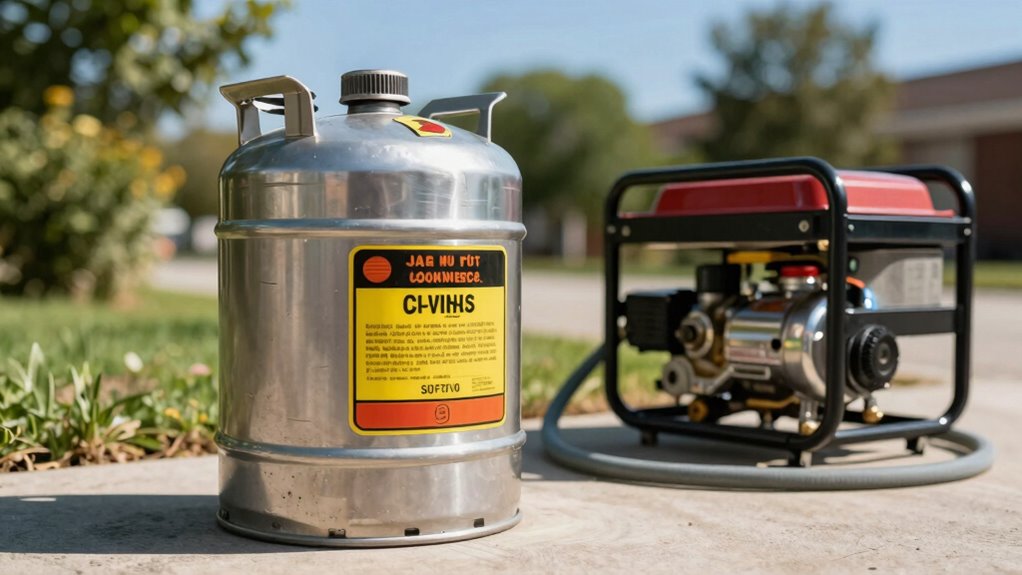
Proper fuel storage is critical to prevent accidents and guarantee safety, especially because gasoline and diesel are highly flammable. Fuel vapor hazards pose a significant risk, as vapors can ignite even without visible flames. To minimize these dangers, ensure containers are tightly sealed and stored in well-ventilated areas away from heat sources. Regularly check for leaks or corrosion, as compromised containers increase the risk of vapor ignition. Implementing storage best practices can significantly reduce the chance of accidents. Fire prevention strategies include keeping storage away from sparks, open flames, and electrical equipment. Always label containers clearly, and never store more fuel than necessary. Remember, even small spills or vapors can lead to dangerous fires. Incorporating environmentally friendly craft ideas or other cultural artifacts can also add aesthetic appeal while maintaining a safe environment. Staying vigilant and following proper storage practices helps protect you and your property from preventable fuel-related accidents.
Safe Fuel Handling and Refill Procedures for Your Generator

To guarantee safe fuel handling and refilling your generator, always turn off the unit and allow it to cool down before opening the fuel tank. This prevents accidents and reduces the risk of fire. When refilling, use a clean, approved container to avoid fuel contamination. Be cautious to prevent spills by carefully pouring and avoiding overfilling. Keep a fire extinguisher nearby in case of emergencies. Always work in a well-ventilated area, away from open flames or sparks. To maintain safety, consider these tips:
- Use a funnel to minimize spills
- Wipe up any fuel spills immediately
- Store fuel in approved containers, away from heat
- Avoid overfilling the tank
- Regularly check for leaks or damage
- Proper storage practices are essential to prevent accidents and ensure safety during fuel handling. Proper storage not only reduces the risk of fire hazards, but also helps maintain fuel quality over time.
Following these procedures ensures safe, spill-free refilling and prevents fuel contamination.
Tips for Operating Your Generator Safely During Power Outages
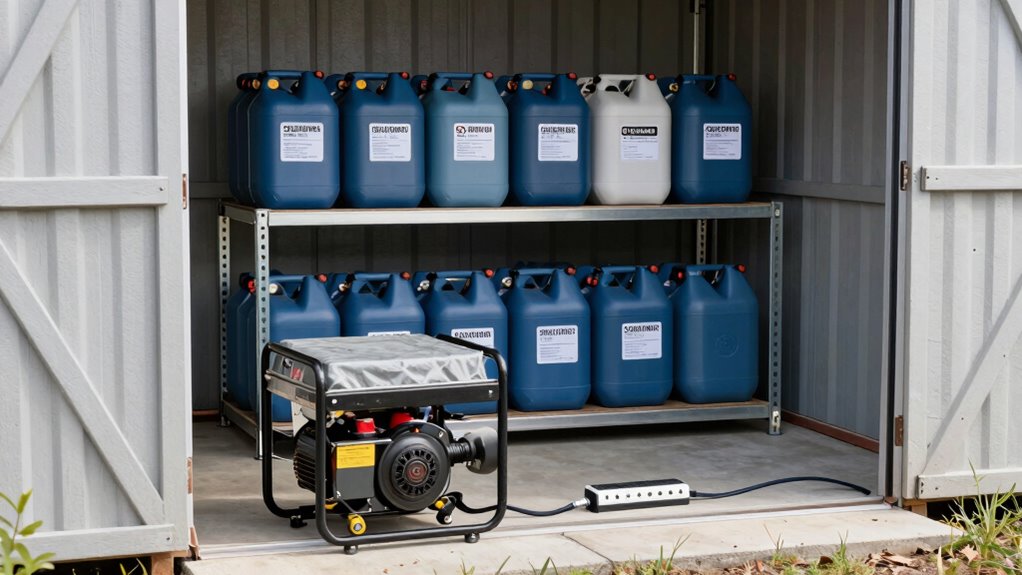
During a power outage, operating your generator safely is essential to protect yourself and your property. Always place your generator outdoors in a well-ventilated area, away from windows and vents, to prevent carbon monoxide buildup. Before starting, check for fuel contamination; stale or contaminated fuel can cause engine problems or dangerous fumes. Keep the generator dry and on a stable surface to avoid accidents. Use proper extension cords rated for outdoor use, and never overload the generator—know its wattage capacity. During emergency preparedness, familiarize yourself with startup procedures and safety features. Regularly inspect your unit and fuel supply to ensure readiness. Additionally, choosing the right generator varieties can improve safety and efficiency during power outages. Proper storage practices for fuel, such as using approved containers and keeping them away from heat sources, also contribute to safe operation. It is also important to understand the fuel handling guidelines to prevent leaks and spills. Maintaining a routine inspection schedule can help identify potential issues before they become hazards. Being aware of emergency shutdown procedures can further reduce risks if problems arise during operation. By following these tips, you minimize risks and guarantee your generator runs safely during power outages.
Long-Term Maintenance for Generator and Fuel Storage Safety
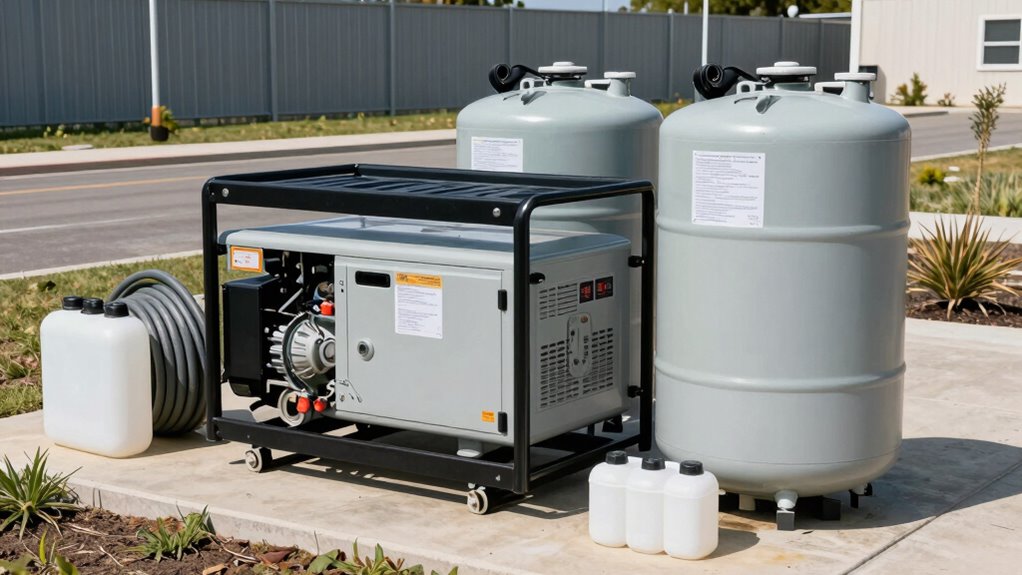
Regular long-term maintenance of your generator and fuel storage is key to keeping everything ready and safe over time. Proper upkeep prevents fuel contamination, which can clog your system or cause engine damage. Guarantee fuel storage areas meet ventilation requirements to prevent dangerous fumes buildup. Regularly inspect and clean fuel tanks and filters to avoid moisture and debris accumulation. Check for leaks, corrosion, and proper sealing to maintain safety. Keep storage containers tightly sealed when not in use. Test ventilation systems periodically to ensure they operate effectively. Use stable, approved fuel stabilizers if storing fuel long-term. Additionally, maintaining fuel quality is essential to prevent issues related to degradation or contamination. Ensuring appropriate fuel stabilization practices can significantly extend the lifespan of stored fuel. Schedule routine maintenance to detect issues early. Incorporating fuel testing into your maintenance routine can help identify potential problems before they become serious. Proper maintenance practices extend equipment life and keep your generator ready for emergencies.
Frequently Asked Questions
How Often Should I Inspect My Fuel Storage Containers for Leaks?
You should inspect your fuel storage containers for leaks at least once a month. Regular inspection frequency guarantees early leak detection, preventing potential hazards and fuel loss. During each check, look for any cracks, drips, or unusual odors. If you notice any issues, address them immediately. Consistent inspections help maintain safety, keep your fuel secure, and ensure your generator runs smoothly when needed.
Can I Mix Different Types of Fuel in the Same Container Safely?
You shouldn’t mix different types of fuel in the same container because fuel compatibility varies, and incompatible mixes can cause dangerous reactions or engine damage. Always check container labeling to verify it’s designated for specific fuel types. Mixing fuels might seem convenient, but it risks safety and performance. For your safety, use separate, clearly labeled containers for each fuel type, and follow manufacturer recommendations to avoid unforeseen hazards.
What Are the Best Methods to Dispose of Old or Contaminated Fuel?
You should never pour old or contaminated fuel down the drain. Instead, consider fuel recycling services or specialized disposal facilities that handle contaminated fuel safely. These services often include contaminant removal, ensuring harmful substances are extracted before disposal or reuse. Always follow local regulations, and never attempt to burn or dump fuel yourself. Proper disposal protects the environment and keeps your equipment safe.
How Do Environmental Conditions Affect Fuel Stability Over Time?
Environmental conditions greatly influence fuel stability over time. Weather impacts, such as humidity, temperature fluctuations, and exposure to sunlight, accelerate fuel degradation. High temperatures cause evaporation and chemical changes, while moisture promotes microbial growth and corrosion. To maintain fuel quality, store it in a cool, dry place, use airtight containers, and consider stabilizers. Regularly check and rotate stored fuel to prevent deterioration caused by changing weather conditions.
Are There Specific Safety Precautions for Storing Fuel Indoors?
Yes, you should follow specific safety precautions for indoor fuel storage. Keep the fuel in approved containers, store it in a well-ventilated area, and guarantee proper ventilation requirements are met to prevent buildup of fumes. Avoid storing fuel near heat sources or open flames. Regularly check for leaks or spills, and never store more fuel than necessary. Proper indoor storage minimizes risks and keeps your environment safe.
Conclusion
Remember, safety comes first when handling generator fuel. Choose the right containers and storage spots, follow proper refilling procedures, and stay vigilant during outages. Regular maintenance keeps everything running smoothly and reduces risks. As the saying goes, “A stitch in time saves nine”—address issues early to prevent bigger problems later. By staying informed and cautious, you’ll keep your home safe and your generator ready when you need it most.
NFL season / tailgating Picks
team gear
As an affiliate, we earn on qualifying purchases.