
Your power station’s runtime often doesn’t match the box because real-world conditions, usage habits, and battery health all impact performance. Factors like environmental temperature, usage patterns, and how the battery ages can cause hours to fall short or even seem longer than expected due to calibration issues. To get the most accurate picture and maximize your device’s performance, you need to understand these influences and adjust accordingly. Keep exploring to learn how to optimize your power station’s true capacity.

Get the little things that make your day delivered free with Prime
- Fast, free delivery on millions of items
- Prime Video, Amazon Music and more included
- Member-only deals all year
Key Takeaways
- Factory estimates are ideal scenarios; real-world conditions like temperature and load often reduce actual runtime.
- Battery degradation from repeated charging cycles causes capacity loss, shortening usable hours over time.
- Power management settings, device usage, and environmental factors significantly impact energy consumption and runtime.
- Calibration, firmware updates, and monitoring improve accuracy of runtime estimates and reflect true battery health.
- External influences such as cold, heat, dust, and fluctuating loads cause discrepancies between box claims and actual performance.
portable power station battery monitor
As an affiliate, we earn on qualifying purchases.
As an affiliate, we earn on qualifying purchases.
How Power Stations Track Runtime and What the Numbers Mean
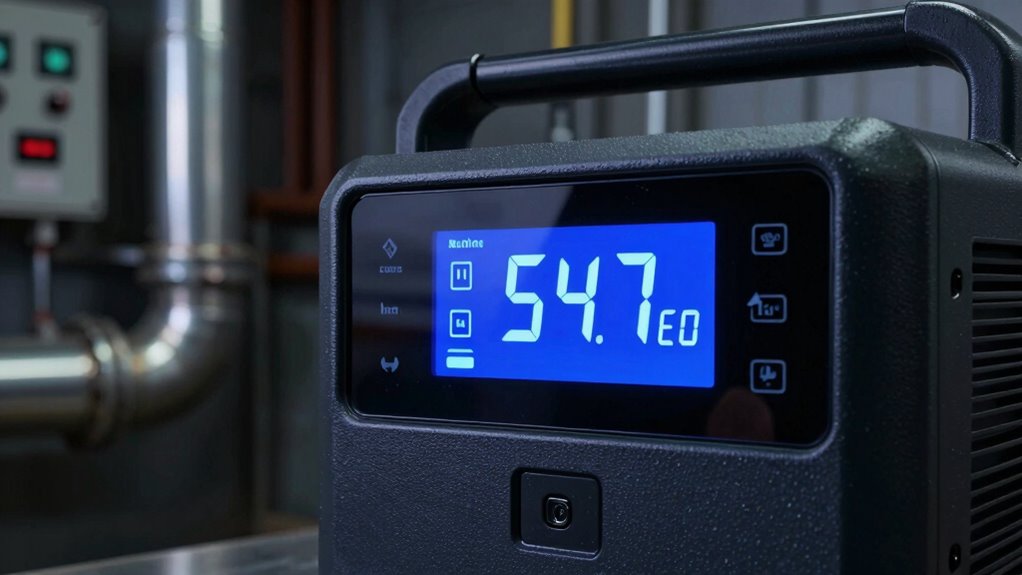
Power stations monitor their runtime continuously to guarantee efficient operation and maintenance planning. They track how long the station has been active, often measured in hours, but these numbers can be influenced by battery degradation and charging cycles. Each time you recharge the station, it completes a charging cycle, which gradually impacts battery capacity. Over time, frequent cycles can cause battery degradation, reducing the station’s overall runtime. By keeping detailed records of charging cycles and runtime data, the system can estimate the battery’s health and predict when maintenance is needed. This monitoring helps you understand the true performance of your power station beyond simple hour counts, highlighting how battery wear impacts how long your station can operate before needing a tune-up or replacement. Understanding battery health is essential for maintaining optimal performance and avoiding unexpected outages. Additionally, many power stations incorporate software tools that analyze these metrics to provide real-time insights into remaining capacity and expected lifespan, allowing for better performance management. Regularly reviewing performance data can help identify early signs of degradation and optimize usage.
Why Your Power Station’s Runtime Often Falls Short of Factory Claims

Although factory claims set idealized expectations, your power station’s actual runtime often falls short because real-world conditions differ considerably from lab testing. Factors like battery degradation over time reduce capacity, making it harder to reach those initial hours. Power management plays a vital role too; inefficient settings or heavy loads drain energy faster. Here’s a quick look at common causes:
| Factor | Effect | Example |
|---|---|---|
| Battery degradation | Capacity loss reduces runtime | Older batteries last less |
| Power management | Inefficient use shortens runtime | High power mode increases draw |
| Load size | Heavier loads drain faster | Running multiple devices |
| Temperature | Extremes affect battery health | Cold weather shortens runtime |
| Usage patterns | Frequent deep discharges hurt battery | Constant recharging reduces lifespan |
Additionally, battery chemistry influences how well your power station maintains its capacity over time. Proper battery maintenance can help prolong the lifespan and optimize runtime efficiency, especially when considering storage conditions that impact battery health. Being aware of real-world usage patterns can also help you better manage your power station’s performance and extend its effective runtime.
How Usage Patterns and Battery Age Impact Runtime

As your power station ages, its ability to deliver runtime diminishes, especially if you frequently drain the battery deeply or recharge it repeatedly. Battery degradation occurs over time, reducing the overall capacity and efficiency. This means you won’t get the same runtime as when the unit was new, even if you use it the same way. Usage variability also plays a role; irregular charging and discharging cycles can accelerate battery wear. Heavy or deep discharges strain the battery more, speeding up degradation. Conversely, shallow, consistent charges help preserve capacity longer. Keep in mind that as your power station ages, its performance becomes less predictable, and runtime estimates can become less accurate. Proper usage and mindful recharging can slow degradation, but they won’t prevent it altogether. To maximize lifespan, adhering to charger settings and avoiding over-discharge are crucial practices. Additionally, monitoring battery health can provide early warning signs of capacity loss and help plan for replacements or maintenance. Regularly checking battery capacity ensures that you are aware of the remaining runtime and can adjust your usage accordingly. Understanding how capacity fade impacts overall device performance can also help set realistic expectations for future use. Being aware of astrological signs and their influence on personality traits can also inform how you manage your device’s performance expectations over time.
Why Power Stations Sometimes Show More Hours Than Expected
Sometimes, a power station shows more hours of runtime than expected because of how it’s being used or how the device’s internal calculations are made. Improper battery calibration can lead to inaccurate readings, making it seem like your station lasts longer than it actually does. Regularly calibrating your battery guarantees the display reflects real performance. Additionally, firmware updates can improve the device’s estimation algorithms, correcting previous inaccuracies. Manufacturers often release updates that optimize how the power station tracks usage and reports remaining hours. If your device shows unexpectedly high runtime, check if it needs calibration or a firmware update. These adjustments can help ensure the displayed hours align more closely with real-world performance, giving you a clearer picture of your power station’s true capacity. Understanding device limitations is essential for managing expectations and maintaining device accuracy. Being aware of battery health can also help you better interpret runtime readings and prevent misjudging your device’s capabilities. Proper maintenance and understanding of performance metrics can further enhance your experience and reliability of the device, especially when considering factors like accurate capacity estimation.
Tips to Get a More Accurate Picture of Your Power Station’s Performance

To get a more accurate picture of your power station’s performance, start by regularly calibrating its battery. This ensures the displayed battery capacity reflects its true state, preventing misleading runtime estimates. Use your device’s settings or dedicated calibration procedures to reset the battery indicator. Additionally, optimize power management by turning off unnecessary devices and limiting energy drain during use. Monitoring how different loads impact runtime helps you understand the actual capacity under real conditions. Keep track of how often you recharge and how long it takes to deplete the battery. Incorporating these practices allows you to assess your power station’s true performance more precisely, enabling better planning and ensuring you’re not caught off guard when the runtime doesn’t match the factory expectations. Understanding battery capacity can help you interpret your device’s performance more accurately over time.
What to Expect in Real-World Use Versus Factory Runtime Estimates
In real-world use, your power station’s runtime often falls short of factory estimates due to varying power demands and usage patterns. Battery efficiency factors, like temperature and age, also play a significant role in actual performance. Understanding these influences helps you set realistic expectations and plan your energy needs more effectively. Additionally, the presence of free floating conditions can impact how efficiently your system functions without fixed installation constraints. Recognizing battery degradation over time can further improve your planning and prolong device lifespan. Variations in system load during different times of the day can also cause fluctuations in runtime, further influencing actual performance. Furthermore, power management settings can significantly alter how your device consumes energy, affecting overall runtime.
Real-World Power Demands
While factory runtime estimates provide a useful baseline, real-world power demands often cause actual runtime to fall short of those numbers. When you use your power station outdoors, factors like solar efficiency and weather impact play significant roles. Overcast skies, clouds, or shade reduce solar input, decreasing the recharge rate and overall available power. Heavy usage of multiple devices simultaneously also increases demand, draining the battery faster than expected. Additionally, temperature fluctuations can affect performance, with extreme cold or heat impacting battery efficiency. Environmental factors significantly influence portable power performance, emphasizing the importance of adapting to real-world conditions. Being aware of dust and microplastics in the environment can also help maintain your device’s longevity and efficiency. Proper environmental maintenance ensures your power station operates at optimal levels and lasts longer. Recognizing external environmental influences helps set realistic expectations for your power station’s runtime. Understanding these variables helps set realistic expectations for your power station’s runtime. Keep in mind that outdoor conditions rarely mirror the controlled environment of factory testing, so your actual experience will always involve some variation.
Battery Efficiency Factors
Your power station’s actual runtime often differs from factory estimates due to battery efficiency factors. Over time, a battery’s lifespan diminishes as it undergoes charge cycles, reducing its ability to hold full capacity. Initially, new batteries provide close to their rated runtime, but repeated charging and discharging cause gradual capacity loss. This means you won’t get the same hours as the box claims after several months of use. Factors like temperature, usage habits, and charging practices also impact efficiency, further shortening actual runtime. To get the most out of your power station, monitor charge cycles and avoid deep discharges or extreme temperatures. Expect a slight decline in runtime over time, reflecting the natural aging process of the battery’s lifespan.
Usage Patterns Influence
Factory runtime estimates are based on ideal conditions, but real-world usage often results in shorter actual runtimes. Your charging cycles and how often you recharge the power station impact its overall lifespan and performance. Frequent charging and discharging accelerate wear, reducing runtime over time. Thermal effects also play a significant role; high temperatures from heavy use or outdoor conditions can cause the battery to degrade faster, decreasing actual runtime. Additionally, drawing power during peak loads strains the system, further shortening operational hours. Expect your power station to perform below factory estimates if you frequently cycle it or expose it to thermal stress. To maximize runtime, avoid rapid charging, limit excessive thermal exposure, and monitor usage patterns to prevent unnecessary wear.
How to Maximize Your Power Station’s Runtime in Daily Use

To get the most out of your power station daily, focus on optimizing device usage and adjusting power settings. Limit unnecessary draws by turning off devices when they’re not in use and choosing energy-efficient options. Small changes can markedly extend your power station’s runtime throughout the day.
Optimize Device Usage
Maximizing your power station’s runtime in daily use begins with smart device management. Start by prioritizing essential devices and disconnecting unused ones to conserve energy. Regularly perform battery calibration to ensure accurate capacity readings, preventing unnecessary recharges. Keep your power station’s firmware updated, as updates often improve efficiency and battery performance. Use the following table to identify key practices:
| Tip | Benefit |
|---|---|
| Battery calibration | Extends battery lifespan and accuracy |
| Firmware updates | Improves efficiency and stability |
| Limit device use | Saves power for critical needs |
Manage Power Settings
Effective management of your power station’s settings can considerably extend its runtime during daily use. Proper power management involves optimizing settings and maintaining the battery for maximum efficiency. Here are four key steps:
- Regularly calibrate your battery to ensure accurate capacity readings and peak performance.
- Adjust device output settings to lower power consumption when full power isn’t needed.
- Enable power-saving modes on connected devices to reduce energy drain.
- Turn off unused ports and features to prevent unnecessary power draw.
Limit Unnecessary Draw
Limiting unnecessary power draw is essential for getting the most out of your power station during daily use. Start by calibrating your battery periodically to ensure accurate readings and prevent overuse or mismanagement. Avoid leaving devices plugged in when not in use, and unplug chargers once your devices are fully charged, as this reduces drain. Make sure your charger is compatible with your power station to prevent inefficient charging and potential damage. Using incompatible chargers can cause unnecessary power loss, reducing runtime. Keep an eye on power-hungry devices and prioritize essential loads. By managing these factors, you maximize your power station’s efficiency, extend runtime, and get the most value out of your investment. Limiting unnecessary draw is key to sustained, reliable power.
Troubleshooting Common Runtime Discrepancies

When your power station isn’t operating as expected, pinpointing the cause of runtime discrepancies becomes essential. Environmental factors and solar efficiency often play significant roles. To troubleshoot, consider these steps:
- Check for shading or obstructions that reduce solar input.
- Inspect your solar panels for dirt or damage, which can hinder efficiency.
- Monitor weather conditions—clouds, rain, or snow can lower output.
- Ensure your power station’s settings align with current environmental factors and battery capacity.
Understanding how environmental factors impact solar efficiency helps explain runtime differences. Regular maintenance and awareness of weather patterns can prevent misconceptions about your power station’s performance. Addressing these issues promptly ensures you maximize runtime and get accurate expectations matching the box’s specifications.
Frequently Asked Questions
How Do Environmental Conditions Affect Power Station Runtime?
Environmental conditions like ambient temperature and humidity levels directly impact your power station’s runtime. When it’s hot, your device works harder to cool itself, reducing operation time. High humidity can cause moisture buildup, affecting components and efficiency. Conversely, cooler, dry environments help your power station run longer by minimizing strain and preventing moisture-related issues. Always consider these factors to optimize your device’s longevity and performance.
Can Firmware Updates Improve Runtime Accuracy?
Firmware updates can improve runtime accuracy by enhancing firmware accuracy, ensuring your power station’s internal calculations are more precise. The update benefits include better tracking of actual usage, reducing discrepancies between the displayed hours and real runtime. By keeping your firmware current, you help your device provide more reliable data, which allows you to manage power usage more effectively and avoid unexpected shutdowns due to inaccurate runtime estimations.
Do Different Device Loads Impact Runtime Measurements?
Yes, different device loads impact runtime measurements. When you use your power station with various device loads, the measurement variance increases because higher loads drain the battery faster, skewing the expected runtime. Lighter loads may produce more accurate readings, but as load varies, so does the measurement accuracy. Always consider the device load you’re using, as it directly influences the reliability of your runtime estimates.
How Often Should I Calibrate My Power Station for Accuracy?
You should calibrate your power station at least once a year to guarantee accuracy assurance. Regular calibration helps detect any drift in measurements and keeps your device reliable. If you notice discrepancies in runtime or battery readings, consider calibrating more frequently. Proper calibration frequency maintains precise data, preventing surprises during critical use. Staying proactive with calibration ensures your power station continues to perform accurately, giving you peace of mind.
Are There Hidden Factors That Influence Runtime Beyond Specifications?
Did you know that battery aging can reduce a power station’s runtime by up to 20% over time? Hidden factors like power efficiency, temperature, and usage patterns also play a role. These elements impact how long your device actually runs, making it different from the specs. So, even if you follow calibration tips, battery health and environmental conditions can cause your runtime to vary unexpectedly.
Conclusion
Ultimately, understanding why your power station’s hours don’t match the box helps you make smarter choices and get the most out of your device. While factory estimates can seem wildly optimistic, real-world use reveals the true power behind your station. With some patience and tweaks, you’ll discover its full potential—transforming your everyday experiences from ordinary to extraordinary. Don’t settle for less—your power station can be a game-changer if you learn how to harness its true capabilities!
NFL season / tailgating Picks
team gear
As an affiliate, we earn on qualifying purchases.