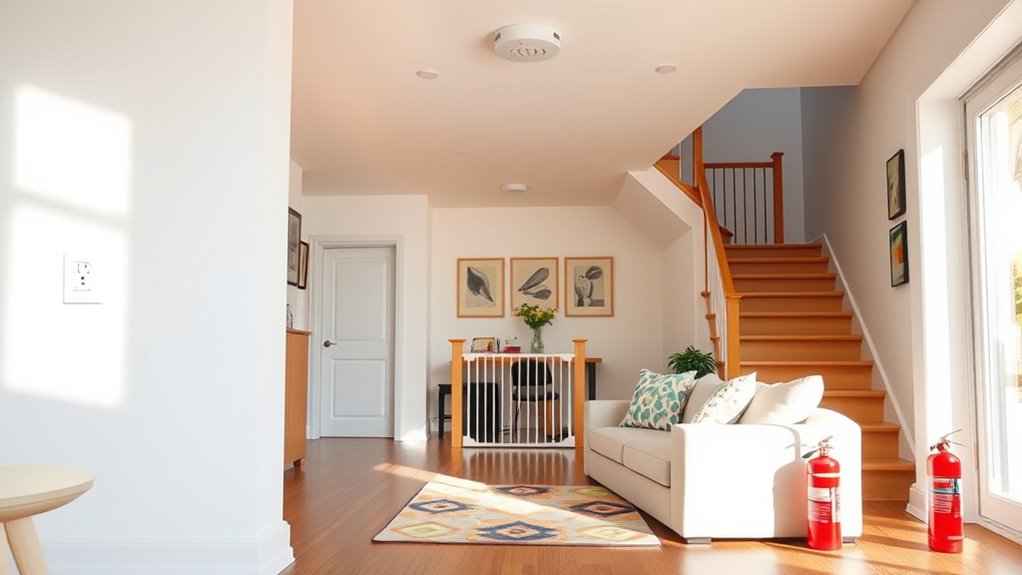

To keep your family safe at home, create a thorough safety checklist covering fire escape plans, smoke alarms, childproofing, window and stair safety, and other precautions. Practice escape routes regularly, install and test alarms, secure heavy furniture, and keep hazards out of children’s reach. Make certain proper lighting, install safety gates, and maintain detectors for carbon monoxide. Staying proactive with these steps helps prevent accidents—continue exploring to discover more vital safety tips.
Key Takeaways
- Create and practice fire escape plans with two routes from each room.
- Install, test, and maintain smoke and carbon monoxide detectors on every home level.
- Childproof your home by securing heavy furniture, covering outlets, and locking away dangerous items.
- Ensure windows and stairways have safety locks, gates, and adequate lighting to prevent falls.
- Keep a well-stocked first aid kit and know emergency contact numbers for quick response.

Are you confident your home is as safe as it can be? Ensuring safety starts with simple, proactive steps that protect everyone in your family. One of the most critical aspects is establishing clear fire escape plans. You need a well-practiced route that everyone understands, including children. Map out two escape routes from each room, and make sure all family members know how to use windows and doors safely in an emergency. Practice these plans regularly so that, in a real fire, everyone can evacuate quickly without confusion or panic. Keep escape routes clear of clutter and ensure that windows open easily, especially on the ground floor or basement. Installing smoke alarms on every level and testing them monthly is also essential. When you combine these fire safety measures with childproofing tips, you markedly reduce the risk of accidents and injuries.
Childproofing your home is an ongoing process that requires attention to detail. Small changes can make a big difference in creating a safer environment for kids. Use outlet covers to prevent electrical shocks and secure cords out of their reach. Anchor heavy furniture and televisions to the wall to prevent tipping accidents. Keep sharp objects, medicines, and cleaning supplies locked away in cabinets that children cannot open. If you have stairs, install safety gates at the top and bottom, and always supervise young children around open stairways. Cover sharp edges on furniture with padding, and ensure windows have locks or stops to prevent falls. These childproofing tips aren’t just about locking things away—they’re about creating an environment where kids can explore safely and parents can breathe easier. Additionally, home safety features such as proper lighting and secure windows are vital for preventing accidents and ensuring a safe living space.
Beyond fire escape plans and childproofing, consider other safety precautions. Install carbon monoxide detectors and check their batteries regularly. Keep a well-stocked first aid kit accessible, and learn basic first aid procedures. Make sure all family members are aware of emergency numbers and know how to respond in various situations. Keep your home well-lit, especially entrances, hallways, and staircases, to prevent trips and falls. Regularly inspect your smoke detectors and replace batteries as needed. Also, secure windows, especially on upper floors, to prevent accidental falls. By combining these safety measures with your fire and childproofing strategies, you create a broad safety net that protects your family from unforeseen hazards. Building safety into your daily routines and home environment ensures everyone can live comfortably, knowing they’re protected against common dangers.
Frequently Asked Questions
How Often Should Fire Drills Be Conducted at Home?
You should conduct fire drills at home at least twice a year. Regular fire drill frequency helps guarantee everyone knows what to do in an emergency and keeps your emergency preparedness planning effective. Make sure to practice different escape routes and roles so your family stays prepared. Consistent drills build confidence and reduce panic during actual emergencies, making your home safer and your response more instinctive when it really counts.
What Is the Best Way to Childproof Electrical Outlets?
Think of electrical outlets as open doors tempting curious kids. To childproof them, you should install outlet covers, which act like sturdy locks, preventing little hands from reaching inside. This is a simple yet effective step in electrical safety. Always choose snug-fitting outlet covers designed for safety, and replace any damaged ones promptly. By doing so, you create a safer environment, making your home a secure space for your children to explore.
How Can I Prevent Falls on Slippery Floors?
To prevent falls on slippery floors, you should regularly clean and dry surfaces to eliminate water or spills. Use non-slip rugs or mats in high-traffic areas and add slip-resistant pads under rugs to prevent slipping. Encourage family members to walk carefully, especially in wet conditions. Keep walkways clear of clutter and ensure proper lighting. These fall prevention tips reduce risks on slippery surfaces, keeping everyone safe at home.
What Safety Measures Are Recommended for Outdoor Play Areas?
You should regularly conduct playground inspections to identify and fix hazards like broken equipment or sharp edges. Always guarantee outdoor supervision by actively watching children during play to prevent accidents. Keep the area clear of debris, and make sure surfacing materials like mulch or rubber mats are maintained at proper depths for impact absorption. These safety measures help create a secure environment where kids can enjoy outdoor play without unnecessary risks.
How Should I Store Hazardous Cleaning Supplies Safely?
Think of hazardous cleaning supplies as treasures that need guarding. Store chemical storage in a locked cabinet, out of kids’ reach, and away from heat and moisture. Always label safety clearly on each container, so everyone knows the contents at a glance. Double-check that lids are secure after use, and never transfer chemicals to unmarked containers. This way, you keep your home safe and prevent dangerous accidents.
Conclusion
By following this home safety checklist, you’re building a fortress of protection for your loved ones, much like a knight safeguarding their castle. Each precaution you take adds a layer of defense, turning your home into a sanctuary where peace prevails. Remember, a little vigilance now can prevent a storm of trouble later. Stay proactive, stay prepared, and watch as your home remains a safe haven—your personal fortress against life’s unexpected battles.