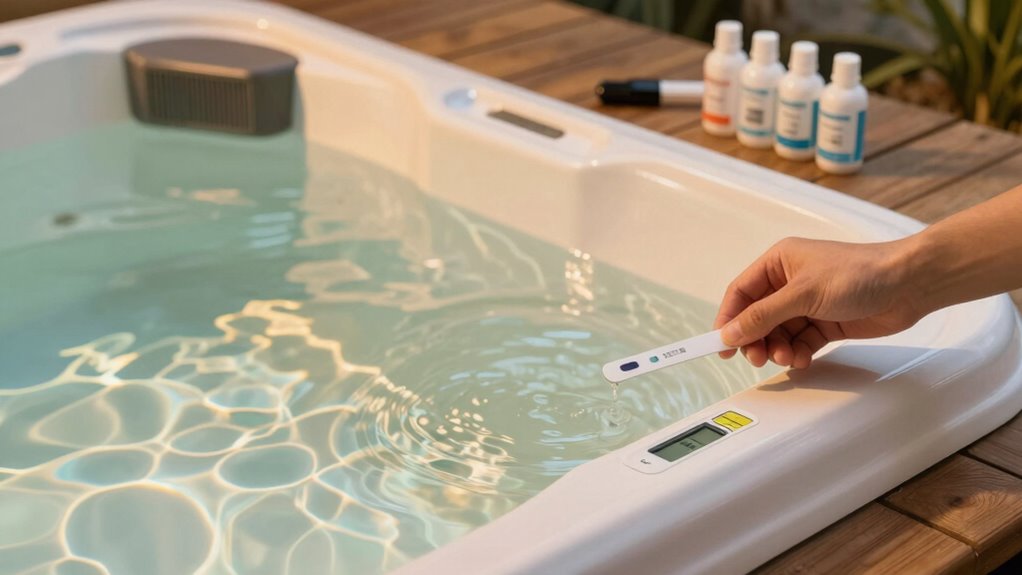
To keep your hot tub water clear, establish a regular water-test routine. Use test strips or liquid kits to check pH levels, sanitizer, and overall water chemistry weekly. Adjust chemicals as needed to maintain pH between 7.2 and 7.8 and sanitizer around 3–5 ppm. Regularly clean filters and drain your tub every few months. Following these simple steps will help you maintain a sparkling, safe hot tub. Keep going to discover more effective tips to guarantee pristine water.
Key Takeaways
- Regularly test pH (7.2–7.8) and sanitizer levels using test strips or kits.
- Conduct weekly water testing to identify and correct imbalances early.
- Use techniques like free floating to ensure even chemical distribution and water clarity.
- Clean or replace filters monthly to maintain filtration efficiency and water quality.
- Drain and refill the hot tub every 3-4 months to prevent buildup of contaminants and maintain clarity.
How to Test Your Hot Tub Water Step by Step
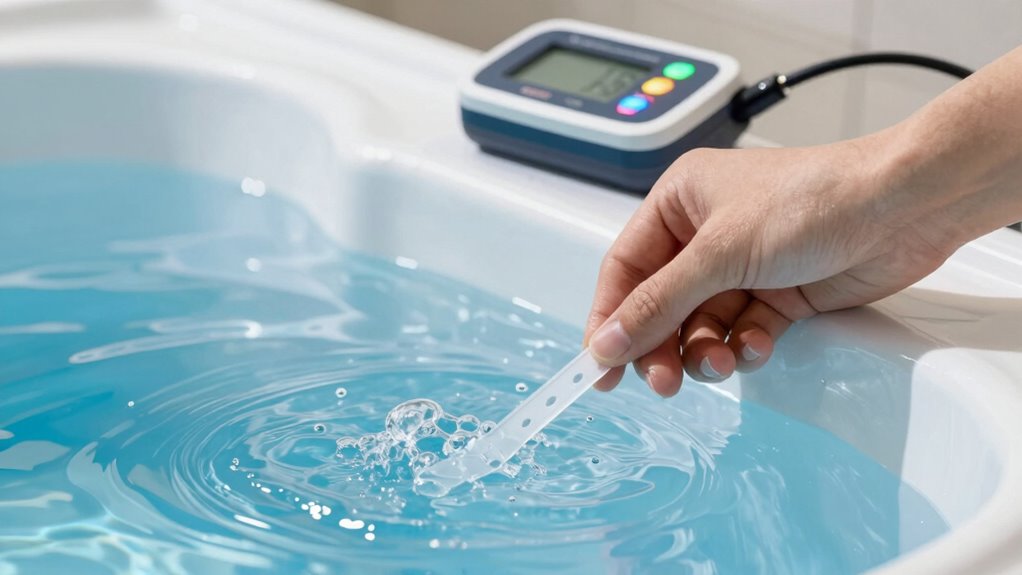
Wondering how to guarantee your hot tub water stays clean and safe? The first step is testing your water regularly. Start by collecting a water sample from the hot tub. Use test strips or a liquid test kit to check the pH level, aiming for a range between 7.2 and 7.8. Keep an eye on pH fluctuation, as imbalances can lead to cloudy water and equipment damage. Regular testing helps you catch these changes early. Additionally, measuring sanitizer levels ensures algae prevention remains effective. Proper pH balance discourages algae growth and keeps your water clear. Incorporating these tests into your routine, ideally weekly, to maintain ideal water conditions. Consistent testing gives you control, so your hot tub stays inviting and safe. Free Floating techniques can also be employed to ensure even distribution of chemicals and maintain water clarity. Being aware of potential microplastics in dust or other contaminants can further improve overall water quality and safety. Routine testing provides a comprehensive understanding of water chemistry and helps prevent issues before they arise.
Understanding Hot Tub Water Chemistry: What Matters Most
Maintaining the right pH balance and sanitizer levels is key to keeping your hot tub clean and safe. When pH gets too high or low, it can cause skin irritation and damage your equipment. Regularly checking and adjusting these levels guarantees a comfortable soak and extends the life of your hot tub. Additionally, understanding hot tub water chemistry helps prevent common issues like cloudy water and unpleasant odors. Being aware of dream symbolism related to water can also help you interpret subtle signs from your hot tub environment. Staying informed about emerging AI trends can provide innovative tools for monitoring and maintaining optimal water quality more efficiently. Incorporating water testing kits into your routine ensures you catch potential imbalances early before they become problematic. Using advanced water testing technology can further enhance your ability to maintain perfect water conditions.
pH Balance Essentials
Understanding pH balance is vital because it directly affects your hot tub’s water quality and equipment longevity. When pH levels fluctuate, it can lead to cloudy water, scaling, or corrosion of parts. Maintaining a stable pH prevents these issues and keeps your water comfortable. Mineral content plays a pivotal role in pH stability; high mineral levels can cause pH fluctuation, making it harder to keep the water balanced. Regular testing helps you catch changes early, allowing you to adjust pH levels promptly. Ideally, keep pH between 7.2 and 7.8 to ensure the water remains safe and inviting. Proper filter sizing/flow can also help maintain consistent chemical levels by reducing debris and contaminants that affect pH. Additionally, understanding water chemistry can help you make more informed adjustments and prevent common problems. Being aware of chemical interactions between sanitizers and other treatment products further enhances your ability to maintain balanced water. Monitoring and adjusting pH regularly is essential because it influences water quality, and understanding these interactions can help you prevent issues before they arise. Incorporating testing kits into your routine can make maintaining proper pH levels more accurate and straightforward. By monitoring and adjusting pH regularly, you protect your hot tub’s equipment and enjoy clearer, more pleasant water every time you soak.
Sanitizer Levels Control
Proper sanitizer levels are essential because they directly eliminate bacteria and prevent the growth of harmful germs in your hot tub. Maintaining the right chlorine levels ensures your sanitizer stays effective, providing a safe and clean environment. If chlorine levels are too low, bacteria can thrive, risking health and safety. Conversely, overly high levels can cause skin irritation and reduce sanitizer effectiveness. Regular testing helps you keep chlorine within the recommended range, usually around 3–5 ppm. Adjust your sanitizer accordingly to maintain this balance, especially after heavy use or contamination. Consistent control of sanitizer levels not only keeps your water crystal clear but also prolongs the life of your hot tub components. Staying vigilant with testing and adjustments is key to hassle-free, healthy hot tub enjoyment. Additionally, understanding water chemistry helps optimize overall water quality and safety. Proper testing techniques and understanding the impact of pH on sanitizer effectiveness are crucial for maintaining optimal water conditions. Monitoring water balance is equally important to prevent issues like cloudy water or scaling, ensuring your hot tub remains inviting and safe. Regularly checking and adjusting sanitizer levels based on bacteria growth risks helps maintain a healthy environment for all users. For best results, consider implementing a routine testing schedule to stay ahead of potential problems and keep your hot tub in perfect condition.
Reading Your Water Test Results and Fixing Imbalances
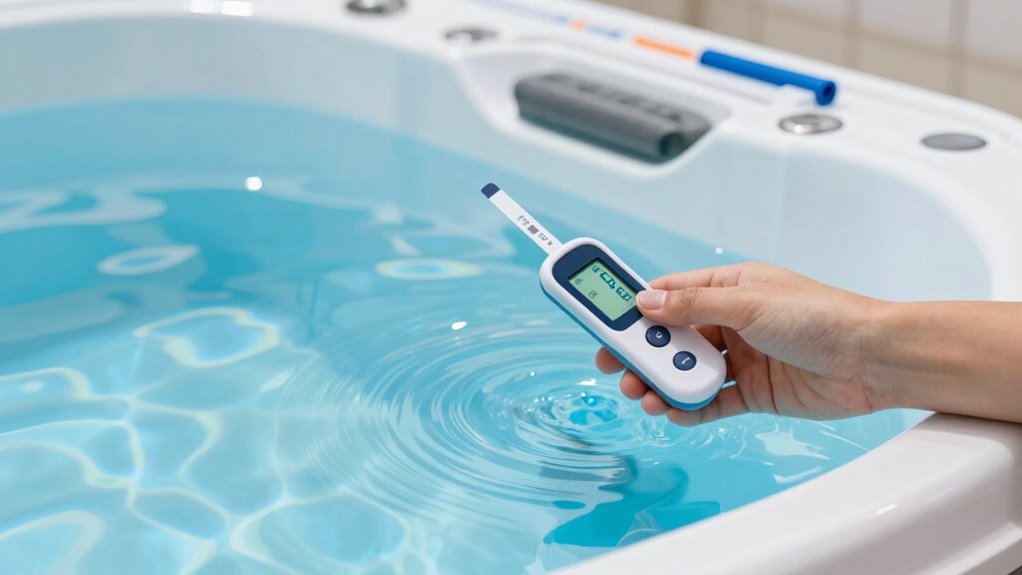
You need to understand your water test results to keep your hot tub safe and comfortable. By interpreting these results, you can identify which chemical levels need modification and fix common issues quickly. Staying on top of this ensures your hot tub stays balanced and ready for use. Incorporating smart monitoring tools can help automate this process and provide real-time data. Regular testing and understanding your water chemistry are essential for effective home soundproofing and noise reduction in your environment. Additionally, maintaining proper water chemistry balance helps prevent skin irritation and equipment corrosion, ensuring a safer and more enjoyable hot tub experience. Using the correct filter maintenance techniques is also crucial to keep the water clear and free of contaminants. Being aware of chemical imbalances allows you to act swiftly and maintain optimal water quality.
Interpreting Test Results
Reading your water test results is essential for maintaining a safe and comfortable hot tub. When you check the levels, look for pH fluctuations, which can affect sanitizer effectiveness and cause skin or eye irritation. If the pH is too low, your water may become corrosive, while high pH can lead to cloudy water and scale buildup. Accurate interpretation involves understanding the ideal ranges: pH should stay between 7.2 and 7.8. If your test shows imbalances, act promptly to correct them. Remember, inconsistent pH levels can reduce sanitizer efficiency, making it harder to keep the water clear and safe. Regularly reviewing your results helps you spot trends early, preventing larger issues down the line and ensuring your hot tub remains inviting and hygienic. Incorporating effective preparation into your routine ensures better results and easier maintenance. Additionally, understanding how to interpret test results properly allows you to address issues swiftly and maintain optimal water quality. Conducting proper filtration helps remove contaminants and protect your hot tub’s components. Consistently monitoring these parameters also helps you maintain the proper water chemistry, which is vital for the longevity of your hot tub components. Paying attention to chemical balance adjustments ensures your water remains healthy and balanced over time.
Balancing Chemical Levels
When your water test results reveal imbalances, it’s important to take prompt action to restore the correct chemical levels. pH fluctuation can cause discomfort and reduce sanitizer effectiveness, so adjust the pH level to stay between 7.2 and 7.8. If the pH is too high, add pH reducer; if too low, add pH increaser. Monitoring regularly helps prevent mineral buildup, which can cause cloudy water and scaling on your hot tub’s surfaces. To combat mineral buildup, consider using a sequestering agent or clarifier as needed. Consistent testing and adjustments guarantee your water remains balanced, clear, and safe. Addressing these issues quickly prevents long-term damage and keeps your hot tub enjoyable for every soak.
Addressing Common Issues
Accurate water testing is essential for maintaining a healthy hot tub, as it helps identify imbalances that can affect water quality and comfort. When test results show high levels of pH or alkalinity, you can correct them by adding the appropriate chemicals. If you notice cloudy water or a strange odor, check your filter maintenance routine—clean or replace filters as needed to remove debris and bacteria. For heater troubleshooting, if your hot tub isn’t heating properly, test the water temperature and inspect the heater for issues like tripped safety sensors or mineral buildup. Addressing these common issues promptly ensures your hot tub runs smoothly, stays clear, and remains inviting. Regular testing and maintenance keep your hot tub in top condition and prolong its lifespan.
Common Water Problems and How to Solve Them
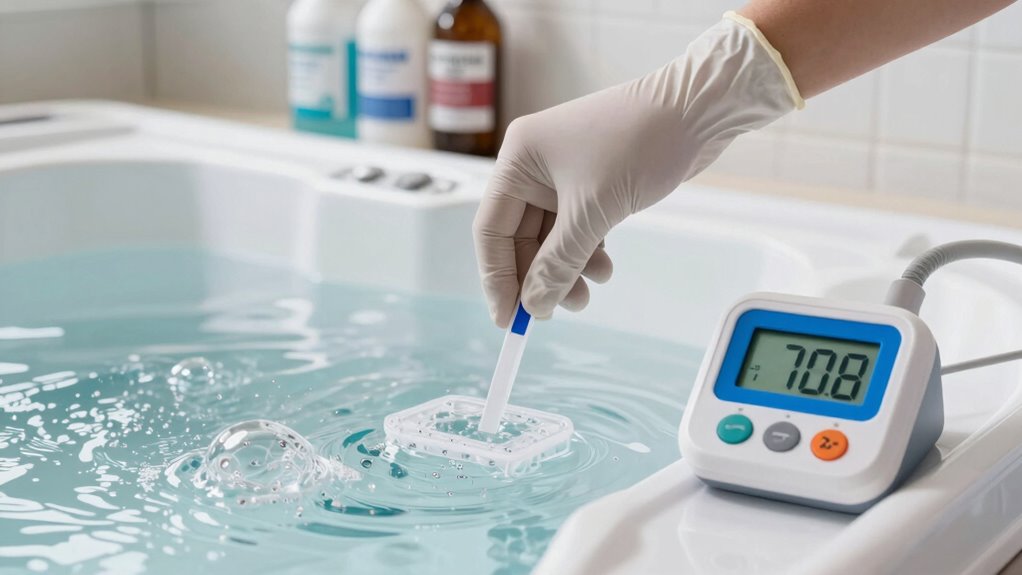
One of the most common water problems in hot tubs is imbalance in pH and sanitizer levels, which can lead to cloudy water, unpleasant odors, and skin irritation. To combat algae growth, regularly shock your hot tub and ensure proper sanitizer levels, especially if you notice green tint or slimy surfaces. Mineral buildup is another issue, often caused by hard water, resulting in cloudy water and scale on jets and surfaces. To prevent this, use a mineral scale inhibitor and drain the tub when buildup becomes noticeable. Maintaining proper water chemistry not only controls algae but also minimizes mineral deposits, keeping your hot tub clear and comfortable. Consistent testing and adjustments guarantee a healthy, inviting soak every time.
Adjusting Chemicals for a Clear, Safe Hot Tub
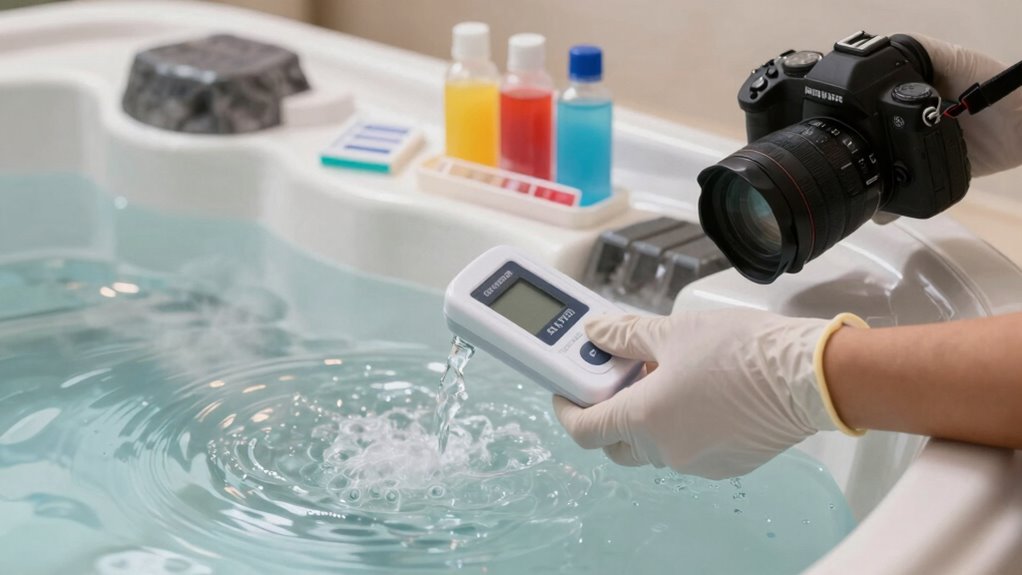
Maintaining proper chemical levels is key to keeping your hot tub water clear and safe for use. You need to regularly test and adjust chemicals to prevent issues like algae growth and cloudiness. Use sanitizer levels, pH, and alkalinity as your guide. Proper cover maintenance also helps reduce debris and contaminants, making chemical balancing easier. To help, here’s a quick reference:
| Chemical | Ideal Range | Purpose |
|---|---|---|
| Chlorine/Bromine | 3-5 ppm | Disinfects water, prevents algae |
| pH | 7.2-7.8 | Keeps sanitizer effective |
| Alkalinity | 80-120 ppm | Stabilizes pH levels |
| Calcium Hardness | 150-250 ppm | Prevents scaling and corrosion |
| Algae Prevention | Regular shock | Stops algae from forming |
Consistently adjusting these chemicals ensures clear, safe water and reduces maintenance worries.
Tips for Long-Term Hot Tub Water Maintenance
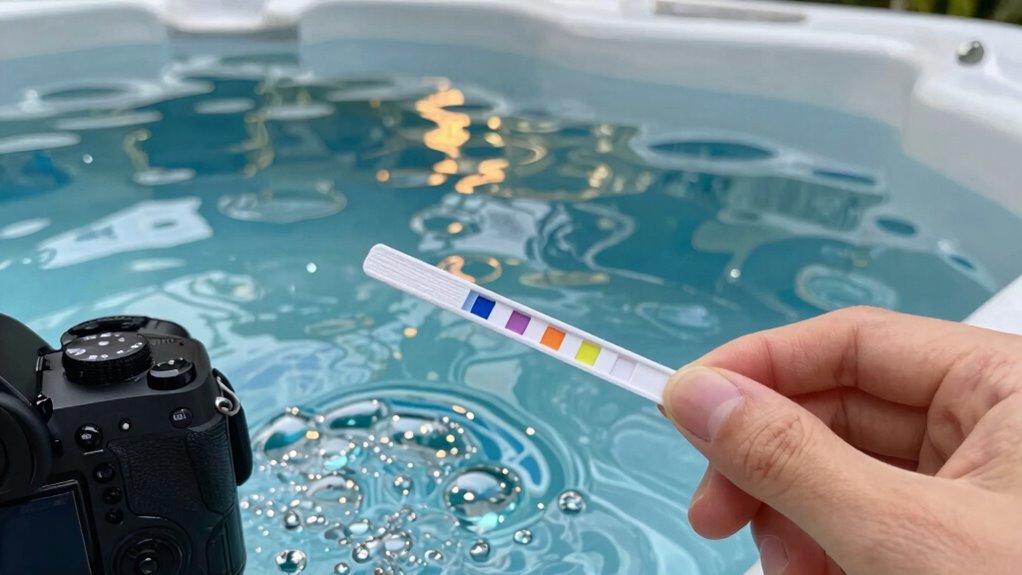
To keep your hot tub water inviting and safe over the long term, establishing a regular maintenance routine that extends beyond daily chemical checks is vital. Consistently monitor and adjust the water temperature to prevent bacteria growth and guarantee comfort. Regular filter maintenance is essential; clean or replace filters at least once a month to keep water clear and circulation efficient. Test the water chemistry weekly to maintain proper pH and sanitizer levels. Additionally, drain and refill the hot tub every 3-4 months to prevent buildup of contaminants. Keep the cover clean and inspect for damage to prevent debris from entering. By sticking to these tips, you’ll certify your hot tub remains inviting, safe, and easy to maintain over time.
Frequently Asked Questions
How Often Should I Perform the Water-Test Routine?
You should perform the water-test routine at least twice a week to make certain of chemical safety and maintain clear water. Use reliable water testing tools to check pH, sanitizer levels, and alkalinity. Regular testing helps you adjust chemicals promptly, preventing bacteria growth and cloudy water. If you notice heavy use or after a soak, test more frequently to keep your hot tub safe and inviting.
What Are the Signs of a Failing Hot Tub Water System?
If your hot tub’s water clarity worsens or you notice a cloudy appearance, it’s a sign your water system might be failing. Additionally, if the chemical balance is off, with pH or sanitizer levels consistently out of range, it can indicate issues. Pay attention to unusual odors, skin irritation, or algae growth, as these also signal your water system needs attention to maintain proper chemical balance and clarity.
Can I Use Household Chemicals to Balance Hot Tub Water?
Did you know that improper water balancing can cause skin irritation and damage your hot tub’s components? You should avoid using household chemicals for water balancing, as they aren’t formulated for hot tubs. Instead, use specialized spa chemicals to maintain proper pH, alkalinity, and sanitizer levels. This guarantees your hot tub stays clean, safe, and enjoyable, preventing costly repairs and keeping the water crystal clear.
How Does Weather Affect Hot Tub Water Maintenance?
Weather impacts your hot tub water maintenance by influencing seasonal temperature and humidity effects. When temperatures drop, you need to check and adjust chemical levels more frequently to prevent freezing or algae growth. High humidity can increase condensation, leading to potential water contamination. Regularly test your water, especially during seasonal changes, and use appropriate chemicals to keep your hot tub clear and balanced, regardless of weather fluctuations.
What Precautions Should I Take During Chemical Adjustments?
Did you know that improper chemical handling can cause skin irritation or respiratory issues? When adjusting chemicals, always wear gloves and goggles for chemical safety. Handle chemicals in a well-ventilated area, and add them slowly to prevent splashes. Follow manufacturer instructions carefully, and measure accurately. Proper handling guarantees safe, effective treatment, keeping your hot tub crystal clear and your health protected. Always prioritize safety during chemical adjustments.
Conclusion
Staying on top of your hot tub’s water quality keeps it inviting and safe, just like a trusty steed in a medieval joust. Regular testing and balancing your chemicals might feel like a quest, but it’s worth the effort. With a little routine, you’ll enjoy crystal-clear water and worry less about pesky problems. Remember, the secret is consistency—so keep up with your water-test routine, and your hot tub will be your oasis for years to come.