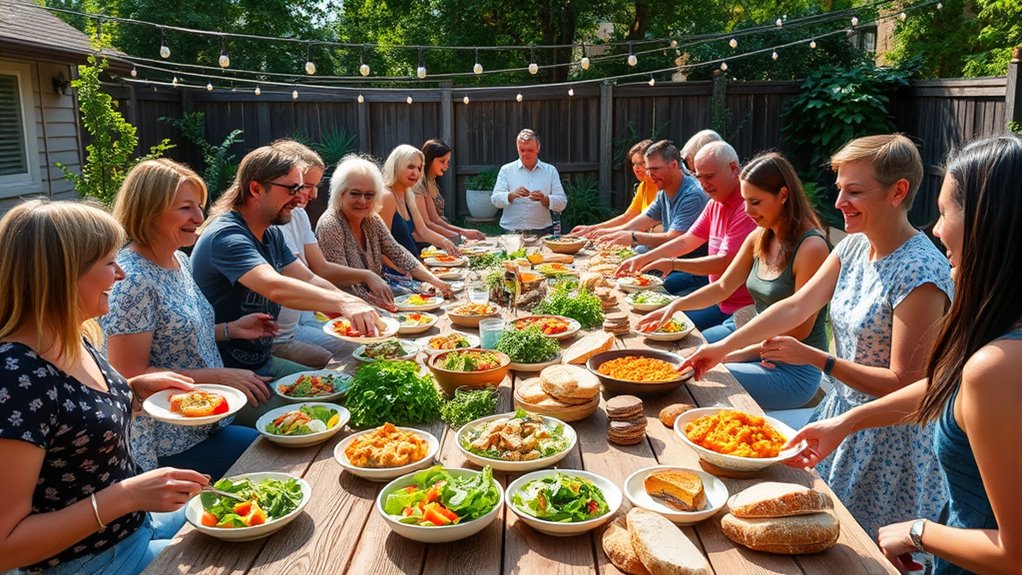

Joining local food swap groups lets you connect with a community that values seasonal, homegrown, and homemade foods. You’ll build social bonds, support local farmers, and promote eco-friendly practices. Sharing surplus produce, baked goods, or preserves not only cuts waste but also introduces you to new flavors and traditions. These groups foster cultural exchange and practical sustainability. Keep exploring to discover more ways these communities can enhance your food experience and community ties.
Key Takeaways
- Joining local food swap groups fosters community connections, friendships, and shared culinary experiences.
- Participating supports local farmers and promotes sustainable, farm-to-table food sourcing.
- Food swaps provide access to seasonal, diverse, and unique ingredients not easily found in stores.
- These communities serve as platforms for cultural exchange, learning about different culinary traditions.
- Engaging in food swaps encourages eco-friendly practices, reduces waste, and enhances sustainable living.

Have you ever wondered how sharing a meal can build stronger connections? When you join a local food swap group, you’re stepping into more than just a culinary exchange—you’re becoming part of a community that values fresh, sustainable, and locally sourced ingredients. These groups often emphasize farm to table principles, encouraging members to share homegrown produce, homemade preserves, or artisanal baked goods. By participating, you’re not only enjoying diverse flavors, but you’re also supporting local farmers and small-scale producers, which strengthens the local economy and reduces your carbon footprint. Engaging in these culinary exchanges fosters a sense of trust and camaraderie, as you exchange recipes, tips, and stories behind each dish. It’s a rewarding way to connect with neighbors who share your passion for good food and sustainable living.
Joining a food swap group makes it easy to access seasonal ingredients and learn new cooking techniques. You might bring freshly picked vegetables, homemade jams, or bread to share, and in return, you could receive unique cheeses, fermented foods, or specialty spices. These exchanges highlight the farm to table ethos, emphasizing the freshness and quality of ingredients directly from local sources. As you participate regularly, you start to recognize the value of supporting local agriculture and reducing food waste by sharing surplus harvests. It’s a simple yet effective way to incorporate more sustainable practices into your lifestyle while enjoying a variety of flavors you might not find at your usual grocery store. Plus, attending these gatherings can be a lot of fun—there’s an element of surprise and discovery in trying new foods and learning about their origins. sustainable practices are often reinforced through these community efforts, promoting environmental responsibility alongside culinary exploration.
Moreover, food swap groups often serve as platforms for cultural exchange. Different members bring dishes inspired by their backgrounds, creating a diverse tapestry of tastes and stories. These culinary exchanges deepen your understanding of different traditions and cooking styles, broadening your culinary horizons. The community aspect also means you’re building relationships beyond the kitchen—sharing meals, celebrating seasonal festivals, or collaborating on community gardening projects. Over time, these connections can turn into friendships, giving you a sense of belonging and purpose. Participating in local food swaps champions a transparent, farm to table approach, where you know exactly where your food comes from and how it was produced. It’s a practical step toward a more sustainable, connected lifestyle, rooted in the simple joy of sharing good food with others.
Frequently Asked Questions
How Do I Find Local Food Swap Groups Near Me?
To find local food swap groups near you, start by checking community events in your area or browsing online forums focused on food sharing. Social media platforms like Facebook often have local groups dedicated to food swaps. You can also visit community centers or farmers’ markets to ask about upcoming events. Engaging with these resources helps you connect with like-minded people and discover opportunities to exchange homemade or homegrown foods.
Are There Any Costs Associated With Joining a Meal Sharing Community?
Joining a meal sharing community usually involves some costs, like membership fees, which vary by group. You might also need to contemplate insurance coverage, as some communities require participants to have liability insurance to protect against accidents or food-related issues. Always check the specific group’s policies, because some may be free or have minimal costs, while others might charge for insurance or additional services.
What Types of Food Are Typically Exchanged in These Groups?
Did you know that over 60% of food swaps involve homemade baked goods? In these groups, you typically exchange a variety of home cooked dishes, such as seasonal salads, hearty stews, and desserts. You might also share homemade baked goods like bread, cookies, or muffins. This vibrant exchange not only diversifies your menu but also fosters community connections through shared culinary creativity and local ingredients.
How Do I Ensure Food Safety During Exchanges?
To guarantee food safety during exchanges, you should practice proper food handling by washing your hands and surfaces thoroughly. Use clean containers and utensils, and label all items with ingredients and dates. To prevent contamination, keep perishable items refrigerated until swap time and avoid cross-contact between raw and cooked foods. These steps help protect everyone by reducing risks of foodborne illnesses and contamination during your local food exchanges.
Can I Participate if I Have Dietary Restrictions or Allergies?
Yes, you can participate even with dietary restrictions or allergies. When joining a food swap group, communicate your allergy accommodations clearly and ask about dietary customization options for others’ dishes. This guarantees everyone’s safety and enjoyment. Be proactive in sharing your needs, and encourage others to do the same. By doing so, you create a respectful environment where all participants feel comfortable exchanging food safely.
Conclusion
By embracing local food swap groups, you open yourself to a world of shared flavors and gentle connections. These communities offer a subtle way to enrich your culinary journey while fostering a sense of belonging. As you partake in these exchanges, you’ll find that the simple act of sharing can weave a richer tapestry of community and tradition. Ultimately, it’s a graceful step toward savoring life’s most nourishing moments, one tasteful encounter at a time.