To stop buffering with your mesh Wi-Fi, guarantee your devices are close to nodes and minimize physical obstructions like walls and furniture. Update your firmware regularly and check for interference from electronics or neighboring networks. Properly position your nodes in open, elevated spots away from metal objects. Prioritize bandwidth for streaming or gaming, and monitor your signal strength to identify weak spots. If issues persist, exploring advanced setup tips will help you enjoy seamless internet everywhere.
Key Takeaways
- Properly place mesh nodes in open, elevated areas away from thick walls and interference sources for optimal coverage.
- Regularly update firmware and ensure device compatibility to improve stability and prevent buffering issues.
- Monitor signal strength and identify weak zones to adjust node placement or add additional units if needed.
- Prioritize bandwidth for high-demand activities like streaming and gaming using device prioritization features.
- Minimize physical obstructions and interference sources to maintain strong, consistent mesh network performance.
Why Buffering and Dead Zones Happen in Mesh Wi-Fi (And How to Fix Them)

Buffering and dead zones in mesh Wi-Fi often occur because signals struggle to reach certain areas or become weakened as they pass through walls and furniture. One common cause is signal congestion, where multiple devices compete for bandwidth, slowing your connection. Proper hardware placement is vital to avoid these issues. If your mesh nodes are too close together, signals can interfere, creating dead zones. Conversely, placing nodes too far apart can weaken the connection to devices. To improve coverage, position nodes in open areas, elevated spots, and away from thick walls or metal objects. Ensuring ideal placement reduces congestion and strengthens signals across your home. Additionally, understanding battery capacity can help you choose hardware that maintains optimal performance for your environment. Optimizing network settings can also help enhance overall stability and speed. Regularly monitoring your network’s signal strength can help identify weak spots and guide better placement decisions. By strategically adjusting your hardware setup, you can markedly minimize buffering and dead zones, creating a more reliable mesh Wi-Fi experience. Remember that hardware quality also plays a significant role in overall network performance and should be considered when troubleshooting persistent issues. Improving overall network management can further optimize your Wi-Fi coverage and reduce disruptions.
Troubleshooting Common Mesh Wi-Fi Problems

When your mesh Wi-Fi isn’t performing as expected, troubleshooting can help identify and fix the root causes quickly. Start by checking network security settings to make sure your network isn’t compromised or restricted, which can slow performance. Verify device compatibility; some devices may struggle to connect or work efficiently with your mesh system. Also, consider firmware updates for your mesh nodes, as outdated software can cause connectivity issues. Keep an eye on signal interference from other electronics or thick walls that weaken the connection. Finally, test your network with different devices to identify if the problem is device-specific.
- Confirm network security settings are properly configured
- Ensure all devices are compatible with your mesh system
- Update firmware regularly
- Minimize interference from other electronics
- Test with multiple devices to pinpoint issues
How Mesh Wi-Fi Boosts Your Daily Internet Speed

Mesh Wi-Fi systems actively enhance your daily internet speed by intelligently directing data through multiple nodes, ensuring your devices stay connected to the fastest available signal. This setup improves overall bandwidth management, preventing network congestion and reducing buffering. By dynamically allocating resources, your network can prioritize bandwidth for activities that need it most, such as video calls or streaming. Device prioritization allows you to assign higher speeds to specific devices during peak times, so your essential tasks stay smooth. Unlike traditional routers, mesh systems adapt in real-time to your household’s usage, optimizing speed and stability. As a result, you experience faster downloads, seamless streaming, and fewer interruptions, making your daily internet usage more efficient and enjoyable. Additionally, local automation features in mesh Wi-Fi can further enhance your network’s responsiveness by adjusting settings based on your habits and preferences. This adaptive approach is part of the dynamic network management capabilities that set mesh systems apart from conventional routers. Furthermore, understanding network optimization principles can help you fine-tune your setup for even better performance.
Identify and Fix Signal Interference in Your Mesh Network
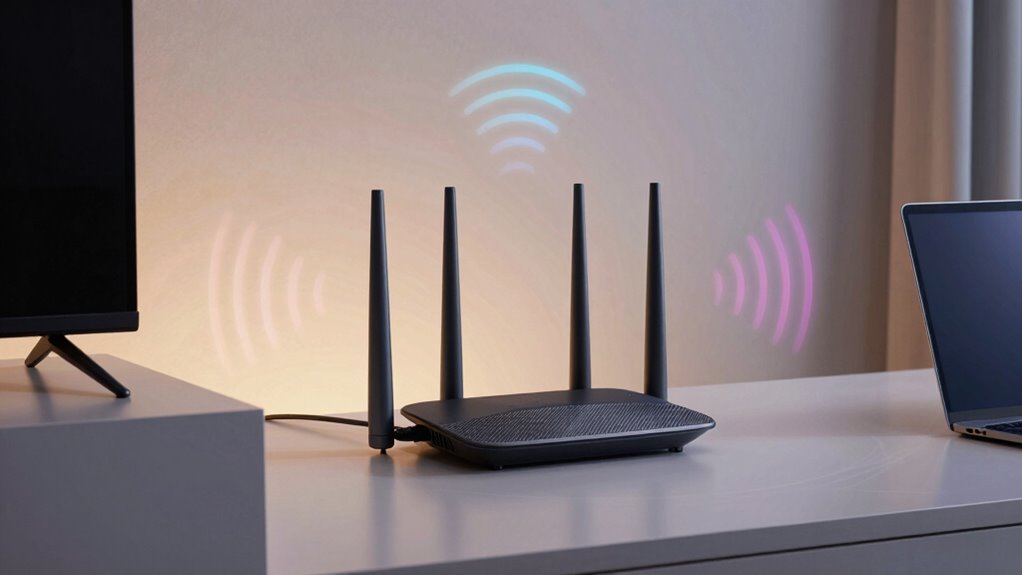
Even though mesh Wi-Fi systems optimize your internet speed by managing traffic across multiple nodes, signal interference can still disrupt performance. To improve your network, identify and fix sources of interference. Look out for channel conflicts, where nearby networks operate on the same or overlapping channels, causing congestion. Physical obstructions like thick walls, furniture, or appliances can weaken signals between nodes. You should also check for electronic devices that emit interference, such as cordless phones or microwaves. Additionally, understanding Borderline Personality Disorder and Pathways to Recovery can offer insights into managing stressors that might affect your focus on network optimization. Use your router’s app or admin panel to scan for crowded channels. Switch your mesh nodes to less congested Wi-Fi channels. Relocate nodes away from thick walls and metal objects. Keep devices like cordless phones away from your mesh nodes. Minimize electronic interference sources near your network, especially signal interference sources, to ensure stable connectivity. Regularly updating your router’s firmware can also help reduce network vulnerabilities and improve overall performance. Moreover, being aware of the history of pinball machines can remind us of the importance of innovation and adaptation in technology, which parallels the continuous improvement needed for optimal network performance.
Optimize Your Mesh Wi-Fi Setup for Reliable Streaming and Gaming

To guarantee smooth streaming and lag-free gaming, optimizing your mesh Wi-Fi setup is essential. Begin by ensuring strong mesh security, which protects your network from interruptions caused by malicious attacks or unauthorized access. Use a secure password and enable encryption standards like WPA3. Next, check device compatibility; confirm all your streaming and gaming devices support your mesh system’s standards to prevent connection issues. Position your nodes strategically—place them centrally and away from thick walls or electronics that could cause interference. Keep firmware updated for ideal performance. Regularly monitoring your network’s performance metrics can help identify and resolve issues before they affect your experience. Additionally, understanding network interference sources can help you further optimize placement and reduce disruptions. Recognizing the importance of mesh Wi-Fi technology can also guide you in making informed adjustments to your setup. These steps help create a stable environment, minimizing buffering and lag. Maintaining optimal performance involves periodically testing your network speed and adjusting node placement accordingly, ensuring consistent high bandwidth. Incorporating proper network configuration can further enhance stability and throughput. With a secure, compatible setup, your mesh Wi-Fi will reliably support high-bandwidth activities, keeping your streaming crisp and gaming lag-free.
When to Upgrade Your Mesh System or Call Support
Knowing when it’s time to upgrade your mesh system or seek support can safeguard you from frustration and guarantee your network stays reliable. If your Wi-Fi constantly buffers, even after firmware updates, it’s a clear sign you might need hardware replacements or an upgrade. Consider calling support if you experience persistent connection drops, slow speeds, or difficulty updating firmware. Upgrading your mesh system can also help if your current setup doesn’t support your devices or home size anymore. Keep an eye on these indicators:
Recognize signs like buffering, slow speeds, or connection drops to know when to upgrade or seek support for your mesh system.
- Firmware updates no longer improve performance
- Frequent hardware failures or malfunctions
- Slow or inconsistent connection across devices
- Need for increased coverage or faster speeds
- Difficulty performing firmware updates or hardware replacements
Addressing these issues promptly ensures your Wi-Fi remains fast and dependable. Additionally, understanding how to troubleshoot common issues, such as warning beeps, clocks, or installation problems, can help you resolve minor glitches before they require an upgrade or support call. For example, mesh network coverage may be insufficient if you experience dead zones or weak signals in certain areas of your home. Regularly reviewing your network’s performance metrics can help you identify when an upgrade is necessary to maintain optimal connectivity. Recognizing early signs of hardware degradation can prevent more significant disruptions and costly replacements, especially when combined with regular maintenance and updates.
Frequently Asked Questions
How Does Mesh Wi-Fi Differ From Traditional Routers?
You’ll find that mesh Wi-Fi differs from traditional routers by providing better coverage and reducing wireless interference. Mesh systems use multiple nodes to create a seamless network, which helps eliminate dead zones and improves performance. Plus, they’re more scalable—you can easily add nodes as your network grows—ensuring consistent, fast internet throughout your home. This setup is ideal for maintaining reliable connectivity, especially in larger spaces or homes with many devices.
Can Multiple Devices Impact Mesh Network Performance?
Ever wonder if your device frenzy is secretly sabotaging your mesh network? Well, it’s quite possible. When multiple devices connect, they cause device congestion and share bandwidth, slowing everyone down. Your smart fridge and gaming console aren’t just living happily; they’re hogging the bandwidth, leaving your streaming buffering and your video calls choppy. To fix this, limit device connections or upgrade your plan to reduce congestion and boost overall network performance.
What Security Measures Should I Implement for My Mesh Network?
You should enable network encryption like WPA3 to protect your mesh network from unauthorized access. Also, set up guest access with a separate network to keep visitors isolated from your main devices. Regularly update your firmware, change default passwords, and disable WPS for added security. These steps guarantee your network stays safe, private, and resilient against potential threats, giving you peace of mind while enjoying seamless connectivity.
How Often Should I Update My Mesh Wi-Fi Firmware?
Like a ship needs a steady course, your mesh Wi-Fi needs regular firmware updates to guarantee network stability. You should update your firmware at least once a month or whenever the manufacturer releases a security patch or performance improvement. Keeping firmware current helps prevent buffering, secures your network, and maintains ideal performance. Don’t wait for issues to arise—stay proactive, and your mesh network will run smoothly and reliably.
Are There Specific Mesh Systems Best for Smart Home Integration?
If you’re looking for the best mesh systems for smart home integration, choose ones with strong smart home compatibility and voice assistant integration. Systems like Google Nest Wifi, Amazon eero, and Orbi support popular voice assistants like Alexa, Google Assistant, and Apple HomeKit. These options guarantee seamless device control and reliable connectivity, making it easier for you to manage your smart home devices effortlessly through your mesh Wi-Fi network.
Conclusion
By mastering these tips, you’ll banish buffering forever, turning your Wi-Fi into an unstoppable force of speed and reliability. No more dead zones or frustrating lag—your network will run smoother than a rocket soaring through space. Imagine streaming, gaming, and browsing with unstoppable power, leaving buffering in the dust. With the right setup, you’re not just fixing your Wi-Fi—you’re unleashing a technological superpower that transforms your daily internet experience into pure, unstoppable perfection.