Barndominiums and shipping container homes are emerging as popular alternative housing options that combine sustainability, affordability, and style. Barndominiums blend rustic charm with modern amenities, while shipping container homes repurpose steel containers into customizable dwellings. Both options promote eco-friendly living through material reuse and lower construction costs. They offer flexibility, durability, and unique designs suited for various lifestyles. Exploring these innovative structures can open up new possibilities for sustainable and cost-effective living solutions.
Key Takeaways
- Barndominiums combine rustic barn aesthetics with modern living features, offering durable and customizable housing options.
- Shipping container homes repurpose steel containers into affordable, eco-friendly, and modular residential structures.
- Both structures promote sustainability through material reuse, waste reduction, and energy-efficient designs.
- These alternative housing options often have lower construction costs compared to traditional homes.
- They support flexible lifestyles, including mobility, off-grid living, and personalized design choices.
In recent years, alternative housing options have gained popularity as people seek more sustainable, affordable, and innovative ways to live. You might find yourself exploring ideas beyond traditional homes, especially as urban living becomes more crowded and expensive. One trend gaining traction is urban farming, where residents turn small plots of land or even rooftops into productive gardens. This approach not only supplies fresh produce but also reduces your carbon footprint by cutting down on grocery trips and transportation emissions. Integrating urban farming into your living space can make your home more self-sufficient and environmentally friendly, aligning with the broader movement toward sustainable living.
Alongside urban farming, the tiny house movement continues to inspire many to downsize and simplify their lifestyles. The appeal lies in reducing costs, minimizing environmental impact, and creating a cozy, manageable space. Tiny homes are often built on trailers, making them portable and adaptable to different locations. This mobility appeals to those who value flexibility or want to live closer to nature without sacrificing comfort. You can customize your tiny house to include smart storage solutions, eco-friendly materials, and even small solar setups, making your home both functional and sustainable. The movement also encourages you to rethink what’s essential, helping you declutter and focus on experiences rather than possessions.
Tiny homes on wheels promote flexibility, eco-friendly living, and decluttering for a simpler, more sustainable lifestyle.
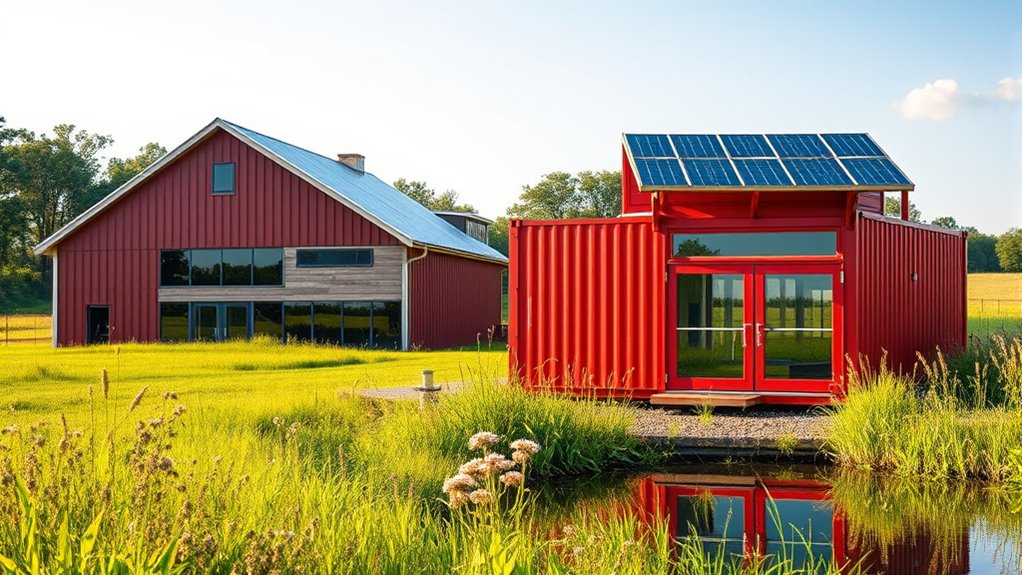
Another innovative trend in alternative housing is the use of non-traditional structures like barndominiums and shipping container homes. These options appeal to your desire for affordable, durable, and stylish living spaces. Barndominiums, for example, combine the rustic charm of a barn with modern living amenities, giving you a spacious, versatile home that can blend into rural or semi-rural settings. Shipping container homes, on the other hand, repurpose steel containers into sleek, compact dwellings. Their modular design allows you to customize layouts easily, and they often come with lower construction costs compared to traditional builds. Both options promote sustainability by reusing materials and reducing waste, aligning with your eco-conscious goals. Additionally, understanding proper tire pressure on gravel roads can enhance your experience when exploring these unconventional homes in rural or off-grid locations.
Whether you’re drawn to urban farming, tiny houses, or repurposed shipping containers, these alternative housing trends are transforming the way you think about homeownership. They offer opportunities to live more sustainably, affordably, and creatively. As you explore these options, you’ll find that they often require less space, less energy, and less financial commitment—giving you more freedom to pursue your passions and enjoy a more intentional lifestyle. The future of housing is about innovation and making the most of limited resources, and these trends are leading the way for anyone enthusiastic to embrace a more sustainable, flexible way of living.
Frequently Asked Questions
Are Barndominiums More Energy-Efficient Than Traditional Homes?
You might wonder if barndominiums are more energy-efficient than traditional homes. Generally, they can offer better energy savings because of their open layouts and simpler design, which reduce heat loss. Plus, their insulation efficiency often surpasses traditional homes, especially if you choose high-quality materials. This means lower utility bills and a more comfortable living space. Overall, with proper insulation and design, barndominiums can be a smart energy-efficient choice.
How Long Does It Take to Build a Shipping Container Home?
Imagine your shipping container home rising from the ground in just a blink—well, that’s almost true! The construction timeline typically takes about 6 to 12 weeks if everything goes smoothly. However, don’t forget the permitting process, which can stretch this out if delays occur. With proper planning, you could be living in your custom container home faster than you’d believe.
What Are the Zoning Laws for Alternative Housing?
You need to understand zoning restrictions and building codes before starting your project. Check with local authorities to see if your desired alternative housing, like a shipping container home or barndominium, complies with regulations. Zoning laws vary by area, affecting setbacks, height limits, and land use. Make sure you obtain necessary permits and adhere to building codes to avoid fines or future legal issues with your innovative home.
Can These Homes Be Customized to Fit Luxury Designs?
Did you know that over 60% of homeowners customize their alternative homes? You can definitely turn your space into a luxury retreat by incorporating a luxury interior and bespoke finishes. These homes are highly adaptable, allowing you to choose elegant fixtures, high-end materials, and personalized designs. With some planning, your unique vision can become a stunning reality, blending affordability with upscale aesthetics for a truly customized living experience.
What Are the Long-Term Maintenance Costs for These Structures?
You wonder about long-term maintenance costs for these structures. You should consider foundation durability, as a strong foundation reduces future repair expenses. Material longevity also impacts costs; high-quality materials typically last longer and require less upkeep. Regular inspections and timely repairs can keep maintenance manageable and affordable over time. By choosing durable foundations and materials, you guarantee your home remains in great shape without unexpected expenses piling up.
Conclusion
As you explore barndominiums and shipping container homes, you’ll find these innovative options are gaining popularity—over 20% of new homeowners now consider alternative housing. They offer affordability, sustainability, and unique design possibilities you can’t find with traditional homes. If you’re looking to downsize, reduce your environmental footprint, or embrace a creative lifestyle, these trends might just be the perfect fit for you. Embrace change and consider how these modern, versatile homes could transform your living experience.