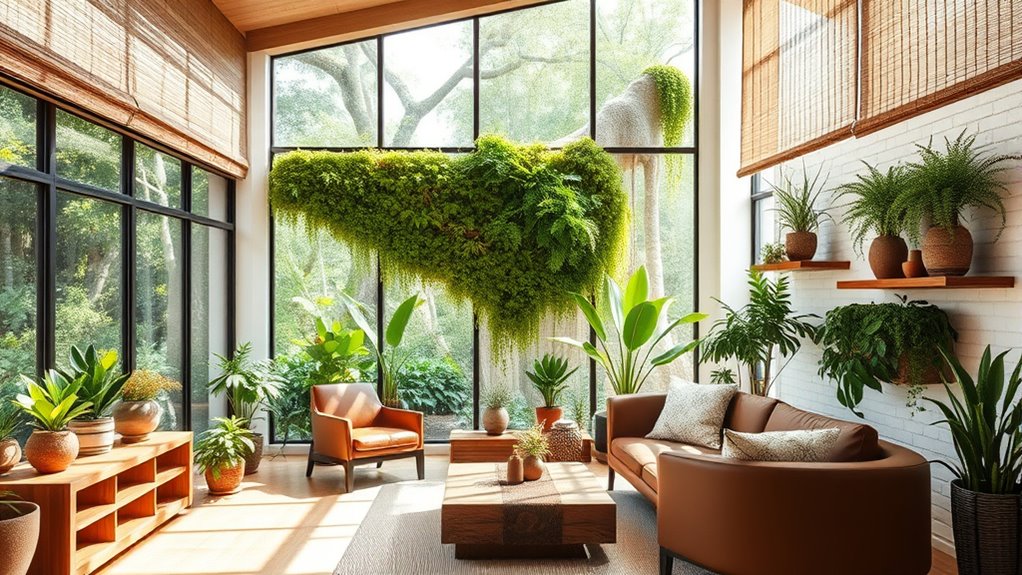

Biophilic design helps you bring nature indoors by incorporating greenery and maximizing natural light. Placing indoor plants near windows and using natural lighting enhances their health while creating a calming atmosphere in your space. This approach boosts your mood, improves air quality, and makes rooms feel more open and vibrant. By blending natural elements with thoughtful lighting, your environment becomes a healthier, more inspiring sanctuary—stay tuned to discover how to transform your space with these simple ideas.
Key Takeaways
- Incorporate indoor greenery to add natural accents and improve air quality.
- Use natural lighting to enhance plant health and create a warm, inviting atmosphere.
- Position plants near windows or sunlit areas to maximize growth and connection to nature.
- Combine light and greenery to foster vitality and transform indoor spaces into calming sanctuaries.
- Integrate biophilic elements to promote mental well-being, aesthetic appeal, and a sense of tranquility indoors.
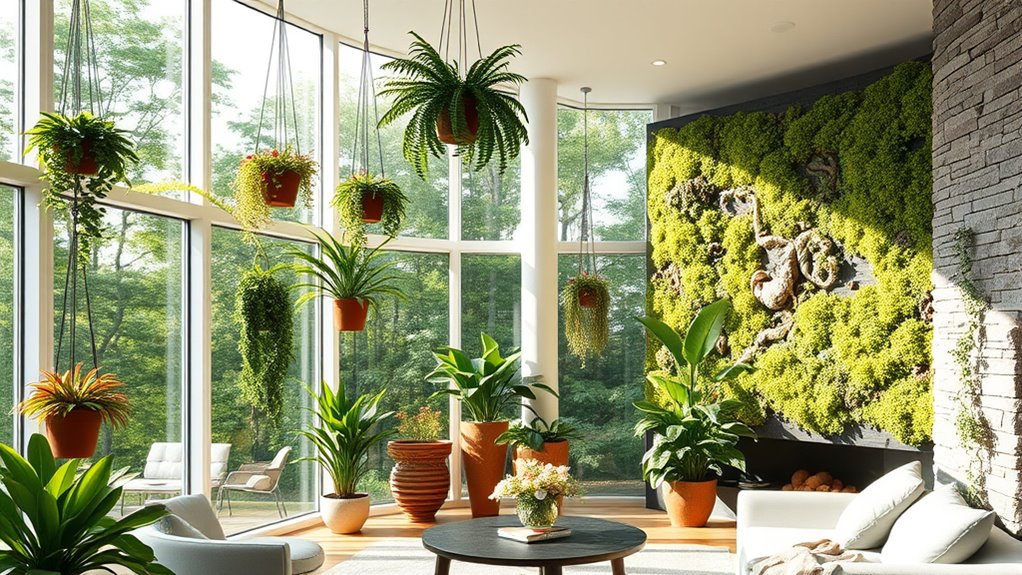
Have you ever wondered how connecting with nature can transform your indoor spaces? Incorporating biophilic design principles allows you to bring the outdoors inside, creating environments that feel both calming and invigorating. One of the most effective ways to achieve this is through indoor greenery. Plants not only add visual interest but also improve air quality and boost your mood. By thoughtfully selecting a variety of indoor plants—ranging from lush ferns to vibrant succulents—you can craft a lively, natural atmosphere that energizes your space. These green accents serve as living art, seamlessly blending nature with your interior decor.
Bringing indoor plants into your space creates a calming, vibrant atmosphere that connects you with nature.
Natural lighting plays a *essential* role in strengthening the connection between your indoor environment and the outdoors. When you maximize natural light, it enhances the colors and textures of your indoor greenery, making everything appear more vibrant and inviting. Large windows, skylights, and glass doors allow sunlight to flood your space, reducing the need for artificial lighting and creating a warm, welcoming ambiance. Not only does natural lighting elevate the visual appeal of your indoor plants, but it also supports their growth and health. This harmony between light and greenery fosters a sense of vitality that’s hard to replicate with artificial sources.
To fully embrace biophilic design, you should consider the placement of your greenery in relation to natural light sources. Positioning plants near windows or in sunlit corners ensures they thrive while making the space feel more open and connected to the outside world. The interplay of daylight and greenery adds depth and dimension to your interior, making even small rooms feel more spacious and lively. Additionally, incorporating elements like sheer curtains or adjustable blinds allows you to control the amount of light entering your space, giving you flexibility to adapt to different times of day or seasons. Incorporating indoor greenery and optimizing natural light can also help create a healthier indoor environment by reducing indoor pollutants.
Beyond aesthetics, integrating indoor greenery and maximizing natural lighting can positively influence your well-being. These elements help reduce stress, improve concentration, and promote overall comfort. When your space feels more alive and connected to nature, you’re more likely to experience a sense of peace and balance throughout your day. Whether you’re working from home, relaxing in your living room, or creating a cozy nook, the thoughtful use of indoor greenery combined with ample natural lighting transforms any space into a sanctuary that nurtures both your mind and body.
Frequently Asked Questions
How Does Biophilic Design Improve Mental Health?
You might find that connecting with nature through design helps improve your mental health. Nature therapy, whether through plants or natural views, reduces stress and promotes relaxation. By bringing natural elements indoors, you create a calming environment that encourages mindfulness and reduces anxiety. This approach supports your emotional well-being, helping you feel more centered and resilient in daily life. Overall, it’s a simple way to boost your mental health naturally.
What Are Cost-Effective Ways to Incorporate Nature Into Small Spaces?
Ever wondered how you can bring the calming effect of nature into your small space without breaking the bank? You can incorporate urban greenery by adding inexpensive potted plants or hanging planters. Use natural textures like wooden furniture, jute rugs, or linen curtains to evoke a cozy, organic feel. These simple upgrades create a more inviting environment, enhancing your well-being while staying budget-friendly. Why not start with a few easy, nature-inspired touches today?
Can Biophilic Design Increase Property Value?
You might wonder if biophilic design can boost your property’s value. It can indeed increase property appreciation by appealing to buyers who value wellness and aesthetics. As market demand for sustainable, nature-inspired spaces grows, integrating natural elements can make your property stand out. This strategic design approach can lead to higher offers and faster sales, ultimately enhancing your property’s overall market value.
What Are Common Challenges in Implementing Biophilic Design?
You might think integrating nature into indoor spaces is easy, but urban integration presents challenges. You’ll need to contemplate space limitations and how to incorporate natural elements seamlessly. Maintenance challenges also arise, as plants or natural features require ongoing care to stay healthy and attractive. Balancing aesthetic goals with practical considerations can be tough, but with careful planning, you can successfully overcome these hurdles and enjoy the benefits of biophilic design.
How Does Biophilic Design Impact Energy Efficiency?
You see, biophilic design can markedly boost energy efficiency by promoting energy savings through natural ventilation and daylighting. When you incorporate natural airflow and sunlight, you reduce reliance on HVAC systems and artificial lighting, lowering energy consumption. This sustainable approach not only benefits the environment but also cuts costs. So, by embracing natural elements, you create a more energy-efficient space that feels healthier and more inviting.
Conclusion
Think of biophilic design as opening a window into a lush, vibrant forest right inside your home. It’s like inviting sunlight, greenery, and nature’s calming presence to dance around you, turning your space into a sanctuary. When you embrace this approach, you craft a haven that nurtures your soul and renews your spirit. Just as a tree finds strength in its roots, your space finds life and energy through nature’s touch.