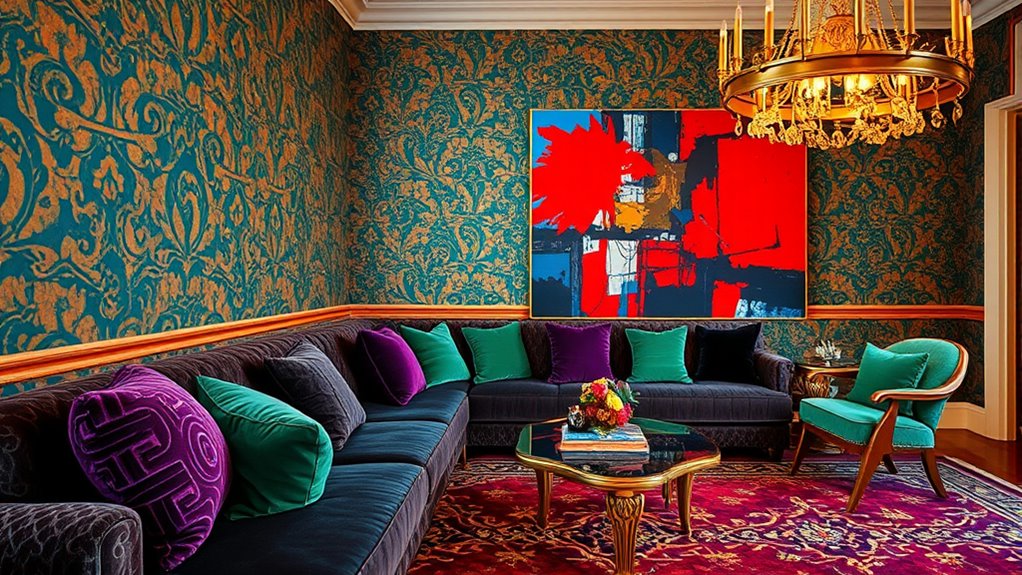

Maximalism is making a strong comeback, encouraging you to embrace bold patterns, rich textures, and vibrant colors to showcase your personality. Instead of minimalism’s simplicity, you’ll layer different elements for a lively, personalized look. Thoughtful curation keeps the space from feeling overwhelming while highlighting your unique style. If you want to explore how AI can help you design a cohesive, dynamic environment filled with personality and richness, there’s more to discover.
Key Takeaways
- Maximalism celebrates abundance through layered patterns, textures, and bold colors, creating personalized and expressive spaces.
- AI tools assist in curating harmonious combinations of patterns, textures, and vibrant hues for an eclectic aesthetic.
- Incorporating diverse textures and bold color palettes adds depth and sensory richness to maximalist interiors.
- Digital experimentation helps refine layering and mixing of elements, ensuring visual balance and cohesion.
- Maximalism reflects individual personality, encouraging the display of collections, artwork, and vibrant decor choices.
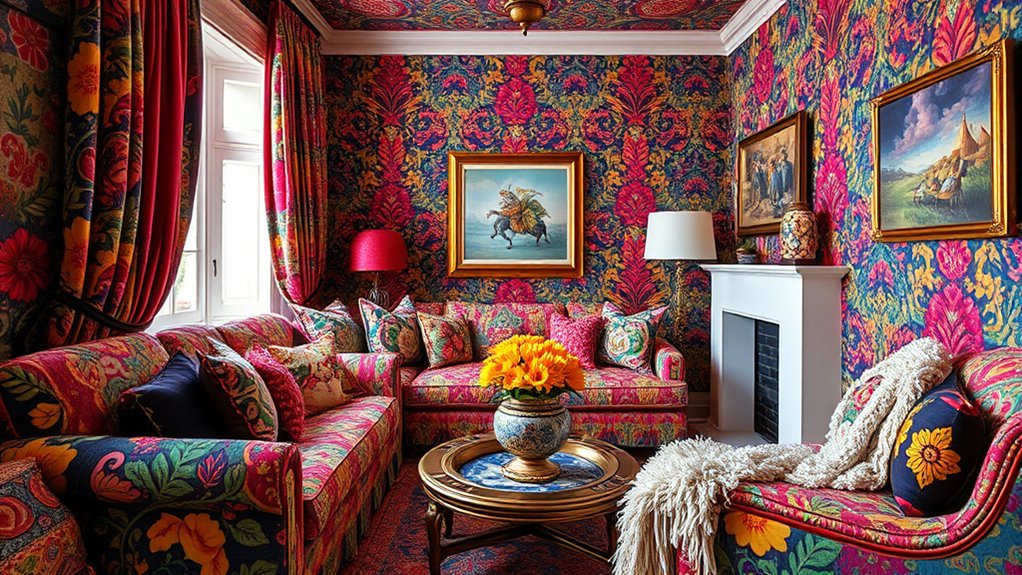
If you’re tired of minimalism’s clean lines and subdued palettes, maximalism offers an exciting alternative that celebrates abundance and individuality. Instead of stripping away details, it invites you to layer patterns, textures, and bold colors that reflect your personality and creativity. Maximalism isn’t about chaos; it’s about curated richness, where every element has a purpose and story. In this vibrant approach, you’re encouraged to mix and match, creating a space that feels lively and uniquely yours.
As technology advances, artificial intelligence plays a growing role in shaping maximalist design. AI tools can analyze your preferences and suggest combinations of patterns and colors that you might not have considered. Imagine having a virtual assistant that helps you assemble a room full of eclectic furniture, textiles, and art, all harmonized through intelligent algorithms. This integration of artificial intelligence makes maximalism more accessible, allowing you to experiment with confidence. It can even generate custom wallpaper designs or suggest textures that complement your existing decor, making maximalist living more personalized and effortless.
While minimalist design champions simplicity and restraint, maximalism embraces complexity. Instead of focusing on clean, unadorned spaces, you fill your environment with a variety of textures—think plush velvet cushions, richly patterned rugs, and layered curtains. The interplay of these tactile elements creates depth and sensory interest. Color becomes your canvas for expression; vibrant reds, lush greens, and jewel tones can coexist in a single room, each adding their voice to the overall harmony. Patterns—florals, geometric shapes, abstract motifs—are mixed and matched boldly, turning your space into a visual feast.
You don’t have to be overwhelmed by maximalism’s exuberance. It’s about thoughtful curation, where every piece is deliberate. Use artificial intelligence to help you choose complementary elements, ensuring your bold choices work together instead of clashing. With AI-powered design tools, you can experiment digitally before committing physically, reducing guesswork and making sure your space feels cohesive. Maximalism celebrates your individuality, encouraging you to showcase your collections, art, and favorite textiles without fear of overdoing it. The key is balance—an art you can refine with the help of technology, making your maximalist vision both daring and harmonious.
Ultimately, maximalism is a reflection of your personality—vivid, layered, and full of life. With the aid of artificial intelligence, it becomes easier to craft a space that’s not just visually striking but also perfectly tailored to you. You get to break free from the constraints of minimalist design, embracing the richness of patterns, textures, and colors that tell your story. It’s about living boldly and creating an environment that energizes and inspires every day. Incorporating self-watering plant pots into your maximalist decor can add a functional and stylish touch, blending practicality with vibrant design.

efgthyjdh Maximalist Eclectic Leopard Pillow Covers 18×18, Y2k Room Decor Aesthetic, Funky Jungle Cheetah Eye Heart Decorative Throw Pillow Covers Pillowcases for Girly Bedroom Dorm Apartment
- Material: Soft flannel for comfort
- Washable: Machine washable, colorfast
- Zipper: Hidden zipper for sleek look
As an affiliate, we earn on qualifying purchases.
As an affiliate, we earn on qualifying purchases.
Frequently Asked Questions
How Can I Balance Multiple Patterns Without Overwhelming a Space?
To balance multiple patterns without overwhelming a space, focus on pattern mixing with intention. Start by varying scale and keeping a cohesive color palette to create visual harmony. Use solid colors or subtle textures to break up busy patterns, allowing each element to stand out. Trust your instincts, and remember that less is often more—carefully curated combinations guarantee a lively yet balanced room.
What Are the Best Color Combinations for a Maximalist Look?
You should experiment with bold palettes and confident color pairing to create a striking maximalist look. Combine jewel tones like emerald, sapphire, and ruby with contrasting shades such as mustard or coral for vibrancy. Don’t shy away from mixing warm and cool hues, and use neutral accents to ground your space. The key is to balance intensity with harmony, making sure each color complements and enhances the overall aesthetic.
How Do I Incorporate Texture Without Cluttering My Room?
Is your room a tapestry waiting to be unraveled? To incorporate texture without clutter, layer textiles like throw blankets, cushions, and rugs thoughtfully. Use tactile materials such as velvet, boucle, or woven fabrics to add depth. Keep the arrangement intentional, balancing bold pieces with neutral backgrounds, so textures enhance rather than overwhelm. This approach creates a rich, inviting space where every element tells its story without feeling chaotic.
What Are Common Mistakes to Avoid in Maximalist Interior Design?
Avoid overcrowding furniture, which can make your space feel chaotic instead of vibrant. Always prioritize a focal point, like a bold artwork or statement piece, so your room doesn’t look cluttered or unfocused. Be cautious with too many patterns and textures; balance is key. Resist the urge to fill every inch—let your bold colors and textures breathe. This keeps your maximalist design lively without overwhelming your space.
How Can Minimalists Transition to a Maximalist Style?
Moving from minimalism to maximalism is about embracing excess with intention. You can start by subtly shifting your decorating psychology—select art pieces that inspire and spark joy, then layer in lively patterns and textures. Mix and match colors boldly, and let your personality shine through the art you pick. By thoughtfully integrating these elements, you’ll turn your space into a vibrant, visually engaging haven that reflects your evolving taste.
Conclusion
So, go ahead—drench your space in a whirlwind of pattern, texture, and bold color. Let your personality explode in every corner, turning your home into a vibrant masterpiece that shouts, dances, and refuses to be ignored. Embrace the chaos, because in maximalism, more truly is more, and your space becomes a breathtaking explosion of life and personality. Don’t hold back—make your home a living, breathing work of art that leaves everyone utterly speechless.