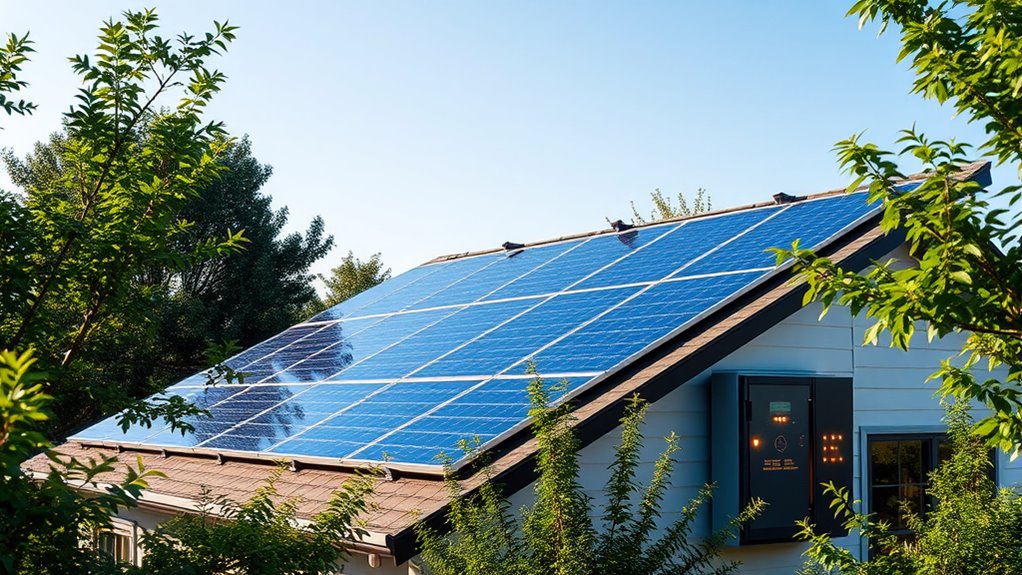

By 2025, your home energy systems will be smarter and more integrated, seamlessly generating, storing, and managing solar and battery power. You’ll gain increased independence from the grid, with batteries storing excess energy for use when needed and systems communicating smoothly with utility providers. Expect automated controls that optimize energy use and reduce costs, all while supporting sustainability. Staying informed will help you maximize these benefits as home energy technology continues to evolve.
Key Takeaways
- Home energy systems will become smarter, automating solar storage, grid interaction, and consumption for optimal efficiency.
- Advances in energy storage will enhance system reliability, allowing homes to store excess solar power for later use.
- Increased grid integration enables seamless energy exchange, with surplus solar power sent back to the grid for credits or income.
- Off-peak energy shifting and real-time system responses will reduce costs and carbon footprint.
- Future home energy setups will prioritize independence, resilience, and sustainability with minimal user intervention.
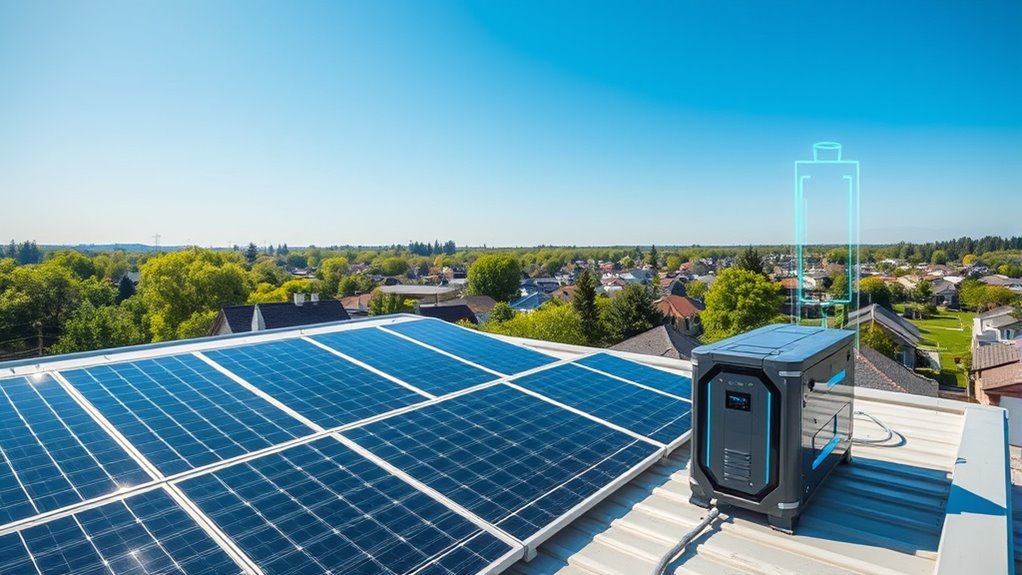
Solar and battery power are transforming the way you generate and store energy, making it possible to reduce reliance on traditional power grids. As technology advances, energy storage becomes more efficient and affordable, giving you greater control over your energy use. Instead of depending solely on the grid, you can now harness solar energy during the day and store excess power in batteries for use at night or during cloudy periods. This shift not only helps lower your energy bills but also contributes to a more resilient and sustainable energy system.
Solar and battery power boost energy independence and sustainability for a greener, more cost-effective home.
With improved energy storage solutions, your home can now hold enough power to meet your daily needs even when the sun isn’t shining. This capability means you’re less vulnerable to power outages and fluctuations in grid supply. As more homes adopt these systems, grid integration becomes smoother, allowing your solar and battery setup to communicate seamlessly with the local utility infrastructure. Grid integration ensures your system can send surplus energy back to the grid, earning you credits or income through net metering programs. Conversely, when your batteries are depleted, you can draw power from the grid with confidence, knowing your system is designed to work harmoniously within the larger network.
The key to maximizing your investment in solar and batteries lies in understanding and optimizing energy storage. Modern batteries not only store excess solar energy but also help balance your energy consumption, shifting usage to off-peak hours when electricity costs less. This efficient energy storage reduces strain on the grid and minimizes your carbon footprint. As grid integration technology advances, your system can intelligently respond to grid signals, adjusting your energy flow based on real-time demand and supply conditions.
In 2025, expect to see smarter, more integrated home energy systems that leverage cutting-edge energy storage solutions. These systems will be capable of managing your energy needs with minimal input from you, automatically balancing stored power, grid interaction, and your consumption patterns. This level of automation ensures maximum savings, efficiency, and sustainability. By embracing these trends, you’re not only becoming more energy-independent but also helping to create a more flexible and resilient energy grid for everyone. As solar and battery technology continues to evolve, your home will play a crucial role in shaping the future of sustainable energy, making your daily life greener and more cost-effective. Additionally, advancements in energy storage technology are making these systems more reliable and accessible for homeowners.

powerwall 10kwh Solar Storage Lithium Battery 51.2V 200Ah Battery Backup Wall-Mounted Power LiFePo4 Home Solar Electric System Storage Batteries for Home Backup Camping Emergency
- Prismatic Cell Technology: Lighter, safer, and more efficient
- Long Cycle Life: Over 6000 cycles, 10-year lifespan
- Expandable System: Supports up to 30 batteries in parallel
As an affiliate, we earn on qualifying purchases.
As an affiliate, we earn on qualifying purchases.
Frequently Asked Questions
How Will Government Policies Impact Solar Adoption by 2025?
Government incentives and regulatory policies will substantially influence your ability to adopt solar energy by 2025. If policies favor renewable energy, you’ll find it easier and more affordable to install solar panels and batteries. Expect increased incentives and streamlined regulations that support solar adoption. Conversely, if policies become restrictive or reduce incentives, you might face higher costs and more hurdles. Staying informed about policy changes helps you maximize benefits and make smarter energy choices.
What Are the Latest Innovations in Battery Storage Technology?
Like a master key opening new potential, recent innovations in battery storage technology are impressive. You’re seeing advances such as solid state batteries, which are safer and more efficient than traditional lithium-ion ones, and modular storage systems that adapt to your energy needs. These innovations make storing excess solar power easier and more reliable, helping you maximize renewable energy use while reducing costs and environmental impact.
How Affordable Will Solar and Battery Systems Become for Homeowners?
You’ll likely see solar and battery systems become more affordable due to ongoing cost reduction efforts and increased market competitiveness. As technology advances and production scales up, prices tend to drop, making these systems more accessible for homeowners like you. Expect better financing options and government incentives too, which further drive down costs. Overall, solar and battery solutions will become a more practical and budget-friendly choice for your home energy needs.
What Are the Environmental Impacts of Large-Scale Battery Production?
Imagine you’re in a sci-fi movie, but the real challenge is the environmental impact of large-scale battery production. You should know that resource extraction strains our Earth, and battery recycling efforts aim to reduce waste. However, mining for raw materials can harm ecosystems, and recycling processes still have room for improvement. As you consider adopting solar and batteries, it is crucial to support innovations that minimize these environmental impacts.
How Will Grid Integration Evolve With Increased Solar and Battery Use?
As solar and battery use grows, you’ll see grid integration become smarter and more efficient. Expect a rise in smart grid technology, which will improve energy management by balancing supply and demand in real-time. This evolution allows your home to better handle renewable energy, reduce outages, and cut costs. You’ll benefit from seamless energy flow, greater reliability, and a more sustainable power system that adapts to your needs effortlessly.
Conclusion
As you consider your home energy options for 2025, embracing solar and battery power can markedly boost your independence and savings. These technologies are becoming more efficient and affordable, making sustainable living within reach. Remember, “a penny saved is a penny earned,” so investing now in renewable energy not only benefits the environment but also your wallet. Stay ahead of the curve and harness the sun’s power—your future self will thank you.