You can see that artisanal handmade ceramics and pottery are trending for their unique craftsmanship, vibrant glazing, and diverse firing techniques. These pieces reflect personal artist signatures, with variations in texture, color, and finish that add character to your table. Techniques like wood, gas, and electric firing create distinct effects, making each item one-of-a-kind. If you want to explore how these processes transform everyday ware into art, there’s much more to discover.
Key Takeaways
- Trend towards unique, handcrafted pieces that emphasize individual artistry and storytelling in tableware design.
- Use of innovative glazing techniques, such as layered, textured, and matte finishes, to add visual interest.
- Incorporation of traditional firing methods like wood and gas firing for organic patterns and distinctive surface effects.
- Growing consumer appreciation for the tactile and visual depth of artisanal ceramics over mass-produced items.
- Emphasis on sustainability and supporting artisan communities through the purchase of handmade, locally crafted tableware.
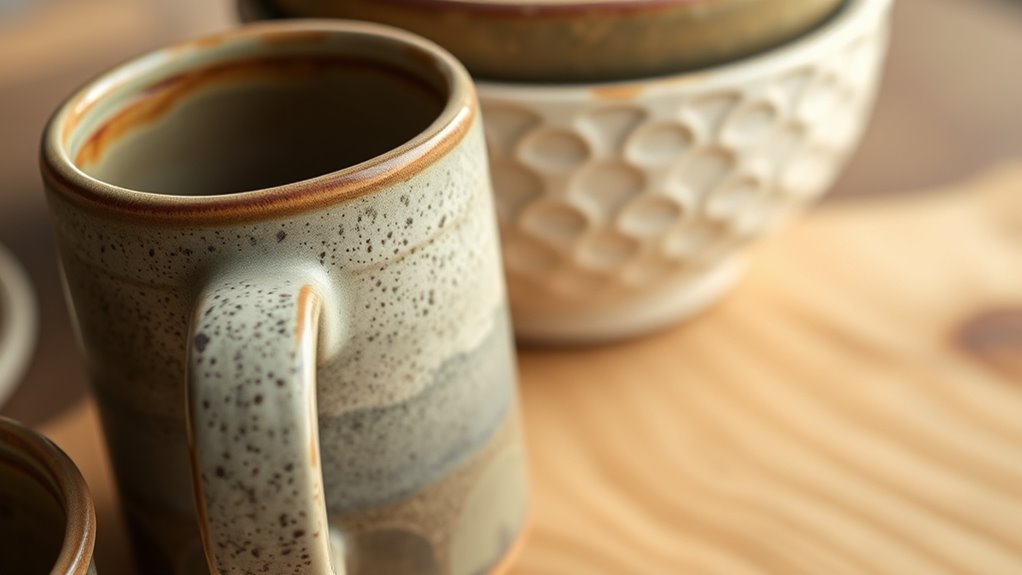
Have you ever wondered what makes artisanal ceramics and pottery stand out in a world filled with mass-produced items? It’s the craftsmanship, the uniqueness, and the attention to detail that set these handmade pieces apart. Central to creating these distinctive tableware items are the glazing techniques and firing methods artisans employ. These elements not only influence the aesthetic appeal but also affect the durability and function of each piece.
When it comes to glazing techniques, artisans often experiment with layers, textures, and finishes to achieve a truly one-of-a-kind look. Unlike mass-produced ceramics, where glazes are often uniform, handmade pottery features variations that reflect the artist’s personal style and process. Some artisans favor dipping or pouring glazes, resulting in smooth, glossy surfaces or subtle drips that add character. Others might use brushwork for intricate designs or apply multiple layers for depth and complexity. The choice of glaze can highlight the natural qualities of the clay, emphasize color contrasts, or introduce unexpected effects like crackles or matte finishes. These techniques allow each piece to tell a story, making it more than just functional ware but also a piece of art.
Artisans craft unique glazes with layers, textures, and finishes that transform functional ware into artful expressions.
Firing methods are equally essential in defining the final product. Artisans often select between techniques like electric, gas, or wood firing, each imparting a different character. For example, wood firing introduces natural ash deposits and flame effects that create unpredictable, organic patterns, making each piece unique. Gas firing offers control over temperature and atmosphere, resulting in smooth, consistent finishes or distinctive surface textures. Electric firing, while more uniform, still allows for precise control, ensuring the piece’s durability and color stability. The firing process also influences how glazes behave—some may develop vibrant colors or crackle effects only after specific firing conditions. By mastering firing methods, artists can bring their visions to life, producing ceramics that are not only beautiful but also resilient and functional.
Additionally, understanding glazing techniques and firing methods enables artisans to push creative boundaries, resulting in innovative and expressive designs. In the end, it’s the combination of glazing techniques and firing methods that truly elevates artisanal ceramics. These processes give each piece a personality, a tactile quality, and a visual richness that mass-produced items often lack. When you choose handmade tableware, you’re not just getting something practical—you’re embracing an artisan’s craft, appreciating the skill and tradition behind every bowl, plate, or cup. It’s this dedication to craftsmanship that makes artisanal ceramics so compelling, offering a connection to artistry and individuality in every piece.
Frequently Asked Questions
How Do I Care for Handmade Ceramic Dishes?
To care for your handmade ceramic dishes, handle them gently and avoid sudden temperature changes. Use mild dish soap and warm water for cleaning, and avoid abrasive scrubbers to prevent damage. For ceramic maintenance, hand wash whenever possible and let them air dry. Employ handmade care techniques like avoiding dishwasher and microwave use if not recommended by the maker. Proper care keeps your artisanal tableware beautiful and functional for years.
Are Artisanal Ceramics Dishwasher Safe?
Artisanal ceramics aren’t always dishwasher safe, so don’t assume they’ll withstand every wash. While some artisanal ceramics feature high ceramic durability, others may crack or fade over time with frequent dishwasher use. To preserve their beauty, it’s best to hand wash your handmade dishes, especially if their craftsmanship emphasizes delicate glazes or unique finishes. Always check with the maker’s care instructions to keep your artisanal ceramics in top condition.
What Are the Common Glazes Used in Pottery?
You’ll often see glazes made from silica, soda ash, and various metal oxides, which create vibrant colors and textures. Understanding glaze chemistry helps you choose the right ingredients for desired effects. During glaze firing techniques, you control temperature and atmosphere to achieve smooth, glossy, or matte finishes. Experimenting with these common glazes allows you to customize your pottery’s look, ensuring each piece reflects your personal style and craftsmanship.
How Can I Identify Authentic Handmade Pottery?
You can spot authentic handmade pottery by examining craftsmanship techniques and authenticity markers. Look for slight irregularities in shape, glaze drips, or finger marks that reveal individual craftsmanship. Feel the surface; handmade pieces often have a tactile, textured feel. Authentic pieces also display unique glazing patterns. Avoid mass-produced items with uniformity. These markers reflect the artisan’s skill and dedication, helping you confidently identify genuine handmade pottery.
What Are the Environmental Impacts of Ceramic Production?
You might wonder about the environmental impacts of ceramic production. By choosing artisans who prioritize sustainable sourcing of raw materials and eco-friendly glazing, you help reduce pollution and resource depletion. The firing process can emit greenhouse gases, but opting for energy-efficient kilns and local clay sources minimizes your footprint. Supporting these practices encourages a more sustainable industry, making your pottery choices eco-conscious and environmentally responsible.
Conclusion
As you explore the world of handmade ceramics and pottery, remember that each piece tells a unique story, like a whisper from an artisan’s heart. Embracing these trends lets you bring warmth and personality to your table, making every meal feel special. Just as a well-crafted mug feels like an old friend, your choice of artisanal tableware adds charm and character to everyday moments. So go ahead, let your table reflect your style—beautiful and one-of-a-kind.