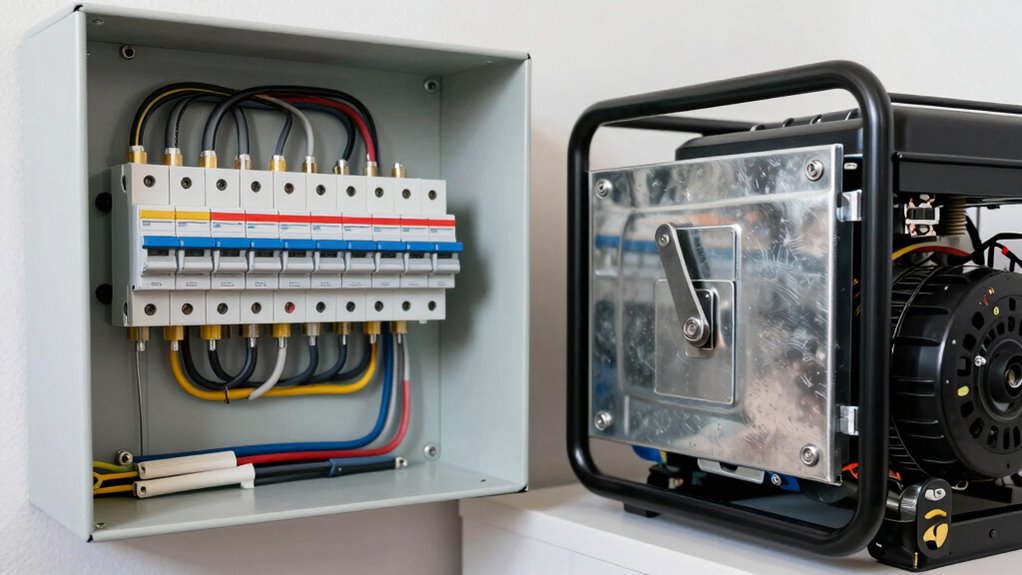
When choosing between a transfer switch and an interlock kit, consider safety, reliability, and your home’s needs. Transfer switches automatically or manually switch power from the grid to your generator, offering certified safety and easy operation, but they can be more expensive and complex to install. Interlock kits are simpler, more affordable, and DIY-friendly, yet may lack formal safety certification. To make the best choice, you’ll want to weigh these factors carefully as you explore your options.

Get the little things that make your day delivered free — and shop member deals
- Fast, free delivery on millions of items
- Access to Prime Big Deal Days deals on October 6–7
- Prime Video, Amazon Music and more included
Key Takeaways
- Transfer switches automatically or manually switch power from utility to generator, offering safer, code-compliant backup power.
- Interlock kits mechanically prevent utility and generator breakers from being on simultaneously, but may lack formal safety certification.
- Transfer switches are more reliable and easier for professional installation, while interlock kits are cheaper and DIY-friendly.
- Proper installation and adherence to electrical codes are essential for both options to ensure safety and performance.
- Choose transfer switches for larger homes and full circuit coverage; interlock kits suit smaller homes with simpler needs.
What Are Transfer Switches and How Do They Work?
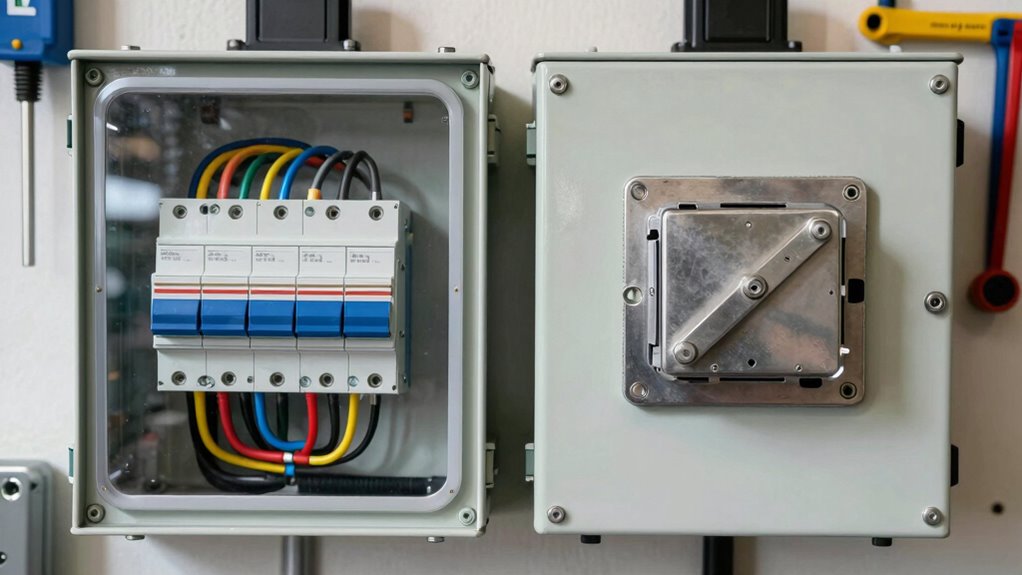
Transfer switches are vital devices that make certain your generator can safely power your home or business during an outage. They ensure generator safety by preventing backfeed, which can be dangerous to utility workers and your equipment. Transfer switches automatically or manually switch your power source from the grid to your generator, aligning with electrical standards to prevent faults. When a power outage occurs, you activate the switch, disconnecting your home from the utility line and connecting it to your generator. This process keeps electrical currents isolated, reducing the risk of damage or injury. Proper installation and adherence to electrical standards are essential for safe operation. By using a transfer switch, you protect your property, maintain safety, and ensure your generator runs efficiently during an emergency. Additionally, understanding the contrast ratio of your generator’s transfer switch can impact how effectively your system manages power loads during switching. To ensure safety, it’s important to have your transfer switch installed by a qualified electrician who understands electrical standards and local codes. Recognizing the importance of power management can also help optimize your generator’s performance during outages. Incorporating a properly rated transfer switch ensures compatibility with your generator’s capacity and enhances overall safety.
What Is an Interlock Kit and How Does It Function?
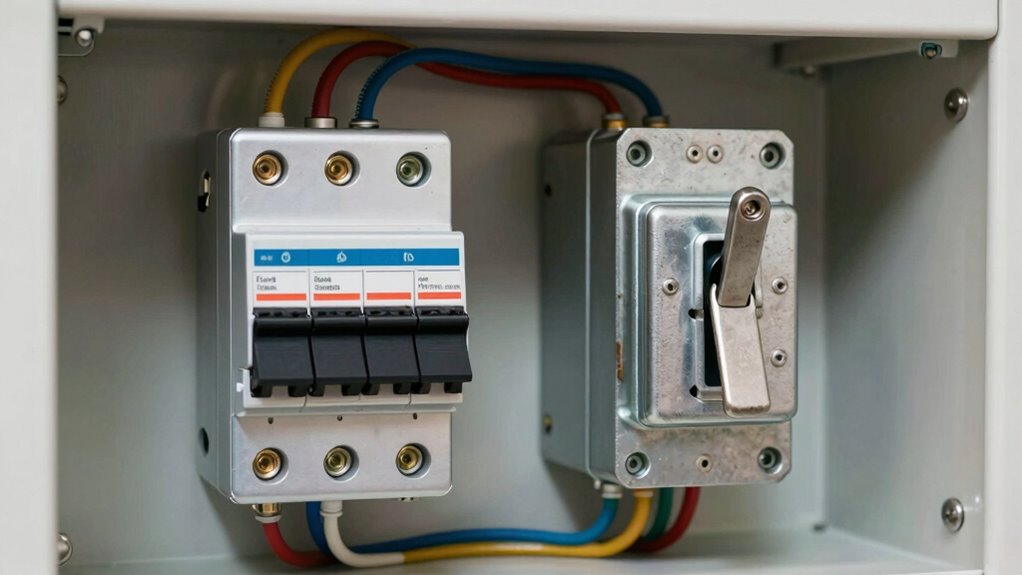
An interlock kit uses a mechanical locking mechanism to prevent your main breaker and generator transfer switch from being on at the same time. This guarantees a safe power transfer process by physically blocking conflicting connections. Proper installation ensures the interlock functions correctly and maintains electrical safety standards. Additionally, understanding the battery maintenance tips and guidelines can help you ensure your entire backup power system operates reliably during outages. Incorporating safety features like interlock kits is essential for preventing dangerous backfeed situations that could harm your electrical system or utility workers. Regular inspection and testing of the safety equipment help maintain optimal performance and compliance with safety regulations. Incorporating co-parenting strategies can also provide a balanced approach to managing household responsibilities during power disruptions, ensuring stability for all family members.
Mechanical Locking Mechanism
A mechanical locking mechanism, commonly known as an interlock kit, is a safety feature designed to prevent accidental or unsafe generator operation. It guarantees that your main breaker and generator breaker can’t be engaged simultaneously. It also ensures proper generator transfer during power outages. This locking mechanism works by physically blocking the breaker panel, maintaining safety. You can use a manual override to temporarily bypass the lock if needed. Think of it as a physical barrier that:
- Fits securely onto your breaker panel
- Prevents both breakers from being on at once
- Uses a lever or sliding plate for engagement
- Is simple to operate with minimal tools
- Offers a reliable, mechanical safety solution
- Is designed to meet electrical safety standards, ensuring consistent protection
This design helps avoid dangerous back feeds into the utility lines, protecting you and utility workers. It’s an essential safety feature in many generator setups. Comprehensive safety measures like interlock kits are vital for ensuring proper generator operation and preventing potential hazards.
Power Transfer Process
The power transfer process relies on the interlock kit to safely switch between utility power and a generator. When a power outage occurs, the interlock kit prevents both sources from running simultaneously, reducing the risk of backfeeding and electrical hazards. This device automatically blocks the utility breaker when the generator is active, ensuring a secure transfer. Proper generator maintenance is essential to keep the system reliable during outages. The interlock kit helps prevent power disruptions by enabling a quick, safe switch to backup power. It also protects your home’s wiring and appliances. Overall, understanding how the power transfer process works with an interlock kit allows you to make certain continuous power and avoid dangerous situations during power outage prevention efforts. Proper wiring practices are crucial to ensure safety and compliance with electrical standards. Additionally, familiarizing yourself with generator safety can further enhance your home’s electrical safety during emergencies. Knowing how to correctly operate and install the interlock kit is an important part of home electrical safety that can prevent accidents and ensure reliable power transfer. Being aware of interlock kit operation reinforces safe procedures and helps ensure the system functions correctly during critical moments. Incorporating smart home integration can also improve monitoring and control over your generator system, providing additional safety and convenience.
Which Is Safer and More Reliable: Transfer Switches or Interlock Kits?

When choosing between transfer switches and interlock kits, safety standards and compliance should be your top priority. You’ll want a system that not only meets industry regulations but also guarantees consistent performance. Incorporating Free Floating technology can further enhance flexibility and safety in your backup power setup. It’s also important to understand how Dark Psychology tactics can influence decision-making processes, ensuring you stay vigilant during critical choices. For example, understanding standby generator ratings can help you select equipment that provides sufficient power without risking overloads. Additionally, considering the security of your electrical setup can prevent vulnerabilities and ensure long-term safety. Recognizing the importance of system testing and maintenance can help maintain reliability and safety over time. Let’s compare how each option stacks up in safety and reliability to help you make an informed decision.
Safety Standards and Compliance
Choosing between transfer switches and interlock kits for your generator setup hinges on safety standards and compliance. Transfer switches are typically UL-listed and adhere to strict code compliance, ensuring they meet recognized safety standards. Interlock kits, while often DIY-friendly, may lack formal certification, raising concerns about adhering to safety standards.
Consider these points:
- Transfer switches follow industry safety standards and certification processes.
- Interlock kits may not be officially certified or tested for safety.
- Code compliance is vital for legal and insurance reasons.
- Transfer switches reduce risk of backfeeding and electrical faults.
- Interlock kits can be less reliable if not installed correctly.
Ultimately, transfer switches provide a safer, more compliant solution, while interlock kits require careful installation to meet safety standards.
System Reliability and Performance
Transfer switches generally offer greater safety and reliability than interlock kits because they are designed specifically for generator transfer applications and undergo rigorous testing. This dedicated design reduces wiring errors and accidental power backfeed, enhancing electrical safety during generator operation. Transfer switches streamline generator maintenance by providing clear, controlled switching, minimizing downtime. They also ensure consistent performance under various load conditions, improving system reliability. Furthermore, their compliance with industry standards enhances safety and performance assurance.
How Easy Is Installation: Transfer Switches vs. Interlock Kits?
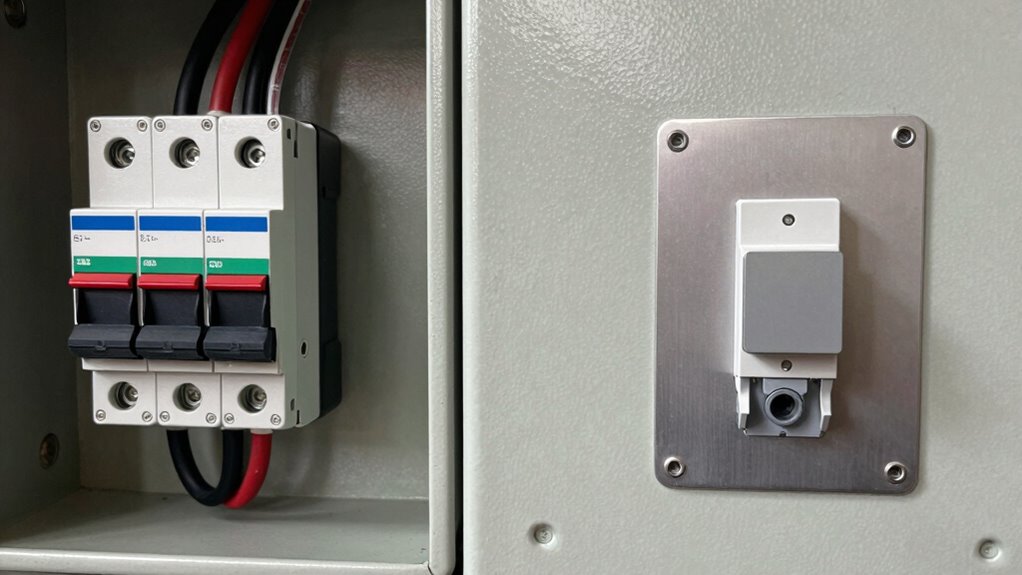
Have you ever wondered how simple it is to install a transfer switch compared to an interlock kit? The installation complexity varies considerably, affecting DIY feasibility. Transfer switches often require professional wiring, involving dedicated circuits and adherence to electrical codes. They can be more challenging because of their complexity and size. In contrast, interlock kits are designed for easier installation, usually fitting over your breaker panel with minimal modifications. To visualize, consider:
Installing a transfer switch is more complex and often requires professional wiring compared to easier, DIY-friendly interlock kits.
- Need for professional electrical knowledge
- Mounting space requirements
- Panel compatibility
- Wiring complexity
- Time investment for setup
Additionally, electrical safety standards play a crucial role in ensuring proper installation and operation. While transfer switches offer a seamless connection, they demand more effort and expertise. Interlock kits, on the other hand, are more DIY-friendly, making them accessible for homeowners comfortable with basic electrical work. The availability of professional installation services can also influence your choice depending on your comfort level and local regulations.
What Are the Cost Differences Between Transfer Switches and Interlock Kits?
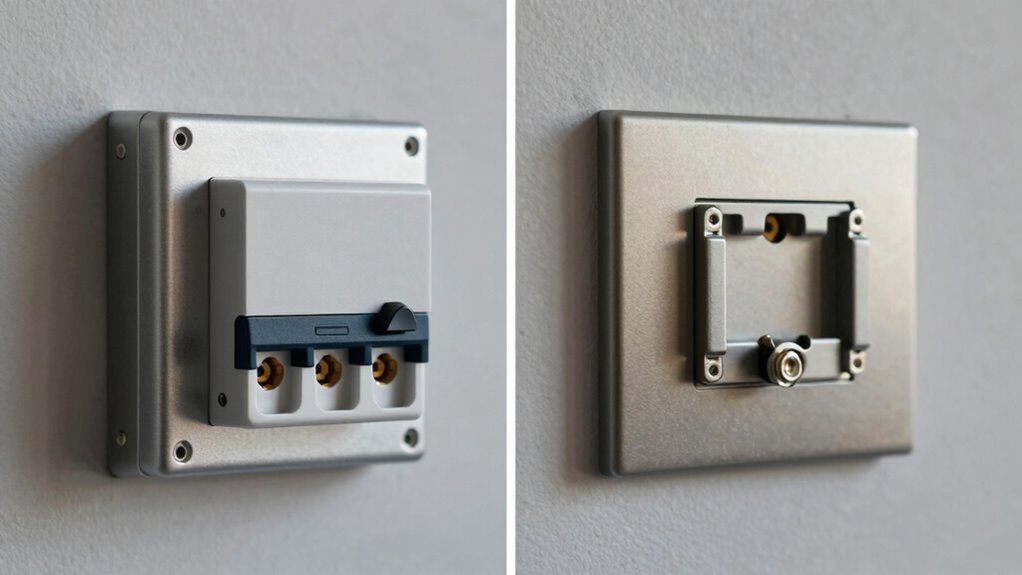
Are you curious about how the costs of transfer switches compare to interlock kits? The cost comparison can considerably impact your budget planning. Transfer switches generally cost more upfront, often between $300 and $2,000, depending on size and features. They require professional installation, which adds to the total expense. Interlock kits are more budget-friendly, typically costing between $50 and $150, with DIY installation often possible. While the initial investment for an interlock kit is lower, consider long-term factors like convenience and safety. If your goal is to save money and do-it-yourself, an interlock kit might suit you. However, for ease of use and added safety, the higher cost of a transfer switch might be worth it. Additionally, understanding battery inverter generator capacity can help you choose the right system for your power needs. Properly evaluating installation requirements can also influence the overall cost and feasibility of each option. For example, considering the compatibility with your existing electrical system is crucial before making a purchase.
Which System Fits Best for Your Home Size and Needs?
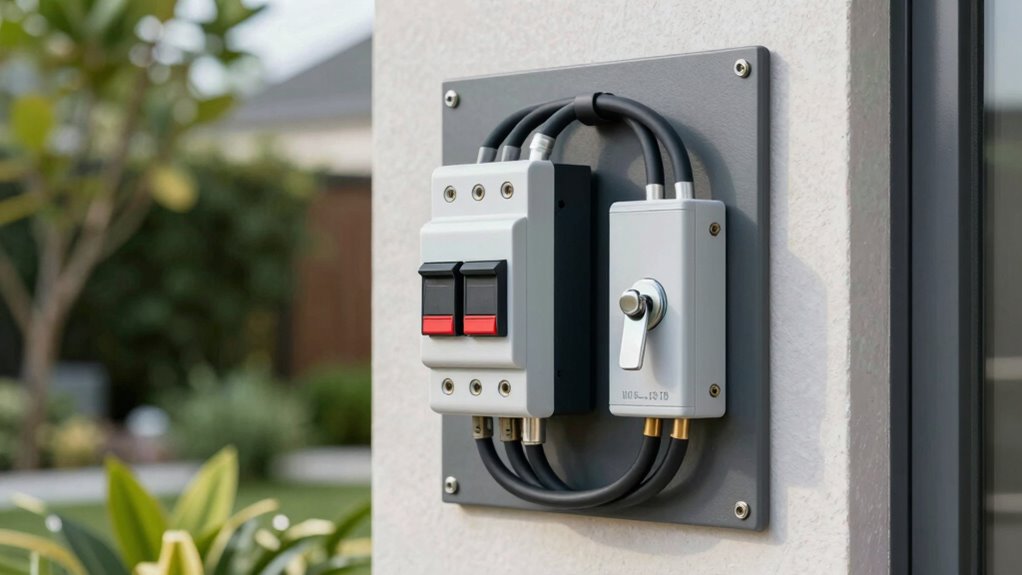
Choosing the right system depends largely on your home’s size and your specific power needs. If you have a small home with minimal appliances, an interlock kit might suffice, offering a budget-friendly and straightforward solution. For larger homes with multiple circuits, a transfer switch provides enhanced electrical safety, ensuring appliances are isolated properly. Consider your maintenance tips—transfer switches often require professional installation and regular checks, while interlock kits are simpler to manage. Think about your power demands, safety preferences, and how much space you have for installation. Here’s a quick overview:
- Small home, limited appliances
- Large home with multiple circuits
- Priority on electrical safety
- Ease of maintenance
- Budget considerations
Matching the system to your needs guarantees reliable power and peace of mind.
Are There Code or Permit Requirements for Installing These Systems?

Installing a generator system isn’t just about selecting the right equipment; it also involves complying with local building codes and permit requirements. Electrical codes ensure your system is safe and properly integrated with your home’s electrical system. Many jurisdictions require permits before installation to verify that your setup meets safety standards and local regulations. Failing to obtain necessary permits can lead to fines, delays, or issues when selling your home. Check with your local building department or code enforcement office to understand specific permit requirements for transfer switches or interlock kits. Ensuring compliance helps protect you from legal complications and guarantees your generator system operates safely and efficiently. Always follow electrical codes and secure the necessary permits before proceeding with installation.
Pros and Cons of Transfer Switches and Interlock Kits
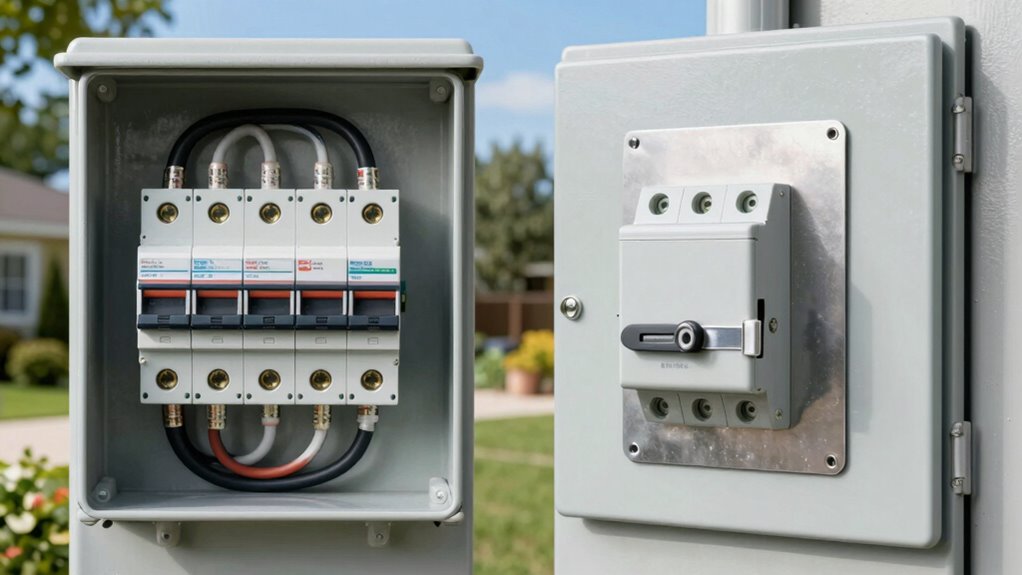
Transfer switches and interlock kits both offer effective ways to connect a generator to your home’s electrical system, but each has its advantages and drawbacks. Transfer switches generally provide better user safety and prevent backfeeding, reducing risk during outages. However, they tend to be more expensive and require professional installation, which adds to the cost comparison. Interlock kits are more affordable and easier to install yourself, but they demand extra caution to prevent unsafe operation.
Consider these points:
- Transfer switch offers superior safety features
- Interlock kit costs less upfront
- Transfer switches often require professional setup
- Interlock kits are DIY-friendly
- Both systems need proper maintenance for safety and reliability
How Do You Choose the Right Power Backup System for Your Home?
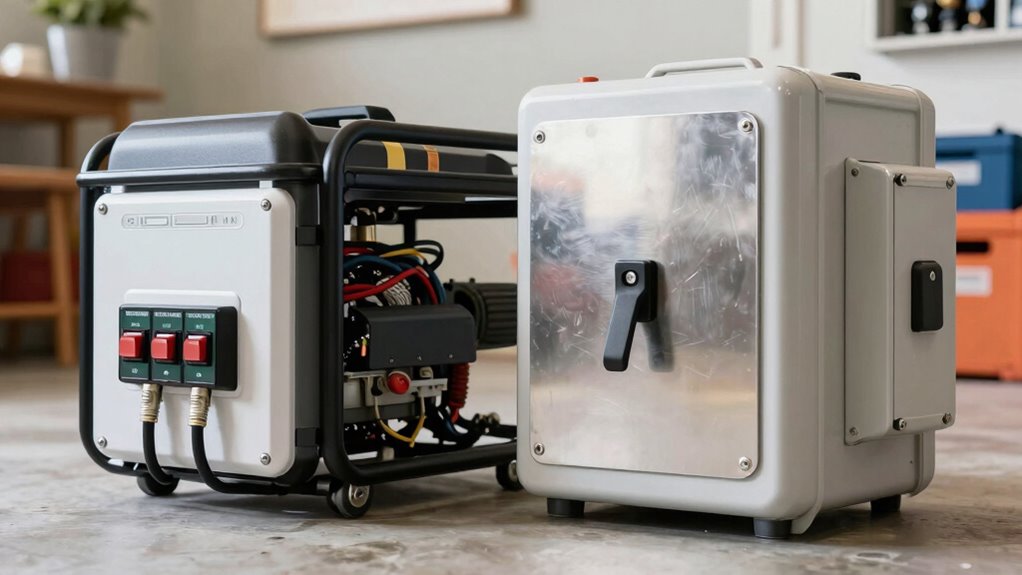
Selecting the right power backup system for your home depends on your specific needs, budget, and safety preferences. Consider how often you experience power outages and the types of appliances you want to keep running. A generator with easy maintenance can save you time and keep it ready during emergencies. Think about emergency preparedness; a reliable backup can provide peace of mind during storms or grid failures. Transfer switches and interlock kits each have their advantages—choose based on your comfort with installation and operation. Budget also plays a role, but investing in a system that’s easy to maintain and suits your household needs ensures safety and reliability when you need backup power the most.
Frequently Asked Questions
Can Transfer Switches and Interlock Kits Be Used Together?
Yes, you can use transfer switches and interlock kits together, but you need to consider safety and compatibility first. Always check the manufacturer’s guidelines and local codes to ensure they work safely in tandem. Compatibility questions are vital because improper combination can cause electrical hazards or damage your equipment. Consulting a licensed electrician helps guarantee you set up everything correctly and safely, avoiding potential risks during power outages.
Do These Systems Require Professional Installation or DIY Setup?
You should opt for professional installation to ensure safety, precision, and code compliance, especially with transfer switches and interlock kits. DIY safety is essential, but these systems involve complex wiring and high voltage risks that can lead to dangerous accidents if mishandled. Think of installation as building a sturdy bridge—expertise guarantees stability. While some handy homeowners may attempt it, professional setup minimizes hazards and guarantees your generator system works flawlessly and safely.
How Do Maintenance and Troubleshooting Differ Between the Two?
You need to prioritize generator safety by understanding that maintenance and troubleshooting differ for transfer switches and interlock kits. Transfer switches often require professional checks because they involve complex wiring and system compatibility, reducing risks during power outages. Interlock kits are simpler to troubleshoot and maintain, but you must still follow safety protocols. Always verify that your system is compatible with your generator and follow manufacturer guidelines for safe, effective upkeep.
What Safety Features Are Included in Each System?
Did you know that 80% of generator accidents happen due to improper setup? Both systems prioritize safety with features like automatic shutoff and grounding connections, ensuring emergency preparedness and electrical code compliance. Transfer switches include lockout controls to prevent backfeeding, while interlock kits use mechanical barriers to avoid simultaneous power sources. These safety features protect you and your home, making sure you’re prepared for emergencies without risking electrical hazards.
Are There Specific Brands or Models Recommended for Residential Use?
For residential use, you should consider trusted brands like Generac, Briggs & Stratton, and Kohler. These brands offer reliable models with solid safety features and easy installation. When comparing models, look for those with automatic transfer switches or interlock kits designed specifically for home backup. Read reviews and check specifications to find the best fit for your power needs, ensuring safety and convenience during outages.
Conclusion
Choosing between a transfer switch and an interlock kit depends on your safety, budget, and home needs. Both options have their benefits and drawbacks, so think about what’s most important for your situation. Do you want a simple, cost-effective solution or the added security of a dedicated transfer switch? Whatever you decide, making an informed choice guarantees you have reliable backup power when you need it most. Are you ready to safeguard your home and loved ones?
NFL season / tailgating Picks
team gear
As an affiliate, we earn on qualifying purchases.