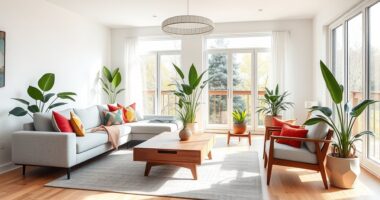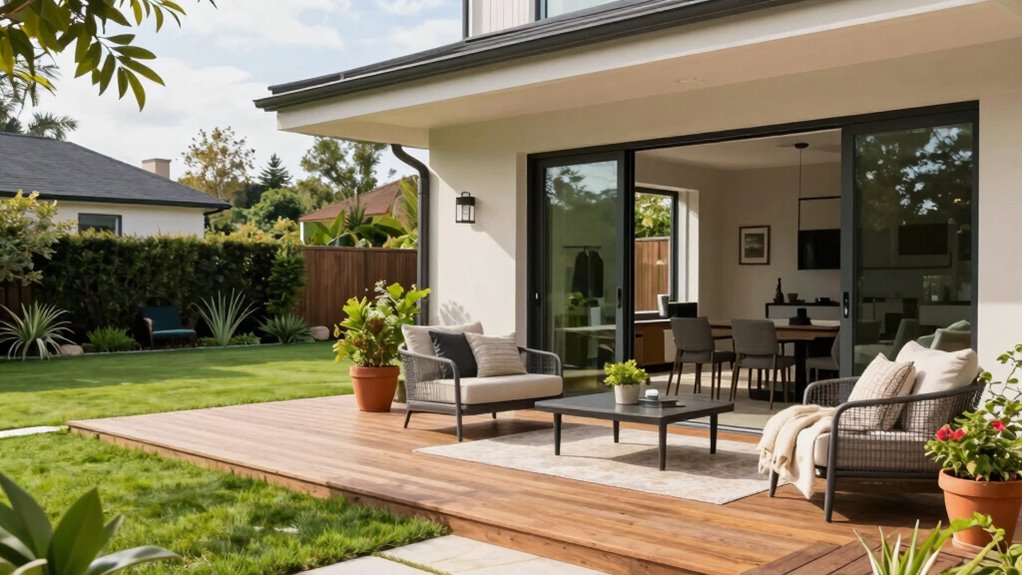
To make your small yard feel much larger, focus on creating seamless indoor-outdoor flow. Use large glass doors, expansive windows, and continuous flooring to blur the boundaries between spaces. Incorporate flexible zones like multi-use patios and decks, add overhead coverings and layered lighting for atmosphere, and choose furniture that maximizes comfort without clutter. Good use of privacy screens and natural barriers keeps the space open and airy. Keep exploring to discover more tips for expanding your outdoor living area.
Key Takeaways
- Use seamless indoor-outdoor transitions with large glass doors and continuous flooring to visually expand the space.
- Incorporate strategic outdoor zones with multi-functional layouts and privacy features to enhance perceived size.
- Maximize natural light through expansive windows, skylights, and layered lighting to create an open, airy atmosphere.
- Install overhead coverings like pergolas and awnings to extend outdoor usability and define spaces.
- Choose appropriately scaled furniture, decor, and vertical elements to maintain openness and prevent clutter.
How Indoor-Outdoor Integration Can Make Your Small Yard Feel Larger
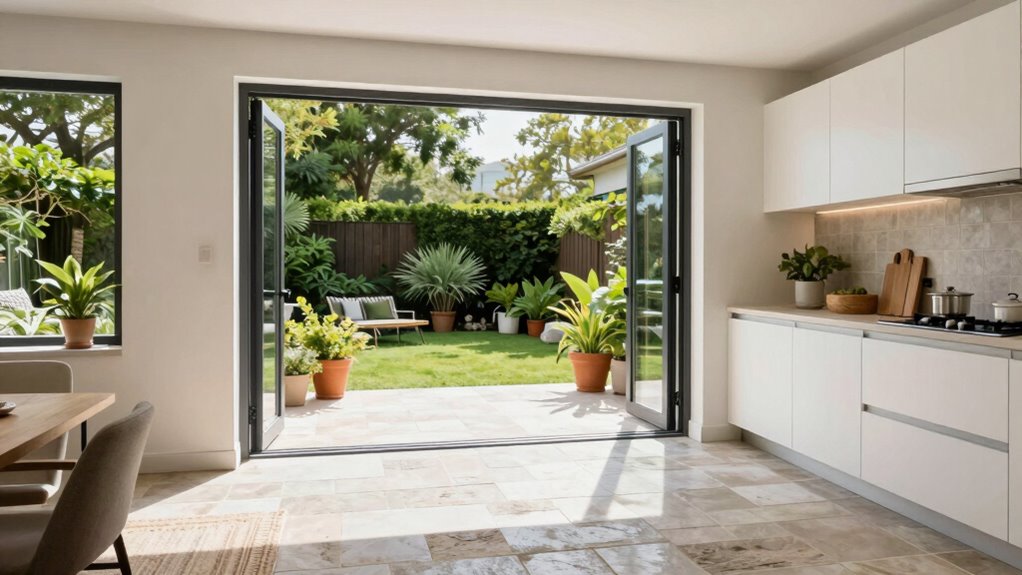
Have you ever wondered how to make a small yard feel more spacious? One effective way is through smart indoor-outdoor integration, which relies on thoughtful landscape architecture. By blending your indoor spaces with the outdoors, you create a seamless flow that visually expands your yard. Large glass doors, patios, and decks serve as connections that draw the outside in, making the space feel larger than it is. Incorporate outdoor art, such as sculptures or decorative panels, to add visual interest without crowding the area. These elements help define zones and create focal points, giving your yard a sense of depth and dimension. When done right, this integration transforms your small yard into a lively, open-air extension of your home. Utilizing field recording techniques can also inspire outdoor ambiance, capturing natural sounds that enhance the overall atmosphere. Additionally, choosing the right painting tools can ensure your outdoor spaces are visually appealing and well-maintained, further emphasizing the seamless indoor-outdoor connection. Paying attention to visual balance in your design can help maintain harmony and prevent cluttered appearances, making your yard feel more expansive. Incorporating landscape design principles can further optimize your space and reinforce the open, airy feeling. Incorporating sustainable landscaping practices can also enhance the environment and reduce maintenance efforts while maintaining the aesthetic appeal.
How to Choose the Best Location and Layout for Seamless Indoor-Outdoor Flow
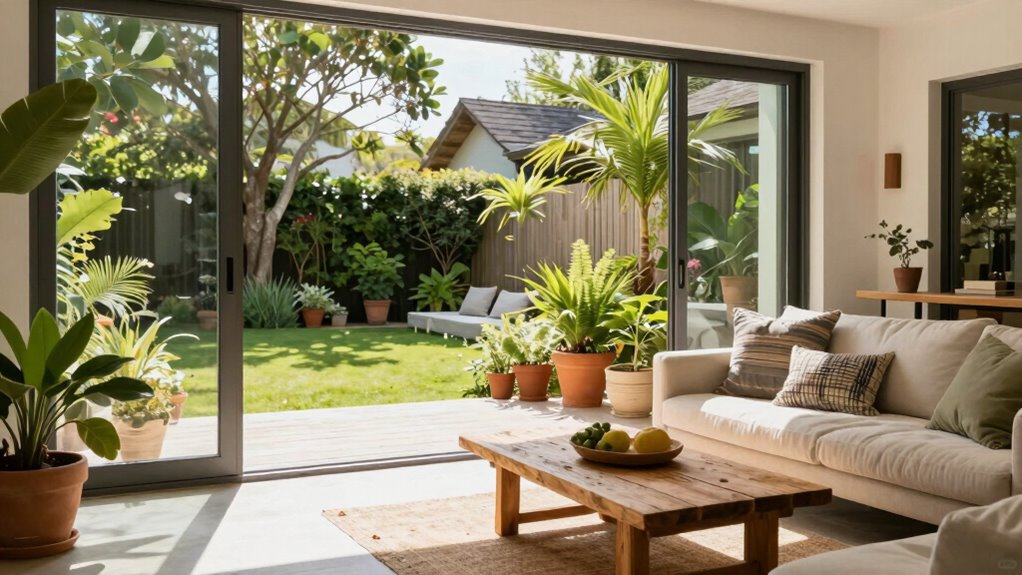
Choosing the right location and layout is key to creating a seamless indoor-outdoor flow. Start by considering landscape symmetry to guarantee your yard feels balanced and inviting. Symmetrical design elements, like matching pathways or plantings, naturally draw the eye outward and create harmony between indoor and outdoor spaces. Additionally, prioritize outdoor privacy when selecting locations for patios or decks; strategic placement of screens, fencing, or tall plants can shield your outdoor areas from neighbors, making them feel more secluded and comfortable. Align your indoor spaces with outdoor zones that are easily accessible, ensuring smooth transitions. Thoughtful placement and layout choices will make your small yard feel larger and more connected, elevating your indoor-outdoor living experience effortlessly. Incorporating easy homemade flautas or flavorful appetizers nearby can enhance outdoor gatherings and make your space even more inviting. Paying attention to architecture details, like door swings and stair proportions, can also improve the overall flow and functionality of your design. Considering the cabling solutions for outdoor entertainment systems can further enhance your seamless living experience. Effective landscape design principles can make a significant difference in maximizing the perceived space and harmony. Additionally, utilizing ergonomic outdoor furniture can increase comfort and encourage longer, more enjoyable outdoor activities.
How to Use Large Glass Doors and Windows to Blur Boundaries
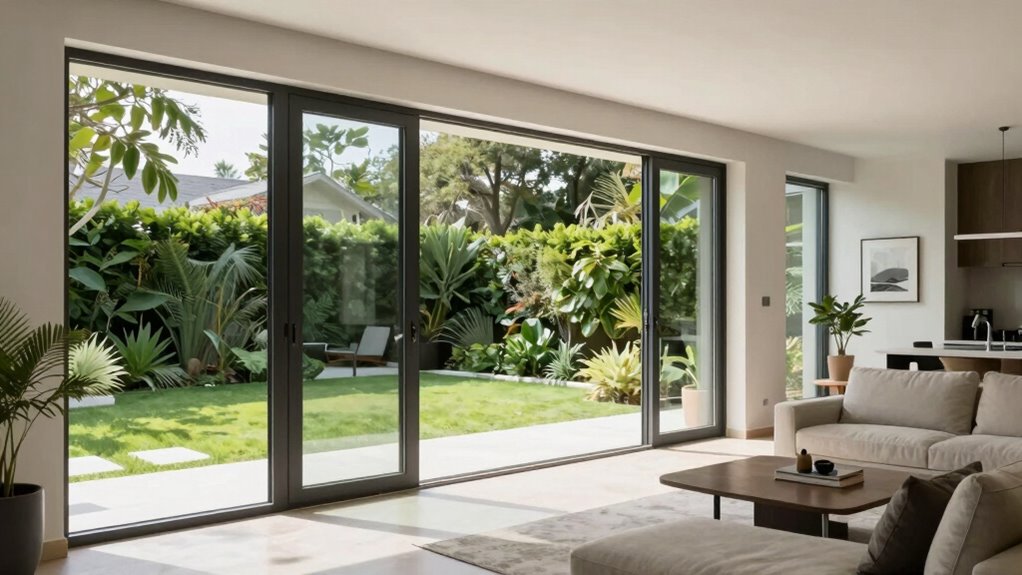
Large glass doors and windows create a seamless visual shift between indoors and outdoors, making spaces feel connected. They also maximize natural light, brightening your home and enhancing its ambiance. By choosing the right style and placement, you can effortlessly blur boundaries and invite the outdoors in. Incorporating appropriate space planning ensures that these features complement your overall layout and optimize your small yard’s sense of openness. Additionally, selecting sustainable fabric technology for interior textiles can reduce environmental impact while maintaining durability and style. Understanding seasonal changes can also help you select the best materials and design features to adapt your space throughout the year. Incorporating thermal insulation can further enhance comfort and energy efficiency throughout different seasons.
Seamless Visual Transition
To create a seamless visual shift between indoor and outdoor spaces, you can strategically use large glass doors and windows that extend from floor to ceiling. These expansive panels allow your view to flow uninterrupted, making your yard feel larger and more connected. To enhance this effect, align garden pathways with sightlines from inside, guiding the eye toward outdoor sculptures or focal points. Incorporate landscaping that continues seamlessly outdoors, blurring the boundary between inside and out. Use consistent materials and colors on both sides to reinforce unity. Additionally, integrating visual continuity through similar textures and finishes helps strengthen the connection. By doing so, your small yard appears more expansive, inviting, and integrated, creating an effortless progression that draws you outside while maintaining a cozy indoor atmosphere.
Maximizing Natural Light
Have you ever wondered how to flood your home with natural light while maintaining a seamless connection to the outdoors? Large glass doors and expansive windows are your best tools. They effortlessly invite sunlight in, making spaces feel open and airy. To enhance this effect, consider strategic placement of landscape lighting that complements daylight hours and highlights outdoor artwork. This layering creates a dynamic flow between inside and out. Use the table below to plan your design:
| Area | Window/door type | Additional features |
|---|---|---|
| Living Room | Floor-to-ceiling glass | Translucent curtains, skylights |
| Patio | Sliding glass doors | Landscape lighting, seating |
| Garden View | Fixed large windows | Outdoor artwork, planters |
| Entryway | Glass double doors | Mirror accents, lighting |
This approach maximizes natural light while blending your indoor and outdoor spaces seamlessly. Incorporating architectural design principles can further optimize the flow and functionality of your space.
Making Your Outdoor Space Feel Like Part of Your Home

To make your outdoor space feel like part of your home, focus on creating seamless floor progressions that blend inside and outside areas. Keep your design themes consistent across both spaces to maintain a cohesive look. Incorporate multi-functional outdoor areas that serve multiple purposes, making your yard an extension of your living space. Additionally, consider integrating smart furniture that can adapt to different needs and maximize your outdoor versatility. Incorporating integrated design principles can further enhance the fluidity between indoor and outdoor environments, creating a more harmonious and inviting atmosphere. Using energy-efficient features, such as electric or ethanol fake fireplaces, can add warmth and ambiance without the complications of traditional installations. For optimal comfort, consider integrating HVAC solutions that can efficiently manage temperature and air quality across both indoor and outdoor zones. Selecting daisy varieties that thrive in your climate can also enhance the aesthetic appeal of your yard, tying the indoor-outdoor flow together seamlessly.
Seamless Floor Transitions
Creating a seamless passage between your indoor and outdoor spaces can transform your home into a unified retreat. Achieving smooth floor crossings enhances landscape integration and makes outdoor furniture feel like a natural extension of your interior. Use continuous flooring materials, such as large porcelain tiles or polished concrete, to eliminate abrupt changes. Incorporate level thresholds or flush transitions to maintain visual flow. This approach emphasizes harmony, making your yard feel bigger and more inviting. To deepen your understanding, consider this table:
| Indoor Benefits | Outdoor Benefits |
|---|---|
| Cohesive aesthetic | Increased usability |
| Enhanced flow for gatherings | Better landscape integration |
| Visual spaciousness | Comfort and accessibility |
Seamless transitions invite effortless movement and unify your living spaces.
Consistent Design Themes
Building on the idea of seamless floor crossings, maintaining a consistent design theme across your indoor and outdoor spaces helps create a cohesive look that feels intentional and inviting. Start by matching your color schemes; choosing similar tones for furniture, cushions, and decor unifies the spaces visually. Incorporate furniture styles that complement each other—if your indoor furniture features sleek modern lines, opt for outdoor pieces with similar minimalist design. Consistent materials, like wood accents or metal finishes, further enhance the connection. This harmony makes your yard feel like an extension of your home rather than a separate area. When your outdoor furniture and color palette reflect your indoor style, you foster a sense of flow that invites relaxation and makes small yards appear larger and more integrated.
Multi-Functional Outdoor Areas
Integrating multi-functional areas into your outdoor space allows you to maximize its use and feel more connected to your home. Think of combining a cozy dining spot with a versatile lounge area, separated subtly by landscape borders. This setup creates distinct zones without feeling crowded. You can also incorporate outdoor storage to keep cushions, tools, and toys neatly tucked away, maintaining a clean look. For example, a built-in bench with storage underneath provides seating and organization simultaneously. Imagine a small patio with a fire pit, surrounded by planters and a shaded dining nook. This layout transforms your yard into a seamless extension of your indoor living area, offering space for relaxation, entertainment, and practicality. Incorporating multi-functional outdoor furniture can further enhance the versatility of your space, making it more adaptable to different needs and occasions. Additionally, using natural landscaping elements can help blend outdoor and indoor spaces even more effectively. Incorporating smart outdoor lighting and sensors can also improve safety and ambiance, ensuring your outdoor area is both inviting and secure. Using eco-friendly craft patterns in your outdoor decor, such as reusable planters or sustainable materials, can enhance the environmental friendliness of your yard.
Adding Multi-Use Patios and Decks for Flexibility

Adding multi-use patios and decks can considerably enhance your outdoor living space by offering versatile areas for relaxation, dining, and entertainment. To maximize their potential, choose patio materials that suit your style and climate, such as concrete, pavers, or natural stone. These options provide durability and visual appeal. Focus on deck design that promotes flexibility—consider built-in seating, extendable tables, or multi-level layouts to adapt to different activities. Incorporate features like pergolas or shade sails to create comfortable zones for sunny days. A well-planned multi-use deck or patio can seamlessly connect indoor and outdoor spaces, making your yard feel larger and more functional. This approach guarantees your outdoor area is as versatile and inviting as your interior, perfect for hosting or relaxing. When installing or renovating, consider using airless paint spraying techniques to achieve smooth, professional finishes on your deck or patio surfaces. Additionally, selecting weather-resistant materials can help maintain your outdoor spaces’ appearance and durability over time.
Creating Visual Flow With Flooring and Landscaping
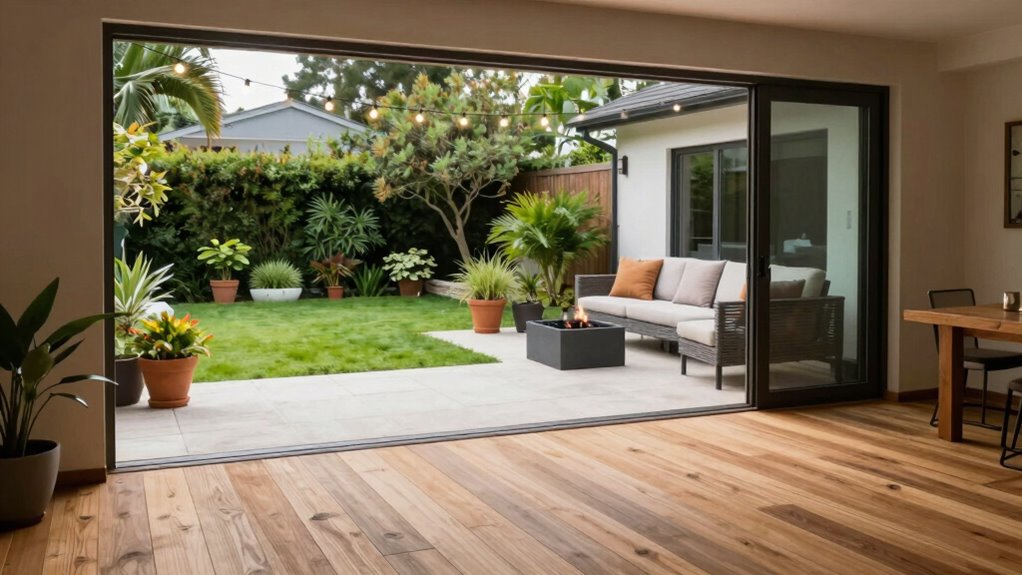
Creating a seamless flow between your outdoor spaces starts with thoughtful flooring choices and landscaping. Use consistent materials for garden pathways that connect different areas, guiding the eye naturally across your yard. Opt for flooring options like stone, concrete, or pavers that complement both your patio and garden zones, creating visual harmony. Plant selection also plays a essential role; choose plants with similar textures and color schemes to unify the space. Incorporate low-growing shrubs or ground covers along pathways to soften edges and maintain an open feel. By carefully coordinating your flooring and plant choices, you establish a continuous visual journey that makes your small yard feel larger and more inviting. This approach encourages movement and exploration, enhancing your outdoor living experience.
How Overhead Coverings Expand Your Outdoor Living Area
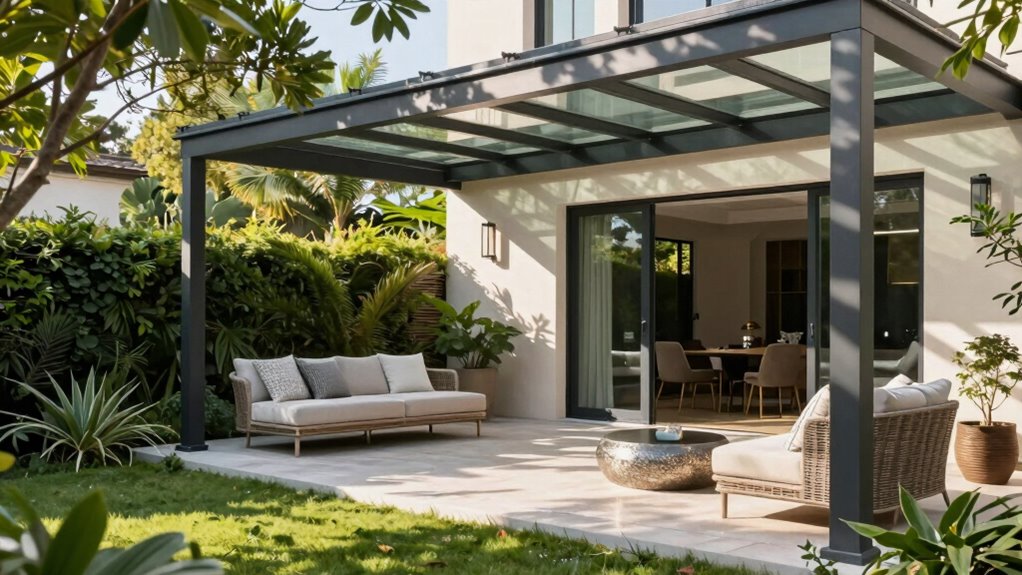
Overhead coverings provide essential shade and comfort, making your outdoor space enjoyable even during hot days. They also help define your area and create a natural flow between indoor and outdoor spaces. Plus, weather protection means you can use your outdoor living area year-round, rain or shine.
Shade and Comfort
When you install overhead coverings like pergolas, awnings, or canopies, you instantly boost your outdoor living space’s comfort and usability. These structures provide essential outdoor shade, shielding you from harsh sun and making your yard more inviting. With ample shade, you create a cozy comfort zone where you can relax, dine, or entertain without the discomfort of direct sunlight. Overhead coverings extend your outdoor season, allowing you to enjoy your yard even during hot summer days. They also help reduce glare and keep temperatures cooler, making your outdoor space more pleasant. By adding these features, you transform a small yard into a welcoming retreat, where comfort and shade invite you to spend more time outside.
Space Definition and Flow
Adding overhead coverings like pergolas, awnings, or canopies doesn’t just provide shade—it also helps define and organize your outdoor space. By creating a clear boundary, these coverings establish a sense of landscape framing that separates seating areas from the yard, making the space feel more intentional. This visual division guides your flow, encouraging smooth movement between different zones. When you position outdoor furniture beneath these structures, it anchors the space, making it feel cozy and inviting. The coverings also help connect indoor and outdoor areas, creating a seamless passageway. As a result, your small yard feels more expansive, because the layout flows naturally, and each zone feels purposefully placed within the overall design.
Weather Protection Benefits
By providing shelter from rain, sun, and wind, overhead coverings instantly expand your usable outdoor space, allowing you to enjoy your yard in various weather conditions. Their weather resistance ensures you stay dry during storms and shaded on hot days, extending your outdoor living season. These structures are built for outdoor durability, resisting the elements over time without deteriorating. With reliable weather protection, you can host gatherings or relax outside without worry about sudden weather changes. This added shelter not only enhances comfort but also protects furniture and landscaping from weather-related damage. As a result, your small yard feels larger and more versatile, giving you a functional outdoor area you can enjoy year-round. Overhead coverings truly maximize your outdoor space’s potential.
Using Lighting to Add Depth and Atmosphere
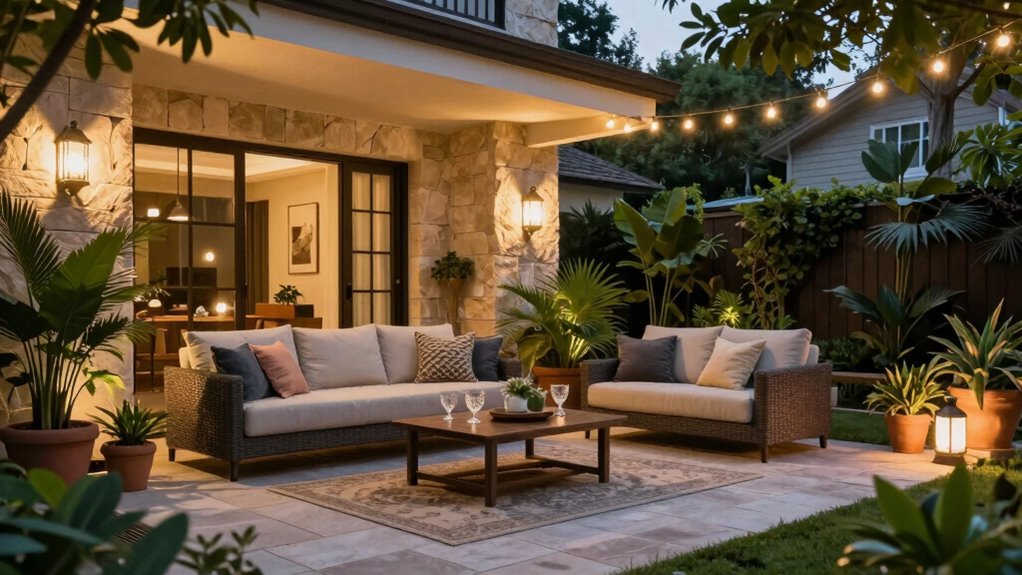
Lighting plays a crucial role in transforming outdoor and indoor spaces by creating a sense of depth and atmosphere. Ambient lighting, such as string lights or soft LEDs, gently fills the area, making it feel inviting and expansive. By layering different light sources, you can highlight architectural features or landscape elements, adding visual interest and dimension. Proper lighting enhances mood, whether you want a cozy, intimate setting or a lively, energetic vibe. Use dimmers to adjust brightness and control the atmosphere easily. Thoughtful placement of lights not only improves functionality but also creates shadows and contrasts that give your small yard a more spacious feel. Ultimately, strategic lighting helps your outdoor space feel larger, more welcoming, and perfectly suited to your mood.
Choosing Furniture and Decor That Maximize Space and Comfort
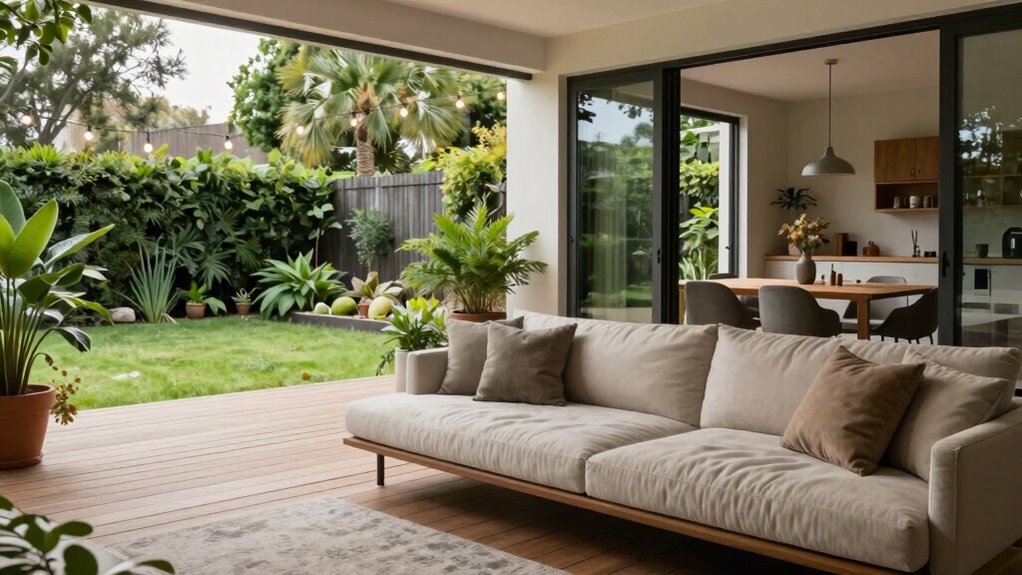
Choosing the right furniture and decor can make even small outdoor spaces feel more spacious and comfortable. Focus on smart furniture arrangement: opt for multi-functional pieces like benches with storage or foldable tables that can be tucked away. Keep scale in mind—avoid oversized furniture that dominates the area. Instead, select sleek, proportionate pieces that fit well within your yard. Decorative accents like cushions, string lights, and outdoor rugs add personality without cluttering. Use vertical space for hanging planters or wall-mounted decor to free up ground area. Keep pathways clear to maintain an open feel. Thoughtful furniture arrangement combined with well-chosen decorative accents transforms your yard into a cozy, inviting retreat that feels larger than it really is.
How to Maintain Privacy Without Blocking the View
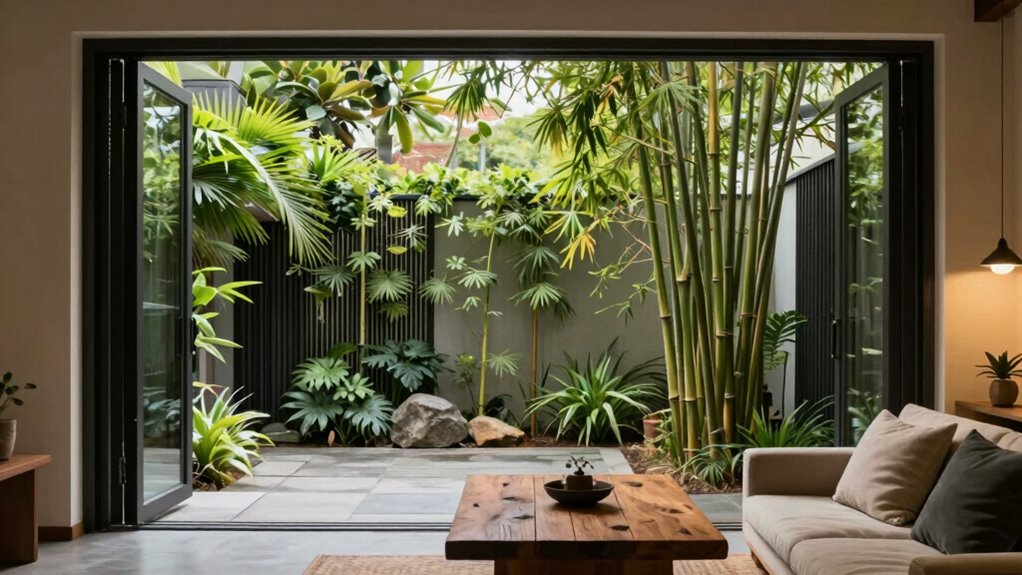
Maintaining privacy in your outdoor space doesn’t mean sacrificing the beautiful views you enjoy. Instead, you can create a sense of seclusion using clever solutions that don’t block your sightlines. Privacy screens made of lattice or decorative metal can be tall enough to obscure neighbors without cutting off your view. Natural barriers like tall shrubs, hedges, or bamboo add privacy while blending seamlessly into your landscape. Incorporate these elements thoughtfully:
- Climbing plants on open trellises
- Strategically placed potted trees
- Low fences with open design
- Vertical gardens or green walls
These options allow sunlight and air to flow freely, keeping your yard open and inviting. With the right balance, you’ll enjoy both privacy and the expansive feel of your outdoor space.
Frequently Asked Questions
How Can I Improve Indoor-Outdoor Airflow During Different Seasons?
To improve indoor-outdoor airflow during different seasons, you should focus on ventilation improvements like installing operable windows and vents that promote natural cross-breezes. Use seasonal shading such as awnings or pergolas to control heat gain in summer while keeping openings open to maximize airflow. In winter, consider adjustable shading options and open windows during milder days to maintain fresh air and prevent stuffiness, ensuring comfort year-round.
What Are Budget-Friendly Options for Expanding Outdoor Living Spaces?
Did you know that adding just a few affordable touches can double your outdoor space? To expand your outdoor living area on a budget, try DIY projects like building simple furniture or creating a cozy fire pit. Incorporate landscape lighting to highlight your space and make it inviting at night. These small upgrades are cost-effective and transform your yard into a more usable, attractive extension of your home.
How Do I Select Durable, Weather-Resistant Materials for Outdoor Furniture?
You should look for outdoor furniture made with weatherproof fabrics like acrylic or polyester, which resist fading and moisture. Opt for rust-resistant metals such as aluminum or steel, ensuring longevity against the elements. Check product labels for durability ratings and reviews from other buyers. Regularly clean and cover your furniture during harsh weather to extend its life. This way, your outdoor space stays stylish and functional year-round.
Can Indoor-Outdoor Design Increase My Home’s Energy Efficiency?
Yes, indoor-outdoor design can boost your home’s energy efficiency. You can add solar shading to reduce heat gain during summer, lowering cooling costs. Additionally, expanding your living space outdoors allows you to enjoy natural ventilation, which can decrease reliance on air conditioning. Insulation improvements in walls and ceilings further help maintain consistent indoor temperatures, making your home more energy-efficient and comfortable year-round.
What Legal or Zoning Restrictions Should I Consider for Outdoor Modifications?
You should first check property setbacks to confirm your outdoor modifications don’t violate local zoning rules. Next, verify if you need building permits for structures like decks, patios, or fences. Zoning restrictions vary by area, so consulting your local planning department helps you avoid fines or required modifications. Being proactive with these legal considerations ensures your outdoor upgrades stay compliant and smoothly enhance your living space.
Conclusion
By seamlessly blending indoor and outdoor spaces, you can make even the smallest yard feel expansive. Nearly 70% of homeowners with integrated outdoor areas report increased happiness and relaxation at home. With thoughtful layout, large glass features, and versatile furniture, you’ll create a welcoming environment that feels much larger than it is. Embrace these design tips, and transform your outdoor space into a true extension of your home—more enjoyable and spacious than you ever thought possible.