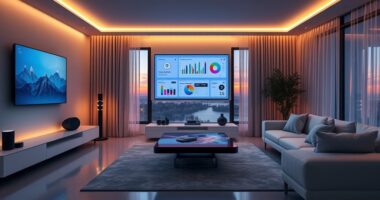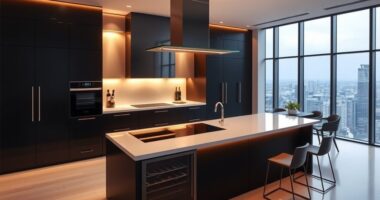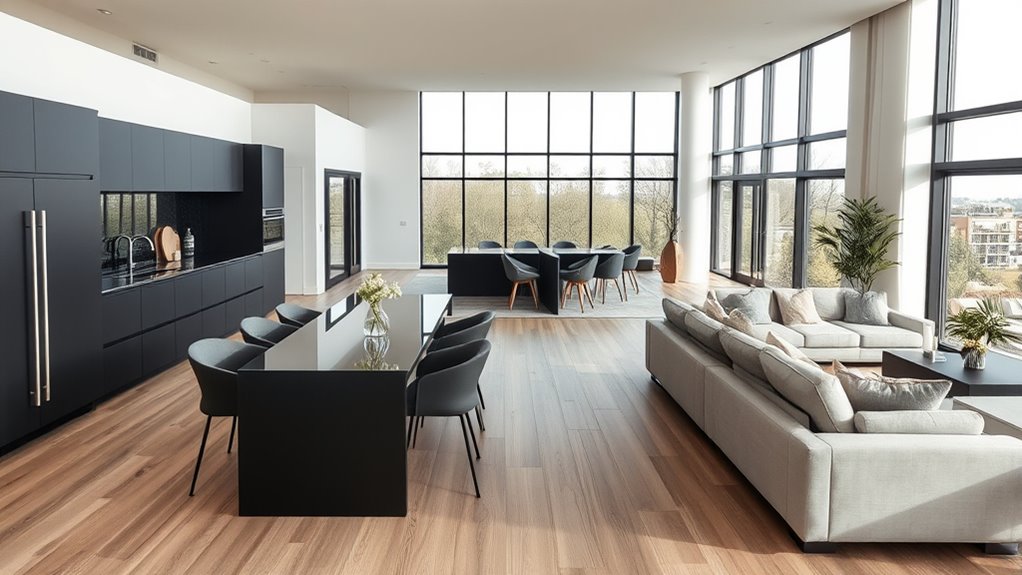

Open concept layouts remain popular, but many homeowners now seek more privacy and noise control. Trends are shifting toward flexible designs that combine open spaces with partial walls, room dividers, or multi-purpose areas. This allows you to enjoy the spacious feel while maintaining personal boundaries. If you want to explore how these evolving trends can suit your lifestyle, there’s plenty more to discover about modern floor plans.
Key Takeaways
- Open concept layouts remain popular but are evolving to include flexible designs for better privacy and noise control.
- Many homeowners now prefer hybrid floor plans that combine open spaces with private, enclosed areas.
- Strategies like partial walls, room dividers, and soundproofing are increasingly used to address privacy and noise concerns.
- The trend is shifting towards adaptable, personalized spaces that balance openness with privacy needs.
- Overall, open concept remains in style but is being refined to meet diverse lifestyle preferences.
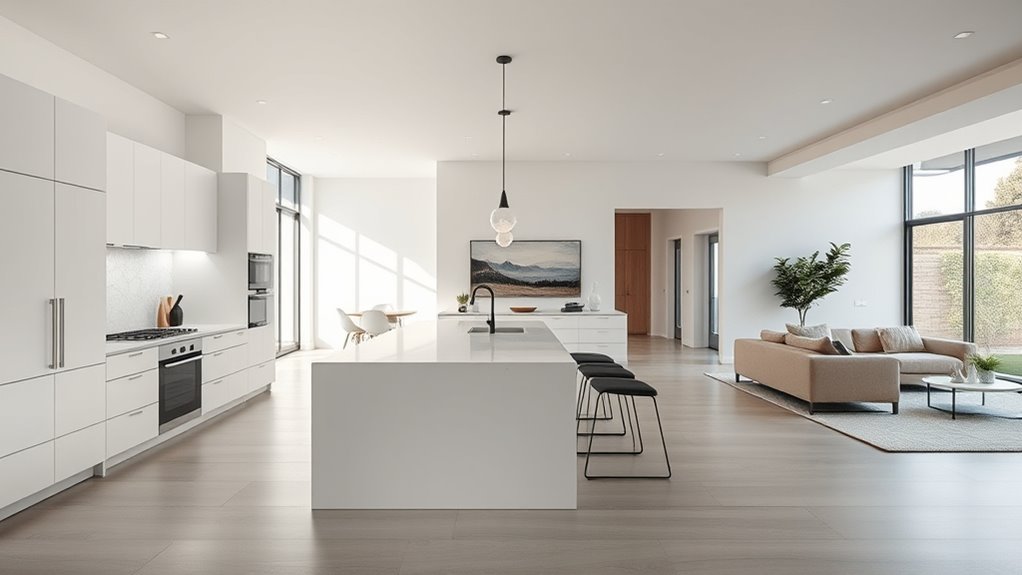
Have open concept floor plans become the new standard in home design? Many homeowners and builders have embraced this trend, valuing the spacious, airy feel it creates. But as much as open layouts promote a sense of connection and flexibility, they also come with some drawbacks you should consider. Privacy concerns top the list. When your living room, kitchen, and dining area blend into one large space, it’s harder to find a quiet corner for work or relaxation. If you’re someone who needs a designated private space, an open layout might feel overwhelming or expose more of your activities to everyone in the house.
Open concept layouts offer spaciousness but can compromise privacy and quiet for work or relaxation.
Noise levels also become a significant issue. Without walls to contain sound, noise from the kitchen—like clattering dishes or appliances—can easily spill into the living room or bedrooms. Conversely, sounds from the TV or conversations can disrupt someone trying to focus or rest elsewhere. If you work from home or have children who need quiet, this can turn into a constant challenge. While open plans foster a lively, social atmosphere, they often sacrifice the acoustic privacy that walls and separate rooms naturally provide.
Despite these concerns, many still favor open concept layouts because they make spaces feel larger and more connected. You might find that with strategic furniture placement, area rugs, and sound-absorbing materials, you can soften noise and create zones within the open plan. For example, placing a bookshelf or a large sofa can help dampen sound and visually separate areas. Some homeowners opt for partial walls or room dividers to strike a balance—maintaining openness while adding some privacy and noise control where needed.
The trend is shifting, though, as people seek more personalized comfort in their homes. Some now prefer flexible layouts that can easily transition from open to more compartmentalized. Multi-purpose rooms with sliding doors or curtains allow you to enjoy the benefits of an open plan without the constant exposure to noise and a lack of privacy. Additionally, incorporating soundproofing techniques can help mitigate noise issues while preserving the open feel. Essentially, open concept is not completely out of style, but it’s evolving. Homeowners are becoming more aware of the need for adaptable spaces that cater to both social interaction and personal privacy.
In the end, whether an open floor plan suits you depends on your lifestyle and priorities. If you thrive in lively, connected environments, the open design might still be your top choice. However, if privacy concerns and noise levels are significant for your daily routine, you might lean toward layouts that offer more separation and acoustic control.
Frequently Asked Questions
How Do Open Concept Layouts Affect Home Privacy?
Open concept layouts can impact your home privacy by increasing noise transmission between spaces, making it harder to find quiet or secluded areas. Privacy concerns arise when shared areas lack walls or doors, so you might feel exposed or less private. To address this, consider adding room dividers, strategic furniture, or soundproofing solutions to create zones where you can relax without interruptions or concerns about noise.
Are Open Floor Plans More Energy-Efficient?
Did you know open floor plans can boost energy efficiency by 10-20%? You might find that they promote better natural light flow, reducing the need for artificial lighting. Plus, the insulation benefits from fewer walls mean less heat loss, helping you save on energy costs. With fewer barriers, your home stays warmer in winter and cooler in summer, making open layouts a smart choice for energy savings.
What Are the Best Ways to Define Spaces in Open Plans?
To define spaces in open plans, you should use room dividers like rugs, bookcases, or curtains to create distinct areas without walls. Proper furniture placement also helps, such as positioning sofas and tables to carve out specific zones. These strategies maintain an open feel while visually separating functions, making your space look organized and inviting without sacrificing the airy atmosphere you want.
How Do Open Concepts Impact Home Resale Value?
Open concepts can boost your home’s resale value, but they’re a double-edged sword. You might attract buyers seeking modern living, yet privacy concerns and sound transmission issues could turn some away. Think of your open floor plan as a glass house—you’ll want to address these challenges with thoughtful design choices. Balancing spaciousness with privacy can make your home more appealing, ultimately helping it stand out in the market.
Can Open Floor Plans Be Adapted for Aging-In-Place Needs?
You can adapt open floor plans for aging-in-place needs by adding aging-in-place modifications and accessible design features. Installing grab bars, widening doorways, and replacing thresholds make spaces safer. You might also consider lowering countertops and adding non-slip flooring. These changes help you maintain independence and comfort, ensuring your open space remains functional and safe as your needs evolve. Embracing these modifications lets you enjoy your home longer.
Conclusion
Just like a once-bustling city street evolving into cozy alleyways, open concept homes are making way for more intimate, segmented spaces. As you navigate your home’s layout, think of it as tending a garden—sometimes you prune the sprawling branches for a more balanced, inviting atmosphere. Embracing these new trends means creating a space that feels just right for you, blending open freedom with cozy corners—your own personalized sanctuary in the evolving landscape of home design.