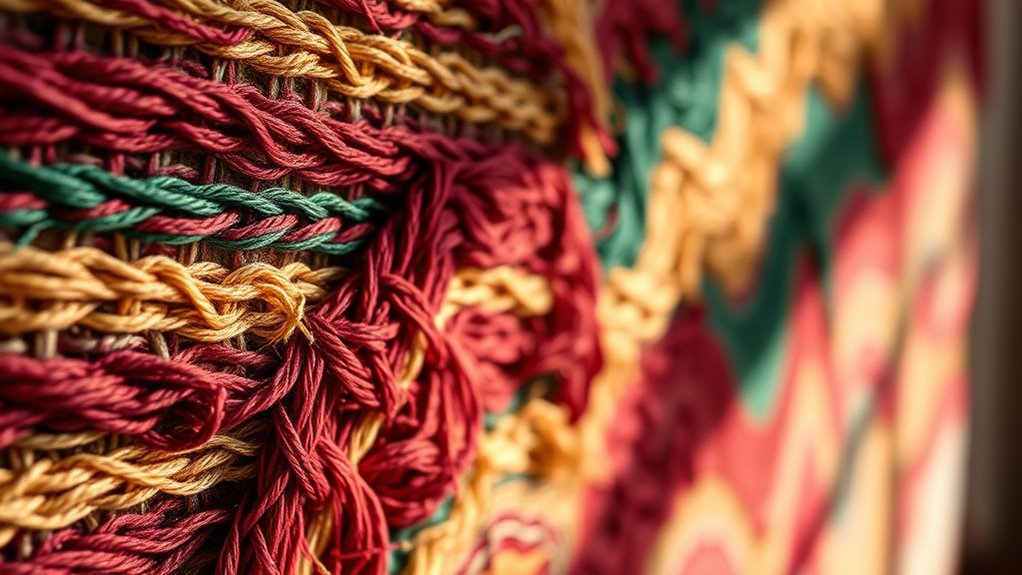

Tapestry textures combine woven fabrics and wall hangings to create rich, intricate surfaces that add depth and visual interest to any space. You’ll notice vivid colors, layered patterns, and tactile details that reflect centuries of craftsmanship and cultural storytelling. The textures invite touch, showcasing variations in thread thickness and weaving techniques. By understanding these elements, you can appreciate the artistry behind each piece and discover ways to incorporate them into your decor, revealing more fascinating details along the way.
Key Takeaways
- Incorporate woven fabrics with layered, textured surfaces to add depth and visual interest to wall hangings.
- Use diverse weaving techniques to create tactile textures and intricate patterns that enhance tapestry appeal.
- Combine bold colors and detailed storytelling motifs to evoke mood and complement interior decor.
- Select materials with varying thread thicknesses for a rich, three-dimensional tactile experience.
- Integrate historical-inspired designs to add cultural significance and artistic legacy to wall hanging displays.

Tapestry textures captivate the eye with their rich, intricate patterns and layered surfaces, inviting you to explore their depth and complexity. When you look at a tapestry, you’re drawn into a world of vivid colors and detailed storytelling woven into fabric. The color palette of these textiles ranges from bold, vibrant hues to subtle, muted tones, depending on their purpose and origin. Historically, tapestries have served both decorative and functional roles, often used to insulate walls and display wealth or status. Their origins trace back centuries to regions like Persia, Byzantium, and medieval Europe, where artisans crafted complex designs that reflected cultural stories, religious themes, or nature motifs. These historical origins influence the styles and techniques you see today, blending tradition with modern aesthetics.
Tapestry textures reveal rich patterns and layered surfaces, blending history, artistry, and vivid storytelling into fabric.
As you explore tapestry textures, you’ll notice how the choice of color palette affects the overall mood and visual impact. Bright reds, deep blues, and gold accents create a sense of grandeur and opulence, while earth tones and softer shades evoke warmth and serenity. The layering of colors through weaving techniques adds depth, making the surface appear almost three-dimensional. This layered surface invites you to run your fingers over the textured fabric, feeling the variations in thread thickness and weave density. The craftsmanship behind each piece is a tribute to centuries of tradition, with artisans skillfully selecting colors and materials to achieve the desired effect. Additionally, the weaving techniques used in creating tapestries contribute significantly to their textured appearance and durability.
You can also appreciate the historical origins embedded in each tapestry. Many designs draw inspiration from ancient stories, mythologies, or regional symbols. For example, medieval European tapestries often depict chivalric scenes or religious iconography, reflecting the values and stories of that era. Similarly, Persian rugs and wall hangings incorporate floral motifs and intricate geometric patterns rooted in centuries of cultural symbolism. These historical influences give each tapestry a sense of authenticity and storytelling, making them more than just decorative objects—they’re cultural artifacts that carry the legacy of their creators.
Incorporating tapestry textures into your space allows you to bring a piece of history and artistry into your environment. Whether you choose a traditional woven piece or a modern interpretation, understanding their rich color palette and historical origins enhances your appreciation. These textiles aren’t just surface decorations; they’re tactile histories, layered with meaning, tradition, and craftsmanship. As you touch and view them, you connect with centuries of artisanship that continue to inspire contemporary design, making each tapestry a unique expression of cultural heritage and artistic skill.

Sdjazl Woven Boho Macrame Wall Hanging Home Decor Tapestry Dip-Dyed Large Modern Handmade Colorful Mountain Landspace for Living room (green)
- Handmade and Unique: Each piece is handcrafted and one-of-a-kind
- Natural Lighting Photos: Photos taken in natural light, unedited
- Colorful Dip-Dyed Design: Vibrant, hand-dyed yarn for visual appeal
As an affiliate, we earn on qualifying purchases.
As an affiliate, we earn on qualifying purchases.
Frequently Asked Questions
How Do I Care for Delicate Woven Wall Hangings?
To care for delicate woven wall hangings, you should regularly dust them with a soft brush or vacuum using a gentle attachment. Avoid harsh cleaning methods that could damage the fibers. To prevent pests, keep your hangings in a clean, dry area and consider using natural repellents like cedar. Handle them carefully when cleaning or moving, and avoid direct sunlight to preserve their colors and texture.
What Are the Best Materials for Durable Tapestry Textures?
Ever wondered what materials make a tapestry truly durable? Natural fibers like wool, cotton, and jute offer strength and longevity, perfect for everyday wear. Synthetic blends, combining fibers like polyester or acrylic, enhance durability and resist fading. You should choose these materials based on the environment and look you desire. By selecting high-quality natural fibers or sturdy synthetic blends, you guarantee your tapestry remains vibrant and resilient for years to come.
How Can I Incorporate Tapestry Textures Into Modern Interior Design?
To incorporate tapestry textures into your modern interior, start by choosing pieces that complement your color scheme and furniture. Hang woven wall art or fabric panels to add warmth and visual interest. Pair these textures with sleek, minimal furniture to keep the space balanced. Use contrasting or matching colors to create harmony, and consider placing tapestries near neutral tones to make them stand out without overwhelming your modern aesthetic.
Are There Eco-Friendly Options for Woven Fabrics and Wall Hangings?
Did you know that over 60% of consumers prefer eco-friendly home decor? You can choose woven fabrics and wall hangings made from sustainable fibers like organic cotton, jute, or hemp. Look for options dyed with eco-conscious dyes to reduce environmental impact. These choices not only enhance your space’s texture but also support sustainability, making your interior both stylish and environmentally responsible.
How Do Different Weaving Techniques Affect the Texture and Appearance?
Different weaving techniques markedly impact the texture and appearance of your woven fabrics. For example, tight weave density creates a smooth, sturdy surface, while looser weaves introduce a more textured, airy feel. Fiber patterns also influence the visual appeal, with intricate patterns adding complexity and simplicity offering elegance. By adjusting these factors, you can customize the tactile experience and aesthetic, making your wall hangings uniquely suited to your space.
Conclusion
Tapestry textures bring warmth and depth to any space, blending woven fabrics and wall hangings seamlessly. Did you know that the global textile industry is expected to reach $1.2 trillion by 2027? By incorporating tapestry textures, you not only enhance your decor but also connect with a rich tradition that’s centuries old. So go ahead—add that layered, tactile element and transform your environment into a cozy, artistic haven.






![Transitliberationism: A Bicycle Anarchist Manifesto [OC]](https://getaninsight.com/wp-content/uploads/2026/07/transitliberationism-a-bicycle-anarchist-manifesto-oc-featured-260x140.jpg)