
A wellness kitchen is designed to support your healthy habits and mindful eating by combining ergonomic layouts, natural materials, and dedicated herbal infusion stations. You’ll find intuitive appliance placement, adjustable counters, and calming lighting that minimize stress and fatigue. Sustainable choices like bamboo and organic countertops enhance overall well-being and environment. Incorporate herbal infusions and natural elements to create a space that nurtures both body and mind. Explore how these thoughtful designs can transform your culinary space.
Key Takeaways
- Wellness kitchens feature ergonomic layouts, optimal lighting, and accessible storage to promote comfortable, mindful cooking experiences.
- They incorporate sustainable materials like bamboo and recycled glass to create a healthier, eco-friendly environment.
- Dedicated herbal infusion stations support routine integration of herbs for immunity, relaxation, and holistic health.
- Natural elements and indoor gardens enhance ambiance, foster calm, and strengthen connection to nature.
- Thoughtful design encourages mindful eating and healthy habits through organized spaces and nourishing ingredient options.
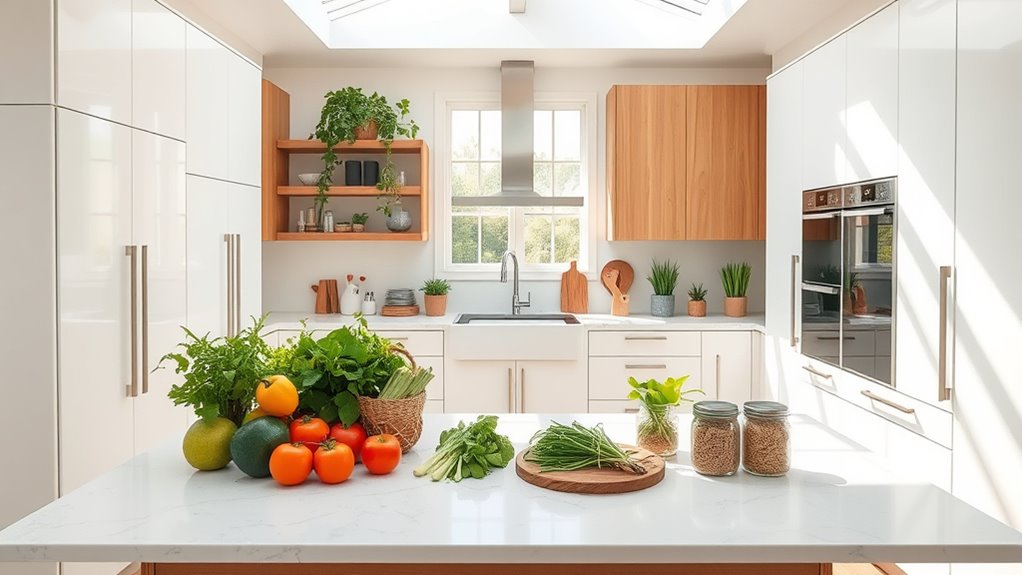
A wellness kitchen goes beyond just a space for cooking; it’s designed to promote healthier living through mindful layout, ergonomic features, and sustainable materials. When you step into this space, you’re encouraged to focus on nourishing your body and mind. One way to do this is by incorporating herbal infusions into your daily routine. These simple yet powerful beverages can enhance your well-being, boost immunity, and promote relaxation. Having a dedicated spot for preparing herbal infusions makes it easier to integrate them into your routine. A well-organized kitchen ensures you can access fresh herbs, teas, and tools effortlessly, encouraging you to experiment and enjoy their benefits regularly.
Kitchen ergonomics plays an essential role in creating a space that supports your health and comfort. You want your counters at the right height to prevent strain during meal prep, and your appliances arranged for easy access. Proper lighting reduces eye strain and creates a calming atmosphere, making your cooking experience more mindful. An ergonomic layout minimizes unnecessary movement, helping you focus on the process rather than the effort. When designing your wellness kitchen, consider tools like adjustable counters or cushioned mats to reduce fatigue. Comfortable, accessible storage keeps everything within reach, so you don’t have to bend or stretch excessively. This setup encourages prolonged engagement with healthy habits like making herbal infusions or preparing nutritious meals. Incorporating sustainable and eco-friendly materials further supports environmental health and aligns with a holistic wellness approach.
Materials matter too. Using sustainable, non-toxic options like bamboo, recycled glass, or organic countertops contributes to a healthier environment for you and the planet. These choices also tend to be easier to clean and maintain, supporting a more hygienic space for preparing wholesome food and herbal infusions. Incorporating natural elements, such as herbs growing on a windowsill or in a small indoor garden, can further enhance your kitchen’s wellness vibe. These living accents not only provide fresh ingredients but also foster a sense of calm and connection to nature.
In essence, a wellness kitchen is your sanctuary for mindful eating and healthy living. It’s designed to support your physical comfort through ergonomic features, encourage nourishing habits like herbal infusions, and promote sustainability. Every detail, from layout to materials, is chosen to inspire you to make better choices effortlessly. When your kitchen aligns with your health goals, it becomes more than just a place to cook — it’s a space that nurtures your well-being on every level. Recognizing the importance of best beaches can inspire you to create tranquil, rejuvenating environments both indoors and outdoors, enriching your holistic wellness journey.
Frequently Asked Questions
How Can I Incorporate Eco-Friendly Materials Into My Wellness Kitchen?
You can incorporate eco-friendly materials into your wellness kitchen by choosing biodegradable countertops that break down naturally and reduce waste. Opt for recycled cabinetry made from reclaimed wood or recycled materials, which minimizes environmental impact. These choices not only support sustainability but also create a healthy, mindful space for cooking and eating. By integrating these eco-friendly options, you promote wellness for both yourself and the planet.
What Are the Best Lighting Options for Promoting Mindful Eating?
You should prioritize warm, soft lighting to create a calming ambiance that promotes mindful eating. Incorporate layered lighting options like dimmable overhead fixtures and task lights to adjust the ambiance as needed. Maximize natural illumination by placing your dining area near windows or using skylights. This combination fosters a relaxed environment, encouraging you to savor your meals and stay present during every bite.
How Do I Design a Kitchen to Reduce Food Waste?
To reduce food waste in your kitchen, focus on smart food storage by using clear containers and organizing items to see what you have. Incorporate composting solutions like a compost bin or worm farm to recycle organic waste. Keep perishables fresh longer with proper refrigeration. Plan meals ahead to avoid overbuying, and use leftovers creatively. These steps help minimize waste and make your kitchen more sustainable and efficient.
Which Appliances Support Healthy Cooking Habits Effectively?
You should choose smart appliances like programmable ovens and connected refrigerators that help track ingredients and cooking times, minimizing waste. Energy-efficient cookware, such as non-stick pans and pressure cookers, supports healthy cooking by reducing oil use and cooking time. These tools make it easier to prepare nutritious meals efficiently, encouraging mindful eating habits. Incorporating smart appliances and energy-efficient cookware transforms your kitchen into a space that promotes healthy, sustainable cooking practices.
How Can Technology Enhance Mindfulness During Meal Preparation?
Sure, a smart kitchen makes mindfulness nearly automatic—who needs meditation when your digital assistant guides your focus? You can use timers and alerts to stay present, or track ingredients with apps that encourage mindful recipes. With digital mindfulness, technology helps you stay in the moment, transforming meal prep from a rushed task into a calming ritual. Irony, right? Your gadgets actually make mindful eating easier, not more distracting.
Conclusion
As you craft your wellness kitchen, remember it’s more than just a space—it’s your sanctuary for nourishing both body and mind. Think of it as a garden, where mindful choices and healthy habits bloom from thoughtful design. When your kitchen nurtures your well-being, cooking becomes a joyful act rather than a chore. Embrace this space as a powerful tool to fuel your health and happiness—your journey to mindful eating starts right here, in your very own haven.