📊 Full opportunity report: Could Video Analysis Make Pickleball Ratings More Useful? on IdeaNavigator AI — validation score, market gap, and execution plan.

Get the little things that make your day delivered free with Prime
- Fast, free delivery on millions of items
- Prime Video, Amazon Music and more included
- Member-only deals all year
TL;DR
A product proposal from IdeaNavigator AI outlines an app that would record pickleball rallies, label shots and errors, and track skill measures that could help players understand rating changes. It is a concept, not a launched or validated service: testing at three clubs across 200 sessions is proposed, but results are not available.
IdeaNavigator AI has proposed a pickleball video-analysis app that would automatically separate rallies, label shots and errors, and show players skill trends alongside rating changes. The concept is aimed at recreational players, but it has not been presented as a launched product or a tested service; a three-club pilot covering 200 sessions is suggested as a way to assess whether players return and pay.
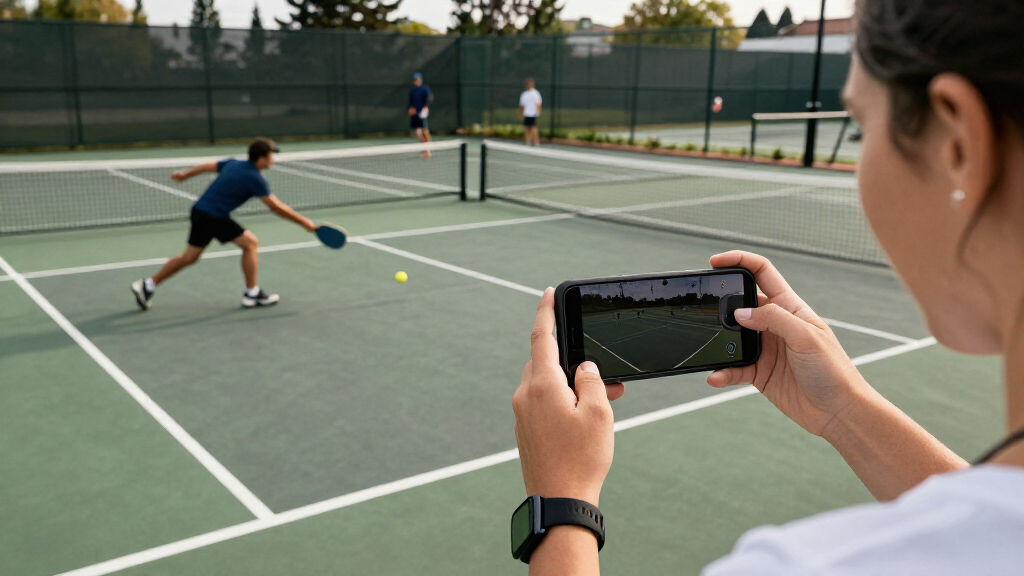
The proposed workflow starts with a player or facility mounting a phone near the court fence. The app would process footage to identify individual rallies, tag shot types and errors, and generate a session highlight reel. It would also track measures of play over time, with the stated aim of helping players understand why a rating may have changed.
The concept focuses on a familiar frustration for recreational players: rallies end, but the details of a point are easy to forget. A player practicing a third-shot drop, for example, may not receive feedback about the shot’s placement or whether it led to an error. The proposal argues that video review could make practice more informative, though it does not report evidence that the suggested analysis can yet measure those skills accurately.
To test demand, IdeaNavigator AI proposes installing mounted phones at three clubs, processing 200 sessions, and measuring repeat use and subscription conversion among club members. The suggested business model combines a consumer subscription with partnerships for facilities that install cameras on courts. No pilot findings, pricing, technical specifications, or adoption figures are provided.
From Ratings to Rally Feedback
A video tool could address a gap between a rating number and the actions that produce it. Players may see a rating move without knowing whether the change reflects shot selection, consistency, errors, or the level of opponents in recent games. If an app could reliably connect clips and tracked measures to performance, it might give players concrete material for practice instead of a number alone.
That possibility matters to clubs as well as players. A facility-based setup could give members a new service and provide a place to test whether video review encourages repeat visits or paid subscriptions. But those are commercial hypotheses, not established outcomes. The proposal supplies a validation plan rather than evidence of demand, retention, or improved play.
There is also a practical distinction between replaying a rally and evaluating it. Capturing a usable clip may be straightforward; consistently identifying shot types, errors, and rally quality from different phones, angles, lighting conditions, and court layouts is a more demanding task. The app’s value would depend on whether its labels are accurate and useful enough that players trust them.
pickleball court side video camera
As an affiliate, we earn on qualifying purchases.
As an affiliate, we earn on qualifying purchases.
The Proposed Court-Side Setup
The idea is positioned within racquet-sports consumer technology and targets recreational pickleball players who want to improve while revisiting memorable points. Its timing rationale is that pickleball has a large and growing player base and that phone cameras and computer-vision systems may make automated video processing more practical. Those points are the proposal’s market case; no market-size figures, technical benchmarks, or product tests are included.
The product outline is deliberately narrow: mount a phone at the fence, process a session, and return rally clips plus performance indicators. It does not describe a dedicated camera, a connection to DUPR, or a formal rating calculation. The reference to DUPR concerns players’ interest in understanding rating movement, not a confirmed partnership or a claim that the app would determine official ratings.
The suggested club pilot would test whether the basic experience is worth using repeatedly and whether members convert to a paid subscription. It would not, by itself, establish that automated labels are accurate across the sport or that the app changes a player’s rating or skill. Those questions would require clearly defined measures and further evidence.
Accuracy and Demand Remain Untested
No working product, pilot results, or user feedback are included in the proposal. It is not clear how the app would distinguish similar shot types, detect errors, or rate rally quality, nor how it would handle missed footage, camera movement, crowded courts, and varied lighting. The meaning of a “rating” for a rally is also not defined.
The proposed skill trends are intended to help explain rating movement, but no method is given for separating a player’s performance from factors such as opponents, partner play, or match conditions. It is also unclear whether the app would connect to DUPR or simply display independent practice metrics. There are no stated privacy, storage, or consent arrangements for video recorded at shared facilities.
Commercial viability is similarly unconfirmed. The outline does not give a subscription price, facility costs, conversion target, or evidence that players would keep using the app after trying it. The proposed 200-session test is a plan, not a completed study, and no timeline is provided.
A Three-Club Pilot Is Proposed
The next step described is a pilot at three pickleball clubs, using mounted phones to record and process 200 sessions. The proposed measures are repeat usage and subscription conversion among club members. No launch date, participating facilities, or commitment to run the pilot has been announced in the information available.
If the test proceeds, its results could help establish whether players find rally clips and skill trends useful enough to return and pay. Further reporting would also need to examine the reliability of shot and error labels, how performance metrics are calculated, how video is handled, and whether any rating platform is involved. Until those details and results are available, the app remains a product concept rather than a demonstrated way to make pickleball ratings more useful.
Source: IdeaNavigator AI
Key Questions
Is the pickleball video-analysis app available now?
No launch is reported. The app is described as a proposal, and no working product or release date is provided.
What would the app analyze?
It is proposed to split court-side phone footage into rallies, tag shot types and errors, create highlight reels, and track skill measures over time. Its ability to do those tasks accurately has not been demonstrated.
Would the app change a DUPR rating?
There is no confirmed connection to DUPR and no claim that the app would calculate official ratings. The stated aim is to help players interpret rating movement through independent performance trends.
How would the idea be tested?
The proposed test is to record and process 200 sessions at three clubs, then measure repeat use and subscription conversion among club members. No results or schedule have been reported.
Source: IdeaNavigator AI
NFL season / tailgating Picks
team gear
As an affiliate, we earn on qualifying purchases.