The Schlage Encode Smart WiFi Deadbolt is my best overall pick for a buyer who wants app-based access in a familiar deadbolt format. The WYZE Palm Lock stands out for palm-vein entry, while the Yale Assure Lock 2 is a strong alternative for buyers who favor keypad access and a recognizable deadbolt design. The main tradeoffs are how you want to authenticate, whether you need built-in Wi-Fi, and whether your door calls for a deadbolt or a complete handle set. Read on for a comparison of all 15 options and guidance on choosing a lock that fits your door, access habits, and connectivity needs.

Get the little things that make your day delivered free with Prime
- Fast, free delivery on millions of items
- Prime Video, Amazon Music and more included
- Member-only deals all year
Key Takeaways
- The roundup spans distinct access methods: palm-vein recognition on the WYZE Palm Lock, fingerprint readers on several Philips, Veise, and Yamiry models, and keypad-focused deadbolts from Schlage and Yale.
- Deadbolts and handle sets serve different jobs: models such as the Schlage Encode and Yale Assure Lock 2 replace a deadbolt, while several Philips and Veise listings pair a lock with handles for a broader hardware change.
- Wi-Fi features appear across several product families: check the exact model and included connectivity rather than assuming every lock with an app supports remote access the same way.
- Fingerprints reduce keypad dependence but add enrollment and sensor considerations: buyers should weigh biometric convenience against the practical need for a dependable backup entry method.
- Fit and installation can outweigh extra access features: knob, lever, handle-set, and deadbolt products are not interchangeable, so door preparation and existing hardware should shape the shortlist.
| WYZE Palm Lock, Smart Door Lock with Palm Vein Recognition |  | Best for Contactless Digital Keys | Lock type: Deadbolt | Biometric entry: Contactless palm-vein recognition | Connectivity: Wi-Fi, Alexa, Google Assistant | VIEW LATEST PRICE | See Our Full Breakdown |
| Philips Wi-Fi Keypad Lock with Handle, Smart Lock for Front Door, Fingerprint Keyless Entry, Electronic Keypad Deadbolt, App Remote Control, Auto Lock, Voice Control, Easy Installation |  | Best for Fingerprint-and-Handle Convenience | Model: DDL241X-1HW-L-M | Lock type: Deadbolt with lever handle | Unlock methods: Fingerprint, PIN, app, voice control, physical key | VIEW LATEST PRICE | See Our Full Breakdown |
| Veise VE027 Wi-Fi Smart Lock with Fingerprint, Keyless Entry, and Deadbolt, Matte Black |  | Best for Weather-Exposed Entryways | Model: VE027 | Connectivity: 2.4 GHz Wi-Fi and Bluetooth | Entry methods: Fingerprint, PIN, voice assistant, IC card, physical key, auto-lock | VIEW LATEST PRICE | See Our Full Breakdown |
| Smart Door Handle Lock with Keypad, Yamiry Fingerprint Knob for Front Door |  | Best for Quick, Hub-Free Setup | Model: YR01 | Lock type: Smart deadbolt lock with handle | Unlock methods: Fingerprint, Bluetooth app, passcode, key fob, mechanical key, Alexa | VIEW LATEST PRICE | See Our Full Breakdown |
| Philips Wi-Fi Smart Front Door Lock Set with Handle |  | Best for Shared PIN Access | Model: DDL242X-15HW-H-MB | Unlock methods: App, keypad password, physical key, Alexa, Google Assistant | Password capacity: Up to 100 | VIEW LATEST PRICE | See Our Full Breakdown |
| Sifely S Fingerprint Smart Lock with Reversible Handle |  | Best Versatile Entry-Level Pick | Unlock methods: Fingerprint, keypad PIN, Bluetooth app, compatible RFID fob, mechanical key | Connectivity: Local Bluetooth; optional Wi-Fi gateway sold separately | Handle: Reversible lever | VIEW LATEST PRICE | See Our Full Breakdown |
| Philips Wi-Fi Smart Deadbolt Lock with Keyless Entry |  | Best for Voice Control Without a Hub | Unlock methods: App, passcode, fingerprint, physical key, Alexa or Google Assistant voice | Wi-Fi: Built-in 2.4 GHz; no hub required | Passcodes: Up to 100 custom; unlimited one-time or scheduled | VIEW LATEST PRICE | See Our Full Breakdown |
| Schlage Encode Smart WiFi Deadbolt with Century Trim, Matte Black |  | Best Overall for Trusted Brand and Reliability | Connectivity: Built-in WiFi | Access codes: Up to 100 | Voice assistants: Alexa, Google Home | VIEW LATEST PRICE | See Our Full Breakdown |
| Yale Digital Keypad Deadbolt, Keyless Entry Door Lock, Black Suede |  | Best No-Frills Budget Pick | Connectivity: None (No Wi-Fi/App) | User codes: Up to 20 | Certification: Grade 3 BHMA | VIEW LATEST PRICE | See Our Full Breakdown |
| Philips 4200 Series Wi-Fi Keypad Deadbolt with Handle |  | Best Value with Handle Set | Connectivity: 2.4 GHz Wi-Fi; no hub required | Access methods: Fingerprint, keypad PIN, app | PIN code types: Permanent, one-time, periodic, recurring | VIEW LATEST PRICE | See Our Full Breakdown |
| Veise VE06-L Smart Deadbolt Lock with 2 Lever Handles – Matte Black |  | Best for Flexible Shared Access | Model: VE06-L | Finish: Matte black | Material: Zinc alloy | VIEW LATEST PRICE | See Our Full Breakdown |
| Philips DDL241-WiFi-B Smart Deadbolt with Fingerprint Sensor and Keypad |  | Best for Fingerprint Access Without a Hub | Model: DDL241-WiFi-B | Connectivity: Built-in 2.4GHz Wi-Fi | Unlock methods: Fingerprint, PIN, app, voice control, physical key | VIEW LATEST PRICE | See Our Full Breakdown |
| Veise VE017 Fingerprint Smart Door Lock with App Control, Matte Black |  | Best for Locally Stored Digital Credentials | Model: VE017 | Finish and material: Matte black zinc alloy | Unlock methods: Fingerprint, app, authorized access, fob card, PIN, shared code, mechanical key | VIEW LATEST PRICE | See Our Full Breakdown |
| Yale Assure Lock 2 Wi-Fi Smart Deadbolt with Keypad, Satin Nickel |  | Best for Hub-Free Remote Keypad Access | Model: YRD410-WF1-619 | Finish: Satin nickel | Connectivity: 2.4 or 5GHz Wi-Fi; no hub required | VIEW LATEST PRICE | See Our Full Breakdown |
| Yamiry Keypad Smart Door Knob Lock with Handle | 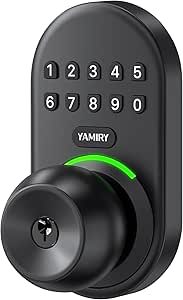 | Best for Simple Code-Based Entry | Model: YR04 | Lock type: Keypad door knob lock | Material and finish: Aluminum alloy, matte black | VIEW LATEST PRICE | See Our Full Breakdown |
| smart locks with digital key | Connectivity | Model | Door thickness | Unlock methods |
|---|---|---|---|---|
| WYZE Palm Lock | Wi-Fi, Alexa, Google Assistant | — | — | — |
| Philips Wi-Fi Keypad Lock with | 2.4 GHz Wi-Fi, Bluetooth, Alexa, Google Assistant | DDL241X-1HW-L-M | 1-3/8 to 2 inches | Fingerprint, PIN, app, voice control, physical key |
| Veise VE027 Wi-Fi Smart Lock w | 2.4 GHz Wi-Fi and Bluetooth | VE027 | — | — |
| Smart Door Handle Lock with Ke | — | YR01 | — | Fingerprint, Bluetooth app, passcode, key fob, mechanical key, Alexa |
| Philips Wi-Fi Smart Front Door | Built-in 2.4 GHz Wi-Fi; no hub required | DDL242X-15HW-H-MB | — | App, keypad password, physical key, Alexa, Google Assistant |
| Sifely S Fingerprint Smart Loc | Local Bluetooth; optional Wi-Fi gateway sold separately | — | 1-3/8 to 2-1/4 inches | Fingerprint, keypad PIN, Bluetooth app, compatible RFID fob, mechanical key |
| Philips Wi-Fi Smart Deadbolt L | — | — | 1⅜–2 inches (38–50 mm) | App, passcode, fingerprint, physical key, Alexa or Google Assistant voice |
| Schlage Encode Smart WiFi Dead | Built-in WiFi | — | 1-3/8 in to 1-3/4 in | — |
| Yale Digital Keypad Deadbolt | None (No Wi-Fi/App) | — | 1-3/8" to 1-3/4" | — |
| Philips 4200 Series Wi-Fi Keyp | 2.4 GHz Wi-Fi; no hub required | — | 1-3/8 to 1-3/4 in (38 to 50 mm) | — |
| Veise VE06-L Smart Deadbolt Lo | — | VE06-L | 1-3/8 to 2 in (35 to 50 mm) | App, codes, web portal, IC cards, e-key, admin access, physical key |
| Philips DDL241-WiFi-B Smart De | Built-in 2.4GHz Wi-Fi | DDL241-WiFi-B | 1-3/8 to 2 in | Fingerprint, PIN, app, voice control, physical key |
| Veise VE017 Fingerprint Smart | — | VE017 | — | Fingerprint, app, authorized access, fob card, PIN, shared code, mechanical key |
| Yale Assure Lock 2 Wi-Fi Smart | 2.4 or 5GHz Wi-Fi; no hub required | YRD410-WF1-619 | 1-3/4 to 2-1/4 in | — |
| Yamiry Keypad Smart Door Knob | — | YR04 | — | — |
More Details on Our Top Picks
WYZE Palm Lock, Smart Door Lock with Palm Vein Recognition
The WYZE Palm Lock takes a different route from fingerprint models such as the Veise VE027: it reads palm veins without requiring a touch, making entry convenient when hands are full or you prefer not to use a keypad. Its Wi-Fi app access, Alexa and Google Assistant support, and remote monitoring add useful digital-key options beyond the biometric reader. A built-in gyroscope can trigger auto-lock, while tamper and ajar alerts add another layer of awareness. The tradeoff is power management: the main battery is rated for six months, but the secondary battery lasts about two weeks and needs periodic charging. It also depends on stable Wi-Fi for its full smart feature set, and installation may not suit every door configuration.
Pros:- Contactless palm-vein recognition offers a distinct alternative to fingerprint or PIN entry.
- Wi-Fi, Alexa, Google Assistant, and the Wyze app support connected access and monitoring.
- Gyroscope-based auto-lock plus tamper and ajar alarms add useful security alerts.
- USB-C emergency charging and a mechanical key provide backup access options.
Cons:- The secondary battery is rated for only about two weeks, so it needs regular charging.
- Full smart functionality depends on a stable Wi-Fi connection.
- Installation may be challenging on some door configurations.
Best for: Households seeking touch-free biometric entry alongside app control and voice-assistant access.
Not ideal for: Buyers who want a simple keypad lock, have unreliable Wi-Fi, or prefer not to monitor a short-life secondary battery.
- Lock type:Deadbolt
- Biometric entry:Contactless palm-vein recognition
- Connectivity:Wi-Fi, Alexa, Google Assistant
- Main battery life:6 months
- Secondary battery life:2 weeks
- Charging port:USB-C
- Security certification:BHMA Grade 3
- Mechanical backup:Included
Our verdict“Choose the WYZE Palm Lock if contactless palm access matters more to you than the lower-maintenance keypad approach of the Philips Wi-Fi Smart Front Door Lock Set.”
Philips Wi-Fi Keypad Lock with Handle, Smart Lock for Front Door, Fingerprint Keyless Entry, Electronic Keypad Deadbolt, App Remote Control, Auto Lock, Voice Control, Easy Installation
The Philips Wi-Fi Keypad Lock with Handle combines a deadbolt and lever in one set, with a top-mounted fingerprint reader suited to quick one-hand entry. It offers five ways in: fingerprint, PIN, app, voice assistant, or physical key. That breadth makes it more flexible than the Yamiry YR01, whose Alexa voice control requires a separately sold gateway. Remote app control works over 2.4 GHz Wi-Fi without a separate hub, and adjustable auto-lock timing lets households choose how soon the door secures itself. The main compromise is power: it takes eight AA batteries, sold separately. Its Wi-Fi is also limited to 2.4 GHz, so buyers with only 5 GHz coverage should check their network before choosing it.
Pros:- Five entry methods include fingerprint, PIN, app, voice control, and physical key.
- Top-mounted reader and lever support convenient one-hand operation.
- Built-in Wi-Fi enables remote control without a separate hub.
- Fits doors 1-3/8 to 2 inches thick and supports left- or right-handed configurations.
Cons:- Requires eight AA alkaline batteries, which are not included.
- Remote connectivity is limited to 2.4 GHz Wi-Fi.
Best for: Households that want a combined lever and deadbolt with fingerprint entry, remote control, and multiple backup methods.
Not ideal for: Buyers whose home network lacks 2.4 GHz Wi-Fi or who want a lock that avoids a large AA-battery set.
- Model:DDL241X-1HW-L-M
- Lock type:Deadbolt with lever handle
- Unlock methods:Fingerprint, PIN, app, voice control, physical key
- Fingerprint capacity:Up to 50 fingerprints
- Connectivity:2.4 GHz Wi-Fi, Bluetooth, Alexa, Google Assistant
- Battery requirement:8 AA alkaline batteries; sold separately
- Door thickness:1-3/8 to 2 inches
- Auto-lock timer:10 to 180 seconds
Our verdict“Pick this Philips set if a fingerprint reader and integrated handle matter more than reducing battery count or supporting 5 GHz Wi-Fi.”
Veise VE027 Wi-Fi Smart Lock with Fingerprint, Keyless Entry, and Deadbolt, Matte Black
The Veise VE027 stands out for buyers who need digital keys on an exposed door: its IP65 weather resistance gives it an advantage over the indoor-oriented Yamiry YR01, while direct 2.4 GHz Wi-Fi supports remote access without a hub. Its entry options are unusually broad, combining fingerprint, PIN, voice assistant, IC card, physical key, and app-based management. Encrypted local storage, anti-peep PIN entry, and a lockout after repeated incorrect attempts add practical safeguards. The fingerprint reader is specified to unlock in 0.2 seconds, and the lock supports 20 or more fingerprints and 100 or more PINs. The tradeoffs are fit and setup: it supports specific door thicknesses and bore sizes, requires eight batteries not included, and remains limited to 2.4 GHz Wi-Fi.
Pros:- IP65 weather resistance suits exposed entryways better than the indoor-focused Yamiry YR01.
- Direct Wi-Fi access, app controls, logs, and alerts work without a separate hub.
- Fingerprint, PIN, voice, IC card, physical key, and auto-lock provide varied access choices.
- AES local encryption, anti-peep PIN entry, and an incorrect-code lockout add security features.
Cons:- Requires eight batteries, which are not included.
- Works with 2.4 GHz Wi-Fi rather than 5 GHz networks.
- Door thickness and bore diameter must match its specified measurements.
Best for: Homeowners who need remote digital access and multiple entry methods on a weather-exposed standard door.
Not ideal for: Buyers with nonstandard door measurements, 5 GHz-only Wi-Fi, or no interest in managing eight batteries.
- Model:VE027
- Connectivity:2.4 GHz Wi-Fi and Bluetooth
- Entry methods:Fingerprint, PIN, voice assistant, IC card, physical key, auto-lock
- Fingerprint capacity:20 or more fingerprints
- PIN capacity:100 or more codes
- Weather resistance:IP65
- Door compatibility:1-3/8 to 1-3/4 inches thick; 1-1/2 or 2-1/8-inch bore
- Power and backup:8 batteries, not included; Type-C backup power port
- Security certification:BHMA and ANSI Grade 3
Our verdict“Choose the VE027 when weather resistance and varied digital credentials matter more than simpler door-fit requirements.”
Smart Door Handle Lock with Keypad, Yamiry Fingerprint Knob for Front Door
The Yamiry YR01 is the fit-first choice here: its drill-free installation is described as taking about ten minutes on most standard American wooden doors, and its reversible handle accommodates either door handing. It supplies six entry methods, including fingerprint, passcodes, key fobs, mechanical keys, and Bluetooth app access. The app can manage permanent, temporary, and one-time access codes and show unlock activity, giving it a useful digital-key role for households sharing access. Compared with the Veise VE027, Yamiry emphasizes simple fitting and key-fob flexibility rather than stated weather resistance and detailed security specifications. There is a notable limitation for voice-control users: Alexa needs a separately sold Wi-Fi gateway. The supplied information also gives no battery-life or door-measurement details, so buyers should confirm fit and power requirements before purchase.
Pros:- Six entry methods include fingerprint, Bluetooth app, passcodes, key fobs, mechanical keys, and Alexa with a gateway.
- Drill-free installation is designed for most standard American wooden doors.
- Reversible handle works on left- and right-handed doors.
- App supports permanent, temporary, and one-time codes plus unlock activity monitoring.
Cons:- Alexa voice control requires a separately sold Wi-Fi gateway.
- The supplied data does not state battery requirements or battery life.
- Only two mechanical backup keys are included.
Best for: Renters or homeowners with a standard wooden door who want a reversible handle and app-managed temporary codes.
Not ideal for: Buyers who need Alexa voice control without extra hardware, detailed weather-resistance specifications, or a confirmed fit for unusual doors.
- Model:YR01
- Lock type:Smart deadbolt lock with handle
- Unlock methods:Fingerprint, Bluetooth app, passcode, key fob, mechanical key, Alexa
- App access:Permanent, temporary, and one-time codes; activity monitoring
- Voice-control requirement:Alexa requires a separately sold Wi-Fi gateway
- Installation:Designed for standard American wooden doors; no drilling described
- Handle orientation:Reversible for left- or right-handed doors
- Included backup items:2 key fobs and 2 mechanical keys
Our verdict“Choose the Yamiry YR01 for straightforward installation and flexible app-managed codes, but pick the Veise VE027 if stated weather protection is a priority.”
Philips Wi-Fi Smart Front Door Lock Set with Handle
The Philips Wi-Fi Smart Front Door Lock Set is the clearest fit for households that rely on codes: it supports up to 100 permanent, one-time, or time-based passwords, making it easier to grant different people access without handing out a physical key. Built-in 2.4 GHz Wi-Fi enables remote app control without a hub, and Alexa or Google Assistant voice commands add another route to operate the lock. Compared with the fingerprint-equipped Philips Wi-Fi Keypad Lock with Handle, this set trades biometric entry for a larger stated password capacity and a long handle. It also includes a physical key for backup. Its limits are practical: eight AA batteries are not included, remote control is specified for router distances up to 65 feet, and 2.4 GHz is the only supported Wi-Fi band.
Pros:- Supports up to 100 permanent, one-time, or time-based passwords for shared access.
- Built-in Wi-Fi enables remote control without a separate hub.
- App, keypad, physical key, and voice commands provide varied entry options.
- Includes a long handle and supports adjustable auto-lock timing.
Cons:- Requires eight AA alkaline batteries, which are not included.
- Wi-Fi support is limited to 2.4 GHz.
- Remote control is specified for router distances up to 65 feet.
Best for: Families, landlords, or households with recurring guests who need many permanent and scheduled PIN credentials.
Not ideal for: Buyers who prefer fingerprint entry, rely on 5 GHz-only Wi-Fi, or need remote control beyond the stated router range.
- Model:DDL242X-15HW-H-MB
- Unlock methods:App, keypad password, physical key, Alexa, Google Assistant
- Password capacity:Up to 100
- Password types:Permanent, one-time, time-based
- Connectivity:Built-in 2.4 GHz Wi-Fi; no hub required
- Remote-control router range:Up to 65 feet
- Door compatibility:1-3/8 to 2 inches thick; 1-1/2 or 2-1/8-inch cross bore
- Power:8 AA alkaline batteries, not included
- Auto-lock delay:10 to 180 seconds
Our verdict“Choose this Philips set if a large roster of scheduled PINs matters more than the fingerprint convenience offered by its keypad-and-fingerprint sibling.”
Sifely S Fingerprint Smart Lock with Reversible Handle
The Sifely S makes the most sense for buyers who want maximum flexibility without paying for smart-home integration they won’t use. It offers five entry methods — fingerprint, keypad PIN, Bluetooth app, compatible RFID fob, and a mechanical key — which is more than the Yale Digital Keypad Deadbolt can claim, since Yale skips app control entirely. Where Sifely falls short is remote access: you’ll need to buy a separate Wi-Fi gateway to control it away from home, whereas the Philips Wi-Fi Smart Deadbolt has Wi-Fi built in. The reversible lever is a genuine convenience for left- or right-handed doors, and the auto-lock, Passage, and Privacy modes give you day-to-day control. Tradeoffs include the need for four AA batteries (not included) and a strict fit requirement — only doors within the listed thickness, bore, and backset dimensions will work. This is a solid pick for renters or first-time smart lock buyers who want to test the waters without committing to a hub-based ecosystem.
Pros:- Five entry methods including fingerprint and mechanical key backup
- Reversible lever suits left- or right-handed doors
- Auto-lock, Passage Mode, and Privacy Mode add everyday control
- Customizable access codes with permanent, timed, one-time, and recurring options
Cons:- Remote internet control requires a separately sold Wi-Fi gateway
- Four AA batteries not included
- Only fits doors within specific thickness, bore, and backset dimensions
Best for: Renters or first-time smart lock buyers who want multiple entry methods and a reversible handle for flexible door orientation, and who don’t need remote access out of the box.
Not ideal for: Homeowners who need remote locking/unlocking or voice control without buying an extra Wi-Fi gateway — the Philips models offer that built in.
- Unlock methods:Fingerprint, keypad PIN, Bluetooth app, compatible RFID fob, mechanical key
- Connectivity:Local Bluetooth; optional Wi-Fi gateway sold separately
- Handle:Reversible lever
- Material:Zinc alloy
- Door thickness:1-3/8 to 2-1/4 inches
- Power:Four AA batteries (not included)
- Emergency power:Micro-USB port
- Warranty:One year
Our verdict“Buy the Sifely S if you want a feature-rich, budget-friendly smart lock that works locally and don’t mind adding a gateway later for remote access.”
Philips Wi-Fi Smart Deadbolt Lock with Keyless Entry
The Philips Wi-Fi Smart Deadbolt stands out because it packs built-in 2.4 GHz Wi-Fi, so you get remote access, app-based history, and voice control through Alexa or Google Assistant — all without a separate hub. That’s a clear advantage over the Sifely S, which requires a separately sold gateway for those features. The five unlocking methods (app, passcode, fingerprint, physical key, voice) cover every practical scenario, and the ability to manage up to 100 custom codes plus unlimited one-time or scheduled codes gives it more flexibility than the Yale Digital Keypad Deadbolt‘s 20-code limit. The auto-lock delay is adjustable from 10 to 180 seconds, letting you fine-tune security. Tradeoffs: it only works on 2.4 GHz Wi-Fi (not 5 GHz), and the AA batteries aren’t included. Also, there’s no door sensor, so you won’t get an alert if the door is ajar — something the Schlage Encode doesn’t offer either, but worth noting for security-minded buyers.
Pros:- Built-in Wi-Fi enables remote access without a hub
- Five unlock methods including fingerprint and voice control
- Up to 100 custom passcodes plus unlimited one-time or scheduled codes
- Adjustable auto-lock delay from 10 to 180 seconds
Cons:- Only supports 2.4 GHz Wi-Fi
- AA alkaline batteries not included
- No door sensor included for open/closed status
Best for: Smart-home enthusiasts who want remote control and voice commands without buying an extra hub, and who need a high volume of temporary access codes for guests or services.
Not ideal for: People with 5 GHz-only Wi-Fi networks or those who want a door sensor to detect open-door states — this lock lacks that feature.
- Unlock methods:App, passcode, fingerprint, physical key, Alexa or Google Assistant voice
- Wi-Fi:Built-in 2.4 GHz; no hub required
- Passcodes:Up to 100 custom; unlimited one-time or scheduled
- Auto-lock delay:10–180 seconds
- Door thickness:1⅜–2 inches (38–50 mm)
- Battery type:AA alkaline (LR6); not included
- Door sensor:Not included
Our verdict“Choose this Philips deadbolt if you want a hub-free Wi-Fi lock with voice control and extensive code management, and you’re comfortable with 2.4 GHz-only connectivity.”
Schlage Encode Smart WiFi Deadbolt with Century Trim, Matte Black
The Schlage Encode earns the top spot because it combines a well-known brand reputation with a polished feature set and a physical key backup — something the Philips Wi-Fi Smart Deadbolt also offers, but Schlage’s build quality and warranty give it an edge. The built-in Wi-Fi lets you lock and unlock remotely, manage up to 100 access codes, and view lock history through the Schlage Home app. The built-in alarm and fingerprint-resistant touchscreen add security layers that the Yale Digital Keypad Deadbolt simply doesn’t have. Four AA batteries are included, which is a nice touch compared to the Philips models that require you to supply your own. The auto-lock delay is adjustable and can be turned off entirely. Tradeoffs: battery life is rated up to six months, which is shorter than some competitors, and you need a secure home Wi-Fi network for app features. The Century trim in matte black looks premium, but the lock is pricier than the Sifely S — you’re paying for brand reliability and a limited lifetime mechanical warranty.
Pros:- Remote lock control and access-code management through the app
- Built-in alarm and fingerprint-resistant touchscreen
- Includes four AA batteries and a physical backup key
- Limited lifetime mechanical and finish warranty
Cons:- Battery life up to six months with typical use
- Requires a secure home Wi-Fi network for remote features
- Higher price point compared to entry-level options like the Sifely S
Best for: Homeowners who want a dependable, well-known smart lock with remote access, a physical key backup, and a built-in alarm, and who prioritize brand trust over saving a few dollars.
Not ideal for: Budget-conscious buyers or those who don’t need a built-in alarm and are okay with a less established brand like Sifely or Philips.
- Connectivity:Built-in WiFi
- Access codes:Up to 100
- Voice assistants:Alexa, Google Home
- Door thickness:1-3/8 in to 1-3/4 in
- Backset:2-3/8 in or 2-3/4 in
- Power:Four AA batteries (included)
- Battery life:Up to six months
- Backup entry:One physical key
Our verdict“If you want a smart lock from a trusted brand with a physical key, a built-in alarm, and reliable Wi-Fi remote access, the Schlage Encode is the safest bet.”
Yale Digital Keypad Deadbolt, Keyless Entry Door Lock, Black Suede
The Yale Digital Keypad Deadbolt is the simplest option in this roundup — and that’s exactly its appeal. It has no Wi-Fi, no app, no hub, so setup is as easy as installing any traditional deadbolt. The backlit keypad makes code entry easy at night, and the Auto-Lock function secures the door automatically after closing. With up to 20 unique user codes, it’s enough for a family or small home, but that’s far fewer than the Schlage Encode‘s 100-code capacity. The Grade 3 BHMA certification and extreme-temperature rating (-22°F to 140°F) mean it’s built for durability in harsh climates. A physical backup key is included for emergencies. Tradeoffs: you get zero smart features — no remote monitoring, no voice control, no access history. If you’re comparing to the Philips 4200 Series, that model adds Wi-Fi and app control but costs more and requires batteries. For someone who just wants key-free entry without the complexity of a smart ecosystem, this Yale is a reliable, straightforward choice.
Pros:- No app, Wi-Fi, or hub required — simple setup and operation
- Backlit keypad for easy low-light entry
- Auto-Lock secures the door automatically
- Grade 3 BHMA certification and wide temperature tolerance
Cons:- No smart home integration or remote monitoring
- Limited to 20 unique entry codes
- Manual battery monitoring via low-power alerts
Best for: Minimalists or budget-focused homeowners who want keyless entry without dealing with apps, Wi-Fi, or hubs, and who need a durable lock that works in extreme temperatures.
Not ideal for: Tech-savvy users who want remote control, access logs, or voice assistant integration — this lock has none of those features.
- Connectivity:None (No Wi-Fi/App)
- User codes:Up to 20
- Certification:Grade 3 BHMA
- Operating temperature:-22°F to 140°F
- Door thickness:1-3/8″ to 1-3/4″
- Backset:2-3/8″ to 2-3/4″
- Included components:Manual, hardware, strike plate, deadbolt, backup key
Our verdict“Buy the Yale Digital Keypad if you want a reliable, no-smart-features keyless deadbolt that works in harsh weather and doesn’t require a learning curve.”
Philips 4200 Series Wi-Fi Keypad Deadbolt with Handle
The Philips 4200 Series is the smart pick if you’re replacing a full lockset, because it includes two door levers and all mounting hardware — something the Philips Wi-Fi Smart Deadbolt doesn’t offer. It connects directly to 2.4 GHz Wi-Fi without a hub, giving you remote control through the Philips Home Access app, including lock status, access history, fingerprints, and multiple PIN code types (permanent, one-time, periodic, recurring). Voice control via Alexa and Google Assistant works out of the box. The fingerprint unlock time of 0.3 seconds is fast, and the auto-lock is adjustable from 0 to 180 seconds, though it’s off by default — you’ll need to enable it in the app. Compared to the Schlage Encode, this Philips offers a handle set at a more accessible price point, but it lacks the built-in alarm and the batteries aren’t included. Also, Wi-Fi range guidance suggests keeping the lock within 33 feet of your router, which could be a limitation in larger homes. For buyers who want a complete door handle and smart lock solution without paying extra for a separate handle, this is a strong value.
Pros:- Includes matching handle set and all installation hardware
- Built-in Wi-Fi with no hub required
- Fast fingerprint unlock (0.3 seconds)
- Supports multiple PIN code types and voice control
Cons:- Batteries not included
- Wi-Fi range guidance limited to 33 ft (10 m) from router
- Auto-lock is off by default and must be enabled in the app
Best for: Homeowners who need both a smart deadbolt and a matching handle set, and want Wi-Fi remote access plus voice control without buying a separate hub.
Not ideal for: Those with a large home where the lock might be more than 33 feet from the router, or anyone who wants a built-in alarm (the Schlage Encode has that).
- Connectivity:2.4 GHz Wi-Fi; no hub required
- Access methods:Fingerprint, keypad PIN, app
- PIN code types:Permanent, one-time, periodic, recurring
- Fingerprint unlock time:0.3 seconds
- Auto-lock:Adjustable 0–180 seconds; off by default
- Battery life:Up to 6 months
- Door thickness:1-3/8 to 1-3/4 in (38 to 50 mm)
- Included components:Two door levers, latch, mounting hardware, smart lock, manual
Our verdict“If you’re replacing a full door lockset and want Wi-Fi smart features plus a matching handle, the Philips 4200 Series delivers the best value for the money.”
Veise VE06-L Smart Deadbolt Lock with 2 Lever Handles – Matte Black
The Veise VE06-L suits households that want more ways to issue a digital key than a standard keypad lock provides. Alongside app and code entry, it supports IC cards, e-keys, and web-portal management, giving family members or visitors different ways to get in. Its DDlock app and portal have no subscription fee, while temporary codes and anti-peeping protection help with guest access. Compared with the Yale Assure Lock 2, it offers card access and a broader mix of credential types, but Yale connects directly to Wi-Fi and has a stronger Grade 2 certification. The Veise is Grade 3, and remote features or voice control depend on the optional G2 gateway. Choose it for credential flexibility; skip it if you want hub-free remote access.
Pros:- Offers app, code, IC card, e-key, web-portal, and physical-key access.
- DDlock app and web-portal management are subscription-free.
- Temporary codes and anti-peeping entry support more controlled guest access.
- Zinc alloy body, IP54 weather rating, and BHMA/ANSI Grade 3 certification.
Cons:- Remote features and voice control require the separately sold G2 gateway.
- Grade 3 certification is below the Yale Assure Lock 2’s Grade 2 rating.
- The stated battery-life estimate is not a guarantee and will vary with use.
Best for: Households, hosts, or small offices that want to assign app keys, temporary codes, and IC cards without paying for app access.
Not ideal for: Buyers who want built-in Wi-Fi, voice control without extra hardware, or a higher certification grade.
- Model:VE06-L
- Finish:Matte black
- Material:Zinc alloy
- Unlock methods:App, codes, web portal, IC cards, e-key, admin access, physical key
- Certification:BHMA/ANSI Grade 3
- Door thickness:1-3/8 to 2 in (35 to 50 mm)
- Hole diameter:1-1/2 or 2-1/8 in (38 or 54 mm)
- Warranty:1-year limited; extendable to 2 years with registration
Our verdict“Choose the VE06-L if you want several kinds of digital credentials and can accept buying a gateway for remote access.”
Philips DDL241-WiFi-B Smart Deadbolt with Fingerprint Sensor and Keypad
The Philips DDL241-WiFi-B combines biometric entry with remote app access, connecting directly to 2.4GHz Wi-Fi rather than requiring a separate gateway. Its angled fingerprint sensor is designed for a more natural hand position, and capacity for 50 fingerprints and 100 passcodes suits a busy household with guests or regular visitors. Compared with the Veise VE017, it avoids a separately sold gateway for Wi-Fi access, while the Veise offers locally stored, encrypted access data and USB-C emergency power. The Philips tradeoff is its dependence on eight AA batteries, which are not included, and it will not connect to 5GHz-only networks. Its stated door measurements also need checking before purchase. This pick makes sense if fingerprint convenience and hub-free remote control matter more than minimizing battery needs.
Pros:- Fingerprint, PIN, app, voice-control, and physical-key entry options.
- Built-in 2.4GHz Wi-Fi enables remote control without a separate hub.
- Stores up to 50 fingerprints and 100 passcodes.
- Angled fingerprint sensor is designed for a more comfortable approach.
Cons:- Requires eight AA batteries, which are not included.
- Supports 2.4GHz Wi-Fi only, not 5GHz networks.
- Installation depends on matching the listed door thickness, backset, and bore dimensions.
Best for: Families or frequent hosts who want fingerprint entry for regular users, many guest passcodes, and remote access without a hub.
Not ideal for: Buyers with a 5GHz-only network, a door outside the listed dimensions, or a preference for fewer batteries.
- Model:DDL241-WiFi-B
- Connectivity:Built-in 2.4GHz Wi-Fi
- Unlock methods:Fingerprint, PIN, app, voice control, physical key
- Fingerprint capacity:Up to 50
- Passcode capacity:Up to 100
- Power:8 AA alkaline batteries, not included
- Door thickness:1-3/8 to 2 in
- Backset:2-3/8 or 2-3/4 in
- Auto-lock timer:10 to 180 seconds
Our verdict“Pick this Philips if you want fingerprint-based entry and remote control from a lock that connects directly to 2.4GHz Wi-Fi.”
Veise VE017 Fingerprint Smart Door Lock with App Control, Matte Black
The Veise VE017 stands out for buyers who want fingerprint entry, app-managed permissions, and access logs with credential data stored on the lock using AES-128 encryption. It also accepts PINs, fob cards, shared codes, and a mechanical key, so households are not tied to a single form of digital key. Its auto-learning reader and stated recognition time under 0.2 seconds aim to make everyday entry quick, while the USB-C port offers an emergency power option. Compared with the Philips DDL241-WiFi-B, the Veise lists local data storage and USB-C emergency power, but remote access and voice assistant support require the separately sold G1 Gateway. Four AA batteries are also not included. It is a stronger fit for buyers prioritizing credential control than for anyone seeking hub-free connectivity.
Pros:- Supports fingerprint, app, fob card, PIN, shared code, and mechanical-key entry.
- Stores access data locally with AES-128 encryption.
- App supports user permissions, alerts, and entry logs.
- IP55-rated zinc alloy construction and USB-C emergency power port.
Cons:- Remote app access and voice assistant features require the separately sold G1 Gateway.
- Four AA batteries are required and not included.
- The stated battery life is about 12 months and varies with usage.
Best for: Privacy-minded households that want fingerprint, PIN, and fob access with app-managed users and locally stored access data.
Not ideal for: Buyers who want remote access or voice control without purchasing a gateway, or who need a lock that includes batteries.
- Model:VE017
- Finish and material:Matte black zinc alloy
- Unlock methods:Fingerprint, app, authorized access, fob card, PIN, shared code, mechanical key
- Fingerprint recognition:Stated under 0.2 seconds; stated 99.99% accuracy
- Data security:AES-128 encryption; access data stored on the lock
- Water resistance:IP55
- Power:4 AA/LR6 alkaline batteries, not included
- Emergency power:USB-C port
- Auto-lock timer:0 to 180 seconds
Our verdict“Choose the VE017 if local credential storage and multiple entry methods matter more than built-in Wi-Fi.”
Yale Assure Lock 2 Wi-Fi Smart Deadbolt with Keypad, Satin Nickel
The Yale Assure Lock 2 is the clearest fit here for buyers who want a connected keypad deadbolt without adding a hub. Its direct 2.4 or 5GHz Wi-Fi connection supports remote control and alerts through the Yale Access app, while scheduled or expiring codes make it practical for recurring visitors. Keypad, smartphone, Apple Watch, automatic unlocking, and a backup key provide alternatives if one access method does not suit a household member. Compared with the Veise VE06-L, Yale skips the optional gateway and carries a higher Grade 2 certification, but the Veise offers IC card and e-key access. Yale’s listed door fit is narrower in some respects, including a 1-3/4 to 2-1/4-inch thickness range and minimum center-to-center spacing. App control is also limited to the US and Canada.
Pros:- Connects directly to 2.4 or 5GHz Wi-Fi without a hub or bridge.
- Supports keypad, smartphone, Apple Watch, automatic unlock, and backup-key entry.
- Unlimited access codes can have schedules and expiration dates.
- DoorSense and Auto-Lock help manage locking after the door closes.
Cons:- Remote app control is limited to the US and Canada.
- Door thickness and minimum center-to-center spacing requirements may rule out some doors.
- Offers keypad and app credentials rather than fingerprint or IC card entry.
Best for: Households in the US or Canada that want hub-free Wi-Fi, scheduled guest codes, and keypad entry with multiple backup options.
Not ideal for: Buyers outside the supported app regions, doors outside its specified measurements, or anyone who wants fingerprint or card access.
- Model:YRD410-WF1-619
- Finish:Satin nickel
- Connectivity:2.4 or 5GHz Wi-Fi; no hub required
- Entry methods:Keypad, smartphone, Apple Watch, automatic unlock, backup key
- Access codes:Unlimited; supports schedules and expiration dates
- Door thickness:1-3/4 to 2-1/4 in
- Certification:BHMA Grade 2
- Operating temperature:-22°F to 140°F
- Warranty:Lifetime limited on finish and mechanical parts; 1 year on electronics
Our verdict“Choose the Yale if you want scheduled digital codes and remote Wi-Fi control without a gateway, provided your door fits and you are in a supported region.”
Yamiry Keypad Smart Door Knob Lock with Handle
The Yamiry YR04 is the simplest digital-key option in this group: it replaces app-based credentials with a backlit keypad, up to 20 user codes, and a one-time guest code. That makes it a practical choice for households that want to share entry without managing an app or network connection. It also includes two physical keys, adjustable auto-lock timing, and an IP54 weather-resistance rating. Compared with the Yale Assure Lock 2, the Yamiry is a more basic code-first lock: Yale adds Wi-Fi, remote management, and scheduled or expiring codes, while this model keeps access local and straightforward. The tradeoff is that no Wi-Fi or app control is listed, and backup access depends on physical keys. Buyers should also check that a keypad knob suits their door and security needs in place of a connected deadbolt.
Pros:- Stores up to 20 user codes and supports a one-time guest code.
- Backlit keypad helps with entry in low light.
- Includes two physical backup keys and a low-battery indicator.
- Auto-lock timing adjusts from 5 to 99 seconds; rated IP54 for weather resistance.
Cons:- No Wi-Fi or app connectivity is listed, so codes cannot be managed remotely.
- Backup entry relies on physical keys.
- A keypad knob may not suit buyers seeking a connected deadbolt like the Yale Assure Lock 2.
Best for: Renters or households seeking a straightforward keypad knob with separate codes for family and occasional guests.
Not ideal for: Buyers who need remote access, app-based digital keys, activity monitoring, or a connected deadbolt.
- Model:YR04
- Lock type:Keypad door knob lock
- Material and finish:Aluminum alloy, matte black
- Code length:4 to 8 digits
- User codes:Up to 20, plus one-time guest code
- Backup keys:2
- Auto-lock timing:5 to 99 seconds
- Weather resistance:IP54
- Dimensions:5.62 x 2.7 x 3 in
Our verdict“Pick the Yamiry if you want local keypad codes and a guest code without the added setup of a Wi-Fi-connected lock.”
How We Picked
I ranked these 15 locks around what makes a digital key useful in daily life: available entry methods, remote-access capabilities as stated for each model, the type of door hardware being replaced, and the amount of setup a buyer may face. I gave priority to options that pair a clear access approach with a recognizable lock format, then weighed how well each product suits a particular household need rather than treating extra features as automatic advantages.
The ranking also reflects fit, usability, and tradeoffs. A fingerprint or palm reader can make routine entry quicker, but buyers still need a fallback plan; a Wi-Fi model can support remote control, but connectivity details vary by product. Deadbolts, knobs, levers, and handle sets solve different installation needs, so I separated their roles instead of ranking them as direct substitutes. Product claims alone do not establish compatibility with every door, so I recommend checking dimensions, handing, and included hardware before choosing.
Factors to Consider When Choosing Best Smart Locks With Digital Keys
Before choosing a model, I would match the lock to the way people actually enter your home and to the hardware already on your door. These four decision points can prevent a digital-key feature from becoming an installation mismatch or an access method nobody wants to use.
Choose the Entry Method Your Household Will Actually Use
A keypad is familiar and lets you share codes without asking everyone to enroll a fingerprint. Biometric entry can reduce keypad use, but fingerprints may be inconvenient for people whose fingers are wet, dirty, or difficult for a sensor to read. The WYZE palm-vein approach offers a different hands-free identity check, while fingerprint models from Philips, Veise, and Yamiry rely on a different kind of user setup. Think about guests, children, caregivers, and anyone who may not want to use an app. Pick a primary method your household can use consistently, then check what backup entry the exact model supports.
Separate App Control From Remote Access
“Smart” and “app control” do not tell you by themselves whether you can operate a lock while away from home. Check the specific listing for built-in Wi-Fi, any required bridge or hub, and which remote functions are supported. A lock that depends on a separate accessory may add setup steps and another device to maintain. If you only need local keypad or fingerprint entry, remote connectivity may add little value to your routine. If you want to manage access away from home, verify connectivity and account requirements before buying rather than inferring them from the product family name.
Match the Lock Type to Your Existing Door Hardware
A deadbolt replacement is not the same project as replacing a knob or installing a handle set. Products in this roundup include standalone deadbolts, knobs, levers, and locks sold with handles, so check what the package actually replaces. Compare your door preparation, backset, thickness, handing, and existing latch arrangement with the manufacturer’s fit requirements. A complete handle set may suit a coordinated hardware change, but it can involve more work than swapping a deadbolt. Do not buy on appearance alone: a mismatch can turn a feature-rich lock into an installation problem.
Plan for Backup Entry and Power
Digital access still needs a plan for a drained battery, a sensor that does not recognize a user, or a phone that is unavailable. Before purchase, identify the lock’s documented backup methods and how it signals low power. A physical key, keypad, alternate enrolled user, or other supported method can make a meaningful difference, but do not assume every model offers the same fallback. Households with frequent visitors may want a code-based option alongside biometrics. The best access method is not only convenient when everything works; it is also manageable when the usual method is unavailable.
Pay for Features That Solve a Real Access Problem
Extra entry methods and remote controls can be useful, but each may add setup, app management, or connectivity dependencies. A buyer who mainly wants keyless entry at the door may prefer a simpler keypad lock over a more elaborate biometric system. A household coordinating access for multiple people may value app-based management more than a specialized sensor. Compare the functions you will use with the installation effort and ongoing maintenance they bring. Paying more makes sense when a feature changes how you manage access, not just when a specification list is longer.
Frequently Asked Questions
Do I need built-in Wi-Fi to use a digital key?
No. A keypad code or enrolled biometric can provide keyless entry at the door without remote connectivity. Wi-Fi matters when you want supported features such as managing the lock from away from home, and the details differ by model. Check whether a bridge or hub is required and what functions remain available without an internet connection. If local access is all you need, Wi-Fi may not be the deciding feature.
Should I choose a fingerprint lock or a keypad lock?
Choose based on who needs access and how reliably they can use the method. A keypad is easy to explain to guests and does not require biometric enrollment, while a fingerprint reader can reduce the need to enter a code each time. Fingerprint sensors may be less convenient when a finger is wet, dirty, or hard to read. Check the model’s backup entry options before choosing either approach, especially if several people will share the lock.
Can I replace my door knob with one of these smart deadbolts?
Not as a direct, like-for-like swap: a deadbolt occupies a different position and serves a different function from a knob or lever. Some products here are deadbolts, while others are knobs, levers, or sets that include handles. Check your existing door holes, latch placement, backset, thickness, and handing against the manufacturer’s requirements. If you want to retain your current knob, a standalone deadbolt may be the simpler route; if you want coordinated hardware, look at a compatible set.
What backup should I look for if the battery dies or biometric entry fails?
Look up the exact model’s documented fallback rather than assuming all smart locks include a physical key or the same emergency access feature. A keypad can help when biometric recognition is unreliable, while a key or another supported method may help if the electronics lose power. Also check how the lock reports low battery and what the manufacturer says about replacing batteries. For a household with visitors or varied access needs, more than one usable entry method can reduce the chance of being locked out.
Should I replace only the deadbolt or buy a lock with a handle set?
A standalone deadbolt is a good fit when your existing knob or lever works and you want to add keyless access with less hardware replacement. A lock bundled with a handle may suit a renovation or a door where the current hardware also needs changing. The two choices can differ in installation scope and compatibility, so compare included parts with your door before ordering. For example, Philips and Veise listings in this roundup include handle-set options, while other products focus on deadbolt replacement. Confirm that the package covers the hardware you intend to replace.
Conclusion
For most buyers seeking connected digital access in a standard deadbolt format, I recommend the Schlage Encode Smart WiFi Deadbolt as the best overall starting point. The Veise VE027 is my value-oriented pick for shoppers who want to compare a fingerprint-equipped Wi-Fi deadbolt, while the Philips Wi-Fi Keypad Lock with Handle suits buyers who need a lock-and-handle package. For a more distinctive biometric route, the WYZE Palm Lock is the specific-needs choice; beginners who prefer a keypad and familiar deadbolt format can start with the Yale Assure Lock 2. Before deciding, match the lock type to your door and confirm the model’s connectivity, backup entry, and fit requirements.