
Choosing the best home automation hub for Alexa and Google requires balancing compatibility, ease of use, and feature set. The Govee Dual Smart Plug stands out for its affordability and straightforward setup, making it ideal for beginners. Meanwhile, the Hubitat Elevation C-8 Pro offers advanced local control and extensive device support for tech-savvy users. The Google Nest Hub 7” provides a seamless display experience for Google-centric households. As options vary widely—some requiring no hub, others offering extensive automation—read on to see which solution best fits your needs.
Key Takeaways
- The top picks balance ease of setup with broad compatibility across Alexa and Google Assistant.
- Hub-based solutions like Hubitat provide advanced automation but come with a steeper learning curve and higher price.
- No-hub options, especially smart plugs, excel for quick, simple device control but may lack extensive automation features.
- Display-based hubs like Google Nest Hub enhance voice control with visual feedback, ideal for smart home dashboards.
- Pricing varies significantly; budget-friendly options often sacrifice some automation complexity for simplicity.




More Details on Our Top Picks
Govee Dual Smart Plug 2 Pack, 15A WiFi Bluetooth Outlet, Work with Alexa and Google Assistant, 2-in-1 Compact Design, Govee Home App Control Remotely with No Hub Required, Timer, FCC and ETL Certified
This option stands out for its seamless blend of app control and voice compatibility, making it ideal for users who want straightforward setup and reliable operation. Unlike the Amazon Echo Hub, which excels as a centralized control panel, the Govee plugs are more flexible for individual device automation, especially if you prefer controlling multiple outlets without a dedicated hub. The dual 2-in-1 design maximizes outlet use in small spaces, and the app offers both timer and scheduling features that help reduce energy waste. The Bluetooth backup adds resilience during WiFi outages, a feature the Echo Hub doesn’t emphasize as much. While the setup is quick and the app intuitive, a tradeoff is the lack of power monitoring—something smart plugs like GHome offer but this model does not. These are perfect for renters or small apartments needing simple, dependable automation without extra hub hardware.
Pros:- Simple, quick setup via app and voice commands
- Bluetooth fallback ensures operation during WiFi outages
- Compact 2-in-1 design doubles outlet capacity
Cons:- Does not support power consumption tracking
- Limited to 15A, not suitable for high-power appliances
Best for: Homeowners or renters seeking reliable, easy-to-configure smart outlets for individual appliances in small spaces.
Not ideal for: Power users wanting detailed energy consumption data or complex automation routines that require advanced hub features.
- Operation Mode:App and Voice Control
- Current Rating:15 Amps
- Operating Voltage:120 Volts
- Control Method:Wi-Fi, Bluetooth, Timer
- Number of Outlets:2
- Materials & Care:Fire-Resistant Materials
- Weight:0.24 Kilograms
- Certification:FCC, ETL
Bottom line: This smart plug set is best for those who want an easy, reliable way to control multiple devices without additional hardware.
Like-New Amazon Echo Hub, 8” smart home control panel, Designed for Alexa+, Compatible with thousands of devices
This pick makes the most sense for users wanting a dedicated smart home control panel with integrated Zigbee, Thread, and Matter support. Compared with the Govee smart plugs, which excel at individual device control, the Echo Hub offers a visual dashboard to manage multiple devices simultaneously, plus arm/disarm security systems directly from the display. Setup is straightforward, and mounting options allow placement in a central location—perfect for smaller apartments or homes where centralized control improves efficiency. Its built-in Zigbee and Thread support enable local device communication, reducing reliance on cloud services, a plus over simpler plugs like GHome. However, the audio quality isn’t designed for music playback, and the price is higher than basic plugs. This is ideal for users who want a hub that consolidates control of diverse devices and enhances overall smart home coordination.
Pros:- Large 8” touchscreen simplifies device management
- Supports Zigbee, Thread, and Matter for local device control
- Wall mounting capability enhances central placement
Cons:- Audio quality is not suitable for high-fidelity music
- Higher cost compared to basic smart plugs
Best for: Tech-savvy homeowners seeking a central control panel to coordinate multiple smart devices and security systems.
Not ideal for: Users seeking budget-friendly solutions or simple, plug-and-play automation for individual appliances.
- Display:8 inches
- Connectivity Protocols:Wi-Fi, Zigbee, Thread, Matter
- Power Requirements:100-240V, US Standard Plug
- Material:Plastic
- Size:7.9 x 5.4 inches
- Weight:12.9 ounces
- Warranty:1-year limited
- Certification:FCC
Bottom line: This device is best for those who want a dedicated control panel that integrates a wide range of smart home devices seamlessly.
Google Nest Hub 7” Smart Display with Google Assistant (2nd Gen) – Chalk
This pick is ideal for users wanting a compact, visually engaging smart display that works globally with multilingual support. When compared to the Echo Hub, the Nest Hub offers a more intuitive interface for controlling smart devices, viewing camera feeds, and managing routines through its bright screen. Its sleek design fits well on nightstands, counters, or walls, making it suitable for small apartments. The built-in Google Assistant provides voice control, and the device supports a wide array of languages, making it a versatile choice for international households. While it doesn’t serve as a dedicated hub for Zigbee or Thread devices, it integrates with many Wi-Fi-based smart products. The primary drawback is the lack of Zigbee support, which is a feature of the Echo Hub. This makes it perfect for users who prioritize visual management and voice control over local device networking.
Pros:- Bright, responsive 7” touchscreen
- Supports multiple languages and international use
- Sleek, space-saving design
Cons:- No Zigbee or Thread support for direct device control
- Limited smart home hub capabilities compared to dedicated hubs
Best for: Smart home users seeking a multi-purpose display for routine management, media, and device control in a compact form.
Not ideal for: Those needing local Zigbee or Thread device control or advanced automation routines.
- Display:7 inches
- Connectivity Protocol:Wi-Fi, Bluetooth
- Speaker:Single speaker
- Power:Corded, wall plug
- Size:4 inches deep
- Weight:4.0 inches
- Supported Languages:Multiple
- Warranty:Limited
Bottom line: This device is perfect for small spaces where a visual, voice-activated interface enhances daily routines and device management.
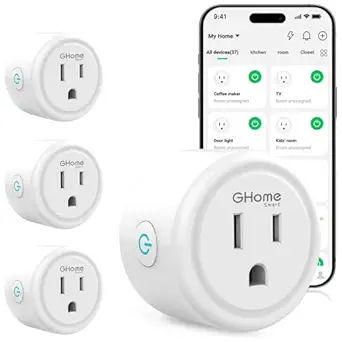
GHome Smart Plug, WiFi Smart Plugs Work with Alexa and Google Home, Smart Outlet Timer with APP Remote Control, 2.4GHz Wi-Fi Only, No Hub Required
This pick is perfect for budget-conscious buyers who want reliable remote control and scheduling without extra hardware. Compared to the Govee plugs, the GHome Smart Plug offers similar app control and voice compatibility, but its design is slightly larger, and it supports only 2.4GHz Wi-Fi, limiting flexibility if you have dual-band networks. The setup is straightforward, and the app provides timers, schedules, and group control, making it suitable for basic automation needs. Its build quality is decent, but it lacks some advanced features like power monitoring or Bluetooth fallback, which are available in higher-end models like Govee. The primary tradeoff is the limited Wi-Fi support and slightly bulkier size, which might block adjacent outlets. This product is ideal for users seeking a simple, low-cost way to automate and control devices in small to medium-sized homes.
Pros:- Affordable and easy to install
- Supports Alexa and Google Assistant
- App-based timers and group control
Cons:- Limited to 2.4GHz Wi-Fi networks
- No power consumption tracking
Best for: Homeowners or apartment dwellers looking for affordable, easy-to-use smart outlets for basic device control.
Not ideal for: Power users needing detailed energy use data or those with dual-band Wi-Fi networks that include 5GHz.
- Operation Mode:App and Voice Control
- Current Rating:10 Amps
- Operating Voltage:120 Volts
- Control Method:Wi-Fi, Timer
- Number of Outlets:1
- Materials & Care:Plastic
- Size:2.1 x 2.1 x 1.1 inches
- Certification:ETL, FCC
Bottom line: This plug is best for users who want an inexpensive, straightforward solution for basic device automation and voice control.
MOES WiFi Smart IR Remote Controller Smart Home Infrared Universal Remote Blaster, One for All Control AC TV DVD CD AUD SAT etc, Compatible with Alexa and Google Assistant, No Hub Required
This device excels for users who want to control a variety of IR-compatible appliances like TVs or air conditioners without needing a hub. Unlike the smart plugs, which automate power to outlets, the MOES IR blaster offers a universal remote that can replace multiple remotes, making it a versatile addition to a smart home. Setup is simple through the Smart Life app, and the device supports customizable DIY commands for unsupported brands. Compatibility is broad, but it only supports IR devices operating at 38kHz, and its range is limited to about 15 meters, which is less than some Wi-Fi plugs. Its reliance on IR signals means it cannot control devices behind walls or in separate rooms without line-of-sight. This product is perfect for those wanting to automate their entertainment and climate control with a single device, especially if they already use Alexa or Google Assistant.
Pros:- Universal IR remote control for multiple devices
- No hub needed, works directly over Wi-Fi
- Supports DIY programming for unsupported devices
Cons:- Limited to IR devices operating at 38kHz
- Range is about 15 meters, line-of-sight required
Best for: Users with multiple IR-controlled devices who want voice-activated, remote control from anywhere without extra hubs.
Not ideal for: Smart home enthusiasts seeking direct Zigbee or Wi-Fi device control or requiring long-range operation.
- Supported Devices:AC, TV, DVD, STB, etc.
- Maximum Range:15 meters
- Connectivity Protocol:Wi-Fi
- Number of Buttons:12
- Compatible Voice Assistants:Alexa, Google Assistant
- Infrared Frequency:38 kHz
- Power Supply:UL Certified Adapter and USB cable
- Size:approximately 3 x 2 inches
Bottom line: This IR remote controller is best for controlling multiple entertainment devices with voice commands in a hub-free setup.
Hubitat Elevation C-8 Pro Smart Home Automation Hub – Latest Platform Updates – Matter 1.5, Z-Wave 800 LR, Zigbee 3.0 & Bluetooth – Local Control (No Cloud) – Alexa, Apple HomeKit & Google Home
This hub stands out for its focus on local automation, allowing all rules to operate without reliance on cloud services, which translates into faster response times and enhanced privacy. Compared with the Amazon Echo Hub, it offers greater device compatibility and supports the latest standards like Matter 1.5, Z-Wave 800 LR, and Zigbee 3.0, making it more future-proof for complex setups. Its ability to run automations internally means even internet outages won’t disrupt your routines. However, the setup process can be more involved, especially for beginners unfamiliar with network configurations. The platform updates ensure continuous evolution, adding features like AI-assisted automations, but this also means a learning curve for some users. Overall, this hub makes the most sense for tech-savvy homeowners who prioritize reliability, privacy, and broad device support, but it may be overkill for simple setups.
Pros:- Operates entirely locally, ensuring faster response and greater privacy
- Supports Matter 1.5, Z-Wave 800 Series, Zigbee 3.0, and Bluetooth, offering broad device compatibility
- Receives regular firmware updates that add new features and expand device support
- Strong range and professional-grade performance for larger homes
Cons:- Initial setup might be challenging for non-technical users
- Limited cloud-based automations require managing rules via web interface, not solely through app
Best for: Advanced users who want a reliable, local-control-centric hub that supports the latest standards and extensive device compatibility.
Not ideal for: Beginners or those seeking a plug-and-play solution with minimal setup effort, as the configuration process can be complex.
- Operation Mode:Local control, no cloud dependency
- Platform Updates:Regular firmware updates
- Connectivity:Matter 1.5, Z-Wave 800 LR, Zigbee 3.0, Bluetooth
- Device Compatibility:Supports 1,000+ devices across 100+ brands
- Size:2.95 x 3.23 x 0.67 inches
- Weight:2.56 ounces
- Control Integration:Alexa, Apple HomeKit, Google Home
Bottom line: Ideal for homeowners who need a robust, privacy-focused hub capable of handling complex automations and future standards.
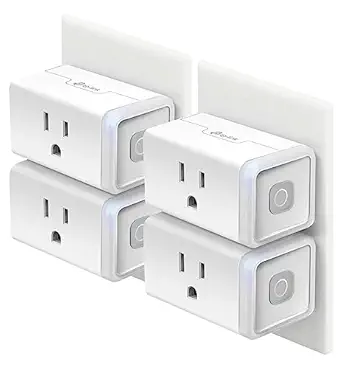
Kasa Smart Plug HS103P4, Smart Home Wi-Fi Outlet Works with Alexa, Echo, Google Home & IFTTT, No Hub Required, Remote Control, 15 Amp, UL Certified, 4-Pack, White
This smart plug excels in simplicity and seamless integration with voice assistants like Alexa and Google Home, making it a top pick for casual users and those new to smart home automation. Unlike the Hubitat, which targets advanced users, the Kasa HS103P4 offers a straightforward Wi-Fi connection, no hub needed, and an intuitive app that guides setup step-by-step. Its instant response to voice commands and stable connection make it highly reliable for controlling lamps, fans, and other appliances. While it lacks the advanced automations and device support of the Hubitat, it compensates with ease of use and affordability. The 4-pack provides excellent value for multiple devices, but it is limited to simple on/off functions and scheduling, not complex routines. This pick makes the most sense for families or individuals who want a reliable, easy-to-use solution that integrates perfectly with Alexa and Google Assistant without additional hardware.
Pros:- No hub required, connects directly via Wi-Fi for simplicity
- Works flawlessly with Alexa, Google Home, and IFTTT for voice control
- Easy to set up with the guided Kasa app
- Reliable connection and quick response to commands
Cons:- Limited to basic on/off scheduling and timers, no advanced rules
- Single control per outlet, not suitable for complex automations
Best for: Homeowners seeking a plug-and-play, reliable voice-controlled smart outlet for basic automation and remote control.
Not ideal for: Power users wanting advanced automations, custom routines, or extensive device compatibility beyond basic outlets.
- Operation Mode:Wi-Fi only, no hub required
- Current Rating:15 Amps
- Control Method:Voice, app, scheduling
- Connectivity Protocol:2.4GHz Wi-Fi
- Certification:UL Certified
- Number of Outlets:4-pack
- Control Range:Remote via app or voice
Bottom line: Perfect for users who want straightforward voice control and remote access without the complexity of a hub-based system.

How We Picked
Our evaluation focused on compatibility with both Alexa and Google Assistant, ease of setup, device support, and overall value. We prioritized products that deliver reliable performance without requiring complicated configurations, especially for users new to smart home technology. Devices with local control capabilities were favored for privacy and faster response times. Price point was also a key factor, balancing affordability with feature set. Our rankings reflect the best combination of these factors, ensuring options suit different levels of experience and automation needs.
Factors to Consider When Choosing Best Home Automation Hub For Alexa And Google
When selecting the best home automation hub for Alexa and Google, consider several factors that influence usability, versatility, and future-proofing. Understanding these will help you avoid common pitfalls and choose a device that grows with your smart home ecosystem.Compatibility and Ecosystem Support
Ensure the hub supports both Alexa and Google Assistant seamlessly. Some devices are optimized for one platform but work with the other through limited integrations. Compatibility with a wide range of smart devices—lights, sensors, thermostats—is also vital. Choosing a hub that supports protocols like Z-Wave, Zigbee, or Wi-Fi can expand your options as you add new gadgets. Mistakes include only prioritizing one voice platform or ignoring protocol support, which can limit your ecosystem expansion.
Ease of Setup and User Interface
A user-friendly setup process saves time and frustration. Display-based hubs or apps with guided instructions are preferable for beginners. Advanced users may prefer more customizable interfaces but should be wary of overly complex configurations. Cloud reliance versus local control impacts speed and privacy, so consider your comfort level with cloud-dependent systems. Investing in a device with clear documentation and robust app control tends to reduce setup headaches.
Automation Capabilities and Customization
Look for hubs that support complex automations and routines, not just simple device control. Support for scene creation, scheduling, and conditional logic enhances your home’s intelligence. Some hubs excel at local control, reducing latency and dependency on internet connectivity. Be cautious of devices that are limited to basic commands or require proprietary apps for automation—this can restrict your flexibility and scalability as your smart home grows.
Price and Future Scalability
Budget options like smart plugs are great for immediate control and small setups but may fall short for comprehensive automation. Investing more upfront in a capable hub can save money long-term by supporting a larger device ecosystem. Consider your future plans: if you expect to add many devices, a hub with broad protocol support and easy expansion options makes sense. Avoid overspending on features you won’t utilize, but also steer clear of underpowered devices that limit growth.
Frequently Asked Questions
Can I use a single hub for both Alexa and Google Assistant?
Yes, many hubs support both Alexa and Google Assistant, allowing you to control your smart devices with either platform. Devices like Hubitat Elevation and certain smart plugs offer compatibility with both voice assistants through their respective apps or integrations. However, the level of automation complexity and device support may vary, so it’s worth verifying that your specific devices are compatible with both ecosystems. Using a dual-compatible hub simplifies management and reduces the need for multiple devices.
Do I need a hub if I only want to control smart plugs with Alexa and Google?
Not necessarily. Many smart plugs, like the Kasa Smart Plug or Govee Dual Smart Plug, work directly with Wi-Fi and do not require a separate hub. These options are ideal for simple device control and quick setup. However, if you want to create more advanced automations or integrate multiple device types into a centralized system, adding a dedicated hub might be beneficial. Consider your automation goals before deciding whether a hub is necessary for your setup.
Are display-based hubs better for smart home control?
Display-based hubs like the Google Nest Hub provide visual feedback, making it easier to manage multiple devices, view camera feeds, or customize routines. They improve voice command accuracy by combining visual and audio interfaces, especially in busy households. However, they tend to be more expensive and may offer more features than needed if your primary goal is simple device control. For tech-savvy users seeking detailed control, a display hub enhances usability significantly.
How important is local control in a home automation hub?
Local control is vital for faster response times and increased privacy since it operates without relying solely on cloud servers. Hubs with local automation capabilities can perform tasks even during internet outages, maintaining system reliability. Devices like Hubitat excel in local processing, making them suitable for users prioritizing speed and privacy. Relying only on cloud-based hubs may introduce delays and potential security concerns, especially as your smart home becomes more complex.
Should I prioritize protocol support over price?
Supporting multiple protocols like Z-Wave, Zigbee, and Wi-Fi provides greater flexibility for device selection and future expansion. While such hubs may cost more upfront, they often save money long-term by avoiding the need for additional bridges or incompatible devices. Cheaper hubs with limited protocol support might seem attractive initially but can restrict your device choices and automation potential. Balancing your current budget with future growth plans is key to making the right investment.
Conclusion
For most users, the Govee Dual Smart Plug offers exceptional value for basic control without the need for a hub. Tech enthusiasts or those with larger ecosystems should consider the Hubitat Elevation C-8 Pro for its advanced automation and local control. If you prefer an integrated display experience, the Google Nest Hub 7” provides a seamless visual interface for Google-centric households. Beginners aiming for simplicity will benefit from plug-in options like the Kasa Smart Plug, while power users seeking comprehensive control should look at hubs supporting multiple protocols and local automation. Your choice depends on current needs and future plans—consider how much automation complexity you desire versus ease of use and budget constraints.