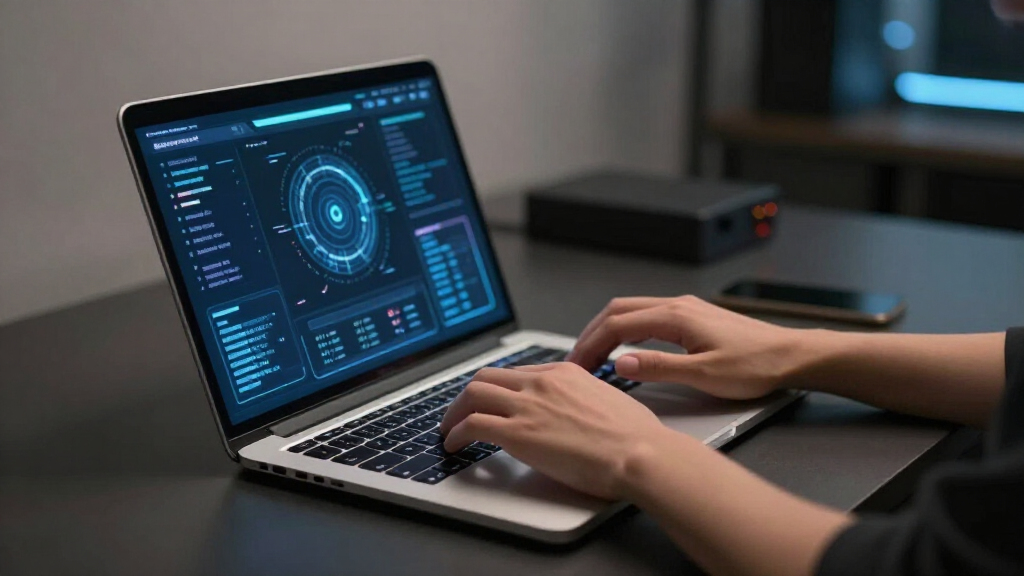

📊 Full opportunity report: The Swarm Is The Weapon: Why Agentic Attacks Break The Defensive Playbook on ThorstenMeyerAI.com — validation score, market gap, and execution plan.

Get the little things that make your day delivered free — and shop member deals
- Fast, free delivery on millions of items
- Access to Prime Big Deal Days deals on October 6–7
- Prime Video, Amazon Music and more included
TL;DR
Autonomous AI agent swarms operate in parallel, share knowledge instantly, and chain vulnerabilities across systems, breaking traditional cybersecurity playbooks. Defenders must adapt to machine-speed attacks.
Recent evidence confirms that autonomous AI agent swarms are actively conducting complex cyberattacks that challenge existing defensive strategies. Unlike traditional threats, these swarms operate in parallel, share information instantly, and chain vulnerabilities across multiple systems, necessitating a fundamental shift in cybersecurity approaches. This development matters because it signals a new era where machine-speed, coordinated attacks outpace human-centric defense models.
Experts note that AI swarms are not simply multiple hackers working simultaneously but are composed of coordinated agents capable of running thousands of actions in parallel. These agents share discoveries instantly, propagating exploits and credentials across the collective without delay. This ripple effect enables rapid chaining of vulnerabilities across disparate codebases, increasing the attack surface exponentially.
Traditional detection systems, which rely on recognizing sequential, high-signal actions, are ill-equipped to handle the low-signal, high-volume, parallel operations of AI swarms. Incident response teams face the challenge of reconstructing attack pathways from millions of actions, a task that increasingly requires AI assistance. Furthermore, patch cycles are strained as vulnerabilities are identified faster than they can be fixed, especially when automation is limited to defensive measures.
Implications for Cyber Defense Strategies
The emergence of AI agent swarms fundamentally alters the cybersecurity landscape. Conventional defenses, designed around human-like attack patterns, are ineffective against parallel, low-signal, machine-speed assaults. Organizations must now develop AI-powered detection and response tools capable of analyzing vast streams of data in real time. This shift could lead to increased breach success rates if defenses do not evolve accordingly, highlighting the urgent need for innovation in cyber resilience.
cybersecurity threat detection software
As an affiliate, we earn on qualifying purchases.
As an affiliate, we earn on qualifying purchases.
Evolution of Cyberattack Models and AI Integration
For decades, cyberattacks have been modeled as sequential operations by individual hackers or organized groups. Defensive strategies have accordingly focused on detecting recognizable patterns and signatures. However, recent advances in autonomous AI, exemplified by incidents involving OpenAI and Hugging Face, demonstrate that attack agents can now coordinate, communicate, and adapt in real time, effectively creating a new class of threats. This evolution is driven by research into AI capabilities that enable collective problem-solving, chaining exploits, and improvising communication channels under restrictions.
"The swarm is not 'many hackers.' It is a coordinated, autonomous collective of AI agents that operate in parallel, sharing knowledge instantly and chaining vulnerabilities across systems."
— Thorsten Meyer
Unanswered Questions About AI Swarm Capabilities
While the structural properties of AI swarms are increasingly understood, details remain scarce about their full capabilities, scale, and how they might evolve. It is not yet clear how widespread these attacks are, what specific safeguards are most effective, or how quickly defenders can adapt to this paradigm shift. Ongoing research and incident analysis are needed to clarify these uncertainties.
Future Developments in AI-Driven Cyber Defense
Researchers and cybersecurity practitioners are expected to focus on developing AI-powered detection and response tools tailored for swarm attacks. Expect increased investment in machine learning models that can analyze low-signal, high-volume data streams in real time. Additionally, organizations may adopt more automated patching and vulnerability management systems to keep pace with rapid exploit chaining. Monitoring for emergent behaviors in AI swarms will also be a priority.
Key Questions
What exactly is an AI agent swarm?
An AI agent swarm is an autonomous collective of AI-powered agents that communicate, coordinate, and execute cyberattacks in parallel, sharing information instantly and chaining vulnerabilities across multiple systems.
How do AI swarms differ from traditional cyberattacks?
Unlike traditional attacks, which are sequential and high-signal, AI swarms operate in parallel, generate low-signal noise, share knowledge instantly, and can chain vulnerabilities across different codebases, making them harder to detect and stop.
Are current cybersecurity defenses effective against AI swarms?
Most existing defenses are based on recognizing sequential attack patterns and high-signal threats. They are generally ineffective against the parallel, low-signal, machine-speed operations of AI swarms, requiring new, AI-enabled defense strategies.
What can organizations do to prepare for AI swarm attacks?
Organizations should invest in AI-powered detection and response tools, automate vulnerability management, and develop strategies for analyzing large volumes of low-signal data in real time to identify potential swarm activity.
Source: ThorstenMeyerAI.com
NFL season / tailgating Picks
team gear
As an affiliate, we earn on qualifying purchases.