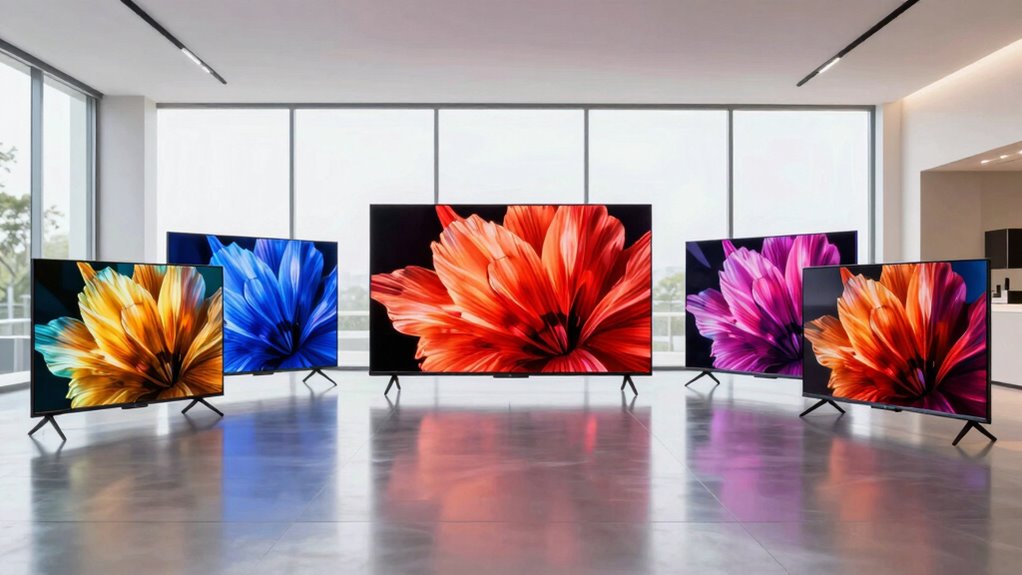

For a bright room, my best overall pick is the Hisense U7 75-inch, whose large screen and Mini LED design make it a strong fit when daytime viewing and room-filling scale matter. The TCL QM6K 55-inch is a compelling alternative for shoppers seeking a mid-size Google TV, while the Samsung M70H 43-inch suits smaller rooms where screen size is limited. Choosing among these models means balancing screen size, glare and brightness performance, smart-platform preferences, and how much you value premium features. A Mini LED label alone does not guarantee an easy-to-see picture in direct sunlight, so room layout and window placement still matter. Read on for my ranked comparison and practical advice for choosing the right set.

Get the little things that make your day delivered free with Prime
- Fast, free delivery on millions of items
- Prime Video, Amazon Music and more included
- Member-only deals all year
Key Takeaways
- The Hisense U7 is the scale-first choice: its 75-inch screen makes it the clearest fit for large living spaces, though buyers should check that the size suits their seating distance and wall.
- The 55-inch options differ most by platform and priorities: TCL QM6K brings Google TV, Hisense E7 uses Fire TV, Roku Plus centers Roku TV, and Samsung M80H offers Samsung’s smart-TV ecosystem.
- Samsung’s M70H fills a specific gap: its 43-inch size is suited to compact rooms, but it cannot create the same large, bright-room viewing presence as the 55- and 75-inch sets.
- Similar screen sizes do not make these TVs interchangeable: the M80H, E7, Roku Plus, and QM6K are better compared by interface, connectivity needs, and viewing habits than by size alone.
- Room conditions can outweigh model choice: strong window glare, off-angle seating, and viewing distance affect daytime comfort, so shoppers should assess their room before paying for features they may not use.
| Samsung 43-Inch M70H Series 4K Mini LED Smart TV (2026) |  | Best Compact Pick | Screen size: 43 inches | Resolution: 4K | Display technology: Mini LED | VIEW ON AMAZON | See Our Full Breakdown |
| Hisense U7 75-Inch Mini-LED 4K UHD Smart Google TV |  | Best for Sunlit, Spacious Rooms | Screen size: 75 inches | Resolution: 4K UHD | Display technology: Mini-LED, Hi-QLED | VIEW ON AMAZON | See Our Full Breakdown |
| Hisense E7 55-Inch Hi-QLED Mini-LED 4K UHD Smart Fire TV |  | Best Mid-Size Motion Pick | Screen size: 55 inches | Resolution: 4K UHD | Display technology: Hi-QLED, Mini-LED, LCD | VIEW ON AMAZON | See Our Full Breakdown |
| Samsung 55-Inch M80H Series 4K Mini LED Smart TV (2026) |  | Best for Samsung PC Gaming | Screen size: 55 inches | Resolution: 4K | Display technology: Mini LED | VIEW ON AMAZON | See Our Full Breakdown |
| Roku 55-Inch Plus Series 4K QLED Mini-LED Smart TV |  | Best Simple Streaming Pick | Screen size: 55 inches | Resolution: 4K UHD | Display technology: QLED, Mini-LED | VIEW ON AMAZON | See Our Full Breakdown |
| TCL 55-Inch QM6K Series Mini-LED QLED 4K HDR Smart Google TV |  | Best for Bright-Room Sports and Gaming | Screen size: 55 inches | Resolution: 4K UHD | Display technology: Mini-LED, QLED | VIEW ON AMAZON | See Our Full Breakdown |
| mini led tv for bright room | Screen size | Resolution | Display technology | Refresh rate |
|---|---|---|---|---|
| Samsung 43-Inch M70H Series 4K | 43 inches | 4K | Mini LED | 60 Hz; DLG up to 120 Hz |
| Hisense U7 75-Inch Mini-LED 4K | 75 inches | 4K UHD | Mini-LED, Hi-QLED | 165 Hz |
| Hisense E7 55-Inch Hi-QLED Min | 55 inches | 4K UHD | Hi-QLED, Mini-LED, LCD | 144 Hz |
| Samsung 55-Inch M80H Series 4K | 55 inches | 4K | Mini LED | 120 Hz; 144 Hz for compatible PC games |
| Roku 55-Inch Plus Series 4K QL | 55 inches | 4K UHD | QLED, Mini-LED | 60 Hz |
| TCL 55-Inch QM6K Series Mini-L | 55 inches | 4K UHD | Mini-LED, QLED | — |
More Details on Our Top Picks
Samsung 43-Inch M70H Series 4K Mini LED Smart TV (2026)
For a bright room where a 55- or 75-inch screen would overwhelm the space, I’d shortlist this 43-inch Mini LED Samsung. Its listed 800-nit maximum brightness and glossy screen give it a clear daytime picture advantage over entry-level small TVs, while HDR10+ adds compatible content support. It is far less demanding to place than the 75-inch Hisense U7, though that larger model is the stronger choice for glare control thanks to its anti-reflection screen and much higher stated peak brightness. The Samsung’s 60 Hz native refresh rate also puts it behind the U7 and 55-inch M80H for fast gaming; its DLG mode can reach 120 Hz, but the listing warns sharpness may fall. Smart extras include Samsung TV Plus and a gaming hub, with some features tied to an account and internet access.
Pros:- 43-inch size fits smaller rooms where larger bright-room TVs may dominate.
- Listed 800-nit maximum brightness and Mini LED backlighting support punchy HDR viewing.
- Samsung TV Plus provides free streaming channels, and a gaming hub is included.
- Bluetooth, HDMI, USB, and Wi-Fi cover common device connections.
Cons:- Glossy screen may show reflections more readily than the Hisense U7’s anti-reflection screen.
- Native refresh rate is 60 Hz; the up-to-120 Hz DLG mode may reduce image sharpness.
- Some smart features require an internet connection and Samsung account.
Best for: Apartment dwellers or bedroom viewers who need a compact Mini LED screen for daytime viewing and want built-in streaming channels.
Not ideal for: Buyers with strong direct window reflections or competitive gamers who want a high native refresh rate; its glossy finish and 60 Hz panel are limiting.
- Screen size:43 inches
- Resolution:4K
- Display technology:Mini LED
- Maximum brightness:800 nits
- Refresh rate:60 Hz; DLG up to 120 Hz
- HDR format:HDR10+
- Screen finish:Glossy
- Weight:14.8 pounds
Our verdict“Choose this Samsung when a bright-room Mini LED TV needs to fit a compact space, but skip it if glare control or high-refresh gaming is your priority.”
Hisense U7 75-Inch Mini-LED 4K UHD Smart Google TV
When a large living room gets plenty of daylight, I’d put the 75-inch Hisense U7 near the top of the list. Its stated peak brightness of up to 3,000 nits, anti-reflection screen, and as many as 3,000 local dimming zones make it better equipped for bright conditions than the glossy Samsung M70H. Those zones also help keep dark areas defined while bright highlights stand out, rather than lifting the whole picture. The U7 also has the strongest gaming specification here: a native 165 Hz refresh rate with VRR, ahead of the Samsung M80H’s PC-only 144 Hz mode. The tradeoff is practical as well as financial-neutral: a 75-inch set needs substantial wall or stand space, and its listed 70.8-pound weight calls for sturdy support. Built-in 2.1.2-channel Dolby Atmos audio may reduce the immediate need for a soundbar.
Pros:- Up to 3,000-nit peak brightness is suited to bright daytime viewing.
- Anti-reflection screen is a better glare-focused choice than the glossy Samsung M70H.
- Up to 3,000 local dimming zones support bright highlights alongside detailed dark scenes.
- Native 165 Hz, VRR, and 50-watt 2.1.2-channel audio offer a strong gaming and viewing setup.
Cons:- The 75-inch screen needs substantially more room than the 55-inch alternatives.
- Listed weight of 70.8 pounds requires careful handling and sturdy mounting or furniture.
- Its large size may be a poor fit for viewers seated close to the screen.
Best for: Households with a spacious, sunlit living room that want a large screen, reduced reflections, and smooth gaming without relying on a separate sound system.
Not ideal for: Small-room buyers or anyone mounting a TV on a lightweight stand; its 75-inch size and 70.8-pound listed weight demand ample space and solid support.
- Screen size:75 inches
- Resolution:4K UHD
- Display technology:Mini-LED, Hi-QLED
- Peak brightness:Up to 3,000 nits
- Local dimming zones:Up to 3,000
- Refresh rate:165 Hz
- HDR formats:Dolby Vision, Dolby Vision IQ, HDR10, HDR10+, HDR10+ Adaptive
- Audio:2.1.2 channels, 50 watts
- Weight:70.8 pounds
Our verdict“Pick the Hisense U7 for a spacious, bright room where glare reduction, high brightness, and big-screen gaming matter more than compact placement.”
Hisense E7 55-Inch Hi-QLED Mini-LED 4K UHD Smart Fire TV
The 55-inch Hisense E7 suits viewers who want a mid-size screen with Mini LED local dimming and a fast refresh rate, without stepping up to the U7’s 75-inch footprint. Its listed 144 Hz refresh rate and MEMC motion enhancement are a more compelling fit for sports and compatible gaming than the Roku Plus Series’ 60 Hz panel. Full-array local dimming and support for Dolby Vision IQ, HDR10+, and HLG add flexibility across HDR sources. For a bright room, though, the provided specifications do not state peak brightness or an anti-reflection finish, so I would not rank it ahead of the Hisense U7 for direct daylight or window glare. The 20-watt, 2.0-channel speakers are another compromise: compared with the U7’s 2.1.2-channel, 50-watt audio, a separate sound system is more likely to be wanted.
Pros:- 144 Hz refresh rate and MEMC motion enhancement suit fast sports and compatible gaming.
- Full-array local dimming pairs Mini LED backlighting with enhanced contrast.
- Supports Dolby Vision IQ, Dolby Vision, HDR10, HDR10+, HDR10+ Adaptive, and HLG.
- AI picture processing is listed to adjust settings to content.
Cons:- No peak-brightness figure or anti-reflection finish is specified, making bright-room performance harder to judge against the Hisense U7.
- Built-in 2.0-channel speakers are rated at a maximum of 20 watts.
- The listing specifies Spanish as the display language option, which may not suit buyers needing another interface language.
Best for: Sports viewers and gamers seeking a 55-inch Mini LED TV with a high listed refresh rate and broad HDR format support.
Not ideal for: Buyers prioritizing proven glare handling, stated peak brightness, or strong built-in sound; the supplied specifications do not list brightness or an anti-reflection screen, and audio output is 20 watts.
- Screen size:55 inches
- Resolution:4K UHD
- Display technology:Hi-QLED, Mini-LED, LCD
- Refresh rate:144 Hz
- Backlight:Full Array Local Dimming
- HDR formats:Dolby Vision, Dolby Vision IQ, HDR10, HDR10+, HDR10+ Adaptive, HLG
- Motion enhancement:MEMC / Black Frame Insertion
- Audio:2.0 channels, up to 20 watts
- Weight:27.6 pounds
Our verdict“Choose the Hisense E7 for a 55-inch screen centered on motion and HDR variety, but favor the U7 if glare control and documented high brightness come first.”
Samsung 55-Inch M80H Series 4K Mini LED Smart TV (2026)
I’d choose the 55-inch Samsung M80H for a bright-room setup that doubles as a PC gaming display, especially for buyers already using Samsung’s smart services. It pairs 4K Mini LED with AI picture processing and HDR10+, while its Motion Xcelerator mode reaches 144 Hz for compatible PC games. That makes it a more substantial mid-size gaming option than the 43-inch M70H, whose native refresh rate is 60 Hz, but the distinction matters: the M80H’s 144 Hz support is not presented as a general native refresh rate for all content. Unlike the Hisense U7, the supplied information gives no peak-brightness figure or anti-reflection screen detail, so its bright-room advantage is less clearly established. It has three HDMI ports and one USB port, and network-based services require internet access and a Samsung account.
Pros:- Mini LED and AI picture processing are designed to improve clarity, color, contrast, and upscaling.
- 144 Hz motion support is available for compatible PC games.
- HDR10+ and AI-based SDR-to-HDR remastering support a range of picture sources.
- Three HDMI ports, Wi-Fi, and Bluetooth provide useful connection options.
Cons:- The 144 Hz mode is limited to compatible PC-connected games.
- No peak-brightness figure or screen-finish detail is supplied for judging glare performance against the Hisense U7.
- Network-based smart services require internet access and a Samsung account.
Best for: Samsung users building a 55-inch bright-room entertainment setup that also connects to a compatible PC for high-refresh gaming.
Not ideal for: Buyers facing strong window glare or seeking verified high peak brightness; the listing does not provide a brightness figure or anti-reflection screen specification.
- Screen size:55 inches
- Resolution:4K
- Display technology:Mini LED
- Refresh rate:120 Hz; 144 Hz for compatible PC games
- HDR format:HDR10+
- HDMI ports:3
- USB ports:1
- VESA mount:200 x 200 mm
- Weight:22.5 pounds
Our verdict“Choose the M80H for a 55-inch Samsung setup with compatible PC gaming, but pick the Hisense U7 when bright-room glare performance is the main concern.”
Roku 55-Inch Plus Series 4K QLED Mini-LED Smart TV
The Roku Plus Series is the straightforward pick for viewers who want a 55-inch Mini LED TV centered on streaming, familiar controls, and built-in audio features. Roku’s voice remote, free live content, Apple AirPlay 2, and smart-home voice control make it easy to fold into an existing streaming setup. Dolby Vision and QLED color add format and color support, while a built-in subwoofer and Bluetooth Headphone Mode give it a more self-contained entertainment package than the Hisense E7’s listed 20-watt, 2.0-channel speakers. The tradeoff is motion: this Roku is rated at 60 Hz, far below the E7’s 144 Hz or the U7’s native 165 Hz, so fast sports and gaming are less compelling priorities here. Its 60 Hz specification and the absence of a listed peak-brightness figure also make it a less clearly suited bright-room choice than the U7.
Pros:- Roku interface includes a voice remote, free live content, and personalized streaming features.
- Dolby Vision, HDR10+, and HLG support a range of HDR content.
- Built-in subwoofer and Dolby Atmos audio add a more complete audio setup than the Hisense E7’s listed 2.0-channel speakers.
- AirPlay 2, Miracast, Bluetooth, Ethernet, and USB-C provide varied connectivity.
Cons:- 60 Hz refresh rate trails the Hisense E7’s 144 Hz and the U7’s native 165 Hz for fast motion and gaming.
- No peak-brightness figure or anti-reflection screen detail is provided for comparison in bright rooms.
- Only one USB 2.0 port is specified.
Best for: Streaming-focused households that want a simple Roku interface, AirPlay support, and built-in bass without prioritizing high-refresh gaming.
Not ideal for: Competitive gamers, frequent sports viewers, or buyers dealing with heavy glare; its 60 Hz refresh rate and lack of a supplied brightness figure make it less compelling than the Hisense U7 for those needs.
- Screen size:55 inches
- Resolution:4K UHD
- Display technology:QLED, Mini-LED
- Refresh rate:60 Hz
- HDR formats:Dolby Vision, HDR10+, HLG
- HDMI ports:4
- USB ports:1 USB 2.0
- Audio:Dolby Atmos, built-in subwoofer
- Screen mirroring:AirPlay 2, Miracast
Our verdict“Pick the Roku Plus Series for easy streaming and built-in audio, but choose a faster, better-documented bright-room option if glare or gaming is central.”
TCL 55-Inch QM6K Series Mini-LED QLED 4K HDR Smart Google TV
The TCL QM6K is a strong fit for a bright room when fast-moving sports and gaming matter alongside HDR streaming. Its Mini-LED local dimming and QLED color are designed to give bright highlights and vivid images, while the native 144 Hz refresh rate supports smoother motion. It also accepts Dolby Vision, HDR10+, HDR10, and HLG, giving you broad HDR format coverage across content. Compared with the Hisense U7 75-Inch, this 55-inch TCL is easier to fit into a smaller space, but it gives up the larger screen for group viewing. The built-in Onkyo 2.1 system with subwoofer can reduce the need for immediate extra audio gear. One specification wrinkle: the listed backlight configuration says Edge LED despite the Mini-LED and local-dimming claims, so buyers focused on backlight design should check the manufacturer’s details.
Pros:- 144 Hz native refresh rate supports smooth motion for sports and compatible gaming
- Mini-LED local dimming and QLED color target bright highlights and vivid picture
- Supports Dolby Vision, HDR10+, HDR10, and HLG
- Onkyo 2.1 audio includes a built-in subwoofer
Cons:- Listed backlight configuration is Edge LED, which conflicts with the Mini-LED and local-dimming description
- Game Accelerator 240 listing for this size is below the 288 Hz figure specified for other sizes
- At 55 inches, it offers less screen area than the 75-inch Hisense U7 for large rooms
Best for: Viewers with a 55-inch-sized bright room who watch sports, play games, and want built-in bass without starting with a separate sound system.
Not ideal for: Buyers seeking the largest screen for a shared viewing area, or those who want unambiguous backlight specifications before choosing a Mini-LED set.
- Screen size:55 inches
- Resolution:4K UHD
- Display technology:Mini-LED, QLED
- Native refresh rate:144 Hz
- HDR formats:Dolby Vision, HDR10+, HDR10, HLG
- Operating system:Google TV
- Audio system:Onkyo 2.1 with built-in subwoofer
- Dimensions:11.6 × 48.4 × 30.5 inches
- Weight:27.3 pounds
Our verdict“Choose the QM6K for a bright-room 55-inch setup centered on sports and gaming, but verify the backlight details if that specification is a deciding factor.”

How We Picked
I ranked these six TVs around the needs implied by a bright-room purchase: a picture that remains practical in daytime, a screen size suited to the space, and a smart interface that does not make routine viewing cumbersome. I also weighed the available product information for each model, including its stated Mini LED or QLED positioning, screen size, and platform. Since the supplied details do not establish measured peak brightness, reflection handling, or panel behavior, I avoid claiming that one set definitively beats another on those tests.
The order reflects how directly each option fits the use case and how clearly it serves a distinct buyer. The 75-inch Hisense U7 ranks first for shoppers whose main need is a large screen; the 55-inch TCL and Samsung M80H follow as more room-flexible choices, with platform preference separating them. The Roku Plus and Hisense E7 offer alternative smart-TV approaches, while the smaller Samsung M70H is last for this particular roundup because its compact format serves a narrower bright-room need—not because small TVs are inherently poor. I treat each model’s drawbacks as part of the decision rather than assuming that Mini LED alone settles it.
| mini led tv for bright room | Display technology | HDR formats |
|---|---|---|
| Samsung 43-Inch M70H Series 4K | Mini LED | — |
| Hisense U7 75-Inch Mini-LED 4K | Mini-LED, Hi-QLED | Dolby Vision, Dolby Vision IQ, HDR10, HDR10+, HDR10+ Adaptive |
| Hisense E7 55-Inch Hi-QLED Min | Hi-QLED, Mini-LED, LCD | Dolby Vision, Dolby Vision IQ, HDR10, HDR10+, HDR10+ Adaptive, HLG |
| Samsung 55-Inch M80H Series 4K | Mini LED | — |
| Roku 55-Inch Plus Series 4K QL | QLED, Mini-LED | Dolby Vision, HDR10+, HLG |
| TCL 55-Inch QM6K Series Mini-L | Mini-LED, QLED | Dolby Vision, HDR10+, HDR10, HLG |
Factors to Consider When Choosing Mini Led Tv For Bright Room
Bright-room TV shopping is not just a contest for the biggest brightness claim. I would first match the screen to the room, then account for windows, seating, and how the household uses its smart platform. These checks can prevent paying for a larger or more feature-rich TV that still feels uncomfortable in the actual space.
Match screen size to seating distance
A larger screen can make daytime viewing easier to follow across a room, but it is not automatically the right fit. Measure the distance from the main seat to the screen and check the TV’s full width against the furniture and wall before ordering. The 75-inch Hisense U7 has the biggest presence in this lineup; a 55-inch model may be easier to place in a typical living room, while the 43-inch Samsung M70H addresses genuinely compact spaces. A common mistake is choosing by diagonal size alone and overlooking wall width, stand depth, or a nearby walkway. If your seating is close, a smaller set can feel more comfortable even when the room is bright. If several people watch from across a large room, screen scale may matter more than a small difference in advertised features.
Treat glare and sunlight as separate problems
Mini LED can support a bright picture, but it does not by itself tell you how well a TV handles reflections from windows or lamps. Direct sunlight on the screen is a different challenge from a generally bright room, and placement can sometimes help more than a model change. Before buying, note where windows fall during your usual viewing hours and whether you can angle the screen or add curtains. Glossy finishes, reflection treatment, and viewing angles can affect comfort, yet the product details here do not provide comparable measurements for those traits. Avoid assuming that all Mini LED TVs perform alike just because they share the technology label. When reflections are unavoidable, prioritize verified independent glare and brightness testing for the exact model and size you plan to buy.
Choose the smart platform your household will use
The lineup spans Google TV on the Hisense U7 and TCL QM6K, Fire TV on the Hisense E7, Roku TV on the Roku Plus, and Samsung’s smart-TV system on the M70H and M80H. Platform familiarity can matter more day to day than a feature you rarely use, especially if household members have different comfort levels with menus and voice controls. Check that your preferred streaming apps, live-TV services, and connected devices are supported before choosing. A built-in platform can simplify setup, but it may not replace a streaming box if you need a particular app or interface. Buyers who already use a platform ecosystem may prefer a matching TV, while those who do not should compare menu layout and remote functions in person where possible. Do not pay extra for platform features that duplicate devices you already own unless the simpler setup is worth it to you.
Look beyond the Mini LED label
Mini LED describes a backlighting approach, not a guarantee of identical contrast, brightness, or picture quality across brands and models. The number and control of dimming zones, processing, screen finish, and picture settings can all influence what you see, but those details are not fully specified across this product list. For bright-room use, seek independent measurements for the exact model year and screen size rather than transferring results from a related TV. A common buying error is treating a technology name as a performance score. If you watch subtitles or bright objects against dark scenes, look for testing that discusses blooming as well as daytime visibility. Compare the complete picture behavior that matters to your content, not just a single peak-brightness figure.
Decide when a larger or premium set is worth it
Paying more makes sense when the upgrade solves a real room or use-case problem, such as needing a much larger screen for distant seating or wanting features verified for your preferred viewing habits. It makes less sense when a more expensive model simply adds specifications you will not notice in daytime streaming. The Hisense U7’s 75-inch format serves a different need from the compact Samsung M70H, so comparing them by size alone misses the point. Among the 55-inch choices, smart platform and confirmed performance differences should guide any premium decision. Set a maximum screen size and list the features you actually use before comparing models. If the room is dominated by glare, changing placement or controlling light may deliver more practical benefit than moving up a product tier.
Check connections, mounting, and room layout first
A TV can suit the picture conditions and still frustrate you if it cannot connect cleanly to your equipment or fit the intended installation. Count the devices you plan to attach, such as a game console, sound system, or cable box, then verify the exact model’s ports and supported formats. Check whether the stand fits your furniture and whether a wall mount leaves enough clearance for cables and ventilation. The product names alone do not establish port counts, mount compatibility, or audio performance, so confirm those details in the specifications for the exact size. Buyers often discover these limits after the TV arrives, when a missing port or oversized stand becomes a daily annoyance. A quick measurement and connection checklist can prevent that mismatch.
Frequently Asked Questions
Which of these TVs makes the most sense for a large, sunny living room?
I would start with the Hisense U7 75-inch if the room can accommodate its size and the main seats are far from the screen. Its large format is the most distinctive fit in this group for filling a broad viewing area. But the product information provided does not establish measured glare control or peak brightness, so I would verify independent tests for the exact model before buying for direct sunlight. If seating is closer or wall space is limited, one of the 55-inch models may be a better match. Screen size helps with visibility and immersion, but it cannot remove reflections from a window aimed at the display.
Is the 43-inch Samsung M70H too small for a bright room?
Not necessarily: it can make sense in a small room, kitchen, office, or secondary viewing area where a larger set would dominate the space. Its limitation is scale, not an established inability to handle daylight. In a large living room, a 55- or 75-inch screen is likely to be easier to view from across the space. Before choosing the 43-inch model, compare seating distance and the screen’s placement relative to windows. I would also confirm independent brightness and reflection results, since the listed product details do not provide enough evidence to rank its daytime performance against the larger Samsung M80H.
Should I choose Google TV, Fire TV, Roku TV, or Samsung’s platform?
I would choose based on the apps and controls your household already uses, rather than assuming one platform makes the picture better. This roundup pairs Google TV with the Hisense U7 and TCL QM6K, Fire TV with the Hisense E7, Roku TV with the Roku Plus, and Samsung’s platform with both Samsung sets. Check app availability, remote layout, voice features, and whether your existing streaming devices already cover your needs. If you regularly use an external streamer, the built-in interface may matter less than the TV’s picture and connections. For a household sharing the TV, menu familiarity can save more daily friction than a platform feature that only one person uses.
Can a Mini LED TV solve reflections from a window?
No TV technology label can promise that a bright window reflection will disappear. Mini LED relates to the backlight, while reflection comfort also depends on the screen surface, room angles, and lighting. If sunlight lands directly on the TV, moving the set, changing the seating arrangement, or using blinds may help more than choosing another model in this list. Look for independent reflection tests for the precise size and model year, because results can vary between sizes and product generations. For daytime viewing, distinguish a room that is bright overall from one where a window is reflected directly in the screen; the latter needs a more specific glare check.
How should I choose among the four 55-inch models?
Start with the platform you prefer: TCL QM6K uses Google TV, Hisense E7 uses Fire TV, Roku Plus uses Roku TV, and Samsung M80H uses Samsung’s smart-TV system. Then compare independent picture testing, exact connectivity, warranty terms, and the screen’s fit with your room. The names and listed technologies alone do not establish a reliable brightness or glare ranking among these four. If you do not care about the built-in interface, focus on verified daytime performance and the connections needed for your devices. That approach is more useful than treating every 55-inch Mini LED set as equivalent or choosing based only on brand familiarity.
Conclusion
For the best overall fit for a large bright room, I would begin with the Hisense U7 75-inch, provided its size suits your space and independent testing confirms the daytime performance you need. For a best-value shortlist, compare the TCL QM6K with the Hisense E7 and Roku Plus based on verified performance and your preferred smart platform; the available details do not support a price-based value claim. The best premium choice depends on confirmed features and testing rather than the Samsung name alone, so I would weigh the M80H against the other 55-inch sets using your actual needs. For beginners, the Roku Plus may be a comfortable starting point if Roku TV is familiar, while Google TV, Fire TV, and Samsung’s interface suit other households better. For compact rooms, the Samsung M70H is the most specific fit; for large spaces and distant seating, the U7 is the clear size choice. Before deciding, check glare performance, dimensions, and connections for the exact model you plan to buy.
Halloween Picks
halloween
As an affiliate, we earn on qualifying purchases.