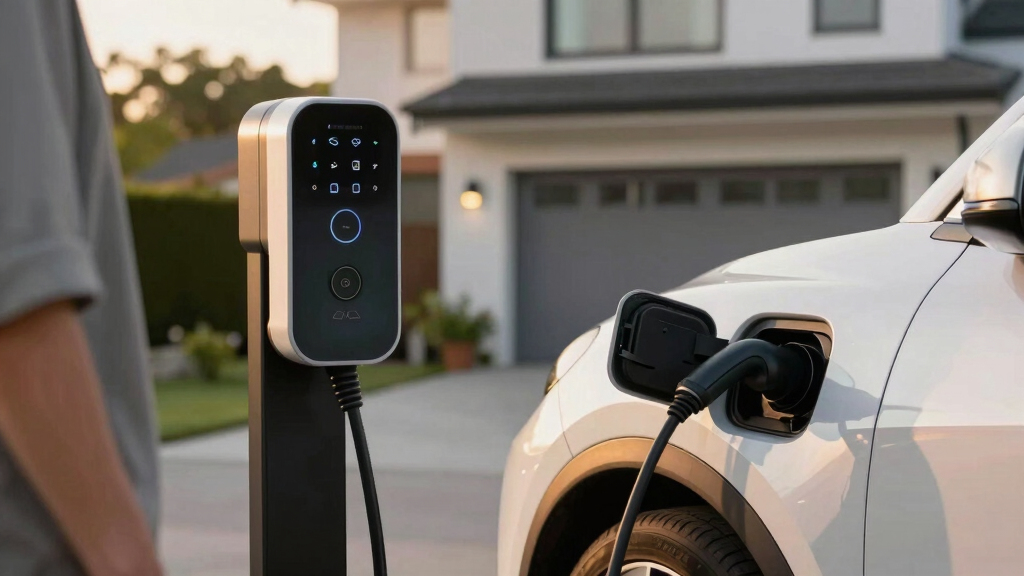

If you’re searching for the best home EV charger with load management, you’re looking for a device that combines powerful charging with smart energy control. The Upgraded 48 Amp Level 2 EV Charger stands out as the overall top pick thanks to its reliable performance and straightforward setup. For those prioritizing smart features, the Autel MaxiCharger offers advanced AI integration, while budget-conscious buyers may prefer the 40A NEMA 14-50 Charger for its affordability. The main tradeoffs in this category typically involve balancing cost, complexity, and smart capabilities. Keep reading for a detailed breakdown of these options and how they compare.

Get the little things that make your day delivered free — and shop member deals
- Fast, free delivery on millions of items
- Access to Prime Big Deal Days deals on October 6–7
- Prime Video, Amazon Music and more included
Key Takeaways
- Top chargers balance load management features with ease of installation and reliability.
- Smart integration, like WiFi or AI, adds convenience but often comes at a higher price.
- Higher amperage units generally offer faster charging but may require upgrades to existing electrical systems.
- Budget options still provide essential load control but may lack advanced features or durability.
- Choosing between hardwired and plug-in models depends on your existing electrical setup and future flexibility.


| home ev charger with load management | Cable Length | Amperage | Warranty | Charging Power |
|---|---|---|---|---|
| Upgraded 48 Amp Level 2 EV Cha | 25ft | 48A | 3 years | 11.5kW |
| Level 2 EV Charger | 25 ft | — | — | 11.5kW |
| Autel 50A Level 2 EV Charger | 25 ft | — | 5 years | — |
| Autel MaxiCharger Level 2 Elec | — | 80 A | 5 years | — |
| 40A Level 2 EV Charger Station | 20ft | — | — | 9.6kW |
| EVIQO Level 2 EV Charger J1772 | 25 ft | 40 A | 3 years | — |
| EMPORIA Pro Level 2 EV Charger | 25 feet | 48 amp | — | — |
| Level 2 EV Charger for Tesla | 25 ft | 48A | 3 years | 11.5kW |
More Details on Our Top Picks
Upgraded 48 Amp Level 2 EV Charger, Hardwired, 11.5kW J1772 Home Charging
This charger stands out for its robust outdoor weatherproof design (IP65 rating) combined with adjustable current and smart scheduling, making it a strong contender for most residential setups. Compared with the Autel MaxiCharger, it offers a slightly lower power output but simplifies outdoor installation without the need for complex AI features. Its 25ft cable provides ample reach, yet the required professional installation and dedicated circuit add to upfront costs. This model is ideal for homeowners wanting reliable, flexible outdoor charging with straightforward features, though Tesla owners will need an adapter (not included) for full compatibility.
Pros:- Weatherproof IP65 rating suitable for outdoor use
- Adjustable current and smart scheduling for flexible charging
- Durable 25ft cable offers versatile placement
- Supports all SAE J1772 EVs and hybrids
Cons:- Requires professional installation and dedicated wiring
- Tesla support needs an adapter (not included)
Best for: Homeowners seeking a durable, weatherproof charger with flexible current adjustments for outdoor installation
Not ideal for: Tesla owners who want built-in NACS support or those preferring plug-and-play setups without professional wiring
- Charging Power:11.5kW
- Amperage:48A
- Voltage:240V
- Cable Length:25ft
- Weatherproof Rating:IP65
- Compatibility:SAE J1772, supports NACS with adapter (not included)
- Installation:Hardwired, professional required
- Warranty:3 years
Our verdict“This charger is best suited for outdoor-focused homeowners who prioritize durability and flexible scheduling over high-power AI features.”
Level 2 EV Charger, 48Amp/11.5KW/240V, UL 2594, Energy Star
This model makes a compelling case for budget-conscious buyers needing reliable, certified safety features and energy management, with smart app control that rivals the Autel’s AI capabilities. Unlike the Autel, it emphasizes energy efficiency and utility program support, which can lower running costs over time. However, its professional installation requirement and limited WiFi support (only 2.4GHz) might deter those seeking seamless, high-speed connectivity. It’s an excellent choice for households wanting a safe, eco-friendly charger that integrates with utility incentives, despite some network limitations.
Pros:- Certified UL 2594, ETL, Energy Star for safety and efficiency
- Supports utility programs and incentives
- Smart app control for scheduling and energy management
- Weatherproof NEMA 4 rated for outdoor reliability
Cons:- Requires professional installation with a 60A breaker
- Limited WiFi support (2.4GHz only) can restrict connectivity
Best for: Homeowners interested in energy efficiency and utility program integration who want certified safety and reliable outdoor use
Not ideal for: Tech-savvy users needing dual-band WiFi support or those preferring plug-and-play installation
- Charging Power:11.5kW
- Current:6A-48A adjustable
- Voltage:240V
- Cable Length:25 ft
- Waterproof Rating:NEMA 4
- Certifications:UL 2594, ETL, Energy Star, CSA
- Dimensions:9.8 x 8.7 x 4.4 inches
- Weight:13.45 pounds
Our verdict“This charger offers excellent value for energy-conscious homeowners seeking safety-certified outdoor charging with smart control features.”
Autel 50A Level 2 EV Charger, 240V Hardwired J1772, WiFi, 25ft Cable
This charger combines fast charging up to 50A with durable construction and smart app control, making it suitable for those needing a long-term, reliable solution. Its AI-powered optimization and weatherproof design surpass basic chargers like the 40A NEMA 14-50, especially for households with larger EV batteries. Compared to the Autel MaxiCharger, it offers simpler installation but less raw power. The higher cost and requirement for professional wiring make it less ideal for casual users, but perfect for those who prioritize longevity and integrated smart management.
Pros:- Fast charging up to 50A and 9X faster than basic chargers
- Smart app control with scheduling and energy optimization
- Weatherproof, UL-certified design suitable for indoor/outdoor use
- Durable, 5-year warranty supports long-term reliability
Cons:- Requires professional hardwired installation
- Higher price point due to advanced features and durability
Best for: Homeowners with larger EV batteries seeking a durable, smart, weatherproof charger for indoor and outdoor use
Not ideal for: Casual users or those with limited budgets who prefer plug-and-play or lower-cost options
- Output Voltage:240 volts
- Input Voltage:240 volts
- Current Rating:50 A
- Connector Type:J1772
- Cable Length:25 ft
- Warranty:5 years
Our verdict“This model is ideal for households looking for a long-lasting, feature-rich charger capable of handling larger batteries and outdoor environments.”
Autel MaxiCharger Level 2 Electric Vehicle (EV) Charger, 80 Amp Fast Charging, AI-Integrated Cloud, Indoor/Outdoor, J1772
This high-capacity charger excels for users with large batteries or multiple EVs, offering up to 80A and nearly 20kW of power. Its AI-powered cloud platform provides advanced scheduling, remote management, and energy monitoring, surpassing the basic smart features of the earlier Autel model. Its durability and theft protection make it suitable for both residential and commercial installations, though its higher power and professional wiring needs can increase setup costs. Compared to the 50A Autel, it offers more raw power and smart features but at a higher price and complexity.
Pros:- High power output up to 80A and 19.2 kW for rapid charging
- AI cloud integration for remote scheduling and energy tracking
- Built-in theft and temperature protection for durability
- Universal J1772 compatibility with all North American EVs
Cons:- Requires 100A circuit for full power, increasing installation complexity
- Higher upfront cost and more complex wiring setup
Best for: Large households or commercial properties needing rapid charging and sophisticated energy management
Not ideal for: Small households or users with limited electrical capacity who do not require maximum power or advanced AI features
- Output Voltage:240 volts
- Input Voltage:240 volts
- Current Rating:80 A
- Amperage:80 A
- Compatible Devices:All EVs and PHEVs in North America
- Connector Type:SAE J1772
- Warranty:5 years
Our verdict“This charger is best for high-demand users seeking rapid charging combined with advanced smart management and durability in a professional-grade unit.”
40A Level 2 EV Charger Station, 9.6KW, NEMA 14-50 Wall-Mount Electric Vehicle Charging Station with 20ft Cable
This compact and straightforward charger offers dependable performance with a 40A current and 9.6kW output, making it ideal for users who prefer a plug-and-play solution. Its NEMA 14-50 outlet compatibility simplifies installation, especially for those who want to avoid hardwired setups like the other models. It’s best suited for those with standard EVs and limited electrical capacity needs, but its lower maximum power may limit fast-charging capabilities for larger batteries. Compared to the others, it trades advanced smart features for simplicity and ease of use.
Pros:- Simple plug-and-play NEMA 14-50 installation
- Reliable 9.6kW output for about 35 miles/hour
- Weather-resistant and CSA certified for indoor/outdoor use
- 20ft cable offers flexible placement
Cons:- Limited to 40A, may be insufficient for high-capacity batteries
- Requires NEMA 14-50 outlet, which may not be available in all homes
Best for: Home users seeking a reliable, easy-to-install charger for indoor or outdoor use with basic smart features
Not ideal for: Households with large batteries or high daily charging needs that require faster, higher-power charging
- Charging Power:9.6kW
- Current:40A
- Connector:SAE J1772
- Cable Length:20ft
- Certification:CSA
- Protection Features:Over current, over voltage, over temperature
Our verdict“This charger suits users wanting straightforward, reliable indoor or outdoor charging without the complexity of hardwired or high-power setups.”
EVIQO Level 2 EV Charger J1772 40A NEMA 14-50 – 240V Wall Charging Station
This option stands out for its compatibility with most non-Tesla EVs without the need for adapters, making it ideal for households with mixed EV brands. Its WiFi control allows for remote scheduling and energy tracking, providing convenience that competitors like the Autel 50A charger lack at this price point. While the 40A current supports overnight charging effectively, it demands a dedicated NEMA 14-50 outlet, which could require additional electrical work. Its weatherproof design (IP66/NEMA 4) and glow-in-the-dark holster make it suitable for outdoor installation, but WiFi stability can be a concern depending on signal quality. Compared to higher-powered chargers, this model balances affordability with reliable load management features, though it doesn’t support faster charging speeds. Overall, this charger is a solid choice for those needing durable, outdoor-capable load management without sacrificing broad EV compatibility.Pros:- Compatible with most non-Tesla EVs without adapters
- WiFi app control for scheduling and energy management
- Weatherproof and durable for outdoor use
- Glow-in-the-dark holster for nighttime docking
Cons:- Requires a dedicated NEMA 14-50 outlet, possibly needing electrical upgrades
- WiFi connectivity may be unreliable in weak signal areas
Best for: Homeowners with a variety of non-Tesla EVs seeking reliable outdoor charging with remote control features.
Not ideal for: Tesla-only owners or those who want ultra-fast charging, as this model offers moderate power and compatibility.
- Amperage:40 A
- Voltage:240V
- Connector:J1772
- Outlet Type:NEMA 14-50
- Cable Length:25 ft
- Weatherproof Rating:IP66 / NEMA 4
- Wireless Connectivity:WiFi (2.4 GHz)
- Warranty:3 years
Our verdict“This charger is best suited for users who need outdoor, versatile load management with broad EV compatibility and moderate charging speeds.”
EMPORIA Pro Level 2 EV Charger with PowerSmart – 48 Amp Fast Home Charging Station with J1772 Connector
The EMPORIA Pro stands out for its ability to deliver 48 amps of power without requiring costly electrical panel upgrades, making it a strong choice for those upgrading from lower-capacity chargers like the 40A EVIQO model. Its smart charging features via the Emporia app enable precise scheduling and energy monitoring, helping users optimize costs and reduce waste. Although it necessitates professional installation, the flexibility of hardwire or plug-in options broadens its appeal. Compared with the Tesla-compatible Level 2 charger, this model offers similar power but with more installation flexibility and broader compatibility with existing electrical setups. The main tradeoff is that it lacks integrated WiFi, relying instead on Bluetooth and optional Wi-Fi modules, which may add complexity. Overall, this charger provides a high power, feature-rich solution for tech-savvy households prioritizing speed and control.Pros:- Fast charging at 48 amps, compatible with existing panels
- Smart control and scheduling via the Emporia app
- Flexible installation options including hardwire and plug-in
- Real-time energy monitoring for cost savings
Cons:- Requires professional installation, increasing initial cost
- Potentially higher overall price due to advanced features
Best for: Homeowners wanting fast, flexible charging with smart controls and minimal electrical upgrades.
Not ideal for: DIYers or those seeking a plug-and-play solution, as professional installation is recommended.
- Amperage:48 amp
- Voltage:240v
- Connector:J1772
- Cable Length:25 feet
- Hardwire Compatible:Yes
- Wi-Fi Support:Yes
- Bluetooth Support:Yes
Our verdict“This charger is ideal for users seeking rapid, controllable home charging with flexible installation options and no electrical upgrades needed.”
Level 2 EV Charger for Tesla, 48Amp/11.5KW, UL 2594/ETL/Energy Star
This charger excels with its high 11.5kW output, delivering around 46 miles of range per hour—ideal for Tesla owners or NACS-compatible EV drivers who want a reliable, fast home charger. Its smart app control, safety features like automatic overheating protection, and broad certification (UL, ETL, Energy Star) make it a dependable option for daily use. Compared to the EMPORIA, this model supports only 2.4GHz WiFi, which may limit connectivity stability, and requires a hardwired installation, unlike plug-in models that offer easier setup. The inclusion of a NACS connector simplifies Tesla charging but means non-Tesla EV owners need an adapter (not included). The main tradeoff is the need for professional wiring, which raises upfront costs. Overall, this charger is best for Tesla owners seeking a fast, certified solution with safety and energy management features.Pros:- Fast charging at 11.5kW providing nearly 50 miles per hour
- Certified safety features including overheating protection
- Smart app control for scheduling and energy monitoring
- Compatible with all NACS EVs and PHEVs
Cons:- Requires hardwired installation by a licensed electrician
- Supports only 2.4GHz WiFi, limiting connectivity robustness
- Adapter needed for non-NACS EVs (not included)
Best for: Tesla owners or NACS EV drivers wanting a high-speed, certified charger with smart control features.
Not ideal for: Non-Tesla EV owners without access to NACS adapters or those preferring wireless connectivity support beyond WiFi 2.4GHz.
- Charging Power:11.5kW
- Amperage:48A
- Connector Type:NACS (Tesla-style)
- Cable Length:25 ft
- WiFi Support:2.4GHz only
- Certifications:UL 2594, ETL, Energy Star
- Warranty:3 years
Our verdict“This charger is best suited for Tesla or NACS EV owners seeking a fast, certified, and safe home charging solution with smart features.”

How We Picked
The products in this roundup were evaluated based on several key criteria: load management capabilities, charging speed, build quality, ease of installation, smart features, and overall value. Devices with proven safety certifications and reliable customer support were prioritized. We aimed to identify chargers that effectively balance performance with affordability, ensuring they meet the needs of typical home users. The ranking reflects a combination of technical features, user-friendly design, and long-term reliability, helping buyers find options suitable for various budgets and technical expertise.Factors to Consider When Choosing Best Home Ev Charger With Load Management
When selecting the best home EV charger with load management, it’s important to consider factors beyond basic power output. Load management features help prevent overloads on your electrical system, especially if you have a shared breaker or limited capacity. Understanding your home’s electrical infrastructure ensures compatibility and safety. Additionally, smart features like app control or AI can enhance usability but may increase costs. Price and installation complexity are also key considerations, as some units require professional wiring. Balancing these factors helps you choose a charger that fits your current setup and future needs.Load Management Capabilities
Effective load management prevents your home’s electrical system from becoming overloaded. Look for chargers with dynamic load balancing, especially if your panel has limited capacity. This feature ensures your EV charges efficiently without tripping breakers or causing power fluctuations, which is particularly important in homes with multiple high-power devices. Not all load management systems are equal—some adjust based on real-time consumption, while others rely on preset limits. Choosing the right level of control can save money on electrical upgrades and reduce maintenance needs.
Charging Speed and Amperage
The amperage of a charger directly impacts how quickly your vehicle charges. Units rated at 48A or higher typically deliver faster charging, making them suitable for owners who want quick turnaround times. However, higher amperage units often require a dedicated circuit and may involve more complex installation. Lower amperage models, such as 40A, can be sufficient for overnight charging and are easier to retrofit into existing electrical panels. Consider your vehicle’s charging capability and your daily schedule when choosing the right amperage for your home.
Smart Features and Connectivity
Smart features like WiFi connectivity, app control, and AI integration can simplify monitoring and scheduling charging sessions. These capabilities are especially useful if you want to optimize energy use during off-peak hours or automate load balancing across devices. However, more advanced smart systems tend to come at a higher price and may require ongoing subscriptions or updates. For homes with complex energy setups or renewable sources like solar, these features can justify the extra investment by enhancing efficiency and convenience.
Installation and Compatibility
Installation complexity varies widely—some chargers are plug-in units, while others require professional hardwiring. Your existing electrical panel’s capacity will influence your options; an overloaded panel might necessitate upgrades, increasing overall costs. Compatibility with your EV and existing infrastructure is also key. Make sure the charger supports your vehicle’s connector type and has the necessary certifications for safe operation. Proper planning can prevent future expenses and ensure your charger operates reliably for years.
Budget and Long-Term Value
While cost is a significant factor, the cheapest option may not always provide the best long-term value. Investing in a charger with robust load management and smart features can reduce energy costs and extend device lifespan. Conversely, budget models may lack durability or advanced controls, leading to potential upgrades sooner than expected. Balance upfront costs with your anticipated usage, future expansion plans, and the importance of features like remote monitoring or AI integration.
Frequently Asked Questions
Do I need a special electrical panel for load management EV chargers?
Most load management EV chargers are compatible with standard electrical panels, but your existing capacity could limit your options. If your panel is near its maximum capacity, you might need an upgrade to handle higher amperage or multiple devices. Load management features can help optimize your current setup by adjusting charging based on real-time consumption, but if your panel is undersized, a professional assessment is advisable before installation. In some cases, a dedicated circuit can simplify future expansion and safeguard your home’s electrical system.
Can I install a load management charger myself?
While some chargers are designed for plug-in installation and may be manageable for experienced DIYers, most load management units require hardwiring into your home’s electrical system. This process involves working with high-voltage wiring, which can be dangerous without proper training and tools. Hiring a licensed electrician ensures the installation complies with safety codes and local regulations. Skipping professional help could lead to safety hazards or void warranties, so weigh your technical skills carefully before attempting installation yourself.
Are smart load management features worth the extra cost?
Smart features often justify their cost through increased convenience and energy savings. For example, app control and AI-based load balancing can optimize charging times to minimize electricity bills, especially with variable utility rates. They provide real-time monitoring, alerts, and automation that simplify managing your EV charging alongside other household energy use. However, if you prefer simplicity or have a basic electrical setup, a more straightforward charger without smart features might be sufficient. Consider your comfort with technology and energy goals when evaluating these extras.
What is the typical lifespan of a home EV charger with load management?
Most quality EV chargers are built to last between 8 and 15 years, with many manufacturers offering extended warranties. Load management features generally do not impact longevity directly but depend on the durability of electronic components and build quality. Regular maintenance, such as cleaning and software updates, can help prolong lifespan. Investing in a reputable brand with proven reliability can ensure your charger remains functional and efficient for many years, making it a worthwhile long-term investment.
How do I know if my electrical system can support a high-amperage charger?
To determine if your electrical system can support a high-amperage charger, review your main breaker capacity and available circuit space. Most homes built in recent decades can handle 40A to 50A circuits, but older homes may require an electrical assessment. A licensed electrician can perform a load calculation to evaluate your panel’s capacity and advise whether upgrades are necessary. This step prevents safety hazards and ensures your charger operates correctly without tripping breakers or causing damage.
Conclusion
For buyers seeking overall reliability and ease of use, the Upgraded 48 Amp Level 2 EV Charger offers a balanced mix of performance and load management. Smart home enthusiasts and tech-savvy users will appreciate the Autel MaxiCharger with its AI features, while budget-conscious homeowners should consider the 40A NEMA 14-50 Station for straightforward, affordable load control. Beginners or those with simple electrical setups will find plug-and-play units more suitable, whereas advanced users with complex energy systems should prioritize chargers with dynamic load balancing and smart capabilities. Tailor your choice based on your current setup, future plans, and how much you value automation and speed.
Fall Picks
fall essentials
As an affiliate, we earn on qualifying purchases.