
Upgrading your interior wall insulation boosts your home’s energy efficiency and cuts down noise between rooms. With better materials like spray foam or mineral wool, you’ll keep warm air in during winter and cool air during summer, reducing energy bills. These upgrades also dampen sound vibrations, creating a more peaceful space. To maximize these benefits and learn how to choose and install the right insulation, keep exploring the options available for your home.
Key Takeaways
- Upgrading insulation improves thermal resistance, reducing energy costs and maintaining consistent indoor temperatures.
- Enhanced insulation materials, like spray foam or mineral wool, boost soundproofing by dampening noise transmission.
- Proper installation ensures full cavity coverage, maximizing both thermal and acoustic performance.
- Combining insulation upgrades with soundproofing techniques minimizes noise transfer between rooms.
- Professional installation helps optimize material choice and installation methods for long-term comfort and efficiency.
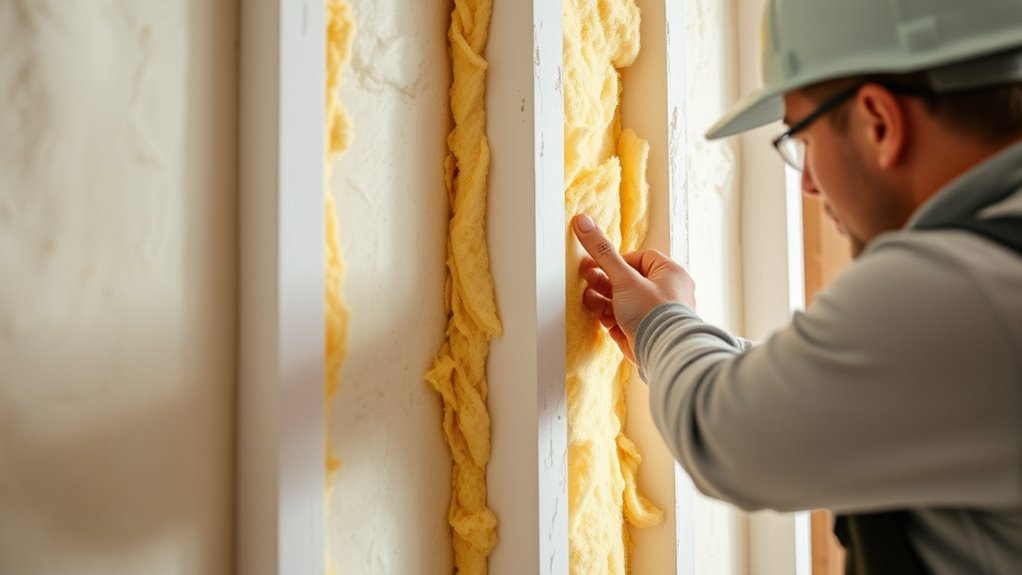
Insulation in interior walls plays a essential role in maintaining a comfortable and energy-efficient home. When you upgrade your wall insulation, you’re not just improving energy savings—you’re also enhancing your home’s soundproofing qualities. Soundproofing techniques, such as adding specialized insulation layers or using resilient channels, can markedly reduce noise transfer between rooms. This means you’ll enjoy quieter spaces, whether you’re working from home, relaxing, or trying to get a good night’s sleep. You may consider installing mineral wool or cellulose-based thermal insulation materials, which are known for their superior sound absorption properties. These materials help dampen sound vibrations, preventing noise from traveling through walls, and creating a more peaceful living environment.
Upgrading interior wall insulation enhances energy efficiency and dramatically reduces noise transfer for a quieter, more comfortable home.
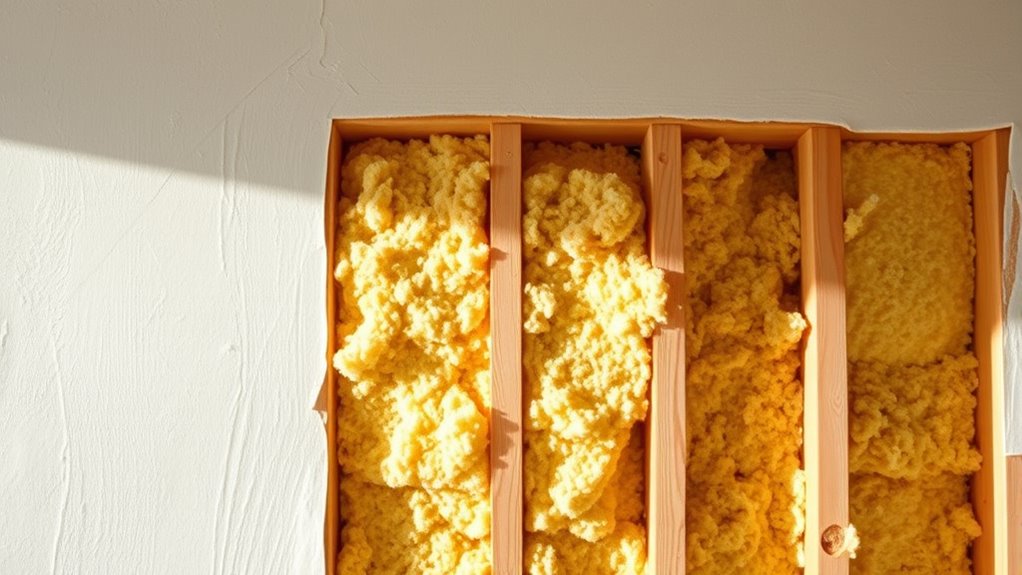
Beyond soundproofing, the choice of thermal insulation materials directly impacts your home’s energy efficiency. High-quality thermal insulation materials, like spray foam, fiberglass batts, or rigid foam boards, create a strong barrier against heat transfer. During cold months, they keep warmth inside your living spaces, reducing the workload on your heating system. Conversely, in warmer months, they help keep cool air inside, decreasing the need for air conditioning. When selecting insulation for your interior walls, look for products with high R-values, which indicate better thermal resistance. Proper installation is just as essential as choosing the right materials—air gaps or compression can markedly diminish insulation effectiveness. Ensuring the insulation is evenly installed and fills every cavity will maximize both thermal and acoustic benefits.
If you’re upgrading existing walls, you might consider removing old, compressed insulation or adding an extra layer to improve performance. For new constructions, integrating insulation during framing ensures ideal coverage and efficiency. Remember, combining different soundproofing techniques with thermal insulation materials creates a more thorough solution. For instance, adding resilient channels or decoupling drywall from framing can further minimize noise transfer, while dense insulation materials boost thermal performance. This synergy results in a home that’s quieter, more comfortable, and less costly to heat and cool.
Additionally, consulting professional insulation installers can help ensure you select the best materials and techniques for your specific needs. Ultimately, investing in quality insulation for your interior walls pays off over time. You’ll notice a tangible difference in your comfort, energy bills, and overall quietness. Whether you’re aiming for better soundproofing or increased energy efficiency, choosing the right soundproofing techniques and thermal insulation materials will transform your living space into a more peaceful, cozy haven.

Spray Foam Insulation Can (6 x 30 oz. / 850 g) Expanding Sealant, Mega Size Closed Cell Spray Foam Insulation, High Density, Walls Ceiling Windows Doors
MEGA SIZE SPRAY FOAM INSULATION: Covers up to 138 board feet (based on standard application thickness); actual yield…
As an affiliate, we earn on qualifying purchases.
As an affiliate, we earn on qualifying purchases.
Frequently Asked Questions
How Does Insulation Improve Indoor Air Quality?
Insulation improves indoor air quality by reducing drafts and preventing the entry of pollutants, dust, and allergens. It also enhances ventilation efficiency, helping to maintain a healthier environment. When you upgrade insulation, you create a better barrier against outside contaminants, promoting air quality improvement. Additionally, improved insulation supports proper ventilation, which reduces humidity and mold growth, making your indoor space safer and more comfortable.
Can Upgrading Insulation Reduce Energy Bills Significantly?
Upgrading your insulation can markedly reduce your energy bills by boosting your home’s energy efficiency. When you improve insulation, your heating and cooling systems don’t have to work as hard, leading to cost savings over time. You’ll notice lower energy consumption and more consistent indoor temperatures. This upgrade not only helps you save money but also makes your home more comfortable and eco-friendly.
What Are Eco-Friendly Insulation Options for Interior Walls?
You should consider eco-friendly insulation options like those made from recycled materials, such as recycled denim, cellulose, or sheep’s wool, which reduce waste and environmental impact. Biodegradable options like hemp or cork are also excellent choices, as they naturally break down without harming the planet. These environmentally conscious materials not only insulate effectively but also help you lower your carbon footprint.
How Long Does It Take to Install New Insulation?
Imagine you’re living in a 90s sitcom—installing new insulation usually takes about one to three days, depending on the insulation materials you choose. The installation timeline varies with factors like wall size, accessibility, and whether you’re doing it yourself or hiring pros. Fiberglass batts are quicker, while spray foam might take a bit longer. Overall, plan for a couple of days to complete the job efficiently.
Is Professional Installation Necessary for Effective Insulation Upgrades?
You don’t need a professional for effective insulation upgrades, especially with DIY tips that guide you through the process. However, professional installation guarantees proper placement and reduces mistakes, but it comes with higher costs. If you’re comfortable doing it yourself, you can save money and learn valuable skills. Compare the cost of professional installation versus DIY, considering time, effort, and the quality of insulation for ideal sound and thermal benefits.

ROCKWOOL AFB Acoustical Fire Batts, Mineral Wool Insulation, Sound Deadening, Heat Resistant, 2-inch, Case of 6
6 pieces of 24" x 48" x 2" acoustical fire batt mineral wool
As an affiliate, we earn on qualifying purchases.
As an affiliate, we earn on qualifying purchases.
Conclusion
Upgrading your interior wall insulation is like giving your home a cozy, protective blanket. It shields you from noise and keeps the temperature just right, making every room more comfortable. With better insulation, you’ll notice a quieter, warmer, and more energy-efficient space, turning your house into a fortress of comfort. Don’t wait—investing in insulation transforms your home into a sanctuary where every moment feels just right.

R21 Unfaced Fiberglass Insulation (5.5" x 15" x 93" batts) – 77.5sf 8pcs
Coverage: One pack covers 77.5 square feet, containing 8 batts
As an affiliate, we earn on qualifying purchases.
As an affiliate, we earn on qualifying purchases.

Trademark Soundproofing Resilient Metal Hat Channel – 8.6' long – Pack of 20 (8.6 FT)
20 Hat Channels per bundle – Length 8.6' (102'')
As an affiliate, we earn on qualifying purchases.
As an affiliate, we earn on qualifying purchases.