
Choosing the right mini-split size is key to comfort and efficiency. Too big, and it will cycle frequently, causing noise, uneven temperatures, and wear on your system. Too small, and it won’t keep up, running constantly and wearing out faster. Proper BTU calculation considers your space, insulation, and zones to make certain of even heating and cooling. Keep going to learn how accurate sizing and zoning can make your system work smarter and last longer.
Key Takeaways
- Correct BTU sizing ensures optimal comfort and prevents issues like short cycling or constant running.
- Zoning allows targeted heating and cooling, improving efficiency and maintaining consistent temperatures across different areas.
- Oversized mini-splits cool or heat rooms too quickly, causing short cycling, noise, and increased wear on components.
- Undersized units struggle to meet thermal loads, leading to discomfort and excessive runtime.
- Proper load calculations and zoning are essential to avoid oversizing, ensuring comfort, efficiency, and longer system lifespan.

Temprium 9000 BTU Mini Split Air Conditioner 115V, 22 SEER2 AC & Heat Pump, Quiet Ductless System for Up to 450 Sq.Ft, R32 Refrigerant, WiFi Smart Control, Indoor & Outdoor Units, Installation Kit
【Unmatched Energy Efficiency with 22 SE2ER2】 Slash your utility bills with our advanced Inverter technology and industry-leading 22…
As an affiliate, we earn on qualifying purchases.
As an affiliate, we earn on qualifying purchases.
Why Proper Mini-Split Sizing Is Key to Comfort and Savings
Properly sizing your mini-split is essential because an incorrect size can lead to discomfort and higher energy bills. If you choose a unit that’s too small, it’ll struggle to cool or heat your space effectively, causing constant operation and increased wear. Conversely, an oversized system may cycle on and off frequently, leading to uneven temperatures and added strain on components. Incorrect sizing also presents installation challenges, as improper fit can complicate mounting and ductwork. Maintenance considerations come into play, too—larger or ill-fitting units may require more frequent repairs or adjustments. Additionally, understanding content formats can help you choose the most effective system for your needs. To avoid these issues, it’s crucial to work with professionals who can accurately assess your space, ensuring you select a system that balances comfort, efficiency, and ease of maintenance. Proper sizing keeps your mini-split running smoothly for years.

SIMOE Dual Zone 18000 BTU Mini Split Air Conditioner, 22 SEER2 208-230V, Pre-Charged Condenser, 7000 BTU + 12000 BTU Ductless Wall Mounted Inverter Air Conditioner & Heater Pump with Installation Kits
Dual-Zone Mini Split AC/Heating System: SIMOE 18,000 BTU dual-zone (7,000 BTU + 12,000 BTU) mini split AC is…
As an affiliate, we earn on qualifying purchases.
As an affiliate, we earn on qualifying purchases.
What Happens When Your Mini-Split Is Too Big or Small?

Choosing the right mini-split size directly impacts how well your system keeps your space comfortable and runs efficiently. If your mini split is too big, it will cycle on and off frequently, leading to mini split noise that can be disruptive. This short cycling not only causes noise issues but also increases wear and tear on the compressor, reducing its lifespan. This constant cycling also causes uneven temperature control, making some areas too cold or too warm. Additionally, proper sizing helps ensure that your system can handle fluctuations in load and weather conditions without excessive cycling. Conversely, a mini split that’s too small may struggle to heat or cool your space adequately, forcing it to run constantly and wear out faster. Oversized units can also create installation challenges, especially if they require additional modifications or support. Proper sizing guarantees smooth operation, minimizes noise, and avoids the frustration and cost of installing an ill-fitting system. Understanding load calculation is essential for selecting the right unit size and ensuring optimal performance. Additionally, selecting a system with appropriate zone control can improve comfort by customizing temperature settings for different areas. Accurate capacity matching helps prevent issues related to improper sizing and enhances overall system efficiency.
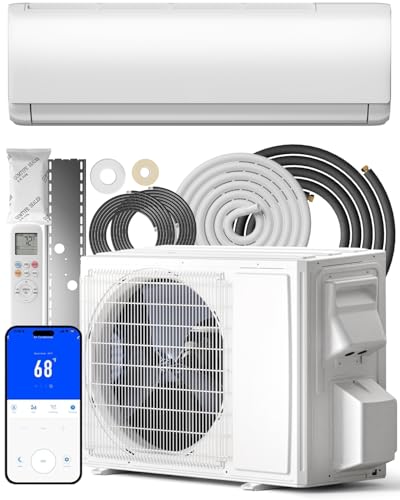
Feelfunn 9000BTU Mini Split AC/Heating System, 22 SEER2 115V Cools Rooms up to 550 Sq.Ft, Air Conditioner with Installation Kit,Remote,Wifi Control,Low Noise (Compatible with Alexa)
Fast Cooling & Heating for Year-Round Comfort: The Feelfunn mini split AC/heating system offers 9100 BTU cooling and…
As an affiliate, we earn on qualifying purchases.
As an affiliate, we earn on qualifying purchases.
The Main Factors That Affect Mini-Split Capacity

Your mini-split’s capacity depends on several key factors. The size and volume of your room, along with insulation and window placement, directly influence how much heating or cooling you need. Additionally, the climate and sun exposure can affect the system’s performance and proper sizing.
Room Size and Volume
Room size and volume are the primary factors that determine the right mini-split capacity for your space. To find the correct size, you need to take into account the room dimensions and perform a volume calculation. This helps ensure your system provides efficient comfort without wasting energy. Properly assessing wall surfaces and finishes can also influence the choice of capacity, as different wall types impact insulation and heat transfer. Consider these key points: 1. Larger rooms require higher BTUs to maintain comfort. 2. Small rooms need less capacity, preventing overcooling. 3. Accurate volume calculation prevents oversizing and inefficiency. 4. Precise room measurements lead to ideal mini-split performance. Additionally, understanding the impact of room insulation can further optimize your mini-split sizing, ensuring consistent temperature control and efficiency. Recognizing how different wall materials and finishes affect heat transfer can help refine your capacity needs for optimal comfort.
Insulation and Windows
While accurate room measurements help determine the right mini-split size, factors like insulation and window quality considerably influence its performance. Good wall insulation minimizes heat transfer, keeping your space cooler in summer and warmer in winter, reducing strain on the mini-split. Window treatments also play an essential role; thick curtains, blinds, or reflective films can block heat gain from sunlight or prevent heat loss at night. If your windows are poorly insulated or have outdated treatments, your system must work harder, increasing energy consumption and decreasing comfort. Upgrading wall insulation and choosing effective window treatments can enhance your mini-split’s efficiency, ensuring consistent temperatures and avoiding unnecessary oversizing. Properly addressing these factors leads to better comfort and lower energy bills. Understanding home insulation helps highlight how these improvements can significantly impact your mini-split’s performance, especially in climate control. Additionally, considering thermal bridging can further improve overall insulation effectiveness. Recognizing energy efficiency measures in your home can also contribute to optimizing your climate control systems.
Climate and Exposure
Climate and exposure are crucial factors that directly influence the capacity needed for your mini-split system. Your local climate impact can mean the difference between a comfortable home and constant discomfort. Exposure considerations, like whether your home faces the sun or wind, affect how much cooling or heating you require. Here’s what to consider:
- Sun Exposure: More sunlight increases cooling needs, especially with south-facing windows.
- Wind Exposure: Constant wind can cool your home, reducing heating requirements.
- Extreme Temperatures: Hotter summers or colder winters demand higher BTU capacity.
- Climate Impact: Mild climates often need smaller systems, while harsh climates call for more robust units. Being aware of climate and exposure helps ensure your system is properly matched to your environment. Additionally, understanding thermal load factors can further refine your sizing needs. Proper insulation and building orientation also play a significant role in energy efficiency, impacting the overall capacity requirements. Recognizing regional climate patterns can help you select the most suitable system for your location. It’s also beneficial to consider how building design influences thermal performance and system needs.
Understanding these factors helps prevent under or oversizing, ensuring your mini-split delivers ideal comfort.

Mountman 12000BTU Mini Split AC/Heating System, 115V 19 SEER2 Energy Efficient Mini Split Air Conditioner with Heat Pump, Cools Up to 750sq.ft, Ductless Inverter AC Unit with Pre-Charged Condenser
Rapid Cooling & Heating with Inverter Technology:Powered by advanced inverter technology, the 12000 btu mini split is a…
As an affiliate, we earn on qualifying purchases.
As an affiliate, we earn on qualifying purchases.
How to Calculate the Right BTUs for Your Space
Determining the right BTU size for your mini-split starts with understanding the specific heating or cooling needs of your space. To do this, you perform a heat load analysis, which guides your capacity calculation. This ensures your mini-split matches your room’s demands without over- or under-sizing. Proper assessment of environmental factors such as insulation and sun exposure is essential for accurate sizing. Accurate calculations also benefit from considering industry standards, which help ensure optimal performance. Additionally, accounting for climate considerations can significantly impact the appropriate BTU requirements. Here’s a simple way to visualize key factors:
| Room Size (sq ft) | Typical BTU Range | Additional Factors |
|---|---|---|
| 100-200 | 6,000–8,000 | Sun exposure, insulation |
| 200-300 | 8,000–12,000 | Number of windows, occupants |
| 300-400 | 12,000–16,000 | Ceiling height, appliances |
| 400+ | 16,000+ | Climate, shading |
Accurate capacity calculation prevents comfort issues caused by improper sizing.
Risks of Oversizing and Why Bigger Isn’t Always Better
Choosing a mini-split that’s too large for your space might seem like a quick fix for comfort, but it can actually cause more problems than it solves. Oversizing leads to:
Oversized mini-splits cause discomfort, inefficiency, and increased wear—size matters for optimal performance.
- Short cycling, making your system run constantly and waste energy.
- Uneven temperature control that leaves some areas uncomfortable.
- Increased wear and tear, reducing the mini-split’s lifespan.
- Higher costs due to frequent repairs and inefficient operation, complicating your DIY installation and cost estimation.
Additionally, oversizing can negatively impact indoor air quality, leading to stale air and increased humidity issues. Larger units tend to have higher BTU ratings, which may not be appropriate for your space, resulting in inefficiency. Bigger isn’t always better, especially when it comes to mini-splits. Oversized units may seem appealing initially, but they often result in discomfort, higher bills, and more maintenance. Properly sizing your mini-split guarantees comfort, efficiency, and peace of mind. Choosing the right size also ensures optimal heat transfer, preventing issues like short cycling and poor dehumidification. Understanding proper sizing techniques can help you avoid these common pitfalls and select the most suitable unit for your needs.
Why Undersized Mini-Splits Struggle to Keep You Comfortable

When a mini-split is too small for your space, it struggles to maintain a consistent, comfortable temperature. Because it can’t handle the cooling or heating load, it runs constantly, trying to catch up but never quite getting there. This often leads to uneven comfort, with some areas feeling too hot or cold. An undersized unit also impacts refrigerant flow, causing the compressor to work harder and less efficiently. Additionally, duct size can influence performance; improper ducting restricts airflow, making it even harder for the mini-split to distribute conditioned air evenly. Proper sizing guarantees the mini-split can handle your space’s demands without sacrificing efficiency or comfort. Accurate sizing is essential to prevent these issues and ensure optimal system performance. Properly considering zone design and layout can further improve the system’s effectiveness.
How Zoning Can Help You Achieve Accurate Mini-Split Sizing

Zoning gives you precise control over different areas of your home, ensuring each space gets the right amount of cooling or heating. This accuracy helps you size your mini-split system more effectively, avoiding overspending or discomfort. Plus, zoning boosts energy efficiency by only conditioning occupied zones, saving you money in the long run.
Precise Zone Control
Implementing precise zone control can markedly improve the accuracy of mini-split sizing because it allows you to tailor heating and cooling to specific areas of your home. With zoning systems and smart thermostats, you gain control over each zone’s comfort level. This approach helps you:
- Feel confident your system matches each space’s unique needs, avoiding discomfort.
- Prevent energy waste by only conditioning occupied areas.
- Experience personalized comfort, making every room just right.
- Reduce system strain, extending your mini-split’s lifespan.
Improved Energy Efficiency
Optimizing energy efficiency is a key benefit of incorporating zoning into your mini-split system, as it guarantees you’re only heating or cooling the areas that need it. By targeting specific zones, you avoid wasting energy on unoccupied spaces, reducing overall power consumption. This precise control helps maintain ideal humidity levels, preventing excess moisture that can lead to mold or discomfort. Additionally, zoning reduces noise because smaller, dedicated units operate quietly when needed, rather than running constantly at full capacity. This focused approach minimizes energy loss and ensures your system works efficiently. As a result, you enjoy lower utility bills, better climate control, and a more comfortable environment tailored to your needs. Zoning truly enhances your mini-split’s energy performance and your overall comfort.
Common Sizing Mistakes and How to Avoid Them
One common mistake homeowners make when sizing mini-splits is choosing an unit that’s too large or too small for the space. This can lead to discomfort, inefficient energy use, and increased costs. To avoid this, consider these pitfalls:
- Relying solely on rough estimates instead of accurate load calculations.
- Overlooking the importance of proper zoning for even comfort.
- Ignoring potential DIY installation challenges that affect performance.
- Underestimating the long-term cost considerations of oversized units, which can waste energy and increase maintenance.
Oversized units cycle on and off frequently, causing temperature swings. Undersized units struggle to keep up, leading to frustration. Taking the time to correctly size your mini-split ensures comfort and saves money—both upfront and in the long run.
Work With HVAC Pros to Get the Perfect Fit for Your Home

Working with HVAC professionals guarantees you get the right-sized mini-split system tailored to your home’s specific needs. While a DIY installation might seem tempting to save costs, professionals ensure proper sizing, placement, and performance. They consider your home’s layout, insulation, and zone requirements to avoid oversizing or undersizing, which can hurt comfort and efficiency. Plus, working with experts helps you navigate budget considerations without sacrificing quality. They can recommend energy-efficient models that fit your financial plans and ensure the system operates smoothly for years. Relying on HVAC pros also reduces the risk of mistakes that could lead to costly repairs or reduced comfort. Ultimately, partnering with experienced technicians ensures your mini-split system is perfectly matched to your home’s unique demands.
Frequently Asked Questions
How Does Climate Affect Mini-Split Sizing Requirements?
Climate substantially impacts mini-split sizing because different climate zones experience varying temperature fluctuations. In colder zones with larger temperature variations, you’ll need a unit with higher BTUs to maintain comfort. Conversely, in milder zones, smaller units suffice. Ignoring these climate factors can lead to inadequate heating or cooling, causing discomfort. Properly sizing your mini-split based on climate zones ensures efficient operation and consistent comfort year-round.
Can Multiple Mini-Splits Be Combined for Larger Spaces?
Yes, you can combine multiple mini-splits for larger spaces by implementing zoning strategies and system integration. This approach allows you to customize comfort in different areas, improving efficiency and temperature control. You’ll need to guarantee the systems are compatible and properly coordinated, often through a centralized control panel or smart system. Proper zoning and integration help you maximize energy savings while maintaining consistent comfort across your entire space.
What Is the Impact of Insulation on BTU Calculations?
Insulation effects considerably impact your BTU calculation because better insulation reduces heat transfer, meaning your space needs fewer BTUs to stay comfortable. If your home has high-quality insulation, you should adjust your BTU estimate downward to avoid oversizing. Conversely, poor insulation requires more BTUs for effective cooling or heating. Always factor in insulation when sizing your mini-split to ensure ideal comfort and efficiency.
How Often Should Mini-Split Capacity Be Reassessed?
Think of your mini-split as a living thing that needs regular checkups. You should reassess its capacity every 1-3 years, especially if your home’s insulation or layout changes. Regular maintenance schedules keep it running efficiently, ensuring energy efficiency and comfort. Don’t wait until it struggles—timely evaluations help you avoid energy waste and maintain a cozy environment, keeping your system perfectly tuned to your evolving space.
Are There Differences in Sizing for Commercial Versus Residential Applications?
Yes, there are differences in sizing for commercial versus residential applications. Commercial considerations often involve larger spaces, higher BTU requirements, and more complex zoning needs, so you might need bigger units or multiple systems. Residential standards typically focus on smaller, individual spaces with simpler zoning. When sizing, you should account for these differences to guarantee ideal comfort, efficiency, and cost-effectiveness for each setting.
Conclusion
Just like Goldilocks sought the bed that’s just right, finding the perfect mini-split size means avoiding the extremes. Oversize units can lead to discomfort and wasted energy, while undersized ones struggle to keep you cool or warm. By understanding your space and working with pros, you guarantee your mini-split hits that sweet spot—delivering comfort, efficiency, and peace of mind. Don’t settle for less than the perfect fit; your home’s comfort depends on it.