
TL;DR

Get the little things that make your day delivered free with Prime
- Fast, free delivery on millions of items
- Prime Video, Amazon Music and more included
- Member-only deals all year
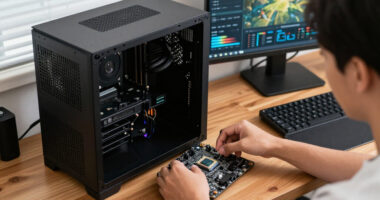
Valve considered releasing a minimal, barebones Steam Machine but ultimately did not. Recent analysis shows strategic reasons behind this choice, affecting future hardware plans.
Valve did not release a basic, barebones Steam Machine, despite considering such a product in the past, as confirmed by recent industry insights. This decision reflects strategic choices that influence Valve’s hardware direction and the broader gaming market.
Sources indicate that Valve explored the possibility of launching a simplified, low-cost Steam Machine aimed at expanding gaming hardware options. However, Valve ultimately decided against this approach, citing concerns over market positioning and product differentiation. Industry insiders suggest that Valve’s focus shifted toward the development of the Steam Deck and other high-performance devices, which better aligned with their strategic goals.
According to reports, Valve evaluated the potential of a basic Steam Machine as a way to penetrate lower-cost segments, but internal discussions revealed challenges in maintaining quality and user experience at a minimal price point. Valve’s leadership reportedly believed that a basic machine could dilute their brand or compete poorly with established console options, leading to the decision not to proceed with a simplified product.
This strategic pivot aligns with Valve’s broader hardware approach, emphasizing high-performance, versatile devices like the Steam Deck, which has seen significant success since its launch. The decision reflects a focus on quality and differentiation rather than mass-market low-cost hardware.
Implications for Valve’s Hardware Strategy
The decision not to release a basic Steam Machine reveals Valve’s focus on maintaining product quality and brand integrity. It suggests that Valve prioritizes high-performance, differentiated hardware over low-cost, mass-market devices, which could influence future hardware developments. For consumers, this indicates that Valve’s hardware offerings will likely continue to target premium segments rather than budget options, shaping the competitive landscape for gaming consoles and PCs.
high performance gaming handheld device
As an affiliate, we earn on qualifying purchases.
As an affiliate, we earn on qualifying purchases.
Historical and Industry Context of Valve’s Hardware Decisions
Valve has historically experimented with gaming hardware, including the Steam Machine line launched in 2015, which ultimately failed to gain widespread adoption. Since then, Valve has shifted toward software and platform development, with the Steam Deck emerging as a flagship hardware product. The company’s hardware strategy has increasingly focused on high-performance portable devices rather than low-cost, simplified machines.
Industry analysts note that Valve’s decision not to pursue a basic Steam Machine aligns with broader trends favoring quality and performance over affordability in gaming hardware. Competitors like Sony and Microsoft continue to target both high-end and budget segments, but Valve appears to be carving a niche in premium portable gaming devices.
Unconfirmed Aspects of Valve’s Hardware Strategy
It is not yet clear whether Valve may revisit the idea of a basic Steam Machine in the future or if their focus will remain solely on high-performance devices like the Steam Deck. Details about internal discussions and future plans remain undisclosed, and Valve has not officially commented on potential low-cost hardware developments.
Future Hardware Plans and Market Positioning
Valve is expected to continue emphasizing portable and high-performance gaming devices, with ongoing updates to the Steam Deck and potential new hardware innovations. Industry observers will watch for any signals indicating a shift toward more affordable hardware options or new product categories. Valve’s next steps could influence the competitive dynamics in gaming hardware for the coming years.
Key Questions
Why did Valve consider releasing a basic Steam Machine?
Valve evaluated a low-cost, minimalistic Steam Machine as a way to expand their hardware lineup and target budget-conscious consumers, but ultimately decided against it.
What are the main reasons Valve did not release a basic Steam Machine?
Concerns over product differentiation, brand dilution, and challenges in maintaining quality at a low price point led Valve to focus on higher-performance devices instead.
Will Valve revisit the idea of a basic Steam Machine in the future?
It remains uncertain; Valve has not officially announced plans for such a product, and current focus appears to be on the Steam Deck and similar high-end hardware.
How does this decision affect Valve’s position in the gaming hardware market?
It positions Valve as a company prioritizing quality and innovation in portable gaming devices, rather than competing primarily on price with low-cost consoles or machines.
What does this mean for consumers interested in budget gaming options?
Consumers may see fewer low-cost, simplified devices from Valve, but could benefit from continued high-performance hardware and software support.
Source: IdeaNavigator AI
Halloween Picks
halloween
As an affiliate, we earn on qualifying purchases.