
TL;DR
Acoustic dampening is mostly about absorption, not full soundproofing. Placement—like treating reflection points and sealing gaps—is key. Moving your rig into a closet or separate room often beats buying foam, as distance and proper ventilation make the biggest difference.
Ever tried recording vocals in a tiny closet? The sound can be surprisingly good—focused, warm, but often with unwanted echoes or low-end booms. The secret isn’t just fancy foam panels; it’s where you place your gear and how you treat the space around it.
This article is about mastering noise control and sound quality by using simple tricks like strategic placement, DIY treatment, and moving your rig into a closet or even another room. Whether you’re recording, doing AI inference, or just want a quieter workspace, these tips will help you make the most of small spaces without breaking the bank.
Acoustic dampening
& the rig in the closet.
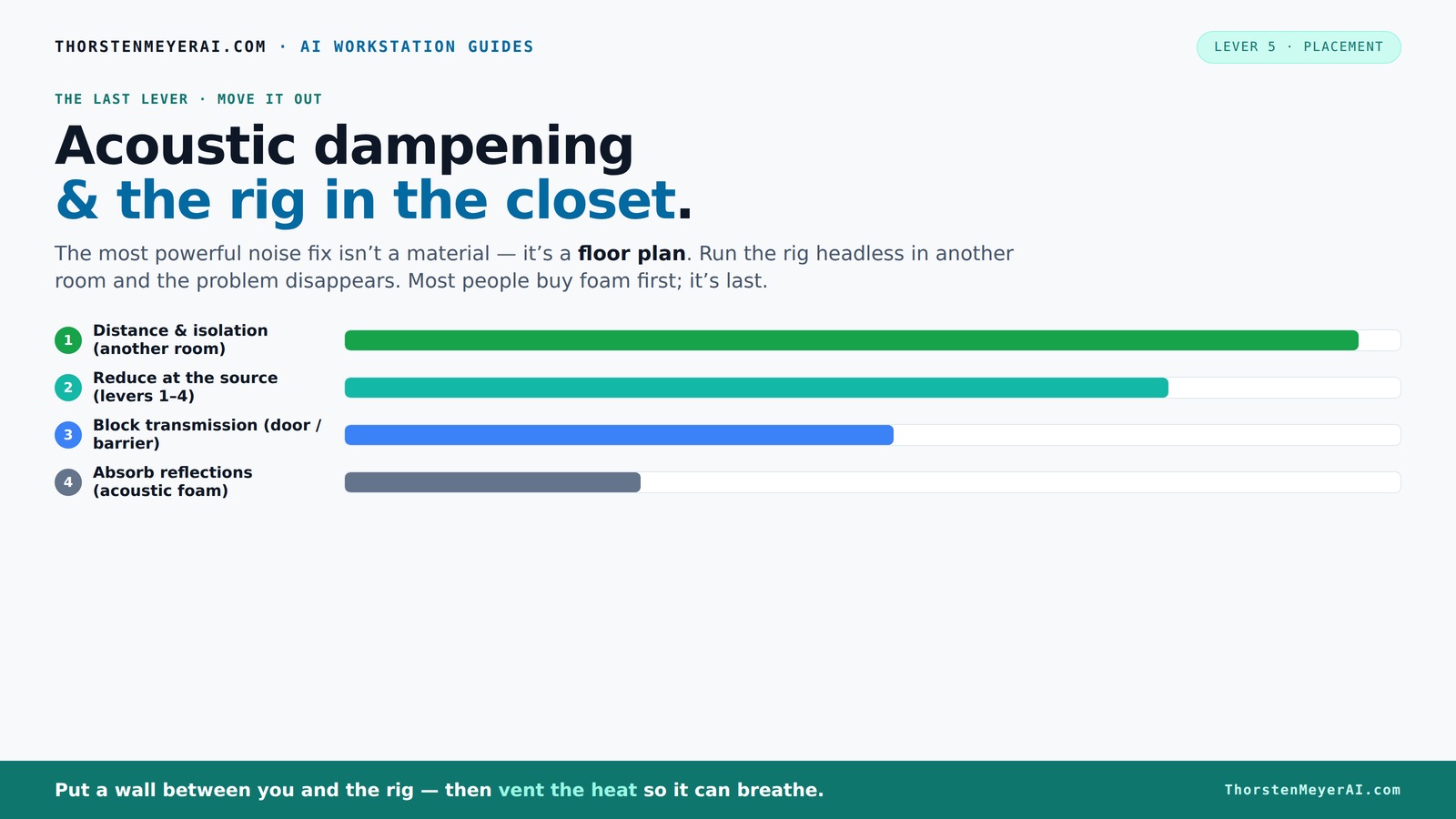
The most powerful noise fix isn’t a material — it’s a floor plan. A rig you can’t hear because it’s in another room beats any amount of foam. Tap the approaches in Part 1 to see what actually works.
(another room)
(levers 1–4)
(door / barrier)
(acoustic foam)
Contain the noise, not the heat
Key Takeaways
- Moving your rig into another room or closet significantly reduces noise without expensive treatment.
- Proper ventilation is critical when placing hot equipment in enclosed spaces; passive vents and quiet fans are your friends.
- Acoustic dampening focuses on absorption and reflection control, while sealing gaps and adding mass block sound leaks.
- Strategic placement of panels behind and around the mic, plus corner bass traps, dramatically improve sound quality.
- Don’t overstuff your closet with treatment—balance absorption, sealing, and ventilation for best results.

Focusound 52 Pack Acoustic Foam Panels 1" x 12" x 12" Sound Proof Foam Panles Soundproofing Noise Cancelling Wedge Panels for Home Office Recoding Studio with 300PCS Double-Side Adhesive
- Soundproofing Design: Triangular grooves for noise absorption
- Includes Adhesive Tape: 300pcs strong double-sided adhesive included
- Easy Installation: Adhesive helps secure panels and protect walls
As an affiliate, we earn on qualifying purchases.
As an affiliate, we earn on qualifying purchases.
Why Your First Move Should Be Moving the Rig Out of Your Room
The most effective way to cut noise? Distance. When your rig sits in another room, your noise problem becomes a non-issue. Think of it like a loud neighbor—you don’t complain about the music when you’re on the other side of the house. Same logic applies to computers and GPUs.
For example, I set up a dedicated server in the basement. Now, I SSH into it, and my small apartment stays quiet. No amount of foam on my desk could match that silence. This approach works especially well with AI workstations, which don’t need to be in the same room to function. Just a wired network and good ventilation.
Beyond noise reduction, physically relocating your rig reduces vibration and mechanical noise transmission. It also minimizes distractions, enabling more focused work. The tradeoff? Slight inconvenience in setup and access, but the substantial gain in quiet operation often outweighs this. This method emphasizes that sometimes, the best noise control isn't about treatment—it's about strategic placement.
The 'Rig in the Closet' Setup — How to Keep It Cool and Quiet
Putting a powerful, heat-generating machine in a closet sounds perfect—until you realize heat builds up fast. A sealed closet traps heat, causing your GPU or CPU to throttle and roar. To make this work, ventilation isn’t optional—it's mandatory. You need airflow paths, exhaust fans, or ducted cooling.
For instance, a friend built a custom soundproof cabinet with quiet exhaust fans and ducting. It keeps noise down to about 30-35 dB while dissipating hundreds of watts. Proper ventilation ensures that heat is effectively removed without creating noise pollution inside the closet, which is essential for maintaining system stability and longevity. The tradeoff here is balancing noise isolation with cooling efficiency—over-insulating can trap heat, while poor ventilation risks overheating. Finding the right compromise means designing a system that dissipates heat silently, often involving ducting or strategically placed fans. For detailed guidance, check out [how to reduce heat and noise in your AI workstation](https://thorstenmeyerai.com/reduce-heat-noise-ai-workstation/). This ensures your rig stays cool without turning your closet into a furnace.
Acoustic Dampening in Small Spaces: Absorption vs. Soundproofing
Acoustic foam and blankets mainly absorb reflections—making your sound less echoey. They don’t block sound from escaping or entering. Think of foam as softening the inside of a room, not sealing it off from the outside. This distinction is critical because many assume foam provides complete soundproofing, which it does not. Absorption reduces internal echoes and improves clarity but doesn't prevent sound leakage—especially through gaps or structural openings.
In a closet, focusing on treating reflection points—such as walls behind you, the ceiling, and side walls—is essential because these are the surfaces where sound bounces and creates echo or low-end buildup. Cover these with foam panels, blankets, or even thick rugs to reduce internal reverberations. However, to truly contain noise, sealing gaps around doors or adding mass with heavy curtains can significantly block sound leaks. Combining absorption treatments with effective sealing creates a more balanced approach, reducing both echo and sound escape. For example, a DIY closet booth with blankets and sealing tape can cut noise transmission by over 50%, but understanding the tradeoff is key—this method improves clarity but isn't a substitute for full soundproofing when needed.
Placement Secrets: Where to Put Your Panels and Microphone
Positioning your equipment and treatment materials is half the battle. Start with your microphone—face it toward the most controlled part of the closet, away from reflective surfaces. Treat the wall behind and the side walls where sound bounces back into the mic, as these are primary sources of unwanted reflections that color your recordings.
For example, if you’re recording vocals, placing a panel behind you and on the side walls that reflect sound into the mic prevents early reflections that cause comb-filtering and muddiness. Adding a panel or blanket above the mic helps tame overhead reflections, which can cause a harsh or distant sound. Using a rug on the floor minimizes foot noise and reduces floor bounce, which can muddy recordings. If you notice low-end boominess, adding bass traps in the corners helps absorb the lowest frequencies that tend to build up in small, parallel spaces. Proper placement of these elements ensures that sound waves are controlled at critical points, leading to clearer, more accurate recordings and a more natural sound environment.
DIY Tips for Making Your Closet a Recording-Friendly Space
Transforming a closet into a recording booth doesn’t require professional-grade gear. Use blankets, moving blankets, and foam panels layered to boost absorption. Mount panels on walls with simple hooks or adhesive strips—this allows for quick adjustments and minimizes damage. For corners, DIY bass traps—stacking blankets or foam blocks—are effective for controlling low frequencies that tend to accumulate in tight spaces.
Pro tip: don’t overstuff the space. Keeping enough room for your mic, stand, and some airflow prevents the space from becoming overly dampened or acoustically dead, which can lead to unnatural sound. Think of it as creating a cozy cocoon rather than a confining box. Power your setup with a surge protector, and route cables carefully to avoid creating noise bridges. Ventilation fans or small ducting can make a huge difference in keeping your rig cool and quiet, preventing overheating that can cause noise and hardware issues.
Common Mistakes That Make Closet Rigs Worse
Relying solely on foam panels without sealing gaps? That’s a mistake. Gaps around doors or vents let noise leak out, undermining your efforts. Overstuffing a tiny closet with thick layers of foam can cause standing waves, creating harsh echoes and uneven sound. This can result in recordings that sound muffled or boomy, defeating the purpose of treatment.
Another trap: placing the mic in a reflection zone or too close to a wall. This results in boomy recordings and uneven sound, as reflections bounce directly into the mic capsule. Always test your setup by recording and listening back—what sounds good in the moment might reveal issues later. Lastly, ignoring ventilation leads to overheating and throttling. A hot rig roars louder and risks damage, and poor ventilation can compromise hardware longevity. Balancing treatment with adequate airflow—using ducted fans or passive vents—helps keep your space cool and quiet, ensuring consistent performance and better sound quality.
Frequently Asked Questions
Is acoustic foam enough for a closet booth?
Acoustic foam helps reduce echo and harsh reflections, but it won’t block sound from leaking out. For best results, combine foam with sealing gaps and adding mass to doors or panels.
Where should I place panels in a small closet?
Place panels behind and beside the microphone, especially on the walls that reflect sound back into the mic. Cover the ceiling if reflections bounce downward and add bass traps in corners if low-end booms.
Should I treat the corners or the walls first?
Start with treating the reflection points—walls behind you and side walls—then add bass traps in corners. Prioritizing reflection points makes a noticeable difference quickly.
How do I stop sound from leaking through the door?
Seal gaps with weatherstripping or acoustic sealant. Use heavy curtains or blankets over the door for extra damping. For serious soundproofing, consider a solid, sealed door or a custom acoustic door.
Do blankets work as well as foam panels?
Blankets are effective for absorption, especially when layered, and are a cheap DIY solution. They are less precise than foam panels but work well in small, treated spaces.
Conclusion
Turning a closet into a quiet, effective workspace or recording booth is about smart placement, proper treatment, and ventilation. It’s not just about foam—it's about understanding what works and where to put it.
Remember, a well-ventilated, sealed closet with targeted absorption can outperform most commercial solutions at a fraction of the cost. Your best move? Start by relocating your rig and treating reflection points—then enjoy a quieter, clearer space.