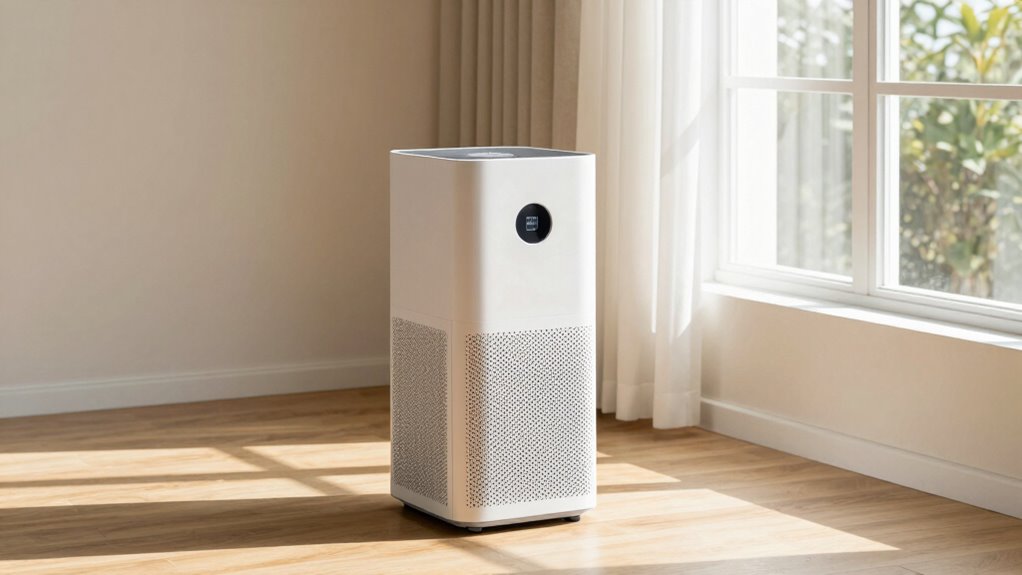
To maximize clean air, place your air purifier in the center of the room away from walls and furniture, preferably on a shelf or high surface to improve circulation. Keep it at least a few inches from objects and avoid corners that block airflow. Position near pollution sources like kitchens or pet areas for better efficiency. Ensuring open space around the device boosts airflow and purification; continue exploring for more tips.
Key Takeaways
- Place the purifier centrally in the room, away from walls and furniture, to ensure even air circulation.
- Elevate the device slightly on shelves or tables for better airflow and coverage.
- Keep open space around the purifier, avoiding corners and clutter that block airflow.
- Position near pollution sources like kitchens or pet areas for targeted air cleaning.
- Maintain at least a few inches clearance from walls and furniture to prevent airflow obstruction.

Air Purifier Elevated Stand with Secure Fit, Compatible with Levoit Core 300/300-P | 6.5 Inch Lift for Cleaning | Two-Piece Design | No Tools Required for Installation | Air Purifier Accessories
- Compatibility: Fits Levoit Core 300/300-P models
- Elevated Height: Raises purifier by 6.5 inches
- Two-Piece Design: Secure and stable support structure
As an affiliate, we earn on qualifying purchases.
As an affiliate, we earn on qualifying purchases.
Where Should I Place My Air Purifier for Best Results?
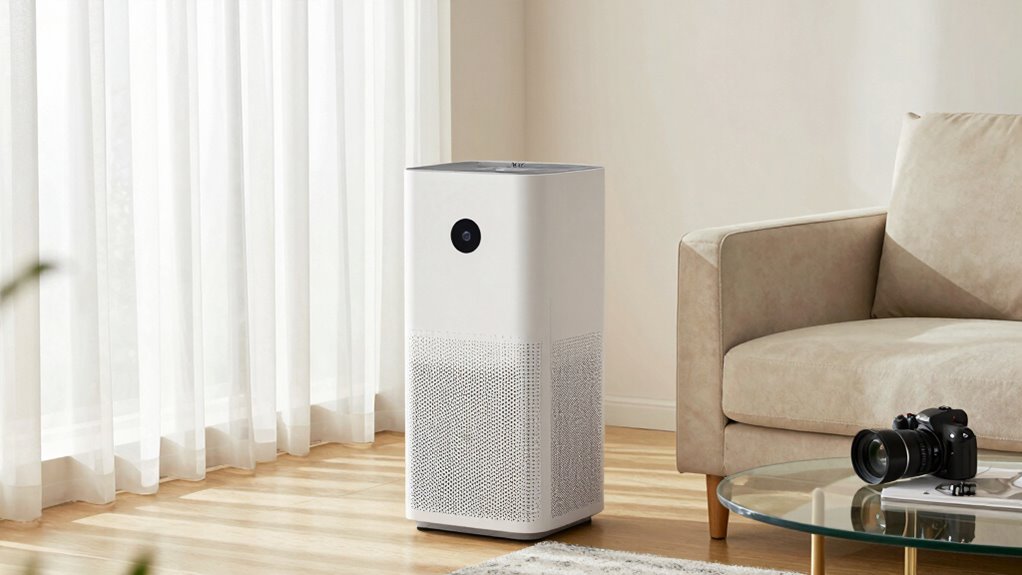
Where’s the best spot to place your air purifier for maximum effectiveness? To optimize filter maintenance and noise reduction, position it in a central location away from walls and furniture. Keep it at least a few feet from electronic devices that can interfere with airflow. Avoid placing it on carpets or uneven surfaces, which can cause vibrations and increase noise. Placing it near sources of pollutants, like kitchens or pet areas, helps clean the air faster. Regularly check and replace filters as recommended to maintain efficiency. Proper placement reduces the noise you hear during operation and ensures the purifier works at its best. Additionally, understanding basic DIY tools and safety tips can help you set up and maintain your air purifier safely and effectively. Considering the airflow patterns in your space can also enhance the purifier’s performance and coverage, ensuring optimal air circulation throughout your home. Recognizing air quality indicators can also guide you in adjusting placement for improved results. Being aware of microplastics in dust and other pollutants can further inform your placement choices to improve overall indoor air quality.
How to Identify the Best Spots for Your Air Purifier Based on Airflow
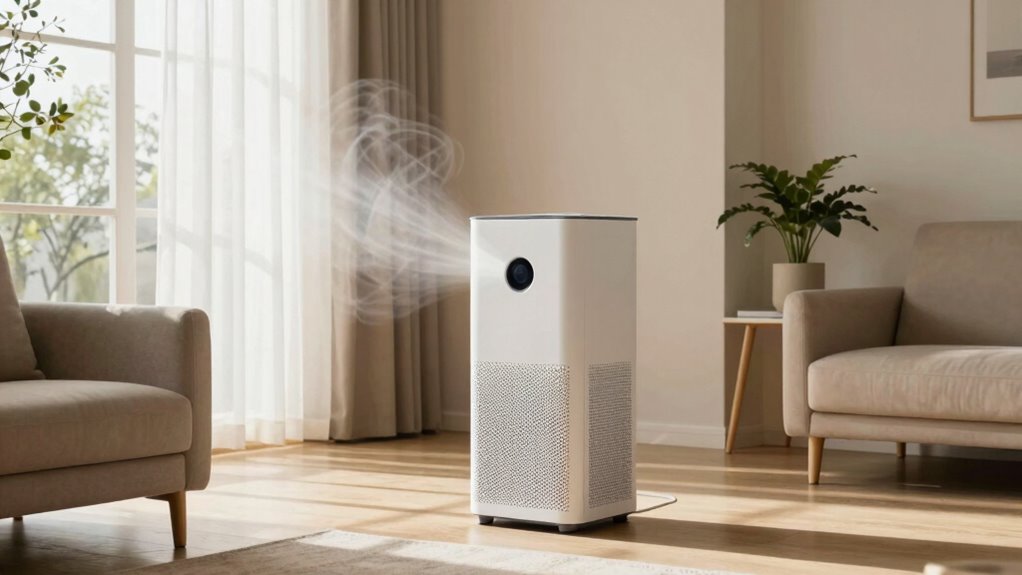
To find the best spots for your air purifier, focus on ideal airflow pathways that circulate air efficiently throughout the room. Make sure to avoid obstructions and clutter that can block airflow and reduce its effectiveness. Elevating your purifier slightly off the ground can also improve circulation and help it clean the air more effectively. Additionally, positioning the purifier near airflow pathways such as vents or open doorways can enhance its performance. Remember that understanding air circulation patterns can further optimize placement for maximum air purification efficiency.
Optimal Airflow Pathways
Understanding how air moves through your space is key to placing your air purifier effectively. Observe the airflow patterns to identify where air circulates most naturally. Areas near windows, vents, or fans often have stronger airflow, making them ideal spots for your purifier. Keep in mind that purifier height influences airflow; placing it too low or too high can limit its effectiveness. Ideally, position your purifier at ear level or slightly above to maximize airflow intake and distribution. Pay attention to the direction of airflow—placing the unit where it can intercept the most circulating air ensures better purification. By aligning your purifier’s placement with these airflow pathways, you enhance its ability to clean the air efficiently and maintain a healthier environment. Additionally, considering airflow pathways can help you optimize the placement for maximum efficiency.
Avoid Obstructions and Clutter
Ensuring your air purifier works effectively means choosing a spot free of obstructions and clutter. A cluttered space with furniture arrangement that blocks airflow can reduce its effectiveness. Keep the area around your purifier clear of large furniture pieces, decorative items, and unnecessary clutter that may hinder airflow. Avoid placing it behind furniture or near walls that may trap or redirect clean air. Instead, position it in an open area where air can circulate freely. Removing obstructions ensures the purifier can draw in contaminated air and distribute clean air efficiently. Proper airflow management plays a key role in maximizing the purifier’s performance. Regularly check for and clear away clutter to maintain ideal airflow, maximizing your purifier’s performance and ensuring the air in your space stays fresh and healthy. Additionally, understanding large number conversions can help in assessing the size of your space or the capacity of your purifier relative to room size. To further enhance effectiveness, consider air quality awareness to monitor when your purifier needs more frequent operation or filter changes. Ensuring proper filter maintenance also supports optimal airflow and air quality, and being aware of airflow patterns can help you optimize placement for the best results.
Elevate for Better Circulation
Elevating your air purifier can substantially improve airflow and overall effectiveness. When placed higher, it captures airborne particles more efficiently, enhancing your air quality. Elevated positions help distribute clean air evenly throughout the room by promoting better air flow. Look for spots like atop a sturdy shelf, a table, or mounted on a wall bracket. Avoid low or blocked areas that restrict movement of air. Proper placement minimizes airflow disruptions and allows your purifier to operate at peak performance. Additionally, positioning your purifier in open spaces helps prevent stagnation and ensures a consistent flow of fresh air. Considering air circulation patterns in your space can further optimize placement. By positioning your purifier above eye level or in open spaces, you allow it to draw in more contaminated air and push out purified air more effectively. This simple adjustment guarantees better circulation, reduces stagnant zones, and maximizes your purifier’s performance, ultimately providing cleaner, healthier air in your space. Incorporating airflow dynamics into your placement strategy helps achieve optimal purification results.
Factors Like Room Size and Layout That Affect Placement
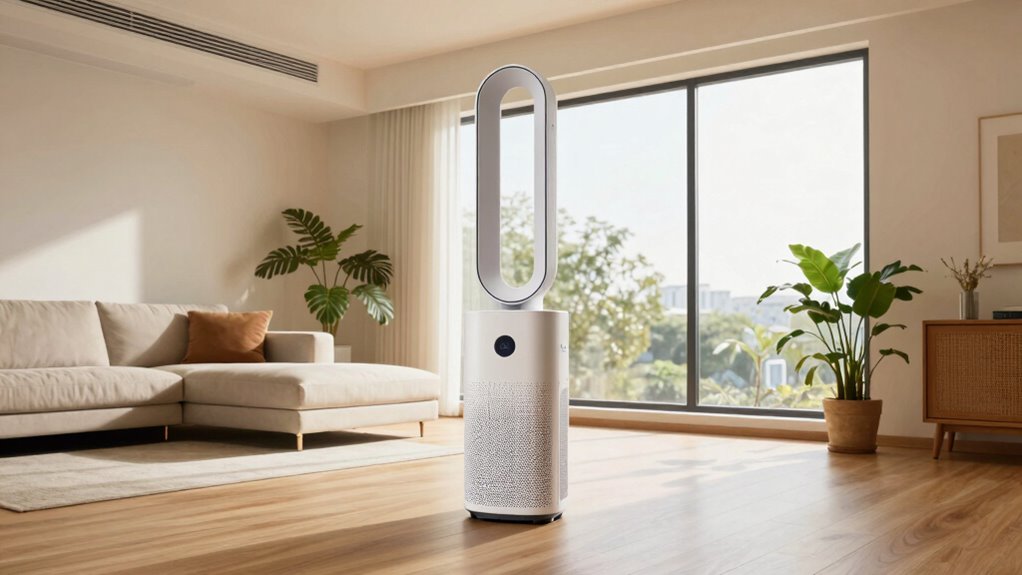
The size and layout of a room play a crucial role in determining where you should place your air purifier. Larger rooms may require positioning the purifier closer to the center to ensure even airflow, while smaller spaces benefit from nearby placement to maximize efficiency. Your room’s airflow patterns influence placement; placing the purifier where air naturally circulates helps improve filtration. Additionally, furniture arrangement affects airflow and accessibility. Avoid blocking vents or covering the purifier with furniture, as this can hinder performance. Keep the device away from corners or tight spots where air movement is limited. Understanding airflow dynamics and how they interact with room size and layout can help you optimize your air purifier’s placement to achieve cleaner air throughout your space. Proper air circulation is essential for maintaining consistent air quality and preventing stagnation. Being mindful of airflow patterns ensures the purifier functions effectively and delivers the best possible air quality. Recognizing how air exchange rates influence air quality can further enhance your placement strategy.
Common Mistakes to Avoid When Placing Your Air Purifier
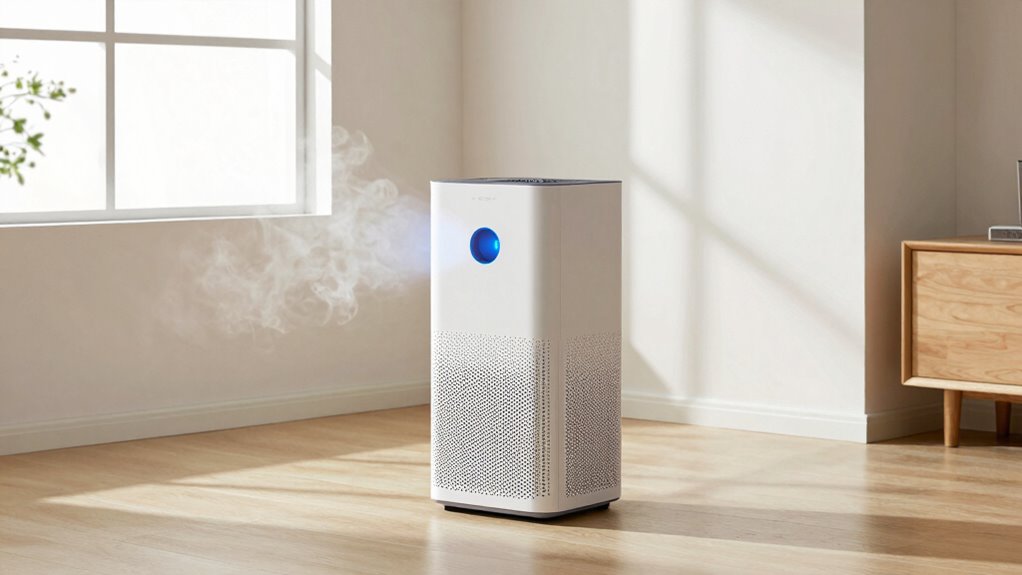
Many people make simple placement errors that reduce an air purifier’s effectiveness. Placing the device in corners or behind furniture blocks airflow and hampers air quality. Avoid positioning it near windows or vents, which can cause drafts that diminish purification. Keep the purifier away from sources of dust or moisture, as these can clog filters and require more frequent device maintenance. Also, don’t place it too high or too low; ideal placement is at a mid-level height for better air circulation. Additionally, neglecting regular device maintenance, like filter changes, can compromise performance and air quality. To optimize your setup, consider creative and gaming gear that enhances your environment’s overall comfort and functionality. Proper airflow management is essential for maximizing purification efficiency. Ensuring your device is situated in a well-ventilated area can significantly improve its performance. Incorporating air circulation techniques can also help distribute clean air more evenly throughout the space. Being mindful of air filtration principles can further boost the effectiveness of your air purifier. By avoiding these common mistakes, you ensure your air purifier works efficiently, maintaining cleaner air and better overall air quality in your space.
Placement Tips for Living Rooms, Bedrooms, and Other Spaces
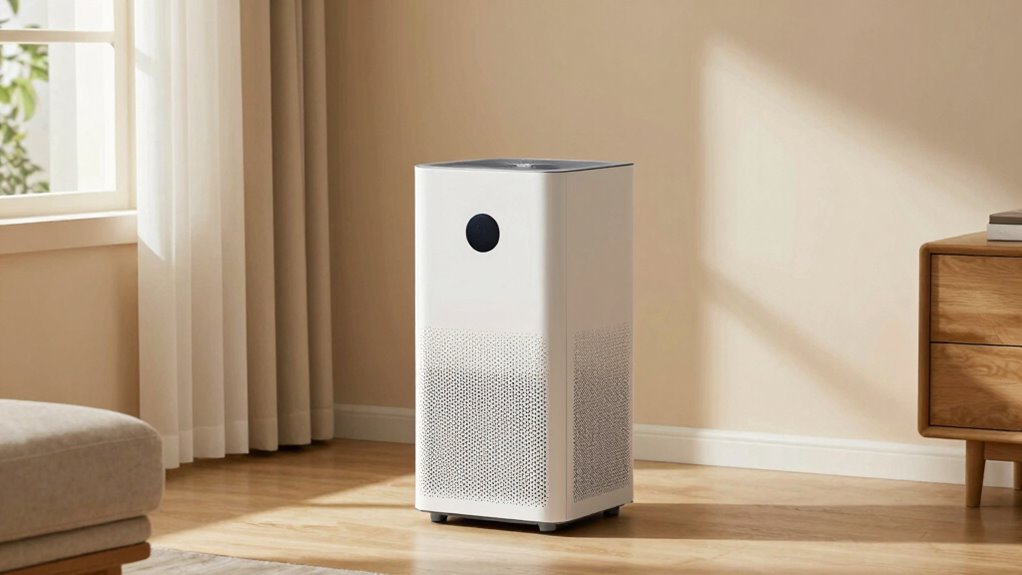
To get the best air purification, keep your device a few inches away from walls to allow proper airflow. Placing it in a central location guarantees maximum coverage, and avoiding obstructions helps it work efficiently. Follow these tips to optimize your air purifier’s performance in any space.
Optimal Distance From Walls
Position your air purifier at least a few inches away from walls and furniture to guarantee proper airflow. Maintaining appropriate wall proximity prevents airflow blockages and ensures the unit functions efficiently. Avoid placing your purifier directly in corners, as corner placement can restrict airflow and reduce purification effectiveness. Instead, choose a central spot, slightly away from walls, to allow air to circulate freely around the device. This placement helps the purifier draw in pollutants from all directions, maximizing its performance. Keep in mind that a tight wall proximity can cause the unit to work harder, decreasing its lifespan and efficiency. By maintaining a proper distance from walls and avoiding corner placement, you optimize clean air delivery and enhance your space’s overall air quality.
Central Location Benefits
Placing your air purifier in a central location allows it to effectively circulate clean air throughout the room. This setup enhances air quality by guaranteeing even distribution and minimizes stagnant spots. To maximize benefits, consider these tips:
- Position the purifier away from walls and furniture for ideal air circulation.
- Choose a spot in the middle of the room to cover the entire space evenly.
- Keep it at a height where airflow isn’t obstructed, such as on a table or stand.
- Avoid corners, which can restrict airflow and reduce purification efficiency.
A central location ensures the air purifier works efficiently, improving air quality and maintaining fresh, clean air throughout your living space. Proper placement makes a noticeable difference in your indoor environment.
Avoid Obstructions
Ever wonder why your air purifier isn’t performing as well as it should? Obstructions like furniture interference or decorative items can block airflow, reducing efficiency. Keep the area around your purifier clear to maximize its effectiveness. Avoid placing it behind furniture or cluttered with decorative objects that can trap air and hinder circulation. To illustrate, consider this placement tips table:
| Obstruction Type | Effect | Solution |
|---|---|---|
| Furniture interference | Blocks airflow | Keep 1-2 feet clear around purifier |
| Decorative items | Traps dust, hampers flow | Remove or reposition nearby items |
| Walls behind purifier | Limits air intake | Place away from walls or corners |
| Clutter near unit | Reduces efficiency | Maintain tidy space around purifier |
Ensure nothing obstructs the airflow for cleaner, healthier air.
How to Position Your Air Purifier Near Pollution Sources and Allergens
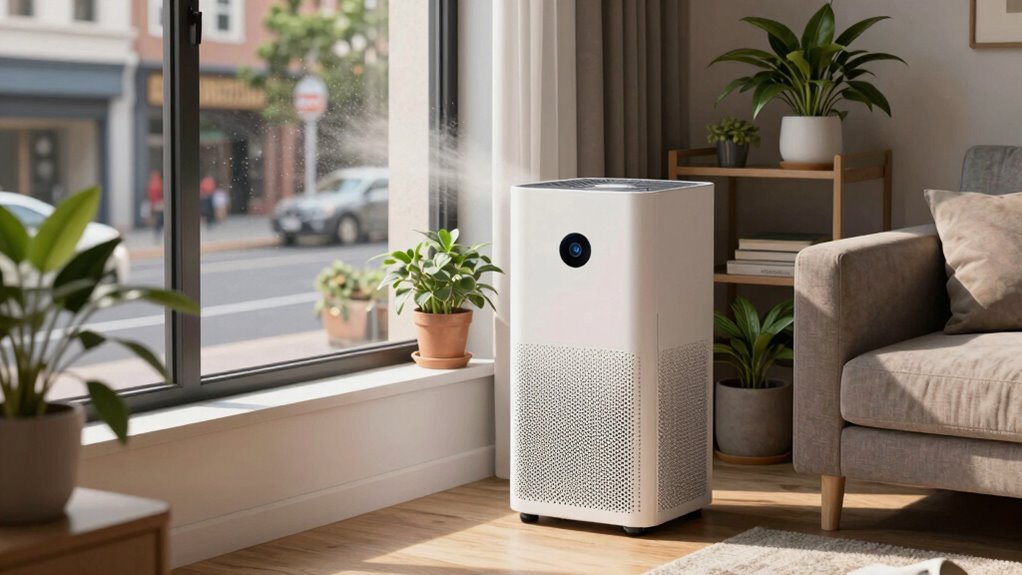
To maximize the effectiveness of your air purifier, it’s important to place it close to pollution hotspots and allergen zones. Doing so ensures it captures pollutants at their source. Here are four tips to help you position it effectively:
- Place the purifier near areas with frequent cooking, smoking, or pet activity.
- Position it close to bedrooms or living rooms where dust and pollen settle.
- Avoid placing it behind furniture or in corners that block airflow.
- Keep it at least a few feet away from windows and doors to prevent outdoor pollutants from bypassing the unit.
Using Placement to Boost Air Circulation and Remove Odors
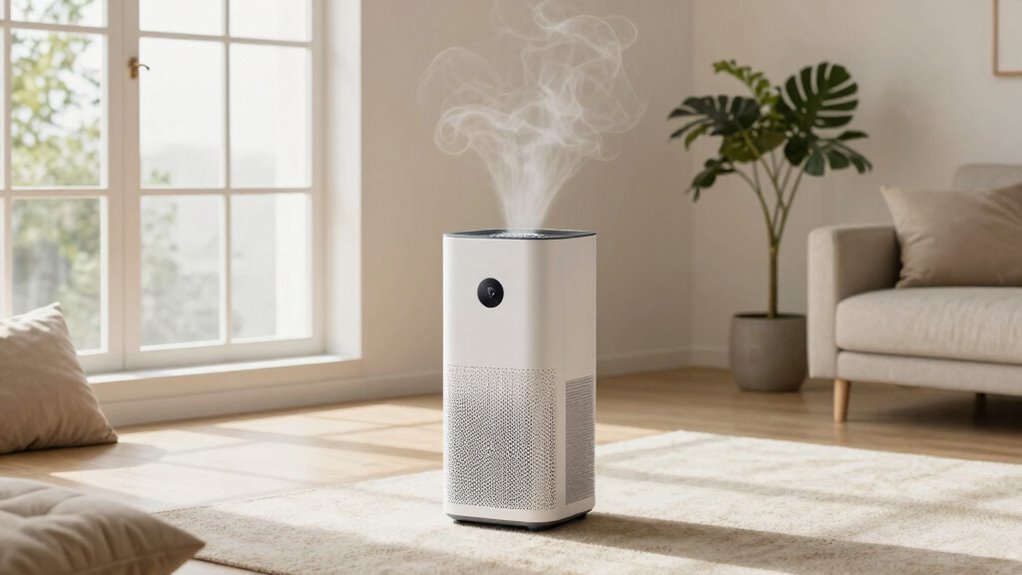
Strategic placement of your air purifier can considerably enhance air circulation throughout your space, helping to distribute clean air more evenly. Proper positioning promotes airflow optimization, ensuring that fresh air reaches all corners and that stale air, including odors, is effectively removed. Place the purifier in a central location or near areas with persistent odors, such as kitchens or bathrooms, to maximize odor elimination. Avoid blocking vents or placing the unit in corners, which can restrict airflow and reduce effectiveness. Keep the purifier elevated if possible, to improve circulation. By optimizing airflow through thoughtful placement, you’ll create a cleaner, fresher environment and ensure odors are swiftly and efficiently eliminated. Proper positioning makes a noticeable difference in overall air quality.
How to Test and Adjust Your Air Purifier’s Placement for Optimal Air Quality
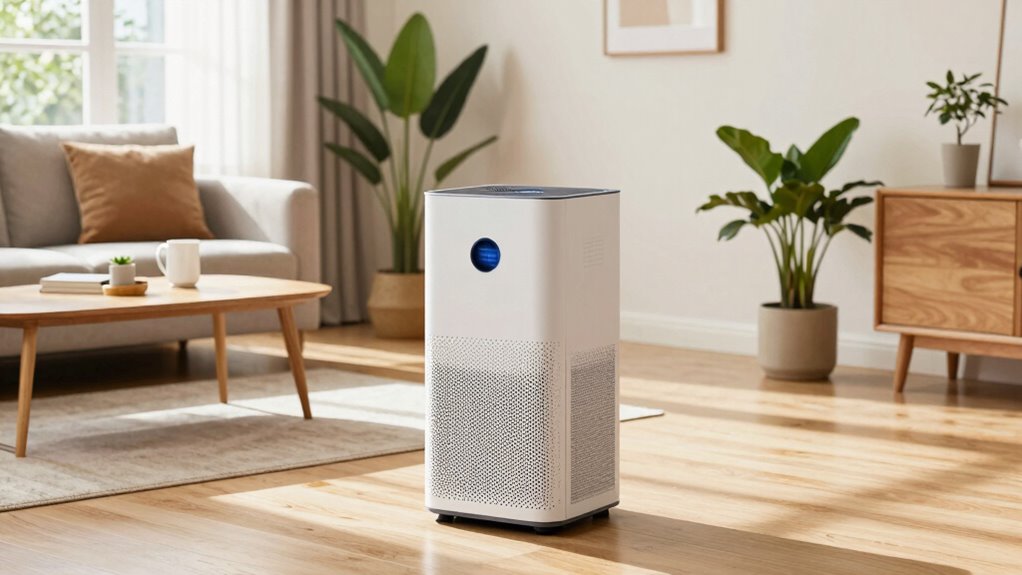
Testing and adjusting your air purifier’s placement is essential to achieving the best indoor air quality. Start by conducting airflow testing around your space. Observe where the air feels strongest and weakest, indicating optimal or suboptimal placement. Use these steps for effective placement adjustments:
- Place the purifier in a central location for even airflow.
- Elevate it off the ground to improve circulation.
- Avoid placing it near walls or obstructions that block airflow.
- Test airflow again after each adjustment to see if air feels cleaner and fresher.
Frequently Asked Questions
How Often Should I Reposition My Air Purifier for Maximum Efficiency?
You should reposition your air purifier every 3 to 6 months to maintain maximum efficiency. Regular filter maintenance is essential, so check and replace filters as needed. Consider room size considerations—place it where airflow isn’t blocked and in the most used area. Repositioning helps guarantee the purifier effectively circulates clean air, especially if furniture or room layouts change. This keeps your indoor air fresh and healthy over time.
Can Placing an Air Purifier Near Windows Improve Air Quality?
Placing an air purifier near windows can improve indoor air quality by targeting outdoor airflow and pollutants entering through open windows. Position it close enough to capture airborne particles from outdoor sources, but avoid direct drafts that might disrupt its operation. Keep windows closed during use for ideal efficiency, and consider rotating its position if you notice areas with higher outdoor pollution or airflow. This setup helps your purifier work more effectively.
Does Furniture Placement Affect the Purifier’s Performance?
Yes, furniture placement can impact your purifier’s performance. If you block airflow with large furniture or clutter, it causes airflow disruption and reduces filtration efficiency. To keep your air clean, make certain the purifier isn’t obstructed by furniture, especially near vents or doors. Keep the area around it open, and regularly check for furniture that might interfere. This simple step makes a big difference in maintaining ideal air quality.
Should I Turn off the Purifier When Not in Use?
You should turn off your air purifier when not in use to save energy and reduce unnecessary noise levels. Leaving it on constantly increases energy consumption and can be disruptive if it’s noisy. If you’re away or sleeping, turning it off is a good idea, especially if your air quality isn’t a concern during those times. Regularly switching it off also helps extend the unit’s lifespan.
How Do I Know if My Air Purifier Is Effectively Removing Allergens?
Think of your air purifier as a vigilant gatekeeper, constantly battling allergens. To know it’s working, you can perform air quality testing or notice fewer allergy symptoms. If your home feels fresher and allergens like dust and pet dander decrease, your purifier’s effectively reducing allergens. Regular filter checks and monitoring for improved air clarity are signs it’s doing its job. Keep an eye on your environment to guarantee ideal allergen reduction.
Conclusion
Think of your air purifier as the heart of your home’s air quality—placing it wisely keeps your indoor air crisp and healthy. By choosing the right spot, you’ll guarantee it works like a breeze, sweeping away pollutants and odors. Remember to test and tweak its position, just like tuning an instrument, to achieve the best results. With careful placement, you’ll breathe easier, knowing your space is as clean and invigorating as a spring morning.