

TL;DR
This article explains how a single video can produce a full publishing kit offline, covering outputs like thumbnails, captions, and web embeds. It emphasizes local processing for greater control, privacy, and faster workflows—no cloud needed.
Imagine turning one video into a complete set of publish-ready assets—thumbnails, captions, snippets, and even web embed codes—without ever leaving your local machine. That’s the promise of a new wave of tools designed for creators who value control and privacy. No more waiting on cloud uploads, no dependency on internet speed, just fast, secure, and flexible workflows. If you’re tired of the endless manual packaging, this new approach might just change everything you thought you knew about publishing.
In this article, you’ll discover how these tools work, what they produce, and why doing it all offline can be a game-changer. Whether you’re a solo creator, a marketing team, or an educator, the ability to generate a full publishing kit from one video—without the cloud—offers a new level of independence and efficiency.
Key Takeaways
- Generating a full publishing kit from one video offline saves time, enhances privacy, and increases control over content.
- Offline workflows eliminate dependence on internet speed and reduce security risks, making them ideal for sensitive or time-critical projects.
- A complete publishing kit includes titles, descriptions, thumbnails, captions, short clips, and embed codes, all auto-generated from a single source.
- Comparison shows offline processing is faster and more secure, but may require better hardware; cloud workflows excel in collaboration but depend on internet stability.
- Starting is simple: a modern computer, a capable local app like ChannelHelm, and a clear workflow make offline publishing straightforward.
![WavePad Audio Editing Software - Professional Audio and Music Editor for Anyone [Download]](https://m.media-amazon.com/images/I/B1fcLEGCs6S._SL500_.png)
WavePad Audio Editing Software – Professional Audio and Music Editor for Anyone [Download]
- Professional Audio Editor: Record and edit music, voice, audio
- Audio Effects: Echo, noise reduction, reverb, more
- Wide Format Support: WAV, MP3, FLAC, OGG, and more
As an affiliate, we earn on qualifying purchases.
As an affiliate, we earn on qualifying purchases.
How One Video Turns Into a Complete Publishing Kit — Fast and Offline
Imagine dropping a single video file into a local app. Instantly, it analyzes the audio, visuals, and on-screen text. It then drafts everything you need to publish: a catchy title, social snippets, captions, thumbnails, and even platform-specific formats. All processing happens on your machine, not in some distant cloud.
This isn’t just file conversion. It’s a smart, layered process: the system recognizes who spoke when, what’s shown on screen, and how each element fits into a story. This deeper analysis allows the system to generate assets that are not only relevant but optimized for engagement, SEO, and platform specifications. The result? A full publishing kit that’s fully customizable, but built automatically. No waiting on uploads, no third-party servers—just pure, local power at work. This process empowers creators to maintain full control over their assets, adjust them as needed, and avoid the pitfalls of cloud dependency, such as latency or data leaks.
Why ‘Without the Cloud’ Means More Control, Privacy, and Speed
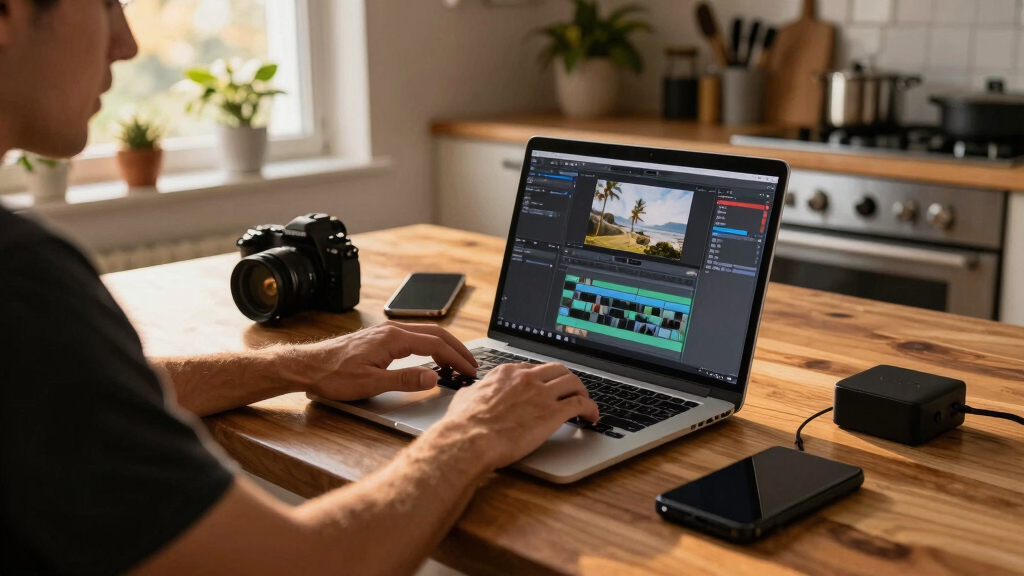
Doing everything locally means your videos and assets stay on your machine, which significantly enhances control over your content. This approach minimizes the risk of data breaches or leaks since sensitive footage remains private and confined to your hardware. It also means you’re not at the mercy of third-party servers or cloud providers, which might have vulnerabilities or experience outages, leading to delays or data loss. This independence from external services grants you peace of mind, especially when handling confidential or proprietary material.
Furthermore, processing speeds often improve because your hardware’s capabilities are directly utilized, eliminating the bottleneck of file uploads and downloads that cloud workflows rely on. This is especially crucial when working under tight deadlines or in environments where internet connectivity is unreliable. The ability to process, review, and refine assets entirely offline allows for rapid iteration and immediate adjustments, making your workflow more agile. However, this tradeoff requires investing in capable hardware, which might be a barrier for some. Nonetheless, the benefits in security, speed, and workflow resilience make offline processing particularly attractive for sensitive projects or high-stakes publishing.
While cloud tools excel at collaboration and scalability, offline workflows prioritize sovereignty over your assets, offering a level of privacy and control that can be crucial for certain industries or personal projects. The choice ultimately depends on your specific needs—offline for security and speed, or cloud for convenience and collaboration.

What Exactly Does a ‘Publishing Kit’ Include? Think Everything You Need
When you generate a publishing kit, it’s like a toolkit for every platform. Think: a set of ready-to-publish assets tailored for each destination. From SEO-optimized titles, descriptions, and hashtags to social clips, thumbnails, and caption files. Learn more about creating comprehensive publishing kits.
Here’s what you typically get:
| Asset Type | What It Does | Format Examples |
|---|---|---|
| Titles & Descriptions | Hook viewers and boost discoverability | Text, character-limited snippets |
| Thumbnails | Catch the eye at a glance | JPEG, PNG |
| Captions | Make videos accessible and boost SEO | SRT, VTT |
| Social Clips | Short-form snippets for TikTok, Reels | MP4, vertical formats |
| Embed Code & Web Assets | Easy integration into websites | HTML, iframe |
Beyond just list-making, understanding what a comprehensive kit entails is vital. These assets are carefully generated based on content analysis, ensuring each piece aligns with your branding, platform specifications, and audience engagement goals. The real significance lies in how this automation reduces manual labor, minimizes errors, and ensures consistency across all your publishing channels. It’s not merely about convenience but about elevating your content strategy through precise, automated asset creation that maintains your creative control.

How This Changes Your Workflow: From Manual Repackaging to Automation
Picture this: instead of manually cutting clips, writing descriptions, and uploading multiple times, your tools do it all at once. You drop the video, review the drafts, make quick tweaks, and hit publish—done in a fraction of the usual time. This shift from manual to automated workflows reduces human error and frees up creative energy for more strategic tasks. It also aligns with modern content creation workflows.
For example, a marketing team repurposes one webinar into a YouTube video, a TikTok clip, a blog draft, and social posts—all from the same local package. They save hours, keep branding tight, and avoid the hassle of juggling multiple tools or risking leaks through cloud uploads. This integrated approach enhances productivity and security, especially for teams managing multiple content streams or working under tight deadlines. The automation’s real power lies in its ability to streamline complex workflows, making content repurposing faster, more reliable, and more aligned with your strategic goals. The tradeoff is investing in quality tools and setting up a robust workflow, but the long-term gains in efficiency and control are substantial.

Comparison Table: Cloud vs Local Publishing Workflows
| Feature | Cloud-Based Workflow | Local Offline Workflow |
|---|---|---|
| Processing Speed | Dependent on internet speed, often slower | Fast, relies on hardware power |
| Privacy & Security | Data stored in cloud, potential risks | All assets stay on your device |
| Dependency | Requires stable internet for uploads/downloads | Works offline, no internet needed |
| Collaboration | Easy, via cloud sharing | Requires local network or manual sharing |
| Cost | Subscription-based, ongoing fees | One-time hardware/software investment |
Choosing local processing means more control and security, but may require better hardware. Cloud tools offer convenience, but at the expense of dependence and potential privacy issues. These tradeoffs influence your decision based on your priorities—whether speed, security, collaboration, or cost.

Real-World Use Cases: Who Benefits Most from Offline Publishing Kits?
Imagine a news agency needing to publish sensitive footage quickly and securely. They drop a video into their local system, and in minutes, get a package ready for social, website, and internal review—without risking leaks or delays from internet issues. This capability is crucial when dealing with confidential or time-sensitive content, where delays or breaches can have serious consequences. Offline kits enable rapid, secure dissemination, often in situations where cloud-based workflows might be too slow or risky.
Or consider educators creating course videos. They generate all assets locally—captions, snippets, thumbnails—and upload only finalized versions. This approach ensures that sensitive student data remains private and that content is prepared precisely without external dependencies. It also allows for quick iterations and updates, which are essential in educational settings where accuracy and privacy are paramount. For regional marketers or teams working in areas with unreliable internet, these workflows mean they can maintain productivity and security without interruption, ensuring content delivery is consistent and timely regardless of connectivity issues.

Getting Started: Hardware, Software, and Setup Tips
If you want to try this approach, start with a capable computer—think: a modern laptop with at least 16GB RAM. You’ll need a local app that handles video analysis and asset generation, like [ChannelHelm](https://channelhelm.com/). Investing in a machine with a good GPU accelerates processing, reducing wait times and enabling smoother workflows. Compatibility with common video formats such as MP4 or MOV is essential to ensure seamless integration.
Installation is straightforward, but choosing the right hardware setup is critical. Ensure your system has sufficient storage to handle large video files and generated assets. Once installed, create a workflow: drop your video, review the drafts, tweak the titles or captions, and then export your package. This process minimizes manual input, maximizes automation, and keeps everything offline—enhancing security and speed. Developing a routine around this setup allows you to quickly produce consistent, high-quality assets tailored to your needs.
Future Trends: Automation, Hybrid Systems, and More Control
The future of publishing is shifting towards smarter, hybrid systems. Expect tools that auto-analyze content, suggest edits, and sync seamlessly with cloud services when needed. But the core advantage remains: you stay in control. These emerging systems aim to combine the speed and privacy of local processing with the collaboration and scalability of cloud solutions. For instance, local-first modes that process assets instantly and then sync when online offer the best of both worlds, reducing latency and enhancing security.
Recent trends suggest offline capabilities will become standard, not optional. As creators demand more speed, privacy, and control, tools will evolve to support complex workflows that are resilient to internet disruptions. This hybrid approach allows for flexible, scalable, and secure publishing, accommodating diverse needs—from solo creators to large teams. The key is maintaining sovereignty over your content while leveraging automation and cloud connectivity when advantageous. This evolution promises a future where control is decentralized, and workflows are more adaptable, secure, and efficient.
Frequently Asked Questions
How does the process work step by step?
You drop your video into the software, which analyzes audio, visuals, and text. It then drafts assets like titles, captions, and clips. You review, tweak, and export the full package—all on your local machine, without uploading to the cloud.
What makes this different from standard video editing or export tools?
Traditional tools focus on editing and exporting. Offline publishing kits automate the creation of a comprehensive set of assets—thumbnails, captions, social clips—based on content analysis, all processed locally for speed and control.
Can I still publish online after creating a kit offline?
Absolutely. The kit includes web-ready assets like embed codes and thumbnails. You can upload or publish to your platforms manually or via integrated publishing tools, maintaining full control over timing and content.
Is this approach safer and more private than cloud workflows?
Yes. Since all processing is local, your data stays on your device, reducing risks of leaks or breaches. It’s ideal for sensitive content or environments with strict privacy requirements.
What hardware do I need to get started?
A recent laptop or desktop with at least 16GB RAM and a decent GPU will handle most processing tasks smoothly. Software like ChannelHelm supports common formats and is designed for straightforward setup.
Conclusion
Turning one video into a complete publishing package offline isn’t just a time-saver; it’s a way to reclaim control over your content, protect your privacy, and speed up your workflow. This approach strips away dependencies and puts you in the driver’s seat.
As tools evolve, expect more automation and hybrid options, but the core advantage remains: you decide what happens, when, and how—with zero reliance on the cloud. Ready to take control? Start experimenting today, and see how much faster and freer your publishing process can become.