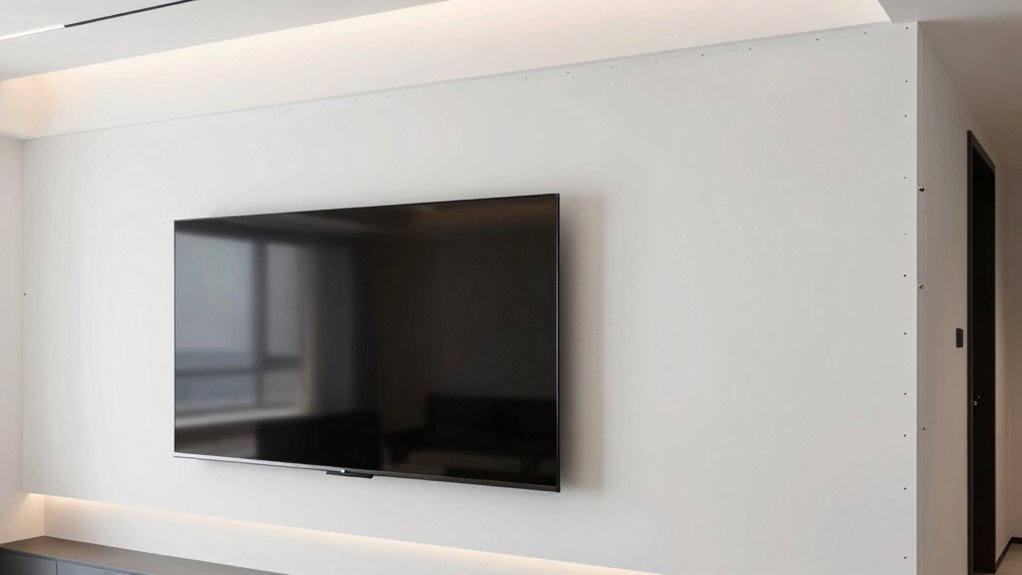
To mount your TV without regret, start by locating and marking wall studs with a stud finder for secure support. Choose the right anchors based on your wall type and TV size, then install them safely using proper tools. Manage cables with raceways, clips, or in-wall systems to keep everything neat. Avoid common mistakes like mounting too high or rushing the process. Keep these tips in mind, and you’ll guarantee a stable, tidy setup—more details await you.
Key Takeaways
- Locate and mark wall studs accurately using a stud finder for secure mounting.
- Choose appropriate anchors based on wall material and TV weight to ensure stability.
- Mount the TV at a proper height aligned with eye level for optimal viewing comfort.
- Use cable management devices like raceways or clips to conceal and organize cords neatly.
- Double-check all hardware tightness and wall support before finalizing installation.
How Do I Find and Mark Wall Studs for Mounting?
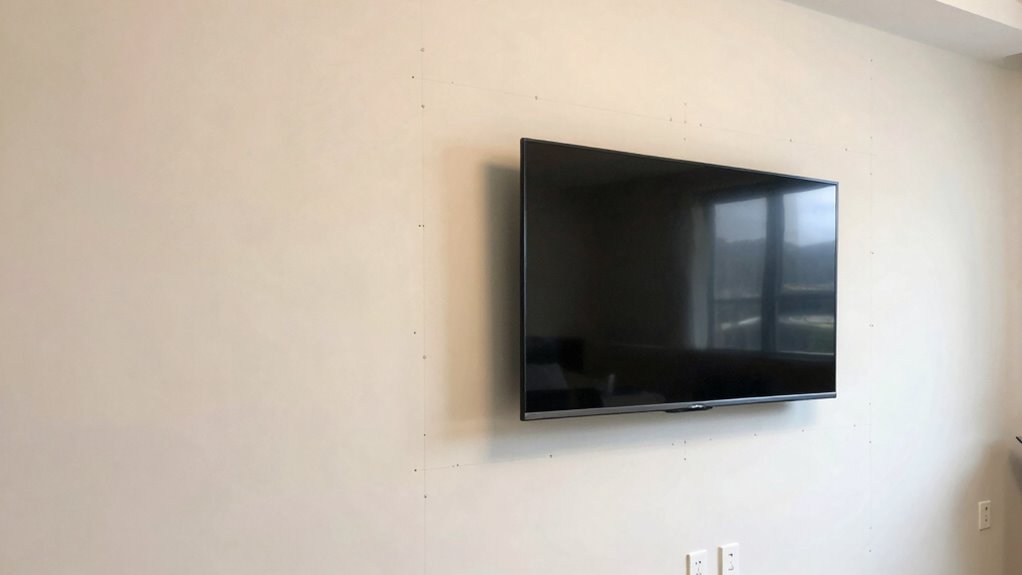
Finding and marking wall studs is essential for secure TV mounting. Start by using a stud finder to locate the studs behind your wall. Turn it on and run it steadily across the area where you plan to mount your TV. The device will signal when it detects a stud, helping you pinpoint its location accurately. Once you’ve identified the stud, use a pencil to mark the wall with a light wall marking at the center of the stud. Repeat this process along the wall to ensure your marks align vertically. Proper wall marking ensures your mounts are secured into sturdy studs, preventing damage and increasing stability. Taking the time to find and mark the studs correctly guarantees a safe, long-lasting TV installation. Additionally, understanding the contrast ratio of your projector can help optimize your viewing experience in your home cinema setup. Knowing how to identify wall stud locations accurately can also prevent unnecessary repairs or adjustments later on. Using a stud finder with advanced detection capabilities can make this process quicker and more reliable.
What Are the Best Wall Anchors for My Wall and TV Size?
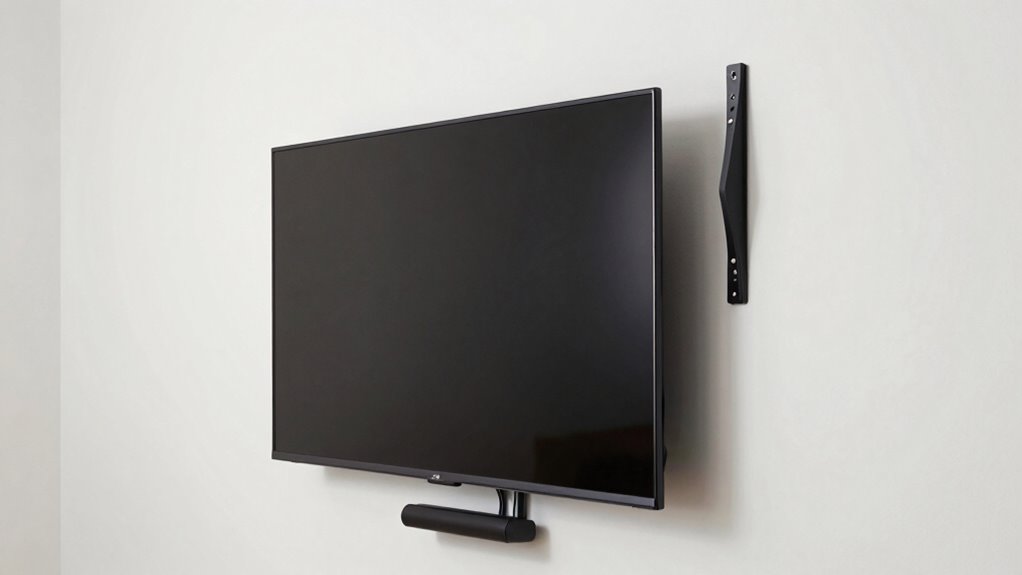
Choosing the right wall anchors depends on your wall material and your TV’s weight and size. Make sure the anchors you select are compatible with your wall and can support your TV’s weight safely. Knowing these details helps you pick the best anchors for a secure and stable mount. Additionally, understanding advanced mounting technology can further enhance your installation’s security and longevity. For example, some wall anchors are specifically designed for uneven or textured surfaces, providing extra grip and reliability, especially when considering piercings that require careful handling to avoid damage. Being aware of the latest innovations in mounting hardware can also help ensure a more durable and easy installation process. Incorporating high-quality hardware can significantly reduce the risk of failure over time, giving you peace of mind.
Wall Material Compatibility
The type of wall you have considerably influences which anchors you should use for mounting your TV. Different wall materials require specific types of anchors to guarantee proper compatibility and secure support. For drywall, toggle bolts or molly bolts work well because they distribute weight evenly across the wall’s surface. If you have brick or concrete walls, you’ll need heavy-duty anchors like sleeve anchors or masonry screws designed for high load capacity. Wood or paneling walls often allow for simpler mounting with screws directly into studs, but if studs aren’t available, appropriate wall anchors are still essential. Always check the compatibility of your anchors with your wall material to ensure your TV stays securely mounted and to prevent damage. Additionally, understanding wall material compatibility can help you select the most effective mounting hardware for your specific situation, especially when considering load capacity and safety. Being aware of installation safety tips can further prevent accidents and ensure a secure setup. Knowing the proper installation procedures helps to avoid common mistakes and enhances overall safety during mounting. Moreover, considering structural integrity can prevent potential damage to your walls and ensure long-term stability of your mounted TV.
TV Weight and Size Limits
Your wall’s material determines how much weight it can support, which directly impacts the type of anchors you should use for mounting your TV. Knowing your TV’s mount weight and size is essential to guarantee a secure installation. Larger, heavier TVs require stronger, more robust wall anchors and possibly mounting brackets that can handle the load. Check the mount weight capacity recommended by the manufacturer and compare it to your TV’s weight. For bigger TVs, use heavy-duty anchors like toggle bolts or Molly bolts that can bear the load without risking damage. Smaller or lighter TVs may only need standard anchors or drywall mounts. Always prioritize safety by verifying that your chosen anchors and mount size match your TV’s specifications and wall structure. Considering the horsepower of electric dirt bikes can also help you understand the importance of a secure and well-supported mount, especially if your setup is in an active or high-traffic area. Additionally, understanding wall material types can guide you in selecting the most appropriate anchors for your specific wall. Proper anchoring techniques are essential to ensure your TV remains safely mounted over time, preventing accidents and damage. Using proper anchoring techniques ensures your TV remains safely mounted over time, preventing accidents and damage. Being aware of load distribution can further enhance the stability and safety of your installation.
How to Install Anchors Safely and Securely
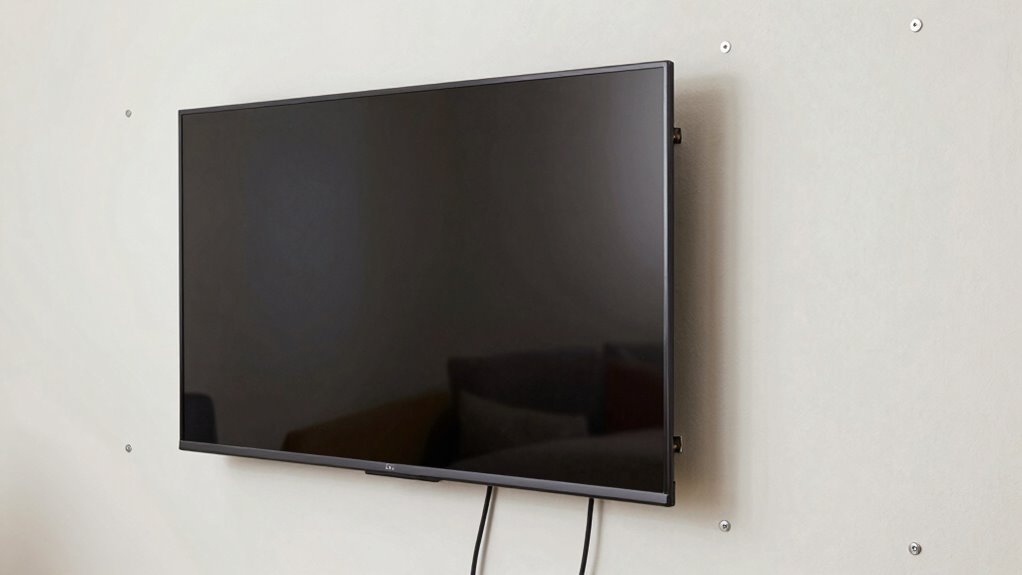
To install anchors safely and securely, you need to follow precise steps to make certain your TV mount stays firmly in place. First, assess the wall type to choose the right anchor types, such as toggle bolts or plastic expansion anchors, for ideal mounting safety. Mark the drill points carefully, ensuring they align with wall studs or suitable anchor spots. Use a level to keep your mount straight. When drilling, apply steady pressure and avoid over-tightening to prevent wall damage. Always verify that anchors are fully inserted and secure before attaching the mount. Proper installation minimizes the risk of the TV falling or damage. By selecting the correct anchors and following these safety steps, you guarantee a stable, long-lasting mount without compromising wall integrity. Additionally, understanding essential DIY tools and safety tips can help prevent accidents during installation. Ensuring correct anchor placement is crucial for maintaining the stability of your mounted TV and avoiding future issues. Moreover, consulting precise installation instructions can enhance your confidence and ensure safety throughout the mounting process.
How Can I Manage Cables for a Clean, Tidy Look?
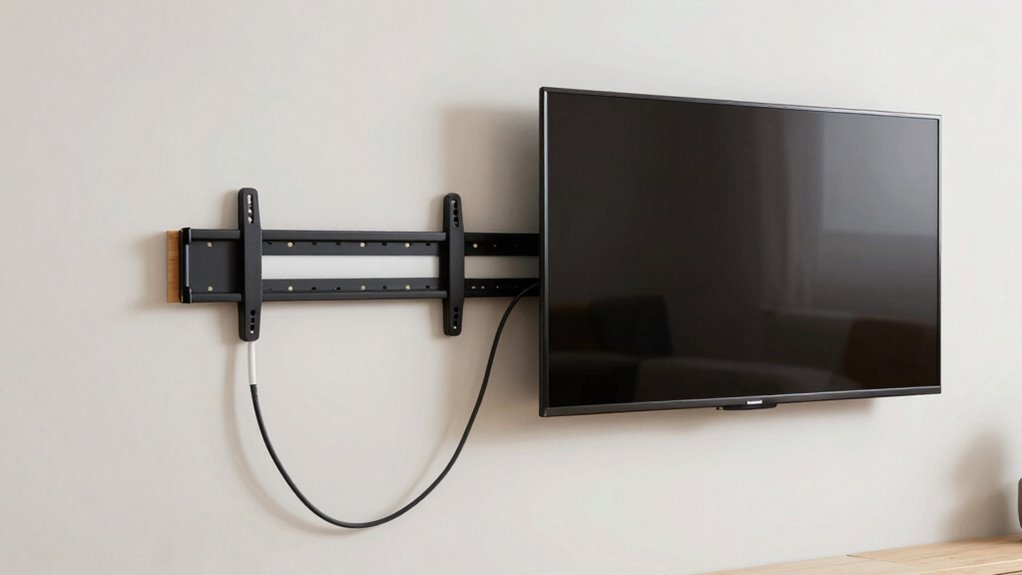
Managing cables is key to keeping your setup looking neat. You can conceal them with raceways or cord covers, or use cable management devices to keep everything organized. These simple techniques make your TV area look clean and professional. Additionally, employing effective cable organization techniques can enhance the overall safety and accessibility of your setup. Implementing cable management methods can also help prevent damage and tangling over time. Properly secured and cable anchored to studs can further improve safety by reducing the risk of tripping hazards or accidental disconnections. Using proper mounting hardware ensures your cables are securely fastened and less likely to become loose or damaged.
Concealment Techniques for Cables
Keeping cables organized is essential for a sleek, clutter-free TV setup. Wire concealment techniques help hide unsightly cords, creating a clean look. Start by choosing a cable routing path that keeps cords close to the wall and out of sight. Use raceways or cable covers that stick to the wall and blend with your decor. These products allow you to run cables neatly along the wall, preventing tangles and mess. Consider installing in-wall cable management systems if you want a truly seamless appearance; they hide cables within the wall cavity. Velcro straps or cable clips can also help bundle and secure wires, reducing clutter. Proper wire concealment not only improves aesthetics but also prevents accidental pulling or damage. For added security and neatness, using cable management accessories can further streamline your setup and ensure all cords stay in place. Incorporating wire organization tips can make the process even easier and more effective, especially when using cable clips and ties to keep everything tidy.
Use of Cable Management Devices
Using cable management devices is an effective way to maintain a clean and organized TV setup. These tools help hide and route cables neatly, reducing clutter and hazards. To achieve a tidy look, select cable management products like clips, sleeves, or raceways that suit your space and device installation needs. Attach clips along the back of your TV stand or wall to keep cables secured and out of sight. Use cable sleeves or channels to conceal multiple cords running in the same direction. When installing your device, plan the cable routes beforehand to minimize slack and tangles. Proper cable management not only improves aesthetics but also makes future adjustments easier, ensuring your entertainment area remains sleek and safe.
What Common Mistakes Should I Avoid When Mounting a TV?
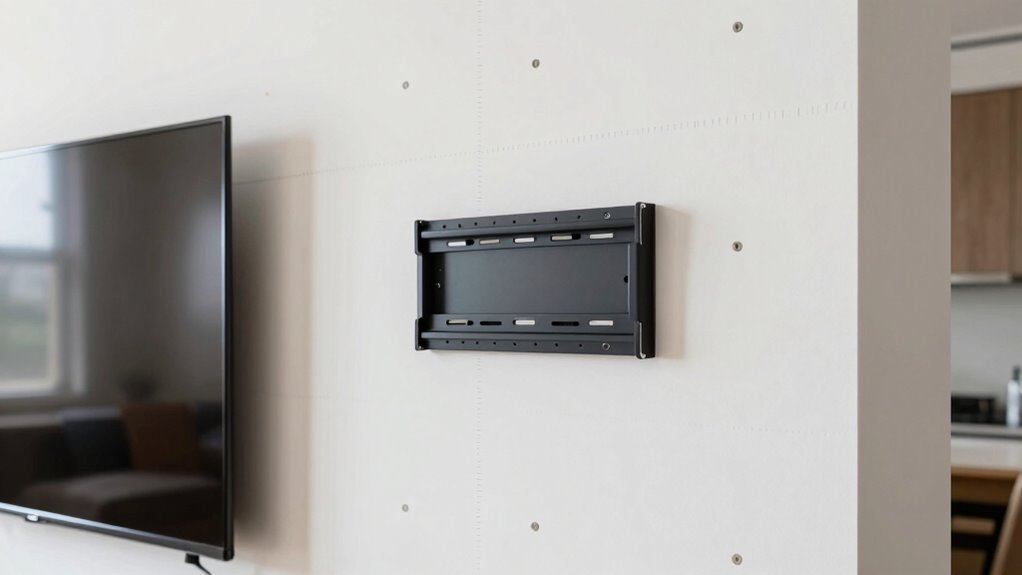
One common mistake to avoid when mounting a TV is positioning it too high on the wall. The mounting height directly affects your screen positioning, so aim for a level eye line when seated. If you mount it too high, you’ll strain your neck and compromise viewing comfort. Take time to measure and mark the ideal height before drilling. Also, avoid rushing the process; improper placement can lead to awkward viewing angles and frustration. Remember, correct screen positioning enhances your overall experience and prevents future adjustments. Don’t forget to double-check your measurements and ensure the mount is secure. Proper planning upfront saves you time and avoids costly mistakes later. Prioritize a comfortable, eye-level setup for a truly regret-free TV mounting experience.
Final Checklist for a Perfect TV Mount
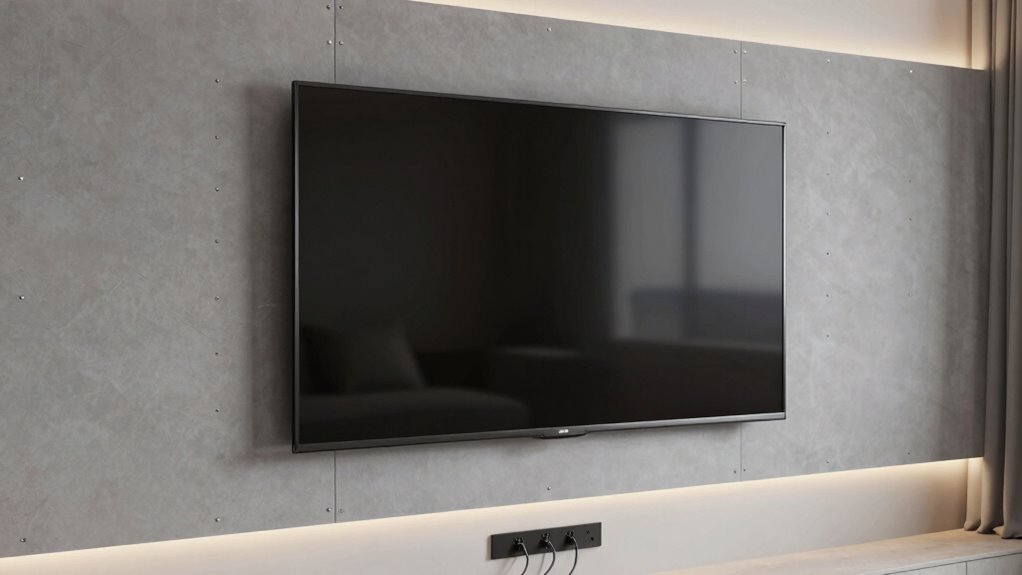
Here’s a quick summary:
- Confirm the mounting height suits your space and style.
- Make sure wall anchors and studs provide strong support.
- Plan and organize cables for a neat, professional finish.
Completing this checklist helps you avoid mistakes and guarantees your TV is mounted securely, stylishly, and with the right aesthetic balance.
Troubleshooting Tips If Your TV Won’t Stay Secure

If your TV isn’t staying secure on the wall, it’s likely due to issues with mounting hardware or installation. First, check the mounting height; if it’s too high or low, it can cause instability. Confirm your wall is compatible with the mount—drywall, concrete, or brick require different anchors. Verify that you’ve used the right anchors and screws for your wall type, and confirm they’re tightened properly. If the mount feels loose, re-tighten or replace worn hardware. Double-check that the mount is level and securely attached to studs or appropriate anchors. If your TV still wobbles or slips, consider adjusting the wall compatibility or reinforcing the mounting points. Proper installation and compatibility are key to keeping your TV secure and safe.
Frequently Asked Questions
Can I Mount a TV on Drywall Alone Without Studs or Anchors?
You shouldn’t mount a TV on drywall alone without studs or anchors because drywall strength isn’t enough to support the weight safely. Instead, consider mounting alternatives like heavy-duty anchors, toggle bolts, or mounting directly into studs. These options distribute the TV’s weight properly, preventing damage or accidents. Always make sure your mounting hardware matches your drywall’s capacity and follow manufacturer instructions for a secure, safe installation.
How Do I Conceal Cables Inside the Wall for a Professional Look?
Oh, because everyone loves a tangled jungle behind their sleek TV, right? To conceal cables professionally, consider wireless solutions to eliminate clutter altogether. If wires are unavoidable, run them inside a paintable conduit for a seamless look. Fish the conduit through the wall, paint it to match your wall color, and hide those unsightly cords. Voilà, a clean, polished setup that screams “professional,” not “cable chaos.”
What Tools Are Essential for Mounting a Heavy TV Securely?
To mount a heavy TV securely, you need essential tools for mounting safety and precise installation. Grab a stud finder to locate studs, a power drill with various bits, a level to ensure straight alignment, a socket wrench for tightening bolts, and a tape measure for accurate placement. Using these tool recommendations helps you attain a secure, professional-looking mount, minimizing risks of accidents or damage. Always prioritize safety and proper technique.
How High Should I Mount My TV for Optimal Viewing?
For ideal viewing, mount your TV so the center is at eye level when you’re seated. Typically, this means placing it about 42 inches from the floor, but adjust based on your sofa height and room layout. Proper TV height ensures comfortable viewing, reduces neck strain, and enhances your overall experience. Measure carefully, consider your seating position, and aim for a height that offers the best viewing angle.
Is It Safe to Mount a TV Outdoors or in a Bathroom?
Mounting a TV outdoors or in a bathroom isn’t safe unless you guarantee proper outdoor weatherproofing and bathroom moisture protection. Did you know that humidity can cause internal damage in just a few months? You should use weatherproof mounts, sealed enclosures, and moisture-resistant materials. If you don’t, humidity and moisture can lead to electrical failures or mold growth. Always opt for specialized outdoor or bathroom-rated mounts to keep your TV safe and functional.
Conclusion
Remember, a well-mounted TV is only as good as the effort you put into it. Take your time, double-check your work, and don’t rush the process. Using the right tools and techniques guarantees a secure, neat setup that lasts. After all, Rome wasn’t built in a day—nor should your perfect TV mount be rushed. With patience and care, you’ll enjoy a safe, stylish viewing spot that’s worth the effort.