Installing a water-saving showerhead is a quick and easy way to lower your water bill while helping the environment. First, turn off the water supply and remove your old showerhead carefully. Then, screw on the new one by hand, making sure it’s snug but not overtightened. Check for leaks and proper flow. If you want to guarantee a powerful, eco-friendly upgrade, keep exploring these simple steps to maximize your savings and efficiency.
Key Takeaways
- Turn off the water supply, remove the old showerhead, and clean the threads before installing the new water-saving model.
- Check for included washers or gaskets and screw the showerhead onto the shower arm snugly by hand.
- Use adjustable pliers gently if needed, avoiding overtightening to prevent leaks or damage.
- Test water flow and adjust flow restrictors or spray settings for optimal performance.
- Regularly clean the showerhead with vinegar to prevent mineral buildup and maintain efficiency.
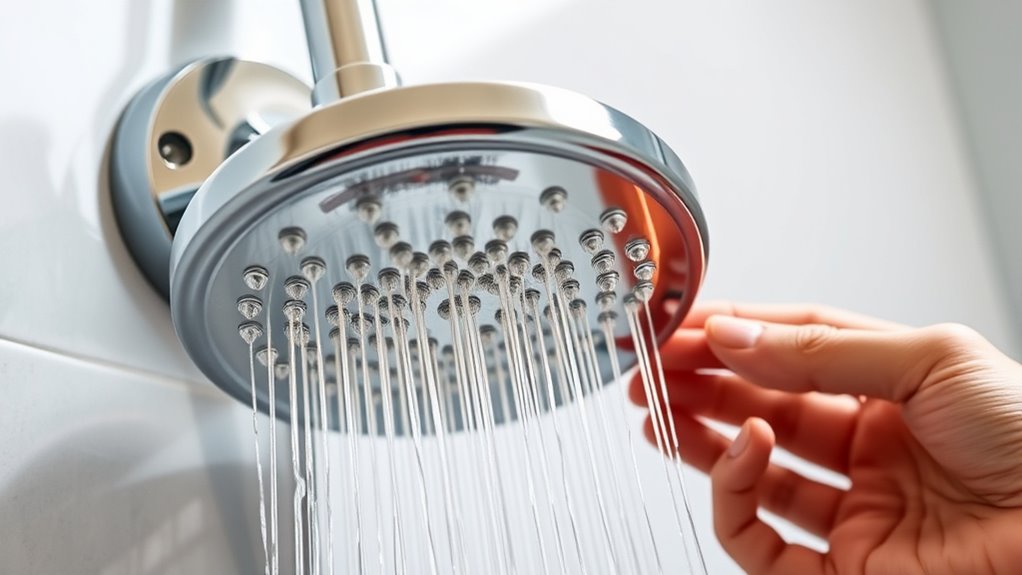
Installing a water-saving showerhead is a simple way to reduce your water consumption and lower your utility bills. When you make this upgrade, you’ll enjoy the benefits of an eco-friendly choice that also saves you money each month. One concern you might have is whether a new showerhead will affect your water pressure, but modern designs are built to maintain a satisfying flow while conserving water. It’s easy to guarantee that your shower still feels powerful after installation by choosing a model with good reviews on water pressure performance.
Installing a water-saving showerhead reduces water use while maintaining strong, satisfying pressure.
The installation steps are straightforward and don’t require advanced plumbing skills. First, you’ll want to turn off the water supply to your shower or turn on the showerhead to drain any remaining water. Next, use a cloth or rag to protect the shower arm’s threads and then unscrew the existing showerhead by hand. If it’s stuck, a gentle turn with adjustable pliers can help, but use a cloth to avoid damaging the fixture. Once the old showerhead is removed, inspect the threads for any mineral build-up or debris; cleaning these off with a brush or cloth assures a tight seal.
Before attaching the new water-saving showerhead, check whether it comes with a washer or gasket—if so, ensure it’s properly seated. Screw the new showerhead onto the shower arm by hand, turning clockwise until it’s snug. To avoid leaks, avoid overtightening as this can damage the threads or the showerhead itself. After installation, turn the water supply back on and run the shower to check for leaks and to assess water pressure. If you notice a decrease in flow, you might need to adjust the showerhead’s settings or choose one with a different flow restrictor.
Many water-saving showerheads come with adjustable features that allow you to control spray patterns and water flow, giving you a comfortable shower experience without sacrificing performance. If you’re concerned about water pressure drops, opt for models designed to maintain strong flow rates even at lower water volumes. Regularly cleaning your showerhead with vinegar or a descaling solution helps prevent mineral buildup that can hinder water flow over time, guaranteeing consistent water pressure and efficiency. Additionally, understanding the importance of fathers’ role in nurturing and guiding their children can inspire environmentally conscious choices that benefit future generations.
Installing a water-saving showerhead is a quick, cost-effective upgrade that pays off in savings and environmental impact. With just a few steps—removing the old, attaching the new, and testing—you can enjoy a more sustainable shower experience. Remember, choosing the right model and following proper installation steps will maximize water pressure and ensure a leak-free fit, turning a simple upgrade into a smart, eco-friendly change for your home.
Frequently Asked Questions
Will a Water-Saving Showerhead Reduce Overall Water Bills Significantly?
Yes, a water-saving showerhead can substantially cut your water bills. By reducing water flow, you save on your overall water consumption, leading to noticeable cost savings each month. Plus, it lowers your environmental impact by conserving resources. You’ll enjoy the benefits of eco-friendly living without sacrificing comfort. Over time, these small changes add up, making a meaningful difference for both your wallet and the planet.
Are Water-Saving Showerheads Compatible With All Types of Shower Valves?
Water-saving showerheads are generally compatible with most shower valve types, but you should verify shower valve compatibility before installation. They’re designed for retrofit installation, making it easy to upgrade without replacing your existing valve. However, some older or specialized valves might require adapters or additional fittings. To ensure a smooth upgrade, review the manufacturer’s instructions and confirm that your shower valve supports water-saving showerheads.
How Do Water-Saving Showerheads Affect Water Pressure During Showers?
Water-saving showerheads typically reduce water flow, which can slightly decrease water pressure during your shower. However, many models are designed to optimize the shower experience by maintaining a satisfying water flow while saving water. You might notice a gentler spray or a more mist-like feel, but most users find the balance between water conservation and comfort acceptable. Adjusting the showerhead or water pressure can help enhance your overall shower experience.
Can I Install a Water-Saving Showerhead Without Professional Assistance?
Yes, you can definitely do a DIY installation of a water-saving showerhead, but make sure to check compatibility concerns first. You’ll need to verify that your shower arm threads match the showerhead’s fitting. Turn off the water supply, remove the old showerhead, and screw on the new one tightly. Most models are straightforward to install, but reading the instructions guarantees a smooth, leak-free upgrade without professional help.
Are There Any Maintenance Requirements for Water-Saving Showerheads Over Time?
You might wonder if your water-saving showerhead needs much attention over time. The truth is, regular cleaning keeps it performing efficiently, so you should clean it every few months to prevent mineral buildup. Watch out for reduced water flow, which could signal it’s time for part replacement. With simple maintenance like cleaning and occasional part swaps, your eco-friendly upgrade stays effective and saves water for years to come.
Conclusion
By installing a water-saving showerhead, you’re making a simple yet powerful eco-upgrade. It’s an easy step to reduce water usage and save on bills, all while helping the environment. Remember, “A little goes a long way”—small changes can lead to big impacts. So, take action today, and enjoy the benefits of your eco-friendly choice every time you shower. Every drop counts, so make each one matter.