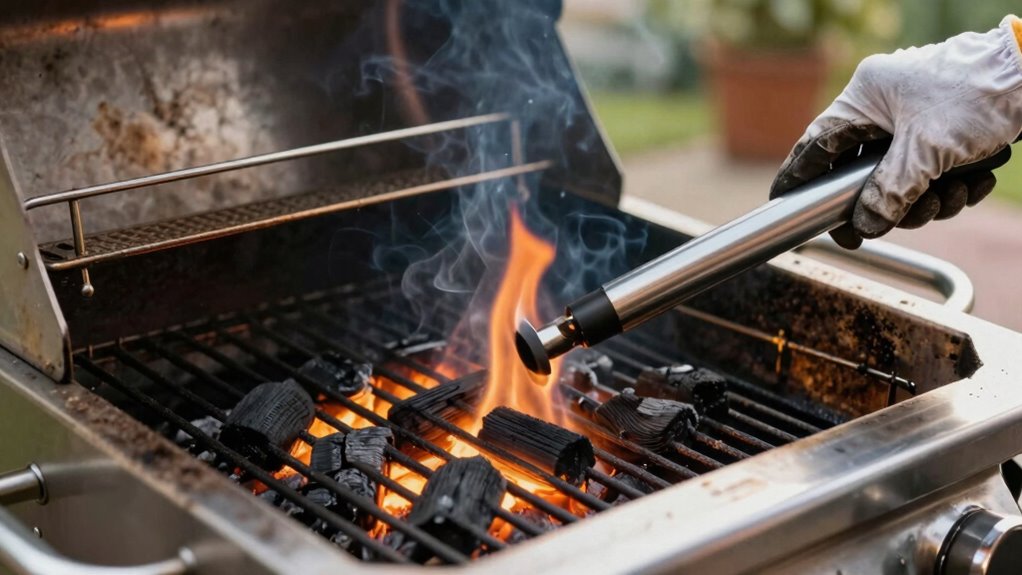
To upgrade your grill’s flavor and stop flare-ups, prioritize regular cleaning and maintenance. This prevents grease buildup on drip pans and burners, which often cause flames and uneven charring. Make sure to scrape and wipe grates, clear grease traps, and inspect burners regularly. Doing so guarantees consistent heat, better flavor, and safer grilling. Keep your grill in top shape, and you’ll enjoy tastier, flare-up-free meals every time. Learn more about maintaining your grill’s performance.
Key Takeaways
- Regular cleaning of grease buildup prevents flare-ups that can cause uneven charring and burnt flavors.
- Clearing burner ports and drip trays reduces the risk of grease fires and maintains consistent heat.
- Proper maintenance ensures even heat distribution, enhancing smoky flavor and overall grilled food quality.
- Removing food residue and debris minimizes flare-up triggers, preserving flavor integrity.
- Routine inspections and cleaning extend grill lifespan, ensuring a safe environment for flavorful outdoor cooking.

Built In 4-Burner Propane Gas Grill, 304 SS, 3200 BTU, 516sq.in., BBQ
- Material: 304 stainless steel construction
- Body Thickness: Over 2mm thick main body
- Corner Finish: Polished high-end corners
As an affiliate, we earn on qualifying purchases.
Why Do Flare-Ups Harm Your Grill’s Flavor and Safety?

Flare-ups can be more than just a nuisance; they can seriously damage your grill’s flavor and pose safety risks. When flames suddenly surge, they can char your food unevenly, ruining the intended grill aesthetics and smoky taste. These bursts of fire often result from excess grease or fat igniting, which interferes with your control over cooking techniques. Instead of achieving perfect sear marks and tender textures, flare-ups cause charring and burnt flavors that diminish your meal’s quality. More importantly, they threaten safety by increasing the risk of fires or burns. Proper maintenance, such as regularly cleaning grease buildup, can help prevent flare-ups and ensure consistent results. Additionally, understanding the performance of your grill, including how well it manages heat and flare-ups, is crucial for maintaining both safety and flavor. Regularly inspecting and replacing worn or damaged parts can also enhance your grill’s ability to control flare-ups, ensuring safer and more flavorful cooking. Developing a maintenance routine that addresses these issues can significantly reduce flare-ups and prolong your grill’s lifespan. Staying attentive to grill condition and practicing preventive measures are key to avoiding flare-ups and maintaining optimal flavor. By understanding how flare-ups compromise both flavor and safety, you’ll see why proper maintenance is essential for maintaining your grill’s performance and ensuring a safe, delicious grilling experience.
What Causes Flare-Ups on a Grill? (Including Dirty Drip Pans and Burners)
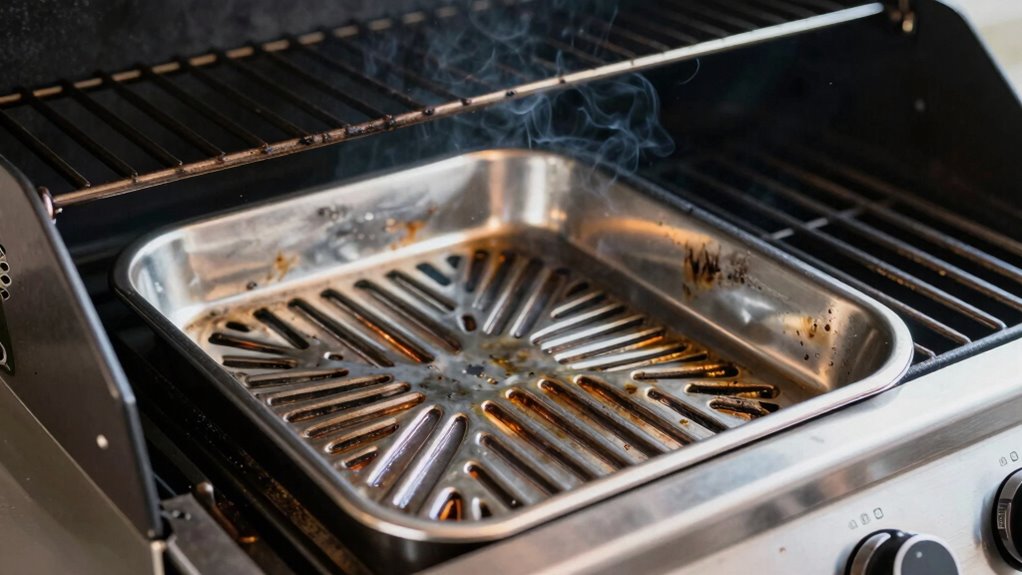
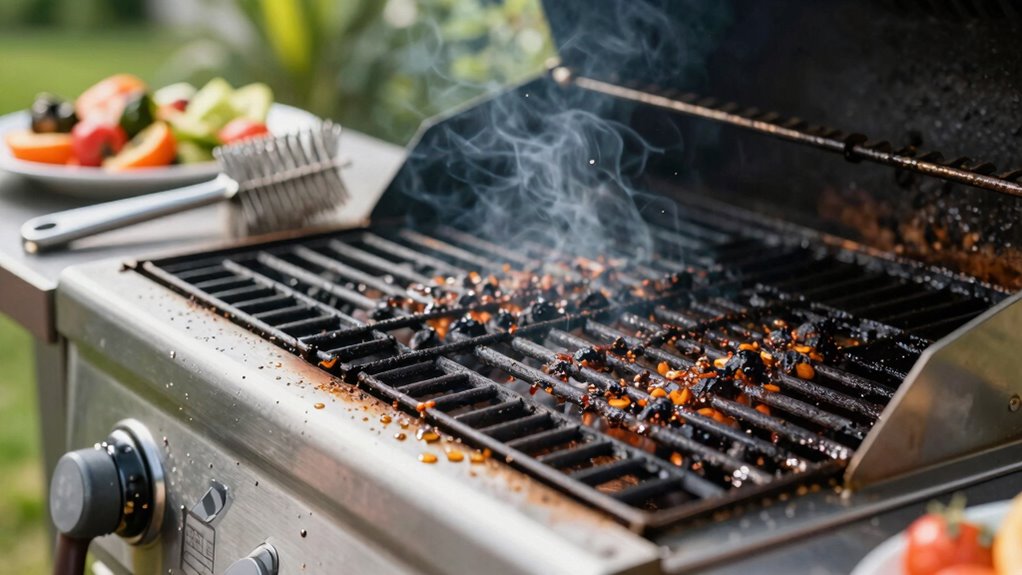
One common cause of flare-ups is the buildup of grease and food drippings on your grill’s surfaces. These residues act as flare-up triggers, igniting sudden bursts of flame when exposed to heat. Dirty drip pans and clogged burners are prime culprits, reducing grill hygiene and increasing fire risks. When grease accumulates, it drips onto hot surfaces, creating unexpected flare-ups that can char food and damage your grill. Regular cleaning removes these buildup areas, preventing unexpected flames and maintaining safe operation. Keep an eye on these components to avoid flare-up surprises. Here’s a quick overview:
| Cause | Effect | Prevention |
|---|---|---|
| Grease buildup | Sudden flare-ups | Frequent cleaning |
| Dirty drip pans | Ignition of flare-ups | Empty and clean regularly |
| Clogged burners | Uneven heat, flare-ups | Clear debris and inspect |
| Food residue | Increased flare-up triggers | Wipe surfaces after use |
Additionally, inspecting and maintaining grill burners can significantly reduce the risk of flare-ups. Regularly checking for clogged burners can help prevent uneven heating and dangerous flare-ups.
How Can You Tell If Your Grill Needs a Deep Clean?

Your grill shows signs it’s time for a deep clean when you notice stubborn grease buildup, charred residue, or uneven cooking results. These issues indicate your grill needs some TLC to maintain excellent grill maintenance and prevent flare-ups. A dirty grill can affect flavor and safety, making it harder to control high heat. Regular cleaning also helps prevent airflow obstruction, which is crucial for safe and efficient grilling. Look for these signs:
- Excess grease and grease fires during cooking
- Burnt-on food leftover from previous grilling sessions
- Uneven heat distribution
- Rusty or corroded parts
- Difficulty achieving consistent temperatures
Deep cleaning helps remove built-up grime and guarantees your grill performs safely. Regular maintenance not only extends your grill’s lifespan but also plays a vital role in flare-up prevention. Keep your grill in top shape for better flavor and safer grilling sessions.
How to Clean Your Grill’s Drip Tray and Burners Properly

Cleaning your grill’s drip tray and burners starts with removing built-up debris to keep everything functioning smoothly. Next, check the gas flow to make sure no blockages are affecting performance. Regular maintenance like this helps your grill stay in top shape and enhances flavor.
Removing Debris Buildup
Debris buildup in the drip tray and burners can hinder your grill’s performance and affect the flavor of your food. Regularly removing grill debris and ash is key to maintaining ideal heat and preventing flare-ups. To do this effectively, start by turning off the grill and letting it cool. Carefully remove the drip tray and burner’s grates, then scrape away accumulated ash and debris. Use a brush or scraper to clear out burner ports to ensure proper gas flow. Keep an eye out for grease and food particles that can cause flare-ups if left unchecked. Proper grill maintenance is essential for optimal operation and food safety. Regular inspections and the use of suitable grill accessories can help prolong the life of your equipment and enhance your cooking results. Incorporating cleaning tools designed specifically for grills can make this process easier and more thorough. Additionally, inspecting the gas lines regularly helps prevent potential hazards and keeps your grill running smoothly. Incorporating attention to detail in your maintenance routine can further ensure consistent performance and safety.
Checking Gas Flow
Ensuring proper gas flow is essential for consistent grill performance and safe operation. Start by inspecting your gas supply line for any blockages or leaks, which can disrupt pressure regulation. Check that the propane tank valve is fully open and that the regulator is functioning correctly. If your grill has adjustable pressure settings, verify they’re set according to the manufacturer’s instructions. Clean any debris or residue around the burners and drip tray that might restrict gas flow. Proper pressure regulation ensures the flames stay steady and even, preventing flare-ups. Regularly testing your gas flow helps maintain ideal performance and safety, so make it part of your routine maintenance. Additionally, cleaning your grill’s drip tray and burners properly can help prevent obstructions that cause uneven flames. When in doubt, consult your grill’s manual or a professional to verify everything is functioning correctly. Conducting routine maintenance can greatly extend the lifespan of your grill and ensure safe operation. Remember, proper gas flow not only improves cooking efficiency but also significantly reduces the risk of dangerous flare-ups. In addition, checking ventilation around the grill ensures proper exhaust of gases and reduces the risk of hazardous buildup during use.
How Can You Prevent Flare-Ups With Regular Maintenance?

Regular maintenance is essential for preventing flare-ups on your grill. By staying on top of cleaning tips and safety precautions, you reduce grease buildup and eliminate potential fire hazards. Regularly inspect and clean burners, grates, and grease traps to prevent fat and residue from igniting. Use a wire brush and grill cleaner after each use for the best results. Check for leaks and loose connections to avoid dangerous flare-ups. Keep a fire extinguisher nearby and ensure proper ventilation when grilling. These simple steps help you maintain a safe, efficient grill that’s ready for your next cookout. Staying consistent with maintenance not only enhances safety but also improves flavor and overall grill performance, making your barbecues more enjoyable.
How Regular Cleaning Extends Your Grill’s Life and Performance

Regular cleaning prevents grease buildup that can cause flare-ups and damage your grill. It also helps maintain consistent flames, so your food cooks evenly. By keeping your grill clean, you extend its lifespan and keep it performing at its best.
Prevents Grease Buildup
Grease buildup is one of the main culprits behind grill malfunctions and flare-ups. Regular cleaning is key to grease prevention and extending your grill’s lifespan. Focus on keeping the drip tray clean and free of grease, since accumulated drips can ignite when heated. Proper drip tray care prevents dangerous flare-ups and ensures even heat distribution. By consistently removing grease and debris, you’ll avoid blockages that impair airflow and performance. Plus, a clean grill produces better-tasting food and reduces fire hazards. Incorporating these simple practices for excellent maintenance can significantly prevent flare-ups and enhance your grilling experience:
- Empty and clean the drip tray after each use
- Scrape grease from burners and surfaces
- Use a grill brush to remove stuck-on residue
- Wipe down surfaces with a damp cloth
- Store your grill in a dry, clean area
- Regularly check and clean air vents to prevent airflow obstruction and maintain optimal performance airflow. Maintaining proper ventilation is essential for safe and efficient grilling. Additionally, understanding cabling solutions can help prevent electrical issues that may contribute to safety hazards during grilling. Staying informed about smart yard care technologies, such as robot mowers, can also help you maintain a safe outdoor environment when grilling near automated equipment.
Maintains Flame Consistency
Keeping your grill clean makes sure the flames stay steady and consistent, preventing uneven cooking and flare-ups. When burners and grids are free of grease and residue, the airflow remains unobstructed, supporting reliable flame control. Consistent flames are key to maintaining grill safety, reducing the risk of dangerous flare-ups that can cause injuries or damage. Plus, stable flames help preserve the flavor of your food by ensuring even heat distribution, avoiding charring or dry spots. Regular cleaning keeps your grill functioning properly, so you get predictable results every time you cook. It’s a simple step that boosts safety and flavor preservation, making each grilling session safer, more enjoyable, and perfectly cooked. Proper maintenance also ensures style and appearance, keeping your grill looking great for years to come.
Extends Grill Lifespan
Cleaning your grill consistently prevents buildup that can cause rust and corrosion, substantially extending its lifespan. Regular maintenance not only preserves the grill’s performance but also keeps it looking new longer. When you remove grease and food debris, you help maintain proper grill seasoning, which protects the metal and enhances flavor. Plus, a clean grill aligns with good barbecue etiquette, showing respect for your equipment and guests. Here’s how regular cleaning extends your grill’s life:
- Prevents rust formation
- Maintains even heat distribution
- Improves overall efficiency
- Protects internal components
- Preserves grill seasoning for better flavor
- Proper disposal of used grill parts helps prevent environmental damage from waste. Incorporating seasonal cleaning routines tailored to your local climate can further prevent corrosion and ensure optimal performance. Following a consistent cleaning schedule can also reduce fire hazards by minimizing grease buildup that could ignite during grilling. Sticking to a cleaning routine means fewer repairs and replacements, saving you money and ensuring your grill stays in top shape for every cookout. Regular cleaning also supports grill safety by reducing the risk of flare-ups caused by grease buildup.
Common Mistakes to Avoid When Cleaning Your Grill

One common mistake to avoid when cleaning your grill is using harsh chemicals or abrasive tools that can damage the surface. Instead, stick to gentle scrubbers and proper cleaning solutions. Avoid scrubbing too hard, as this can strip away seasoning techniques that protect and enhance flavor. Regularly maintaining your grill cover is just as important; a damaged cover can let dirt and moisture seep in, accelerating corrosion. When cleaning, focus on removing grease and food debris without removing the seasoning layers that improve taste and prevent flare-ups. Remember, a well-maintained grill with proper cover care stays cleaner longer, reducing the need for intense scrubbing. Steer clear of aggressive cleaning methods to preserve your grill’s surface and ensure peak performance.
What Should Be Your Routine for Maintaining Flare-Up-Free Grilling?
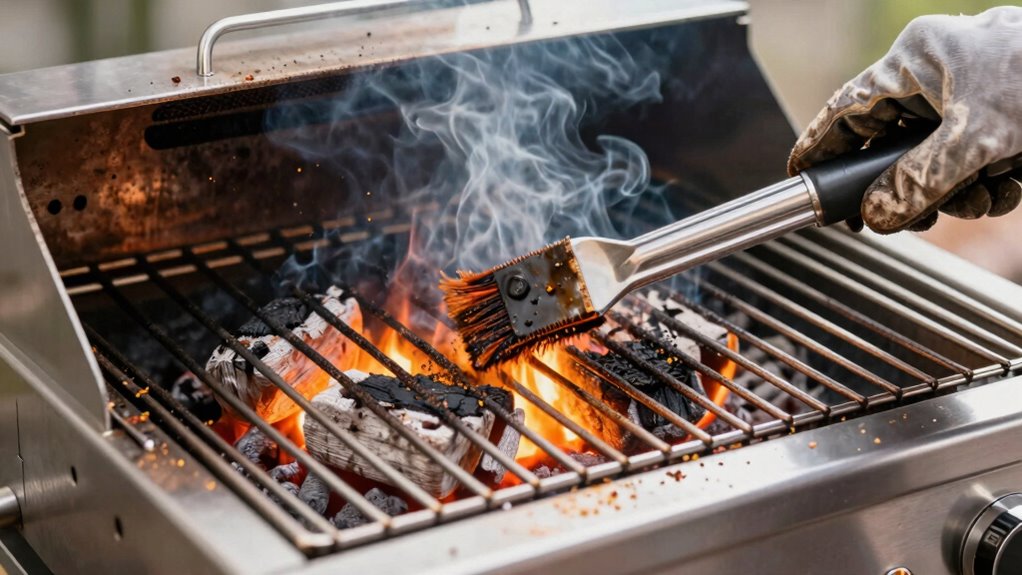
To prevent flare-ups during grilling, establishing a consistent maintenance routine is essential. Regularly clean your grill to remove grease buildup, which can cause dangerous flare-ups. Check your grill accessories like burners and vents to ensure they’re in good condition and functioning properly. Always prioritize fire safety by keeping a spray bottle of water nearby for small flare-ups. Use a wire brush to scrub grates after each use, and inspect gas lines for leaks. Cover your grill when not in use to protect it from debris and weather. Staying vigilant with these steps helps prevent unexpected flare-ups, keeping your grilling safe and enjoyable. Remember, a well-maintained grill is key to flavorful, flare-up-free cooking.
Troubleshooting Persistent Flare-Ups After Cleaning

Even after thoroughly cleaning your grill, persistent flare-ups can still occur, signaling underlying issues that need addressing. Often, leftover grease or food debris hides in crevices, igniting unexpectedly. Check your grill seasoning; if it’s built up unevenly, it can cause uneven heat and flare-ups. Additionally, excessive fat from previous cooks might drip and catch fire during grilling, disrupting your flavor infusion process. To troubleshoot, scrub away grease thoroughly, paying attention to corners and burners. Consider applying a fresh layer of grill seasoning to create a barrier that helps prevent flare-ups. Proper maintenance not only reduces unwanted flames but also enhances flavor infusion, giving you better-tasting results. Identifying these hidden problem spots ensures your grill stays safe and delivers consistent, flavorful grilling.
How Often Should You Clean Your Grill to Keep Flare-Ups Away?
To prevent flare-ups, you should stick to a regular cleaning schedule that keeps grease and residue at bay. After each grilling session, give your grill a quick wipe-down to remove any food drippings. Consistent post-grill maintenance helps make sure your grill stays safe and flavorful for every cookout.
Regular Cleaning Schedule
Regularly cleaning your grill is essential for preventing flare-ups and ensuring your food tastes great. A consistent cleaning schedule keeps grease and debris from building up, which can cause dangerous flare-ups. Ideally, clean your grill after every few uses, especially if you notice smoke or uneven heat. Use your grill accessories to scrub grates and remove residue. Remember, maintaining proper grill seasoning depends on a clean surface, which enhances flavor and prevents flare-ups. For more thorough cleanings, deep clean your grill at least once a month. Incorporate a quick brush of the grates before each use to keep them in top shape. Staying on top of cleaning helps extend your grill’s lifespan and guarantees delicious, flare-up-free meals.
- Use a wire brush or scraper regularly
- Remove grease drip trays after each cook
- Clean grill accessories to prevent buildup
- Reapply grill seasoning after cleaning
- Deep clean monthly for best results
Post-Grill Maintenance
After you’ve given your grill a good cleaning, maintaining it properly between uses is key to preventing flare-ups. Regular post-grill maintenance ensures leftover grease and food debris don’t ignite unexpectedly, which is essential for grill safety. Wipe down grates and check for grease buildup after each session, especially if you cooked fatty foods. This practice keeps your grill in prime condition, reducing the risk of flare-ups during your next cookout. Incorporate good cooking techniques, like controlling heat zones and avoiding excessive flare-ups, by keeping the grill clean. A well-maintained grill promotes even cooking and enhances flavor without compromising safety. Consistent post-grill care helps you enjoy flavorful meals while minimizing hazards, making every grilling experience safer and more enjoyable.
Frequently Asked Questions
Can Flare-Ups Cause Long-Term Damage to My Grill’s Components?
Yes, flare-ups can cause long-term damage to your grill’s components if not managed properly. They can weaken or warp parts, affecting grill safety and performance. To prevent this, follow regular maintenance tips such as cleaning grease buildup and checking for leaks. Staying vigilant during grilling helps protect your equipment, ensures safety, and extends your grill’s lifespan. Proper maintenance is essential to keep flare-ups from causing costly damage over time.
Are There Specific Fuels That Reduce Flare-Up Risks?
Fuels featuring fewer flare-up foes can serve you well. Consider alternative fuels like propane or natural gas, which burn cleaner and produce fewer sparks. Fuel additives work wonders by calming combustible chaos, reducing flare-ups before they flare. You’ll find that switching to these specialized fuels and additives helps keep your grill safe, sizzling smoothly, and flare-up free, giving you peace of mind and perfect, flavorful bites every time you fire it up.
How Does Using a Smoker Box Affect Flare-Up Frequency?
Using a smoker box helps reduce flare-up frequency by controlling smoke and heat release, which contributes to flare-up prevention techniques. The benefits include even flavor infusion and less direct contact with high flames, minimizing grease fires. By using a smoker box, you create a barrier that prevents flare-ups, making your grilling safer and more consistent. This simple step guarantees your meat stays moist while avoiding the disruptive flare-ups that can ruin your cookout.
What Are the Signs of a Dangerous Flare-Up?
You’ll spot a dangerous flare-up by intense, uncontrolled flames and thick smoke buildup that quickly spreads. It’s a serious fire hazard that can cause burns or damage your grill. If flames jump higher or linger longer than usual, it’s time to act. Turn off the heat, close the lid, and avoid pouring water on it. Staying alert helps prevent dangerous flare-ups and keeps your grilling safe.
Is It Necessary to Replace Parts After Frequent Flare-Ups?
Think of your grill as a well-tuned orchestra—every part must work in harmony. If flare-ups happen frequently, it’s wise to review your grill safety and maintenance checklist. You might not need a full replacement right away; cleaning and minor repairs often fix the issue. However, if parts are worn or damaged, substituting them ensures safety and performance, preventing future flare-ups and keeping your grilling game on point.
Conclusion
Think of your grill as a fiery dragon—neglect its cleaning, and it’ll breathe out flames that scorch your food and safety. Regular maintenance is like taming that beast, keeping flare-ups at bay and ensuring your barbecue doesn’t turn into a smoky inferno. So, don’t let your grill become a temperamental monster; give it the TLC it needs, or risk a grilling disaster that leaves your feast charred and your reputation burned.