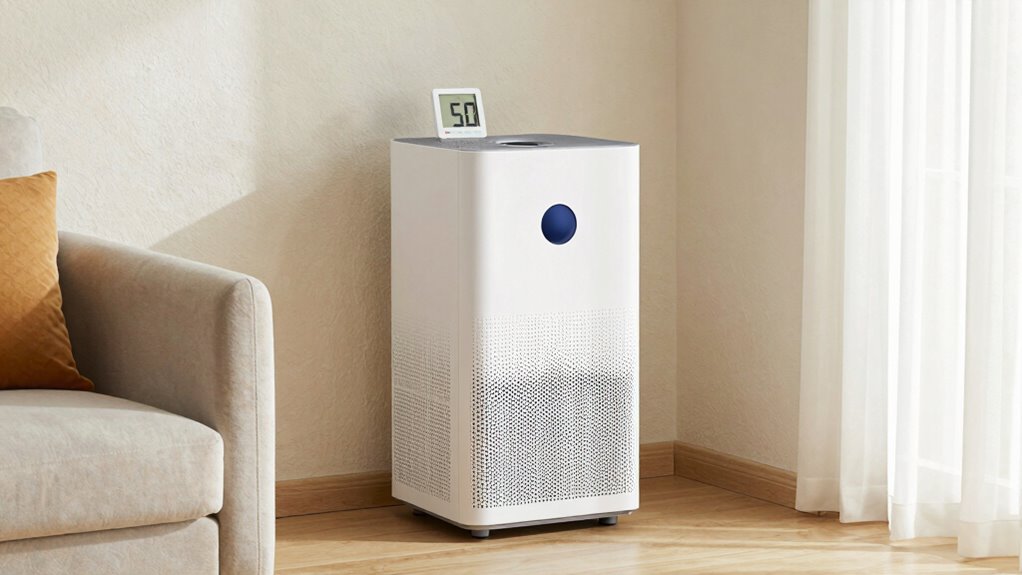

To prevent mold growth, aim to keep your home’s humidity between 30% and 50%. Humidity levels above 60% encourage mold spores to thrive, so using dehumidifiers and proper ventilation can help maintain this range consistently. Regularly monitor humidity with a hygrometer to stay on track. Maintaining these levels reduces mold risk, improves air quality, and protects your home. Continue exploring ways to keep your environment dry and mold-free for good.
Key Takeaways
- Maintain indoor humidity between 30% and 50% to prevent mold growth.
- Keep humidity below 60% to inhibit mold spores from thriving.
- Use hygrometers to monitor and calibrate humidity levels regularly.
- Adjust dehumidifier settings seasonally to sustain optimal moisture control.
- Proper ventilation and moisture management reduce condensation and mold risk.
What Is the Ideal Humidity Range to Prevent Mold?
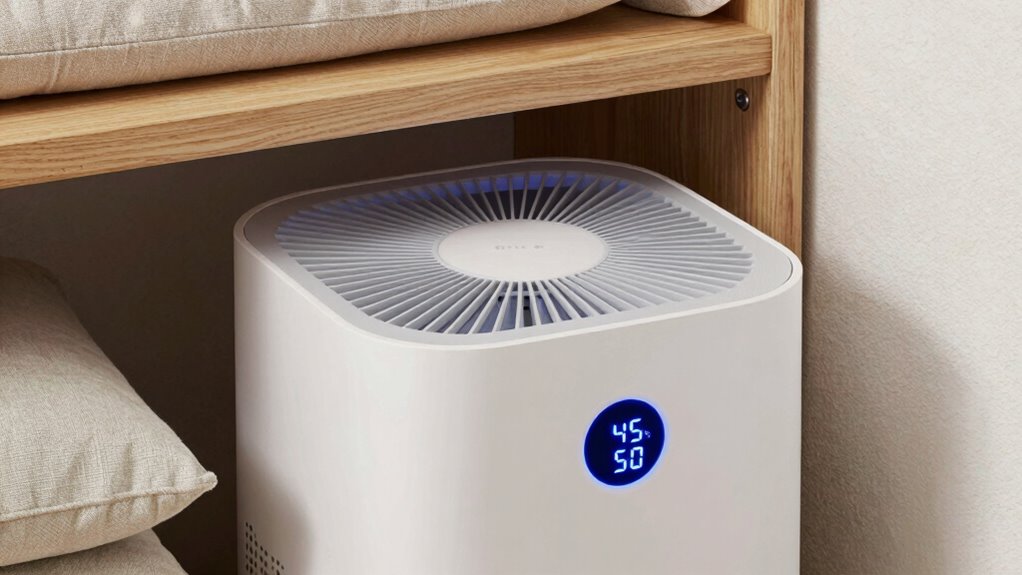
Maintaining the right humidity level is essential for preventing mold growth in your home. Mold spores thrive when humidity exceeds 60%, so keeping the range between 30% and 50% helps inhibit their development. When humidity stays within this ideal range, it discourages mold spores from settling and multiplying. Proper air circulation also plays a crucial role by reducing stagnant air, which can trap moisture and create favorable conditions for mold. Using a dehumidifier helps maintain consistent humidity levels, ensuring mold spores can’t easily take hold. Regularly monitoring your indoor humidity with a hygrometer allows you to keep it in the safe zone. Additionally, humidity control techniques can further enhance your efforts to prevent mold growth. For example, airflow management strategies, such as using exhaust fans in moisture-prone areas, can significantly improve airflow and moisture removal in problem areas. Implementing moisture barriers on walls and floors can also help prevent moisture infiltration from outside sources. Ensuring proper ventilation systems are in place is another effective way to reduce excess humidity. By controlling humidity and promoting good air circulation, you create an environment that’s less inviting for mold growth.
How Proper Humidity Levels Keep Mold Away

Maintaining the right humidity level is key to stopping mold growth in your home. When humidity stays between 30% and 50%, mold struggles to thrive. Keeping your space within this range effectively prevents mold from taking hold and spreading. Additionally, controlling humidity can also reduce microplastic accumulation in dust, contributing to better indoor air quality. Proper humidity management can also protect your home’s HVAC system from excess strain caused by excessive moisture. Ensuring consistent humidity levels can also help prevent condensation issues that often lead to mold development on walls and ceilings.
Optimal Humidity Range
Since mold thrives in damp environments, keeping your home’s humidity between 30% and 50% is essential for preventing mold growth. To achieve this, focus on proper humidifier placement; avoid placing it near walls or windows, which can cause uneven moisture distribution. Maintaining a consistent humidity level helps prevent mold spores from settling and growing. Good air circulation is equally important, so open vents and use fans to promote airflow throughout your space. This prevents moisture buildup in hidden areas like corners or behind furniture. Additionally, using indoor air quality gear such as HEPA filters, carbon filters, and UV-C sterilizers can help reduce mold spores and improve overall air quality. Proper ventilation practices also reduce excess moisture and support a dry environment. Ensuring consistent humidity levels by regularly calibrating your hygrometer can further optimize mold prevention strategies. Incorporating proper humidity monitoring with a hygrometer is crucial for maintaining the ideal range effectively. Regularly inspecting areas prone to moisture, like basements and bathrooms, can help catch mold before it spreads. By monitoring humidity levels with a hygrometer and adjusting your dehumidifier accordingly, you create an environment less inviting to mold. Staying within this ideal range ensures your home remains dry, healthy, and mold-free.
Effects on Mold Growth
Proper humidity levels create an environment that discourages mold growth by limiting the moisture mold spores need to thrive. When humidity stays within the ideal range, mold spores struggle to settle and grow, since they require damp surfaces and high moisture levels. Fluctuations in humidity can create conditions for mold spores to settle and multiply, especially during periods of high humidity. By maintaining steady, peak humidity, you reduce the chances of mold spores activating and forming mold colonies. Consistent humidity control also prevents condensation on surfaces, which provides additional breeding grounds for mold. Additionally, using HEPA filters can help remove mold spores from the air, further reducing the risk of mold proliferation. Proper wiring practices and avoiding electrical hazards are essential to prevent heat buildup that could contribute to mold issues in damp environments. Regularly monitoring humidity levels with a hygrometer helps ensure they stay within the optimal range for mold prevention. Employing dehumidifiers can be particularly effective in maintaining consistent humidity levels and preventing mold growth. Implementing proper ventilation techniques can further help control indoor humidity and inhibit mold growth. Overall, keeping humidity levels stable and within the recommended range effectively suppresses mold growth, protecting your home from mold-related issues and ensuring a healthier environment.
How to Measure and Maintain Humidity in Your Home
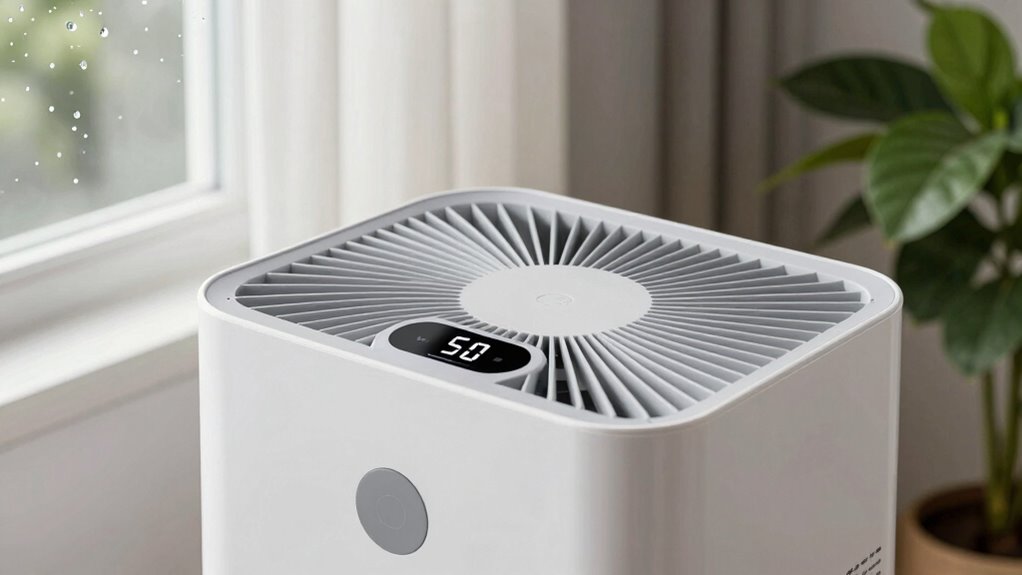
To keep mold at bay, you need to regularly check your home’s humidity levels. Use a hygrometer to get accurate readings and adjust your dehumidifier accordingly. Remember, ideal humidity varies with the seasons, so stay attentive year-round. Monitoring humidity levels closely can also help prevent issues with electric bikes or generators that are sensitive to moisture. Maintaining proper indoor air quality is essential for overall home health. Additionally, maintaining the correct humidity can also extend the lifespan of home appliances that are vulnerable to excess moisture. Consistently controlling humidity ranges helps create a healthier living environment and minimizes mold growth risks. Keeping humidity within the optimal range can also reduce the risk of mold growth on carpets, walls, and furniture.
Using Hygrometers Effectively
Measuring and maintaining the right humidity levels in your home is essential for preventing mold growth, and using a hygrometer makes this task straightforward. To guarantee accurate readings, regularly check your hygrometer’s calibration, following the manufacturer’s instructions. If it’s off, calibrate it using a salt test or other recommended methods. Pay attention to sensor accuracy, as faulty sensors can give misleading humidity levels, undermining your efforts. Keep your hygrometer in a central location away from direct sunlight, vents, or sources of moisture for the most reliable readings. Regularly monitor the humidity, especially during seasonal changes or weather fluctuations, to maintain ideal conditions. Proper use and calibration of your hygrometer help you stay informed and control humidity levels effectively.
Ideal Humidity Levels
Maintaining the right humidity levels in your home is essential for preventing mold growth and ensuring a healthy environment. Aim for a humidity range between 30% and 50%, as this promotes humidity stability and discourages mold development. Use a reliable hygrometer to measure moisture levels regularly, so you can adjust your dehumidifier accordingly. Consistent moisture control helps prevent excess dampness that fosters mold spores. Keep an eye on indoor areas prone to moisture, like bathrooms and basements, and monitor humidity levels at different times of the day. Proper air quality management and moisture control are key to long-term mold prevention and a healthier living space. Incorporating water management techniques can further enhance your efforts in maintaining optimal indoor humidity levels. Understanding drone bees and hive health can provide insights into natural humidity regulation processes, which may inspire more effective moisture management strategies. Additionally, selecting the right dehumidifier models ensures consistent humidity control tailored to your specific needs.
Adjusting for Seasons
Since seasons change, so does the humidity level in your home, making it essential to adjust your dehumidification strategies accordingly. Seasonal adjustments help you manage humidity fluctuations that occur throughout the year. During summer, higher outdoor humidity can cause indoor levels to rise, so you might need to run your dehumidifier more frequently or set it lower. In winter, indoor air tends to be drier, so reducing dehumidifier use prevents over-drying. Regularly measure your indoor humidity with a hygrometer to stay within the ideal range. Keep an eye on seasonal changes and adapt your settings to maintain consistent humidity levels. This approach minimizes mold risk, improves comfort, and ensures your dehumidifier works efficiently year-round. Utilizing proper heat-gun kits can also assist in DIY mold prevention tasks around your home.
Using Dehumidifiers Effectively to Control Humidity
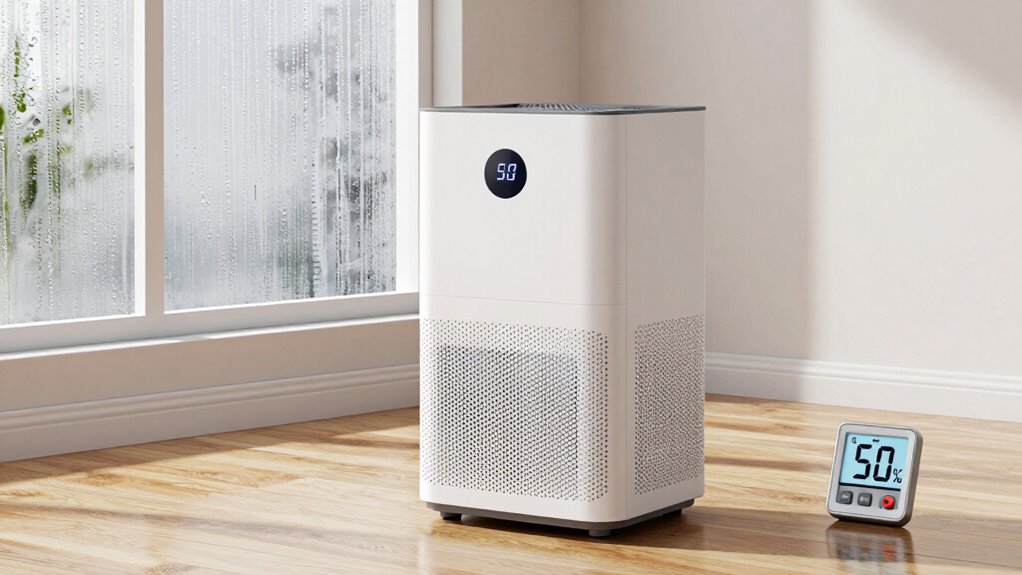
To regulate humidity effectively with a dehumidifier, you need to set it at the right level and make certain it runs consistently. Regular dehumidifier maintenance ensures it functions properly, preventing mold growth. Check and clean filters routinely, and inspect the unit for any issues. Proper humidity sensor calibration is vital; inaccurate sensors can cause the dehumidifier to underperform or over-dry the air. Adjust the settings to maintain a humidity level between 30-50%, depending on your environment. Use the dehumidifier continuously during humid seasons or when needed, and consider using a hygrometer to verify the humidity levels. Consistent operation and proper calibration help control moisture and prevent mold, making your home healthier and safer.
Other Simple Ways to Prevent Mold in Your Home

Simple steps like fixing leaks promptly, ensuring proper ventilation, and keeping surfaces dry can substantially reduce mold growth in your home. Improving air quality and using effective ventilation techniques help control moisture levels naturally. Regularly opening windows or using exhaust fans reduces indoor humidity and promotes air circulation. You can also use dehumidifiers in problem areas to maintain ideal humidity. To make it easier, consider this table:
| Action | Benefit |
|---|---|
| Fix leaks immediately | Prevents hidden moisture buildup |
| Use exhaust fans | Enhances air flow and reduces humidity |
| Keep surfaces dry | Limits mold-friendly environments |
| Improve air quality with ventilation | Reduces mold spores in the air |
These simple steps keep your home dry and mold-free.
How to Monitor Humidity and Stay Mold-Free

Monitoring humidity levels is a key step in maintaining a mold-free home. You can do this easily with reliable humidity sensors, which provide real-time readings of your indoor moisture levels. Place sensors in areas prone to dampness, like bathrooms or basements, to keep a close eye on conditions. Maintaining proper humidity—ideally between 30-50%—helps prevent mold growth. To enhance air quality and reduce mold spores, consider integrating air purification systems alongside your humidity control. These devices filter out allergens and mold spores, creating a healthier environment. Regularly check your humidity sensors and adjust your dehumidifier or ventilation as needed. Staying vigilant with accurate monitoring guarantees you’re always aware of your home’s moisture levels, helping you stay mold-free and comfortable year-round.
Frequently Asked Questions
Can Mold Grow at Humidity Levels Below 30%?
Mold growth is unlikely at humidity levels below 30%, as this is generally below the mold humidity threshold needed for spores to thrive. You can prevent mold by maintaining humidity levels under this threshold. However, if humidity fluctuates or if there’s excess moisture, mold can still grow. Keep your space well-ventilated and monitor humidity to stay below mold’s growth threshold, ensuring a healthier environment.
How Quickly Does Mold Develop if Humidity Is Uncontrolled?
Mold growth can sprout like wildfire within 24 to 48 hours if humidity control is ignored. When you leave humidity unchecked, it acts like a fertile soil for mold spores to settle and flourish. Without proper dehumidification, mold can develop rapidly, turning your space into a breeding ground. Keep humidity levels in check to slow down this process, and you’ll prevent mold from taking root so quickly.
Are Certain Materials More Susceptible to Mold at Specific Humidity Levels?
Certain materials are more susceptible to mold at specific humidity levels, especially those with high surface porosity. Porous materials like drywall, fabric, and wood absorb moisture easily, making them prime targets for mold growth when humidity is high. Non-porous surfaces like glass or metal resist mold, but if moisture lingers, mold can still develop. You should monitor humidity to protect vulnerable materials and prevent mold from thriving.
Does Temperature Affect the Ideal Humidity Range for Mold Prevention?
Think of temperature impact like a cozy room’s thermostat—warmer air holds more moisture, making mold more likely if humidity isn’t controlled. You realize this when you notice condensation on a cold window. Temperature affects humidity control because at higher temperatures, you need lower humidity levels to prevent mold. To keep your space safe, monitor both temperature and humidity, adjusting your dehumidifier settings as needed for *best* mold prevention.
Can Dehumidifiers Eliminate All Types of Mold Spores?
Dehumidifiers can’t eliminate all mold spores, but they substantially reduce moisture that helps mold grow. To boost effectiveness, consider using mold-resistant paints in problem areas, which add an extra barrier. Keep humidity levels between 30-50% for ideal mold prevention. Regularly maintain your dehumidifier, clean filters, and monitor humidity to make certain it works effectively. Combining these strategies gives you the best chance to prevent mold growth in your home.
Conclusion
Maintaining the right humidity is like steering a ship through calm waters—steady and mindful. By keeping your home between 30-50%, you create a fortress against mold’s silent invasion. Use your dehumidifier wisely, monitor levels regularly, and embrace simple habits to safeguard your space. When humidity stays in check, mold has no foothold, allowing your home to breathe freely and stay healthy—like a well-tuned orchestra playing in perfect harmony.