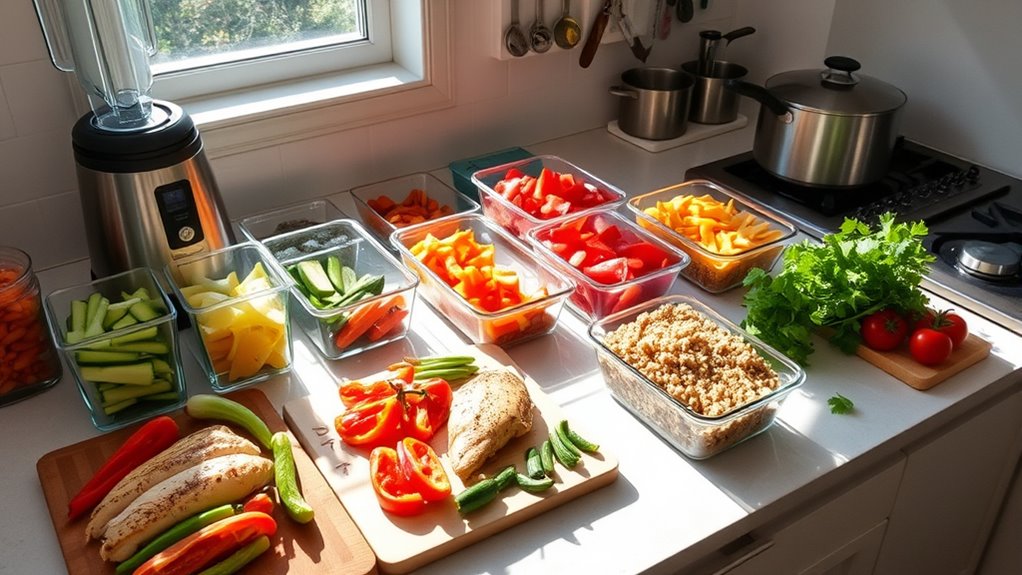

To make your Meal Prep Sunday truly efficient, plan your menu ahead by choosing simple, versatile recipes that store well. Gather quality airtight containers to divide large batches into manageable portions and label them for easy access. Use freezing for extra meals and prioritize organized storage in your fridge and freezer. Keep raw ingredients separate from cooked foods to prevent cross-contamination. Stick to these tips, and you’ll find more ways to streamline your prep and enjoy stress-free weekdays.
Key Takeaways
- Plan your meals and create a shopping list to streamline shopping and cooking processes.
- Batch cook similar ingredients to save time and simplify meal assembly.
- Use airtight, labeled containers for organized storage and easy access throughout the week.
- Divide large batches into smaller portions to fit storage space and daily needs.
- Prioritize freezing some meals to extend freshness and reduce prep time for busy days.
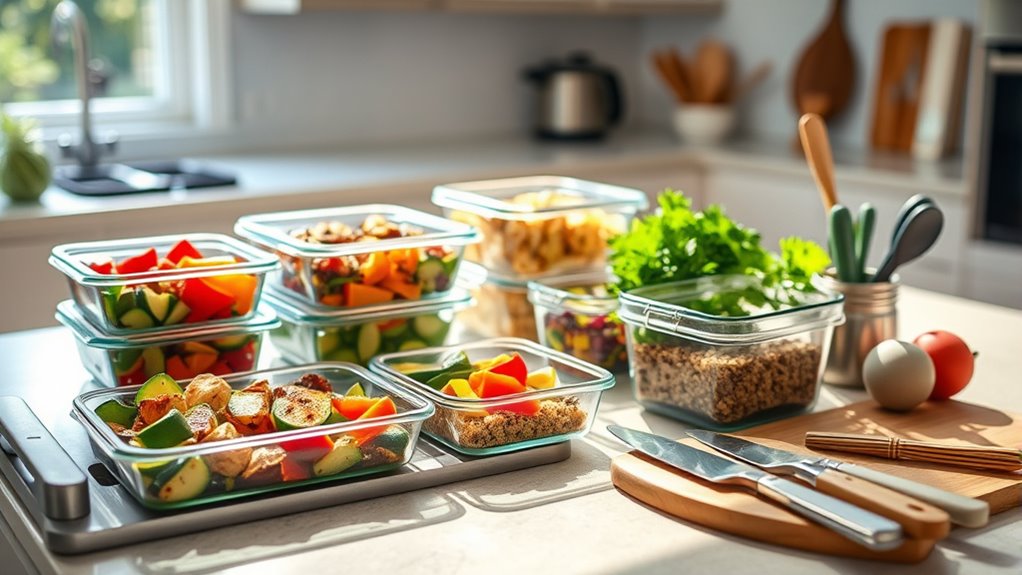
Have you ever wondered how to make busy weekdays easier and healthier? One of the best ways to do that is by dedicating time on Meal Prep Sunday to organize your meals for the week. Batch cooking becomes your secret weapon—cooking large quantities of versatile ingredients or dishes in one go helps you save time and reduces daily stress. When you prepare in bulk, you’re not only ensuring you have nutritious options ready to grab, but you also cut down on the temptation of fast food or takeout. To make the most of your batch cooking efforts, it’s vital to incorporate effective storage tips. Using airtight containers, for example, keeps your meals fresh longer and prevents leaks or spills. Clear containers also make it easier to see what’s inside, so you can quickly select what you want without rummaging through your fridge. Label everything with dates and contents to keep track of freshness and avoid waste. When storing cooked meals, consider dividing large batches into smaller portions that suit your typical mealtime needs. This way, you only defrost or reheat what you plan to eat, preserving the quality of the leftovers and minimizing waste. Additionally, freezing some portions allows you to extend the shelf life of your meals, giving you options for future busy days. Proper storage can also help maintain the quality and texture of your meals, ensuring they taste just as good after reheating. Another key storage tip is to organize your fridge and freezer efficiently. Place meals you plan to consume soon at the front of your fridge, and store frozen items toward the back. Keep raw ingredients separate from cooked foods to prevent cross-contamination, and use stackable containers to maximize space. Investing in good-quality storage options can make a big difference in keeping your meals fresh and accessible. Remember, proper storage not only maintains flavor and texture but also makes reheating more convenient, ensuring your meals taste just as good on the second or third day.
Frequently Asked Questions
What Are the Best Containers for Meal Prep?
The best containers for meal prep are those that promote portion control and are eco-friendly. Look for BPA-free, microwave-safe containers with compartments to keep your food organized and prevent mixing. Glass or durable plastic containers are great options, especially if they’re reusable and dishwasher safe. These containers help you manage portions effectively, reduce waste, and keep your meals fresh longer. Choose eco-friendly options to support sustainability and make your meal prep more efficient.
How Do I Store Cooked Meals Safely?
To store cooked meals safely, you should quickly refrigerate or freeze leftovers within two hours of cooking to prevent bacteria growth. Use airtight containers to maintain freshness and follow food safety guidelines. Label your containers with dates, and keep hot foods hot and cold foods cold during storage. Regularly check for spoilage, and reheat leftovers thoroughly before eating, ensuring you follow proper storage tips for maximum safety.
What Are Quick Breakfast Options for Meal Prep?
Ever notice how mornings seem to sneak up on you? That’s where quick breakfast ideas come in handy. For healthy breakfast prep, try overnight oats, yogurt parfaits, or boiled eggs you can prepare in advance. These options save time and keep you energized. Incorporate fresh fruit, nuts, or seeds for added nutrition. With these strategies, you’ll start each day feeling prepared and ready to tackle whatever comes your way.
How Can I Customize Meals for Dietary Restrictions?
You can customize meals for dietary restrictions by choosing gluten-free options like quinoa, rice, or gluten-free oats, and incorporating vegan substitutions such as plant-based proteins, tofu, or beans. Always read labels to verify ingredients meet your needs, and experiment with herbs and spices to enhance flavor. Planning ahead helps you create delicious, tailored meals that fit your dietary restrictions, making your meal prep both efficient and enjoyable.
What Tools Can Speed up the Cooking Process?
You can speed up cooking by using kitchen gadgets like food processors, Instant Pots, and high-quality blenders. These tools cut prep time and make cooking more efficient. Also, adopt smart cooking techniques such as batch cooking, chopping ingredients in advance, and utilizing convection ovens. Combining these gadgets and techniques helps you save time, streamline your meal prep, and enjoy delicious, healthy meals without the long wait.
Conclusion
By mastering meal prep Sunday, you’re fundamentally planting seeds for a week of success. I once watched a friend turn a chaotic Sunday into a calm, productive oasis by preparing her meals ahead—like a gardener tending to her garden before the storm. With just a bit of planning, you can transform your kitchen into a well-oiled machine, making healthy choices effortless and saving you time and stress. Your future self will thank you for this small, powerful habit.