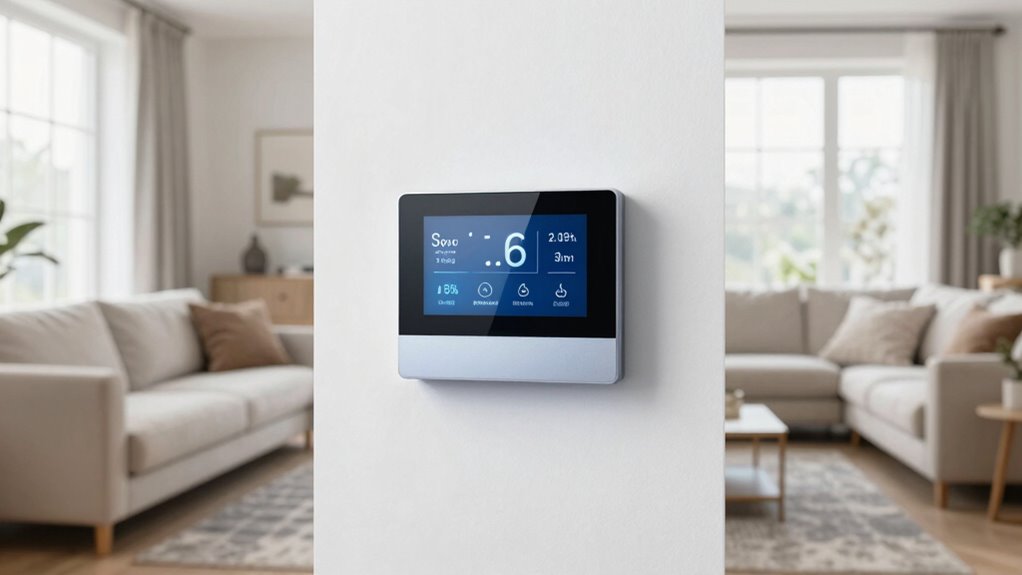

To prevent temperature swings with your smart thermostat, make certain sensors are placed away from sunlight, drafts, or heat sources. Program stable schedules that match your daily routines, and regularly calibrate your system for accuracy. Keep filters clean and inspect ductwork for leaks. Using features like adaptive scheduling and remote control helps maintain steady temperatures. Staying proactive with maintenance and correct sensor placement makes your home more comfortable—continue exploring for detailed tips to fine-tune your system effectively.

Get the little things that make your day delivered free — and shop member deals
- Fast, free delivery on millions of items
- Access to Prime Big Deal Days deals on October 6–7
- Prime Video, Amazon Music and more included
Key Takeaways
- Properly position sensors away from sunlight, drafts, and heat sources to ensure accurate temperature readings.
- Use stable, scheduled programming and adaptive features to prevent unnecessary thermostat adjustments.
- Regularly calibrate sensors and clean filters to maintain sensor accuracy and system responsiveness.
- Seal duct leaks and improve insulation to reduce heat gain or loss, promoting consistent temperature control.
- Avoid opening windows or making frequent manual adjustments that conflict with the thermostat’s settings.
smart thermostat sensor placement
As an affiliate, we earn on qualifying purchases.
As an affiliate, we earn on qualifying purchases.
Why Do Smart Thermostat Temperature Swings Occur?

Have you ever noticed your smart thermostat’s temperature suddenly rising or dropping unexpectedly? These swings often happen because of sensor placement or user behavior. If the sensor is installed in direct sunlight, near a draft, or close to heat sources, it can send inaccurate readings, causing your thermostat to adjust unnecessarily. Additionally, your habits can impact temperature stability; opening windows or adjusting the thermostat frequently sends conflicting signals. Smart thermostats rely on precise data to maintain comfort, but improper sensor placement and inconsistent user behavior can create false temperature cues. Recognizing these factors helps explain why your home’s temperature fluctuates unexpectedly. Addressing sensor location and being mindful of your routines can considerably reduce these temperature swings, ensuring a more consistent comfort experience.
How to Set Your Thermostat for Consistent Comfort
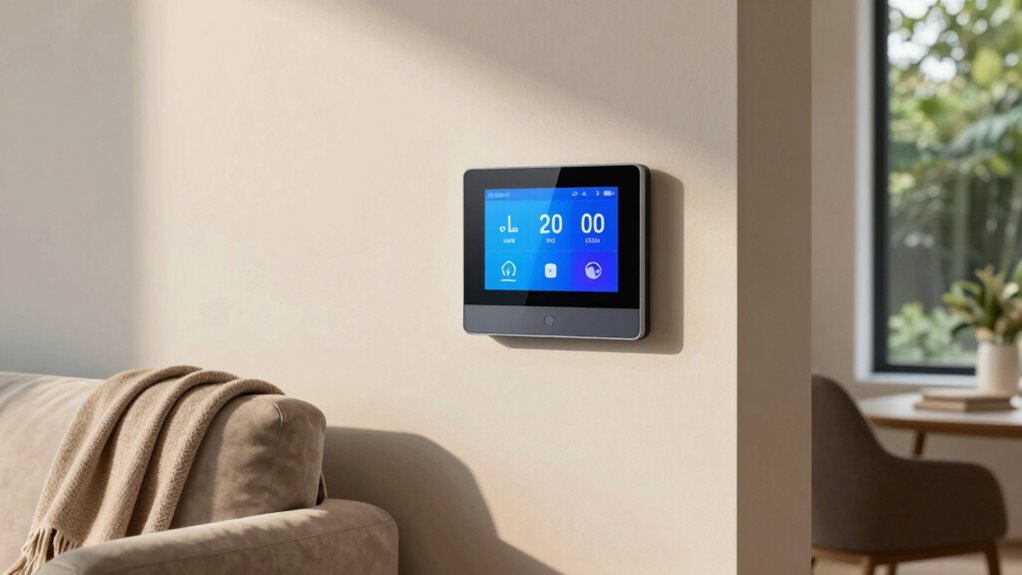
To achieve consistent comfort with your smart thermostat, start by setting a stable temperature schedule that matches your daily routine. Use your user interface to program specific temperatures for different times of the day, avoiding frequent adjustments. This helps maintain energy efficiency by preventing unnecessary heating or cooling cycles. Keep the interface simple and easy to navigate, so you can make quick changes when needed without disrupting your comfort. Consistent scheduling reduces temperature swings and creates a steady environment. Regularly review and adjust your settings as seasons change or routines shift. A well-designed schedule, combined with a user-friendly interface, ensures your home stays comfortable without wasting energy or experiencing unpredictable temperature fluctuations. Additionally, incorporating proper air quality protocols can enhance overall comfort and health in your home. Implementing smart device integration can further optimize your system’s performance and energy savings. Monitoring system performance regularly allows you to identify and address any issues promptly, ensuring consistent comfort. Incorporating temperature sensors can help fine-tune your settings for even greater stability and efficiency, especially when paired with proper system calibration to optimize performance.
Features and Schedules That Help Keep Your Home Stable
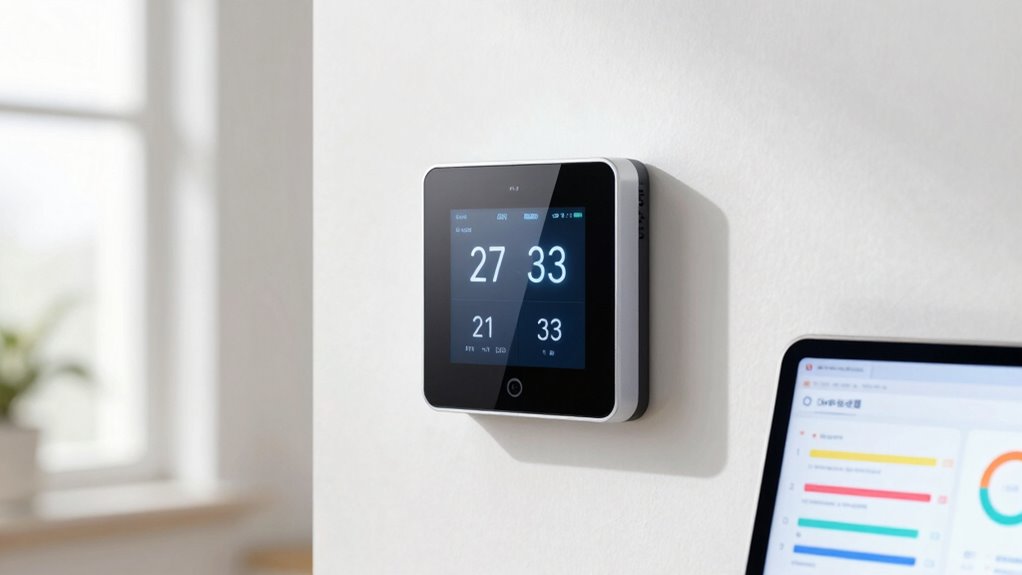
Smart thermostats offer a variety of features and scheduling options that work together to keep your home’s temperature stable. You can set customized schedules to automatically adjust your heating and cooling, preventing unnecessary fluctuations. Many models include humidity control, which helps maintain ideal moisture levels, enhancing comfort and reducing drafts. These features improve energy efficiency by reducing waste and lowering utility bills. With adaptive scheduling, your thermostat learns your routine, making adjustments to keep your home consistently comfortable without constant input. Some systems also offer remote controls via smartphone apps, allowing you to fine-tune settings from anywhere. Additionally, proper installation practices ensure your thermostat operates safely and efficiently. Regular maintenance and system calibration are also important to keep your smart thermostat functioning optimally. By combining smart scheduling with humidity control, you create a stable environment that minimizes temperature swings and boosts overall comfort.
Calibrating Your Thermostat and HVAC System for Accuracy
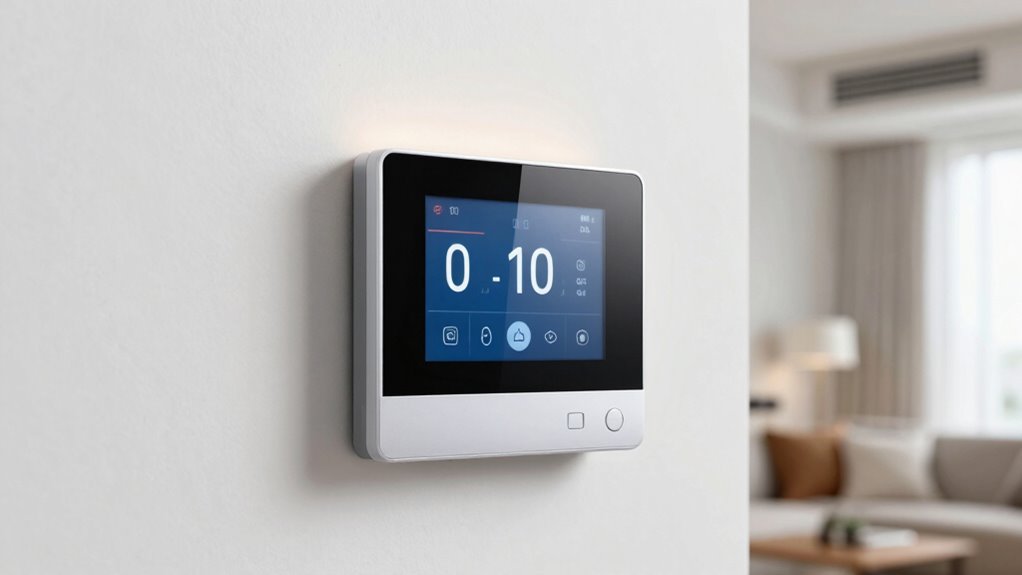
Ensuring your thermostat and HVAC system are properly calibrated is key to maintaining the stable, comfortable environment you’ve set through scheduling and features. Proper sensor calibration ensures the system accurately detects temperature, preventing unnecessary cycling or temperature swings. To improve system accuracy, start by checking the thermostat’s display against a reliable thermometer. If discrepancies exist, recalibrate the sensors according to your device’s instructions. Regularly clean or replace filters to maintain airflow and sensor responsiveness. Also, verify the calibration of zone sensors if you have multiple sensors installed. These steps help your system deliver precise heating or cooling, reducing fluctuations and optimizing comfort. Remember, accurate sensors are essential for the HVAC system’s overall efficiency and your home’s comfort.
Troubleshooting Persistent Temperature Fluctuations

Persistent temperature fluctuations can be frustrating, but they often have simple causes that you can identify and fix. First, check if your thermostat’s sensor is properly calibrated; an uncalibrated sensor may misread temperatures, causing unnecessary heating or cooling. Recalibrate if needed to guarantee accurate readings. Next, examine your duct insulation—poor insulation can lead to heat loss or gain, creating inconsistent temperatures. Seal any leaks or gaps in your ducts to improve airflow and temperature stability. Also, inspect the placement of your sensor; it shouldn’t be near windows, vents, or direct sunlight, as these can skew readings. Ensuring proper indoor air quality gear and humidity control can also help maintain a consistent environment. Proper air filtration minimizes dust and microplastics that can affect sensor performance and overall comfort. Regularly testing and maintaining your HVAC system can further prevent temperature swings, and considering system upgrades may enhance efficiency and stability. Additionally, optimizing system settings and schedules can better adapt your system to your heating and cooling needs. Addressing these issues helps your smart thermostat maintain a more consistent temperature, reducing swings and enhancing comfort throughout your space.
Frequently Asked Questions
Can Smart Thermostats Learn My Preferred Temperature Preferences Over Time?
Yes, smart thermostats can learn your preferred temperature preferences over time. They use personalization features and advanced learning algorithms to adapt to your schedule and comfort levels. As you adjust settings or change habits, the thermostat observes these patterns and automatically updates its programming. This means it becomes more efficient and tailored to your needs, providing consistent comfort without you having to manually tweak the temperature constantly.
How Does Outdoor Weather Impact Smart Thermostat Performance?
Outdoor weather, like solar impact and wind influence, can affect your smart thermostat’s performance. Sunlight heats your home, causing temperature fluctuations, while wind can cool or warm spaces unexpectedly. Your thermostat might struggle to maintain consistent comfort if it doesn’t account for these factors. To improve performance, verify your device is properly calibrated and enabled with weather data integrations, so it adjusts settings based on outdoor conditions effectively.
Are There Specific Room Types Where Smart Thermostats Struggle?
Did you know that some rooms, especially those with poor insulation, can cause smart thermostats to struggle? You’ll find that rooms like garages or attics often have inconsistent temperatures due to inadequate insulation and thermostat compatibility issues. These spaces may experience more temperature swings, making it harder for your smart thermostat to maintain comfort. To improve performance, confirm proper insulation and verify that your thermostat is compatible with the room’s setup.
What Is the Best Placement for a Smart Thermostat in My Home?
Place your smart thermostat where it can accurately read your home’s overall temperature, ideally on an interior wall away from direct sunlight or drafts. Use zoning strategies and sensor placement to optimize comfort. Avoid placing it near windows, doors, or vents, as these can cause false readings. Keep sensors evenly distributed across different zones to ensure consistent temperature control and prevent swings. This setup helps your thermostat learn your habits and maintain steady comfort levels.
Do Smart Thermostats Require Professional Installation for Optimal Function?
Installing a smart thermostat is easier than you think, but for ideal function, you might want to contemplate professional service. While DIY installation is possible and saves money, a pro ensures your device is set up correctly, preventing any tech headaches. Think of it as the difference between a DIY masterpiece and a gallery-worthy installation. If you’re not tech-savvy, professional service guarantees your smart thermostat works flawlessly, keeping your home comfy and efficient.
Conclusion
Just like Icarus flying too close to the sun, chasing perfect comfort can lead to unexpected temperature swings. But with the right thermostat settings, calibration, and features, you can keep your home stable and cozy. Remember, even Da Vinci’s precision relied on careful adjustments. So, take control, fine-tune your system, and enjoy a consistently comfortable space—because, as in all great endeavors, mastery comes from attention to detail.
NFL season / tailgating Picks
team gear
As an affiliate, we earn on qualifying purchases.