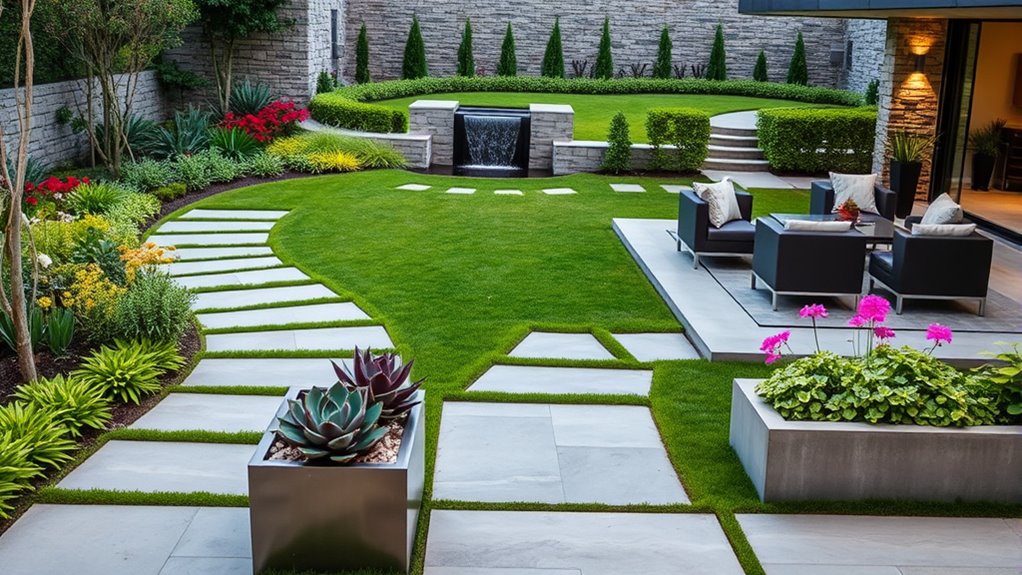

For modern homes, focus on sustainable landscaping by choosing native, drought-resistant plants that require minimal upkeep. Embrace minimalist design with clean lines, geometric plant beds, and simple materials like recycled wood or crushed stone. Incorporate energy-efficient LED lighting and understated water features that unify beauty and tranquility. This combination creates low-impact, stylish outdoor spaces that blend seamlessly with contemporary architecture—exploring these trends further can help you craft a sleek, eco-friendly backyard you’ll love.
Key Takeaways
- Incorporate native, drought-resistant plants for sustainable and low-maintenance landscaping.
- Emphasize minimalist design with clean lines, geometric plant beds, and simple materials.
- Use eco-friendly, durable materials like recycled wood and crushed stone for pathways and edging.
- Integrate energy-efficient LED lighting and understated water features to enhance tranquility and aesthetics.
- Focus on creating eco-conscious outdoor spaces that align with modern, sleek home designs.
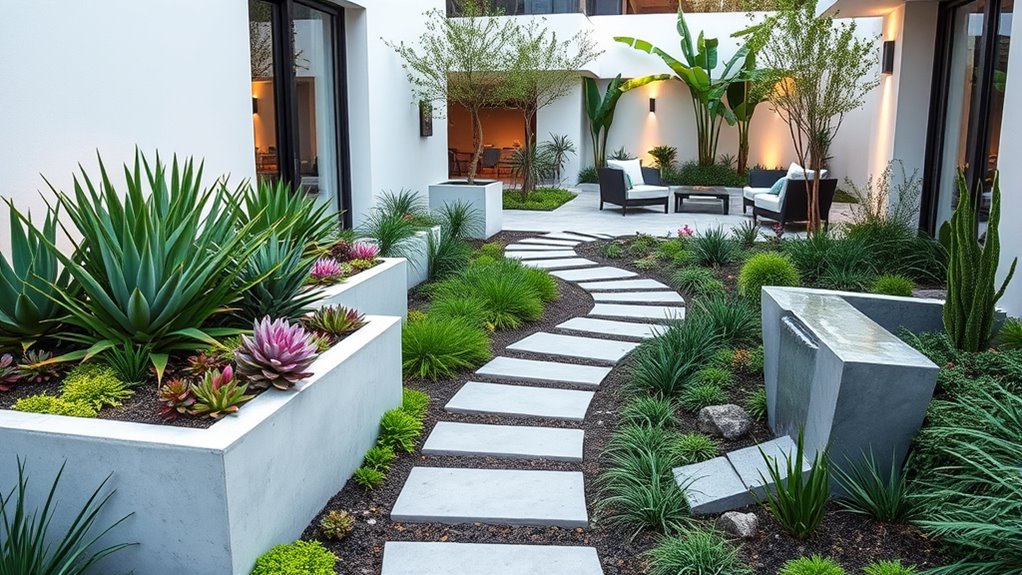
As modern homes embrace sleek design and sustainability, garden and landscaping trends are evolving to reflect these values. You’re likely noticing a shift toward more thoughtful, eco-friendly outdoor spaces that complement your home’s contemporary aesthetic. One of the most prominent trends is sustainable planting, where you choose native, drought-resistant, and low-maintenance plants that thrive with minimal resources. This approach not only reduces your water and energy usage but also supports local ecosystems. Instead of sprawling lawns that demand constant mowing and watering, you’ll find that modern landscapes favor naturalistic plantings that blend seamlessly into the environment. These sustainable choices often incorporate organic soil amendments and eco-friendly fertilizers, ensuring your garden remains healthy without harming the planet. Building on this, attention to plant selection is crucial, as choosing the right species enhances both sustainability and visual appeal.
Modern landscapes favor eco-friendly, native, drought-resistant plants that support sustainability and blend seamlessly into natural environments.
Minimalist design continues to dominate modern landscaping, emphasizing clean lines, simple forms, and clutter-free spaces. You might opt for geometric plant beds or sleek, streamlined containers that add structure without overwhelming the space. The goal is to create a calm, harmonious environment where every element has a purpose. When choosing plants, focus on a limited palette of species that provide visual interest through texture and color, avoiding excessive variety that can clutter the visual field. This minimal approach allows you to highlight the natural beauty of your plants and materials, making maintenance easier and more efficient.
In your garden, you’ll see that the integration of sustainable planting with minimalist design results in a cohesive, modern look that’s both functional and beautiful. For instance, you might select a few hardy native plants arranged in a precise, geometric pattern to create a striking focal point. Incorporating materials like crushed stone, concrete, or recycled wood for pathways and edging complements the minimalist aesthetic while emphasizing sustainability. These materials are durable, low-maintenance, and environmentally friendly, aligning with your desire for an eco-conscious outdoor space.
Lighting also plays a key role in this trend, with energy-efficient LED fixtures that highlight the clean lines and textures of your landscape after dark. Water features, if included, tend to be simple and understated, adding a soothing element without cluttering the minimalist design. Overall, your modern garden becomes a sanctuary of sustainability and simplicity, where every element is thoughtfully chosen to enhance the environment and your quality of life. This synergy between sustainable planting and minimalist design ensures your outdoor space remains stylish, low-impact, and easy to care for, perfectly matching the sleek, eco-conscious homes of today.
Frequently Asked Questions
How Can I Incorporate Eco-Friendly Materials Into My Garden Design?
You can incorporate eco-friendly materials into your garden design by choosing native plants, which thrive naturally and require less water and maintenance. Additionally, utilize recycled materials like reclaimed wood, bricks, or stone for pathways, borders, and furniture. These choices reduce waste and minimize environmental impact. By blending native plants with recycled materials, you create a sustainable, beautiful garden that supports local ecosystems and reflects your commitment to eco-conscious living.
What Are the Best Low-Maintenance Landscaping Options for Busy Homeowners?
Think of your garden as a reliable friend who doesn’t demand much time. For busy homeowners, xeriscaping is your best ally—using drought-tolerant plants that thrive with minimal water and care. Incorporate native grasses and succulents for a low-maintenance, sustainable landscape. This approach keeps your outdoor space vibrant without constant attention, giving you more time to enjoy your garden’s beauty rather than tending to it.
Which Plants Thrive in Shaded Garden Areas in Modern Landscapes?
In shaded garden areas, you want shade tolerant plants that thrive in low light conditions. Opt for low light foliage like hostas, ferns, and caladiums, which flourish without direct sunlight. These plants are low-maintenance and adapt well to shaded spots, adding vibrant texture and color. By choosing the right shade tolerant plants, you create a lush, inviting space that requires minimal effort and flourishing beauty, even in the darkest corners of your garden.
How Can I Improve Privacy Without Sacrificing Style in My Yard?
To boost privacy without sacrificing style, you can incorporate privacy screens or stylish fencing that complements your yard’s aesthetic. Opt for materials like horizontally slatted wood, decorative metal panels, or bamboo screens for a modern look. Plant tall, lush greenery like hedges or ornamental grasses alongside your fencing to add natural privacy and visual interest. This approach guarantees your yard remains both private and visually appealing.
What Innovative Technology Is Available for Modern Garden Irrigation Systems?
You can enhance your garden irrigation with innovative technology like smart sensors and drip irrigation systems. Smart sensors monitor soil moisture levels in real-time, ensuring your plants get just the right amount of water and reducing waste. Drip irrigation delivers water directly to the roots, increasing efficiency. Together, these technologies simplify watering, save water, and promote healthy plants, making your garden both smart and sustainable.
Conclusion
Think of your garden as a living canvas, constantly evolving with the latest trends. By embracing these modern landscaping ideas, you’re planting seeds for a space that reflects your style and adapts over time. Like a skilled artist, you shape and nurture your outdoor masterpiece, turning your yard into a sanctuary that grows and flourishes with you. Keep experimenting, and watch your garden become a vibrant, ever-changing work of art.