To add sculptural art without crowding, choose pieces that complement your space’s style and scale them appropriately—pair large sculptures with smaller accents for balance. Incorporate sculptures into different areas like walls, surfaces, or hidden spots for visual interest without clutter. Opt for neutral tones and minimalist designs to keep a clean look. Elevate smaller pieces on pedestals or shelves and arrange them thoughtfully for maximum impact. Keep exploring for even more creative tips!

Get the little things that make your day delivered free with Prime
- Fast, free delivery on millions of items
- Prime Video, Amazon Music and more included
- Member-only deals all year
Key Takeaways
- Use vertical or layered sculptures to maximize visual impact without occupying extra floor space.
- Choose appropriately scaled sculptures to maintain balance and avoid overwhelming the room.
- Incorporate neutral tones and subtle textures for a harmonious, clutter-free aesthetic.
- Place sculptures near focal points like entryways or garden paths to add art without crowding.
- Pair large statement pieces with smaller accents to create visual interest while preserving openness.
modern sculptural decor for interior
As an affiliate, we earn on qualifying purchases.
As an affiliate, we earn on qualifying purchases.
Why Sculptural Decor Is the Perfect Space-Saving Art

Sculptural decor stands out as an ideal space-saving art because it combines visual impact with functional design. Garden sculptures and outdoor installations serve as stunning focal points that don’t require additional furniture or clutter. They add personality to your outdoor space without occupying extra room, making your yard feel more vibrant and inviting. Because many sculptures are vertical or layered, they utilize vertical space efficiently, providing art and structure simultaneously. Whether placed near a patio or along a garden path, these pieces create a sense of depth and interest without crowding. Additionally, choosing appropriate materials ensures that sculptures withstand outdoor elements and remain a long-lasting feature. Incorporating artistic expression into your outdoor decor can elevate the overall aesthetic and create a harmonious environment. Sculptural decor transforms your outdoor environment into a curated space, offering aesthetic appeal and practical use, all while conserving precious space. Content formats are essential for adapting decor to various environments and personal styles.
How to Choose Sculptures That Match Your Interior Style

Choosing the right sculptures for your interior starts with understanding your overall style and how the artwork will complement it. To match your decor, consider these key factors:
Selecting sculptures that reflect your style and enhance your space is key to perfect interior harmony.
- Reflect Your Artistic Expression – Select sculptures that resonate with your personal taste and emotional connection.
- Embrace Cultural Symbolism – Incorporate pieces that highlight meaningful cultural or historical themes relevant to your space.
- Match Material and Finish – Align sculpture materials, like metal, wood, or stone, with your existing textures and colors.
- Harmonize with Your Space – Ensure the sculpture’s style, whether modern, classic, or eclectic, fits seamlessly into your interior design.
- Consider Curated Product Selection – Opt for pieces from curated product roundups, which often feature well-reviewed and versatile options suited for various styles.
Size and Scale Tips for Uncluttered Sculptural Displays
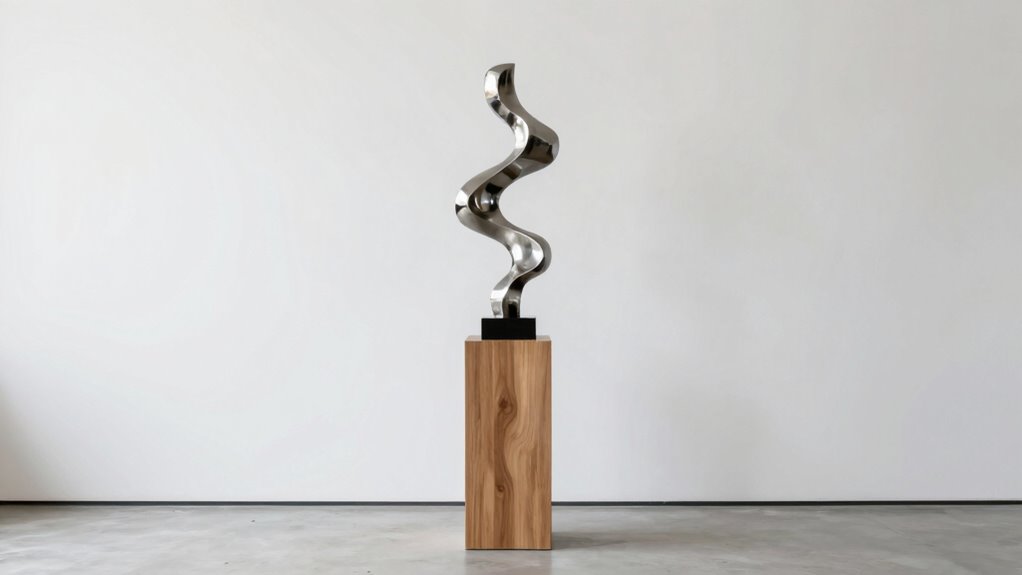
To create uncluttered sculptural displays, understanding proportional pairings helps guarantee your pieces complement each other without overpowering the space. Visual balance techniques guide you in arranging sculptures so they feel harmonious and intentional. Mastering these tips makes your decor look polished and effortlessly stylish. Incorporating size and scale considerations ensures each piece enhances the overall aesthetic without creating visual chaos. Paying attention to visual weights allows you to better distribute visual interest across your display, while considering wall surfaces and finishes can also influence how your sculptures are perceived in the overall design. Additionally, understanding cultural symbolism can help you select sculptures that resonate meaningfully within your space, especially when considering media literacy to interpret the significance behind certain motifs.
Proportional Pairings Guide
Achieving a balanced and uncluttered sculptural display hinges on understanding proportional pairings. To create visual harmony, focus on scale harmony and material contrast. Here are four tips to guide you:
- Vary sizes thoughtfully: Pair larger sculptures with smaller pieces to prevent dominance and maintain flow. Considering visual weight distribution can help in making these decisions more effectively. Additionally, observing spatial relationships between pieces ensures they complement each other rather than compete for attention.
- Balance scale and weight: Distribute visual weight evenly across your display to avoid imbalance.
- Contrast materials: Combine different textures and finishes to add interest without crowding.
- Maintain proportional relationships: Ensure sculptures relate well in size, fostering harmony without overwhelming the space. Understanding time zone differences can also help in planning display setups for different environments.
Visual Balance Techniques
Effective visual balance in sculptural displays relies on carefully managing size and scale to keep the arrangement feeling harmonious and uncluttered. Use lighting techniques to emphasize focal points and create depth, helping smaller sculptures stand out without overwhelming the space. Varying scale intentionally—pairing large pieces with smaller accents—adds interest while maintaining balance. Color coordination also plays a crucial role; choose a cohesive palette that unifies different sizes and shapes, preventing visual chaos. Keep similar tones across your sculptures to foster harmony, and avoid mixing too many contrasting colors. When arranging, ensure that larger pieces don’t dominate, but instead anchor the display, while smaller sculptures add detail. This balanced approach keeps your decor artful without feeling crowded or chaotic. Incorporating principles from auditory processing training can enhance your understanding of visual harmony and improve your overall approach to design.
Creative Ways to Place Sculptures for Maximum Impact
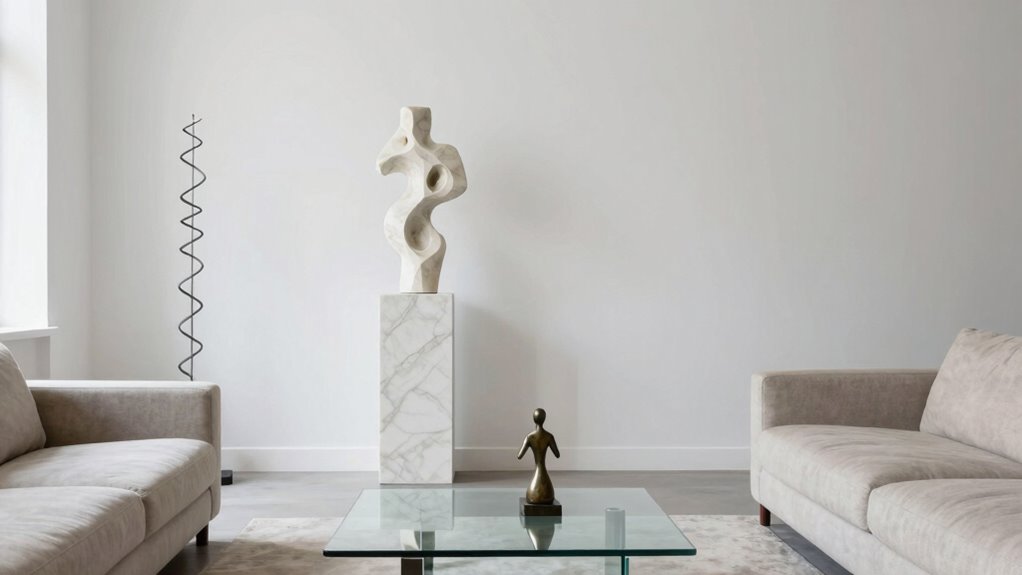
Placing sculptures thoughtfully can dramatically enhance their visual impact and the overall aesthetic of your space. To maximize their effect, consider these creative placement ideas: 1. Use Elevated Surfaces: Position smaller sculptures on pedestals or shelves to create focal points. 2. Create Garden Accents: Integrate outdoor sculptures into garden beds or along pathways for natural beauty. 3. Highlight Architectural Features: Place sculptures near entryways or windows to frame views and draw attention. 4. Designate a Sculpture Niche: Dedicate a corner or niche in your home or yard for a standout piece, making it feel intentional and curated. Additionally, incorporating sculptures in areas where essential oils for respiratory health are used can promote a calming ambiance and enhance relaxation. Recognizing proper placement techniques ensures the sculptures complement your space without overcrowding it. Paying attention to spatial balance can help prevent visual clutter and maintain harmony within your decor. Implementing landscaping principles can further optimize how sculptures are perceived within your outdoor environment. Incorporating visual flow principles can also guide the eye naturally across your arrangement, making the sculptures feel more integrated.
Balancing Bold Sculptures With Minimalist Decor

While bold sculptures create striking focal points, pairing them with minimalist decor can elevate their impact without overwhelming your space. Focus on lighting enhancement to highlight the sculpture’s details—use spotlights or soft ambient lighting to draw attention without clutter. Keep surrounding decor simple, choosing neutral tones that complement the sculpture’s color and form. Effective color coordination ensures the sculpture stands out yet harmonizes with the room. Avoid excessive accessories or busy patterns that compete for attention. Instead, select sleek furniture and subtle textures to create a clean backdrop. This balance allows your sculpture to shine as the centerpiece, adding artistic flair while maintaining a calm, uncluttered environment. Incorporating visual balance strategies can further enhance the overall aesthetic and harmony of your space, especially by understanding the importance of decorative harmony in interior design. Paying attention to spatial arrangement can also help emphasize the sculpture’s prominence without disrupting the room’s serenity. Additionally, using proportion and scale effectively ensures that the sculpture complements other elements rather than overpowering them, and being mindful of sustainable decor choices can support eco-friendly living while showcasing art.
How to Use Color and Material to Keep Sculptural Decor Subtle
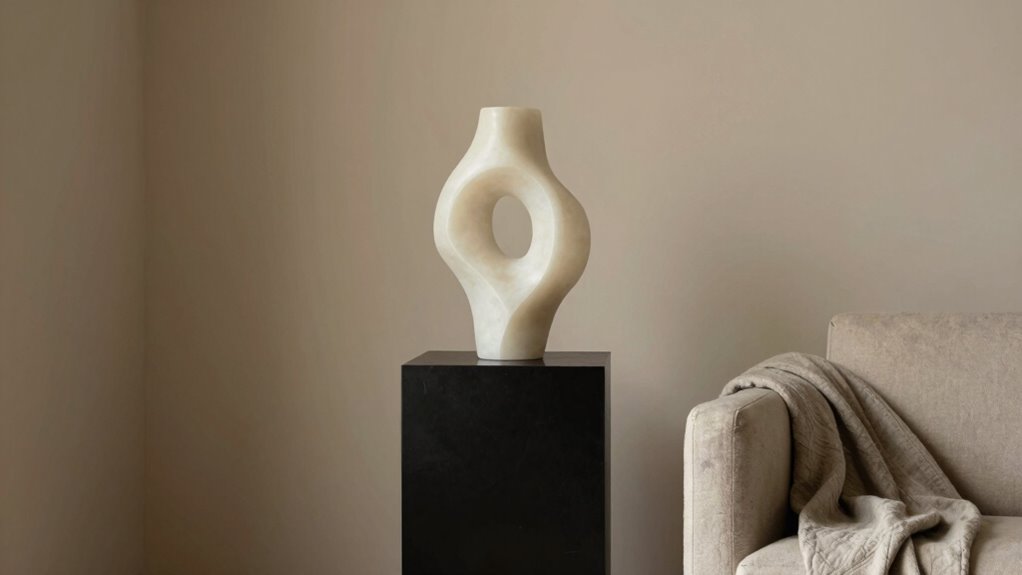
To keep sculptural decor subtle, focus on selecting colors and materials that blend seamlessly with your room’s overall palette. Good color coordination ensures your sculptures enhance rather than overpower your space. Thoughtful material selection also plays an essential role in maintaining a cohesive look. Additionally, choosing materials and finishes that support indoor air quality can help create a healthier environment while maintaining aesthetic harmony. Consider these tips: 1. Use neutral or monochromatic tones for sculptures to match your walls or furniture. 2. Choose matte finishes over glossy ones to reduce glare and visual noise. 3. Opt for natural materials like wood, stone, or clay that complement your existing textures. 4. Stick to a limited color palette to avoid visual clutter and keep the art understated. Being mindful of material sustainability can also contribute to an eco-friendly decor approach. Incorporating low-emission finishes can further improve your indoor air quality and overall decor health. Paying attention to airborne particles in decor choices can further promote a healthier indoor environment. Additionally, selecting eco-friendly materials can help reduce environmental impact and support sustainable living.
Where to Place Sculptures on Walls, Surfaces, and Hidden Spots
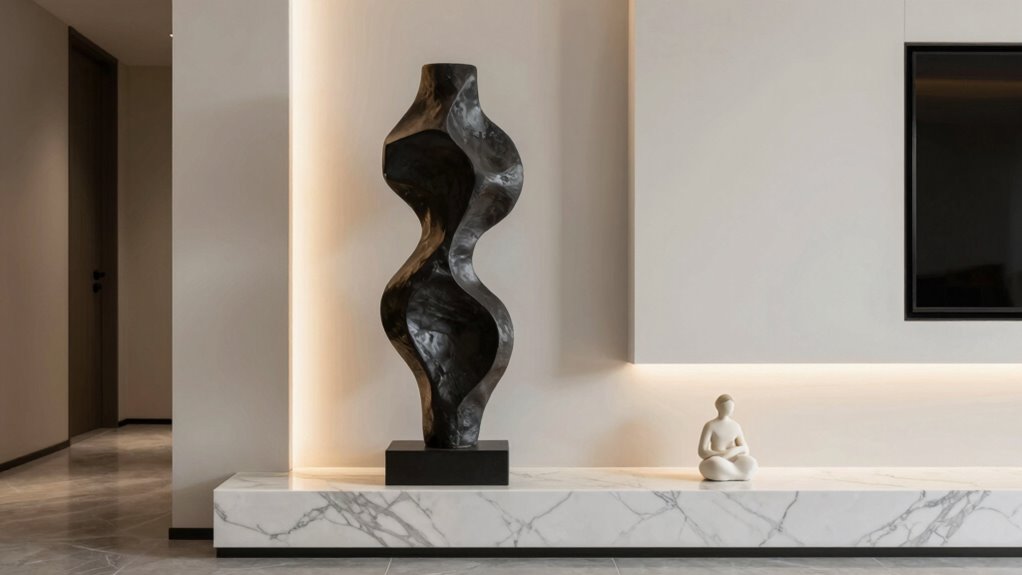
Strategically positioning sculptures enhances their visual impact and harmonizes them with your space. Wall-mounted sculptures work well above sofas, fireplaces, or entryways, creating focal points without clutter. Hidden corner displays add intrigue; place sculptures in alcoves or tucked-away spots to surprise viewers. Surfaces like coffee tables or shelves are perfect for smaller pieces, allowing you to rotate artwork easily. When choosing placement, consider scale and lighting to highlight textures and forms. Avoid overcrowding—each piece should breathe. Use the following table to guide your placement options:
| Location | Sculpture Type | Tips |
|---|---|---|
| Wall-mounted | Abstract, large pieces | Use proper hooks, lighting |
| Hidden corners | Small, intricate sculptures | Create secret visual surprises |
| Surfaces | Textured or minimalist pieces | Balance with surrounding decor |
Combining Sculptures With Functional Decor Elements
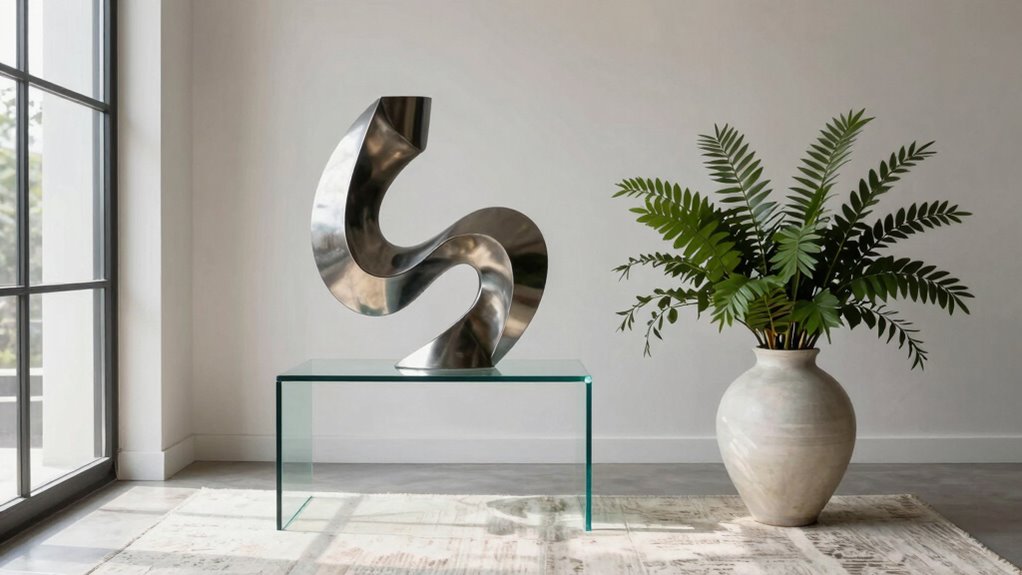
You can create striking displays by merging sculptures with practical storage solutions, making art both beautiful and useful. Think about incorporating sculptural pieces that double as shelves or containers to maximize space. This approach not only enhances your decor but also adds visual interest through seamless functionality.
Merging Art With Storage
Have you ever considered turning sculptures into functional storage solutions that double as striking decor? Merging art with storage allows you to showcase creativity while maximizing space. Here are four ideas to inspire you:
- Use wall-mounted art that doubles as shelves or hidden compartments, blending form with function.
- Incorporate sculptural lighting fixtures that also serve as storage or display spaces.
- Opt for decorative baskets or boxes with sculptural bases to hide clutter elegantly.
- Choose freestanding sculptures with built-in drawers or compartments, seamlessly merging practicality and style.
Enhancing Functionality Visually
Blending sculptures with functional decor elements creates a seamless harmony between artistry and practicality. You can enhance functionality visually by integrating lighting accents into sculptural pieces, highlighting their shapes and textures while providing illumination. Use lighting strategically to draw attention and create mood, making your decor both beautiful and useful. Additionally, focus on color harmony by selecting sculptures that complement your existing palette, ensuring they blend effortlessly into your space. For example, a bronze sculpture paired with warm lighting can add depth, while vibrant colors can energize a neutral room. Combining these elements lets you enjoy the aesthetic appeal of sculptural decor without sacrificing function. The result is a space that feels curated, lively, and thoughtfully designed.
Tips for Maintaining a Clean, Space-Friendly Sculpture Display
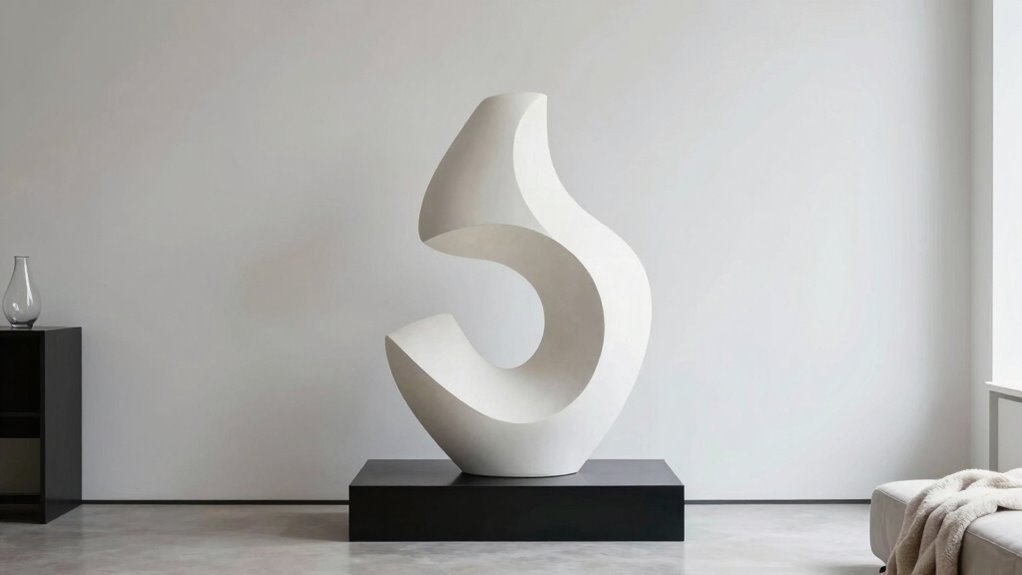
Maintaining a clean, space-friendly sculpture display requires regular attention to prevent dust buildup and clutter. To keep your sculptures looking their best, consider these tips:
- Dust weekly using a soft brush or microfiber cloth to avoid scratches.
- Use lighting accents strategically to highlight your sculptures without creating harsh shadows or glare.
- Ensure your sculptures’ color coordination complements the surrounding decor, keeping the display cohesive.
- Keep surfaces clear of unnecessary items to prevent visual clutter and maintain an open, airy feel.
Mixing Different Sculptural Styles for a Cohesive Look

Mixing different sculptural styles can create visual interest, but it’s essential to harmonize textures and materials so they complement each other. You should also balance the scale and size of each piece to prevent a cluttered or uneven look. Finally, blending styles and eras thoughtfully guarantees your display feels cohesive rather than chaotic.
Harmonize Textures and Materials
To create a cohesive sculptural decor scheme, you need to thoughtfully combine different textures and materials so they complement rather than compete with each other. Achieving this balance involves paying attention to textural contrast and material harmony. Here are four tips to help you harmonize your decor:
- Mix smooth and rough surfaces to add visual interest without overwhelming the space.
- Pair natural materials like stone or wood with sleek metals for a balanced look.
- Use consistent color tones across different textures to unify diverse sculptural pieces.
- Vary scale and depth to create depth while maintaining harmony among your sculptures.
Balance Scale and Size
Ever wondered how to create a visually balanced sculptural decor display? Achieving scale harmony involves mixing different sizes and styles while avoiding overwhelming your space. Use size contrast to highlight focal pieces and create visual interest. For example, place a large, bold sculpture next to smaller, delicate pieces. Think of this layout:
| Large Sculpture | Small Accents |
|---|---|
| Statement Piece | Complementary Art |
| Tall Piece | Short, Compact Forms |
| Vertical Element | Grounded, Stable Shapes |
| Wide Sculpture | Narrow, Elongated Forms |
| Expansive Detail | Slim, Minimalist Pieces |
| Heavy Material | Light, Airy Forms |
| Dense Texture | Translucent Surfaces |
| Central Piece | Surrounding Smaller Pieces |
| Focal Point | Supporting Elements |
This balance creates harmony through thoughtful size contrast.
Blend Styles and Eras
Have you considered how blending different sculptural styles and eras can add depth and personality to your decor? Mixing artistic expression with cultural symbolism creates a unique, cohesive look. To do this effectively, try these tips:
- Combine modern and antique sculptures for a dynamic contrast.
- Layer pieces from different cultures to highlight diverse symbolism.
- Use similar materials or finishes to unify varied styles.
- Balance bold statement pieces with subtle, minimalist sculptures.
This approach allows you to showcase your personality while respecting historical and cultural contexts. It encourages creative expression and deepens your space’s narrative. By thoughtfully blending styles and eras, you craft a curated environment that feels both authentic and visually compelling, emphasizing the artistry behind each piece.
Frequently Asked Questions
How Do I Prevent My Sculptures From Overwhelming Small Rooms?
To prevent your sculptures from overwhelming small rooms, focus on scale balancing and creating visual harmony. Choose smaller or medium-sized pieces that complement your space rather than dominate it. Place sculptures thoughtfully, allowing enough breathing room around them to avoid clutter. Use lighter colors or sleek bases to enhance openness. This approach guarantees your sculptures add artistic flair without crowding, maintaining a balanced, inviting atmosphere in your small room.
What Types of Sculptures Are Best for Outdoor Decor?
For outdoor decor, opt for weather-resistant sculptures like garden statues that withstand the elements. Choose materials such as stone, metal, or resin to guarantee durability. Keep scale in mind—smaller pieces work well in intimate garden corners, while larger statues make bold statements. Select designs that complement your landscape, adding visual interest without overwhelming your outdoor space. Regular maintenance keeps your sculptures looking vibrant and integration seamless.
How Can Lighting Enhance Sculptural Decor Without Clutter?
You can enhance your sculptural decor with ambient lighting that creates a warm, inviting glow, highlighting the art without overwhelming the space. Use spotlight accents to draw attention to specific sculptures, adding depth and focus. Keep the lighting discreet and strategic, avoiding clutter. This combination guarantees your sculptures stand out beautifully, adding elegance and visual interest without taking up extra space or creating a crowded look.
Are There Eco-Friendly Materials Suitable for Sculptural Decor?
Sure, eco-friendly materials are your new best friends. You can craft stunning sculptures from recycled metals or embrace the natural charm of bamboo sculptures. Why not turn trash into treasure? These sustainable options not only reduce your carbon footprint but also add unique character to your space. So go ahead, make art that’s kind to the planet—your decor will thank you, and so will Mother Earth.
How Often Should I Rotate or Update My Sculptural Displays?
You should rotate or update your sculptural displays seasonally or every few months to keep your space fresh and inspiring. Incorporate seasonal updates to reflect holidays or changes in your home’s ambiance, and make artistic rearrangements to showcase different pieces. Regular updates prevent your decor from feeling stale, while creative rearrangements highlight new perspectives. This approach keeps your space dynamic and engaging without overcrowding it.
Conclusion
By thoughtfully selecting and placing sculptural decor, you bring art into your space without the chaos of clutter. Remember, less is often more—think of it as your personal Renaissance. Keep scale in check, mix styles wisely, and find hidden spots for your sculptures. With a little planning, your home becomes a gallery that’s both stylish and serene. Embrace this harmonious balance, and watch your space transform into a timeless masterpiece.
Fall Picks
fall essentials
As an affiliate, we earn on qualifying purchases.