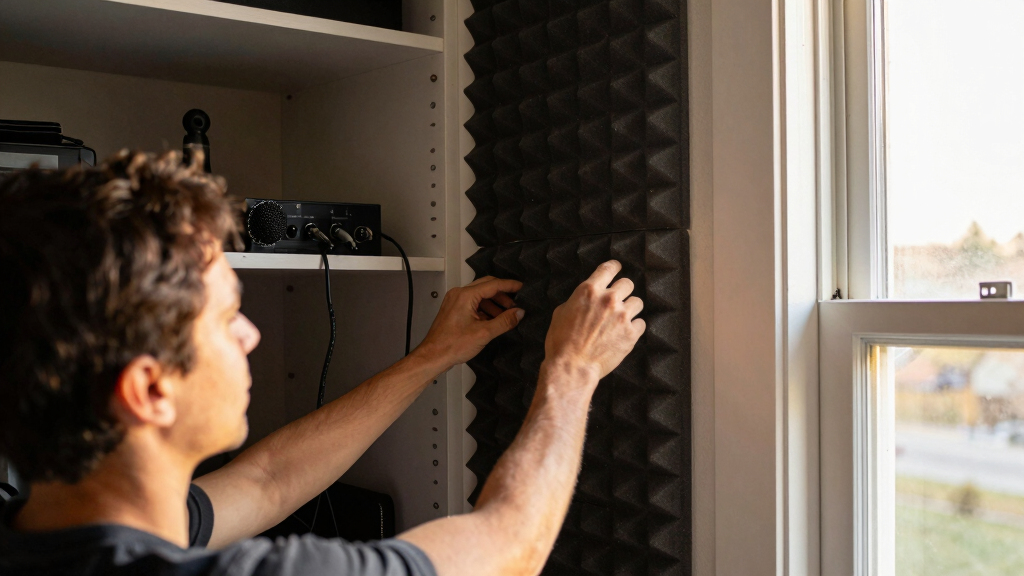

📊 Full opportunity report: Acoustic Dampening, Placement, and the “Rig in the Closet” Setup on ThorstenMeyerAI.com — validation score, market gap, and execution plan.

Get the little things that make your day delivered free — and shop member deals
- Fast, free delivery on millions of items
- Access to Prime Big Deal Days deals on October 6–7
- Prime Video, Amazon Music and more included
TL;DR
Placing AI workstations in separate rooms or closets significantly reduces noise. Proper ventilation is essential to prevent heat buildup, making the ‘rig in the closet’ setup effective if carefully implemented.
Placing high-power AI workstations in a separate room or closet is the most effective way to eliminate noise, according to experts. This is discussed in detail in Acoustic Dampening, Placement, and the “Rig in the Closet” Setup. This approach leverages distance and isolation to significantly reduce sound transmission, making it a preferred solution for noise-sensitive environments.
Thorsten Meyer emphasizes that the most effective noise reduction method is moving the rig away from the workspace, such as into another room or closet, especially when the machine is accessed remotely via network. This setup prevents airborne and structure-borne noise from reaching the user directly. However, placing a high-heat, enclosed system in a closet requires careful ventilation to avoid overheating. Passive vents or active exhaust fans are necessary to dissipate heat effectively, preventing thermal throttling and fan noise. Properly ventilated soundproof cabinets are also an option, combining acoustic dampening with temperature control. The key is ensuring airflow while maintaining sound isolation, which is critical for continuous operation of high-power AI hardware.
Acoustic dampening
& the rig in the closet.
The most powerful noise fix isn’t a material — it’s a floor plan. A rig you can’t hear because it’s in another room beats any amount of foam. Tap the approaches in Part 1 to see what actually works.
(another room)
(levers 1–4)
(door / barrier)
(acoustic foam)
Contain the noise, not the heat
Why Closet Placement Is a Game Changer for Noise Management
This approach allows users to drastically reduce noise levels without sacrificing cooling performance, improving work environment comfort. It also enables the use of high-power AI rigs in shared or noise-sensitive spaces, expanding the practical deployment of such hardware. Proper ventilation ensures longevity and reliability, making the 'rig in the closet' a viable long-term solution when implemented correctly. For guidance on this, see Acoustic Dampening, Placement, and the "Rig in the Closet" Setup.As an affiliate, we earn on qualifying purchases.
Understanding Heat and Noise Dynamics in AI Workstations
High-power AI hardware, such as GPUs consuming 600W or more, generates significant heat and noise. Conventional solutions focus on acoustic foam or case modifications, which are less effective than spatial separation. Experts like Thorsten Meyer advocate for moving rigs into separate rooms or closets, especially since most AI inference tasks are performed remotely. The challenge lies in balancing noise reduction with adequate cooling, as sealed spaces trap heat, risking hardware damage. Proper ventilation strategies, including passive vents or active exhaust systems, are critical to maintaining safe operating temperatures in enclosed setups. This understanding shifts the focus from internal noise mitigation to strategic placement and airflow management."The most effective noise reduction is to put the rig in another room or closet, especially since most AI work is done remotely over the network."
— Thorsten Meyer
Remaining Challenges in Closet-Based AI Rig Setups
While the general principles are clear, the optimal design for ventilation systems in closet setups varies based on room size, ambient temperature, and hardware specifics. The effectiveness of different cooling solutions, such as active exhaust fans versus passive vents, is still under discussion. Cost and complexity of purpose-built soundproof cabinets also vary, and their long-term reliability needs more real-world testing. Additionally, the impact of continuous operation in enclosed spaces on hardware lifespan remains an area for further study.
Next Steps for Implementing Quiet, Cool AI Workstations
Practitioners should focus on designing and testing ventilation solutions tailored to their specific space and hardware. More information can be found in Acoustic Dampening, Placement, and the "Rig in the Closet" Setup. Exploring commercially available soundproof cabinets with integrated airflow management is advisable for those seeking a plug-and-play solution. Further research into long-term effects of enclosed operation and the development of standardized best practices will help optimize these setups. Monitoring temperature and noise levels during operation will inform adjustments, ensuring both performance and longevity.
Key Questions
Can I put my AI workstation in a closet without overheating?
Yes, but only if proper ventilation is provided. Passive vents or active exhaust fans are necessary to dissipate heat effectively and prevent thermal throttling.
Is a sealed closet or cabinet safe for continuous operation?
It can be, if it includes adequate airflow management. Purpose-built soundproof cabinets with temperature control are designed for this purpose, but DIY setups require careful planning.
Does moving the rig into another room affect remote access?
No, as most AI inference tasks are performed remotely over the network, the physical location of the rig does not impact accessibility.
What are the main benefits of the 'rig in the closet' setup?
The primary benefits are significant noise reduction and improved workspace comfort, with the added advantage of better thermal management when ventilation is properly implemented.
Are there cost-effective ways to implement this setup?
Yes, using simple passive vents and rubber feet for vibration isolation can be inexpensive, but investing in purpose-built soundproof cabinets offers better long-term performance.
Source: ThorstenMeyerAI.com
NFL season / tailgating Picks
team gear
As an affiliate, we earn on qualifying purchases.